From manufactured outrage and misinformation to the relentless pressure on politicians to react, the digital public arena is changing the way democracy works. Pip Burley argues that our political institutions must adapt before the loudest voices win out over reason
Democracy was designed for an age when elected representatives had time to debate, deliberate and reach decisions on behalf of the people they served. The modern media landscape, however, has turned this on its head, with both the public and politicians caught in a digital environment of instant opinion, outrage and relentless pressure to respond before the facts are known.
And while this transformation can’t be considered the only cause of today’s democratic malaise, marked by deep division and distrust across society, it is a key factor. To understand how we arrived at this point, it’s worth looking back at how representative government developed and what it was originally intended to achieve.
In 1215, Magna Carta established that the king should consult his barons. In 1265, Simon de Montfort added representatives of towns and counties alongside nobles and clergy. The ‘Model Parliament’ of 1295 helped establish the pattern of local representatives being called to Westminster, mostly to discuss taxation. For centuries, power remained with a small elite, and the vote belonged to only a small part of the population.
The Reform Acts in the 1800s gradually widened the male franchise. The 1832 Act also formally excluded women by defining all voters as male. In 1918, some women gained the vote, and 10 years later both sexes finally had equal voting rights. Representation was a hard-won, ongoing business repeatedly updated as the country changed.
The bargain was straightforward: citizens elected representatives to make decisions on their behalf, then re-elected them if they did well. MPs represented local people in parliament, debated local and national questions and brought the answers back to their constituents. Technically, that remains their role today.
But then along came the railways, the newsheets and, later, radio and TV.
Newspapers began to exert mass influence from the mid-19th century, after the ‘taxes on knowledge’ were removed – the stamp duty in 1855, followed by paper duty in 1861. Cheaper papers, faster printing, railway distribution, the telegraph and growing literacy all helped news reach far more people.
Their influence grew further in the 1890s, when inexpensive, high-circulation dailies emerged. The Daily Mail, launched in 1896, was an early example of a paper designed for a broad popular readership. By the early 20th century, the mass press had become a powerful part of political life.
Newspapers carried arguments far beyond Westminster, with radio from 1922 and then television from 1936 bringing leaders’ voices and faces into people’s homes. Politics became a national conversation. Ministers could be questioned in public, events reported as they happened and the work of MPs scrutinised by millions.
In theory that was a democratic gain. A free press thrives on exposing incompetence and corruption, giving neglected issues an audience and helping citizens make informed choices. Broadcasters, at their best, offered their own standards of verification and impartiality, and editors were further restrained by regulation. Generally, people could disagree about events while sharing a more or less accurate picture of what had happened.
The internet promised an even more open public square. Without the editorial gatekeeping of traditional media, anyone could publish, organise, challenge authority and reach an audience without an editor’s permission. People ignored by traditional media found a voice. The public square became a marketplace where attention was currency. Social platforms do not merely carry messages; unlike professional editors, their mindless algorithms decide which messages are seen based on data alone.
In all forms of media, outrage travels well and social media is no exception. A reasoned explanation is slow, often ponderous; a furious accusation, quick. A correction (if any) may reach only a fraction of those who saw the original, and a rumour is considered fact before anyone checks it. People sort themselves into groups within groups, each with its own grievances, friends and enemies. People increasingly only talk to people who agree with them. A loud minority can look like a majority, distorting politicians’ understanding of public opinion.
Worse still, we now know that online opinion can be faked. A comment may be invented, an account falsified and a deliberate campaign made to look like a spontaneous public outcry. Hostile foreign powers exploit these methods to widen divisions and weaken confidence in democracy. AI makes it easier to produce convincing messages and images instantly, tailored to tell audiences what they want to hear.
Fiction offers more comfortable certainty than fact: ‘our side is right – your side is wrong’. By the time the truth catches up, fiction may already have become fact in people’s minds.
This is not simply a matter of people encountering extreme opinions. Extremes have always existed. The difference is that individuals and campaign groups can broadcast allegations, insults and demands to vast audiences, while platforms like Facebook, Instagram, TikTok, YouTube and X make vast profits.
A Commons committee has warned that algorithms can amplify misleading and harmful content, while acknowledging that the scale and causes are difficult to establish. It has called for greater transparency and independent research.
Despite everything, to say that representatives in parliament have become obsolete would be an exaggeration. They still legislate, scrutinise government and represent constituents. But they, like the rest of us, are not immune to the relentless outpourings of the media. Politicians now answer not only to constituents, parliament and elections but also to an endless stream of online propaganda. An MP who stops to think can look weak beside a colleague who joins in the fray.
Despite our tendency to look back through rose-tinted glasses, the broadcast era was no golden age. Newspapers could be partisan and seek sales, television could denigrate or exclude topics they found disagreeable, whilst powerful interests shaped the agenda. But social media has opened up an entirely new set of doors and let in a gale.
We have a political system built around elections and fair debate. But we live in a media environment built around instant reaction, personal grievance and continuous campaigning. That is the mismatch which largely explains why the system we have inherited feels increasingly unfit for purpose.
The answer is not to silence dissent, nor give the state powers to decide what can and can’t be said. That is the road to totalitarianism. No, platforms that rank content should explain how this works, give users control over their feeds and co-operate with independent researchers by giving them free access to the evidence. They should slow or stop the viral spread of demonstrably false claims, with safeguards for lawful speech and clear routes of appeal. Many of these proposals echo recommendations made by the Commons committee.
We must also repair politics. Proportional representation deserves serious consideration so that Parliament reflects votes more fairly. Citizens’ assemblies – groups of ordinary people who hear evidence, question experts and deliberate – could help tackle difficult questions that online shouting and party point-scoring cannot resolve. Where are the academics, the historians, the philosophers? They should be driving the agenda directly, not having to argue the case remotely.
Above all, MPs must explain the thinking behind their decisions and demonstrate that their jobs mean more to them than countering angry messages. Democracy was never a way to register every opinion every minute. Like the law, it is a means of resolving disputes in a way that people can live with.
We cannot and should not attempt to return to the world before mass communication, try to suppress free speech or impose outdated ideologies in the face of reality. We should also try to understand what the future might hold for our democracy, with AI tightening its tentacles around everything we do.
Most of all, we need to rebuild democratic institutions for the world we inhabit, before those loud voices persuade us that representative government has no purpose.

Pip Burley is a veteran television producer, author, novelist, composer and creative industries expert whose career has spanned more than six decades across television, music, theatre, advertising, publishing, business and writing. He founded television production company Excelsior and produced some of Britain’s best-known dramas, including The Darling Buds of May, A Touch of Frost and My Uncle Silas. He also composed the theme music for The Darling Buds of May, receiving an Ivor Novello Award in 1992. As novelist Philip G. Walsh, he is the author of the Harmony Legacy series of thrillers. As Television Production & Generational Affairs Correspondent for The European, he writes on broadcasting, creativity, leadership, ageism, intergenerational affairs and the role older and more experienced people can continue to play in public life.
READ MORE: The blame game – why Britain can’t stand losing. Have we become a nation of bad sports? From the playing field to the ballot box, Pip Burley asks whether Britain has forgotten how to lose gracefully – and what our increasingly bitter political rivalries mean for democracy.
Do you have news to share or expertise to contribute? The European welcomes insights from business leaders and sector specialists. Get in touch with our editorial team to find out more.
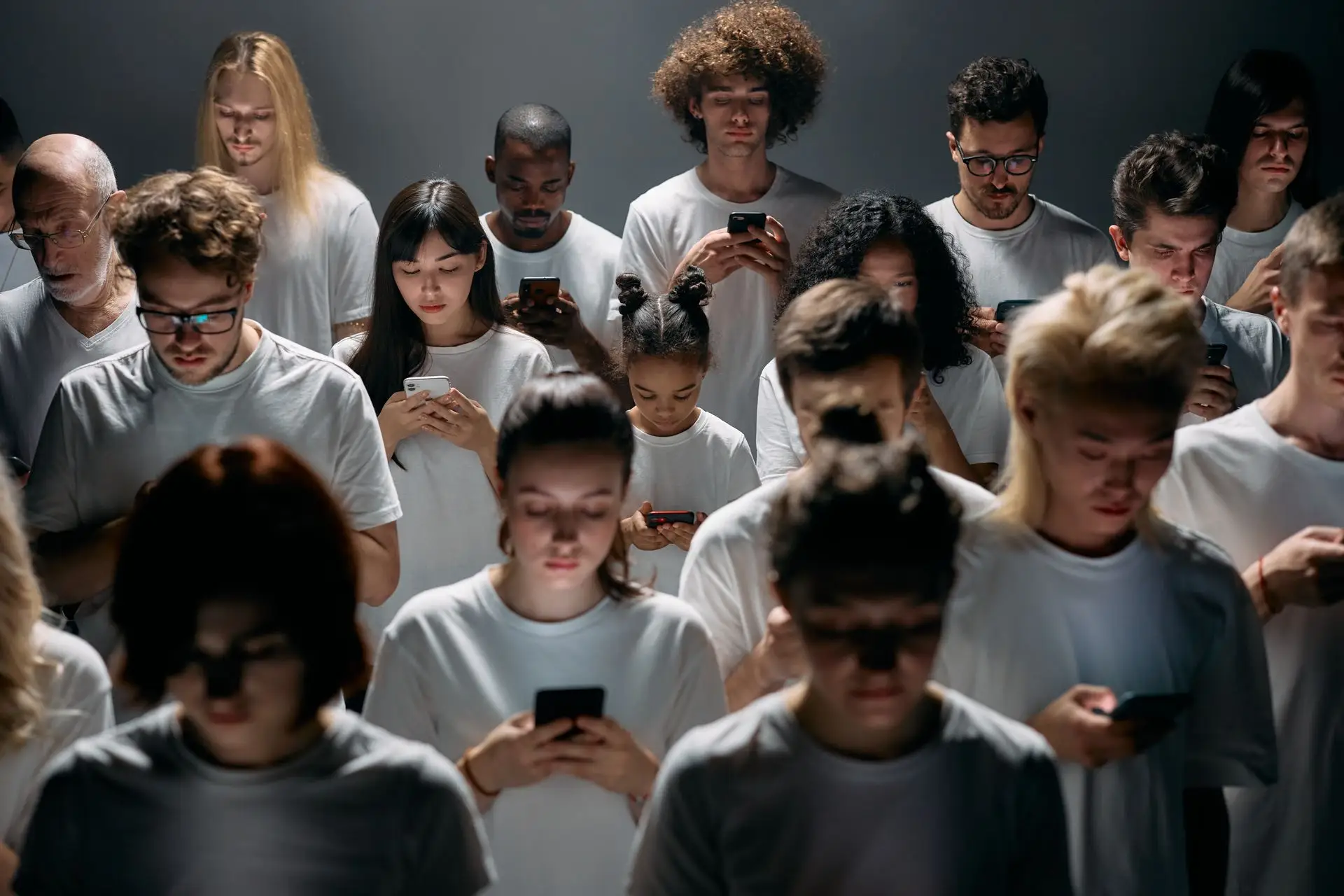
Main Image: cottonbro studio / Pexels