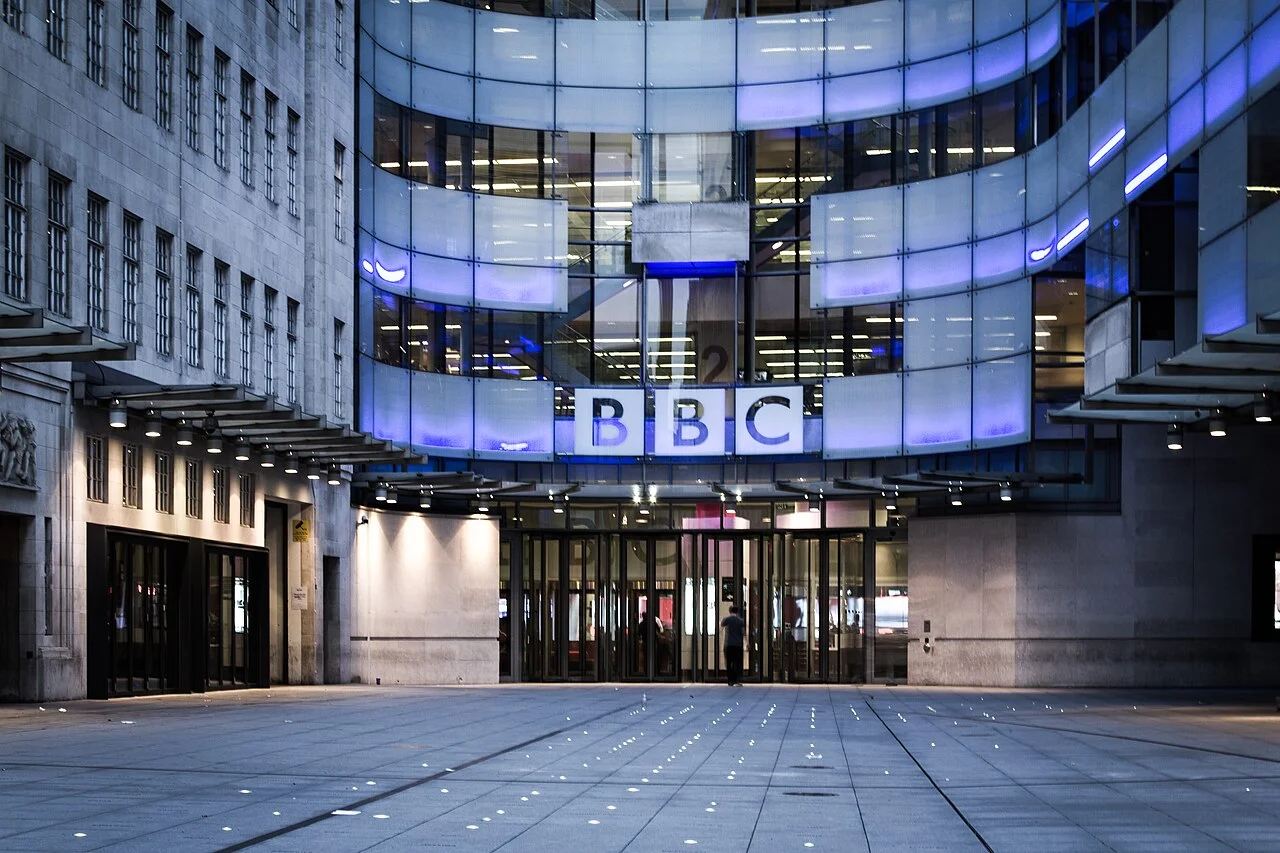
With the BBC’s future funding under review, veteran television producer Pip Burley, whose credits include The Darling Buds of May and A Touch of Frost, asks whether the corporation could survive without the licence fee, and what Britain might lose if it did
The BBC’s current Royal Charter expires at the end of 2027, and its future funding is under review. If the licence fee disappears without a genuinely robust alternative form of collective funding, it may be forced to compete harder for subscribers and advertisers, making it more like the broadcasters around it. If, however, the government keeps funding it but expects favourable coverage in return, the BBC could lose something more fundamental: its independence. Either way, we should ask what kind of BBC we want – or whether we want it at all.
The licence fee is now £180 a year for a colour television licence. In 2025–26, it brought the BBC £3.879 billion. That is the financial foundation for a service intended to be available to the whole country, not just to those who can afford a subscription or attract advertisers.
Presently, the BBC does earn commercial income. BBC Commercial returned £377 million to public service in 2025–26, including cash dividends and investment in content. That is some contribution, but it’s only around a tenth of the licence-fee income. Commercial success can help fund programmes but it cannot, on its own, replace the scale and stability of public funding.
So, what happens if the government decides not to fund the BBC? The corporation could try to rely on subscriptions, advertising revenue, more overseas sales and other business – and might continue in some reduced form for years. But a subscription or advertising-funded BBC would then be competing for the same money as commercial broadcasters and would be forced to chase the largest audiences and the most profitable types of programming.
In reality, even now it’s unable to compete with the quality, choice and marketing power of Netflix, Amazon Prime and the other major streamers, and so is unlikely to be able to do so under any feasible future arrangement.
That pressure would not necessarily kill the BBC quickly. It could, rather, be death by a thousand cuts: fewer costly dramas, less children’s television, less specialist programming and less willingness to take risks. The BBC might keep its name and some familiar content while becoming a smaller, more conventional competitor, with commercial competition steadily eroding those qualities that some feel strongly are worth preserving.
The BBC’s commercial arm already offers a glimpse of how the corporation is attempting to adapt. UKTV is part of BBC Studios, the BBC’s commercial subsidiary. Its channels include U&Dave and U&Drama, with U as its streaming service. UKTV content has been available through Channel 4’s streaming service since January 2026.
In October, Reuters reported preliminary talks involving UKTV and Channel 4’s commercial operations. Such a tie-up could bring together advertising sales, streaming services and some channels, giving British broadcasters more scale as they compete for viewers and advertisers. But it is, at best, a sensible commercial arrangement rather than a solution to the BBC’s overall funding problem.
The pressures are not confined to the BBC. ITV is not doing brilliantly either. Its 2025 group revenue was £4.121 billion, much of which comes from its international production business, so its total turnover is not a like-for-like comparison with BBC licence-fee income. ITV also reported a 5 per cent fall in total advertising revenue in 2025.
Sky, part of the United States-based Comcast group, has agreed to acquire ITV’s broadcasting and streaming business, including ITVX, but not ITV Studios. The transaction remains subject to regulatory approval.
To many viewers, however, ITV and the BBC are both simply national broadcasters. ITV, Channel 4 and Channel 5 provide programmes with a public presence and reach across the country, while relying on commercial income or, in Channel 4’s case, a publicly owned but commercially funded model.
So aside from the concern that a commercial BBC would eventually lose its own identity, if it were allowed to sell advertising on its domestic public-service channels, it would be competing for money in a market that is already under pressure. The effect on ITV, Channel 4 and Channel 5 could be severe.
There is another possibility, more disturbing than the BBC simply being left to wither. A government could decide to keep funding it but make that support conditional – using the BBC’s dependence on public money, and the renewal of its Charter, to press for coverage more favourable to those in power.
The current Charter expressly protects the BBC’s editorial independence. Each board member must uphold that independence and neither seek nor take instructions from government ministers. So, an explicit demand that the BBC become a government mouthpiece would breach the principles of the present settlement.
But the next Charter and funding arrangements are being considered now, and the protections matter only if they are maintained in practice. The current Charter expires on December 31, 2027, and the government has said a White Paper setting out its decisions is expected later in 2026.
A publicly funded BBC that could not function freely would be preserved in name but not its nature. That prospect may once have seemed unthinkable, but it should not be dismissed in this day and age. The BBC is not beyond criticism, and its independence does not exempt it from scrutiny. But scrutiny is different from control.
The choice is not simply between funding the BBC and letting it compete commercially. We need to decide whether we are willing to sustain a broadcaster with both the resources and the independence to truly serve the public – even when its journalism is uncomfortable for the government of the day.
As things stand, the future of our ‘national’ broadcaster’ looks gloomy as its audience becomes harder to sustain in the face of a highly and increasingly competitive market. Furthermore, it’s attempts to court a younger audience (often at the expense of their loyal, older viewers) appear to be making things worse rather than better.
We shall see.
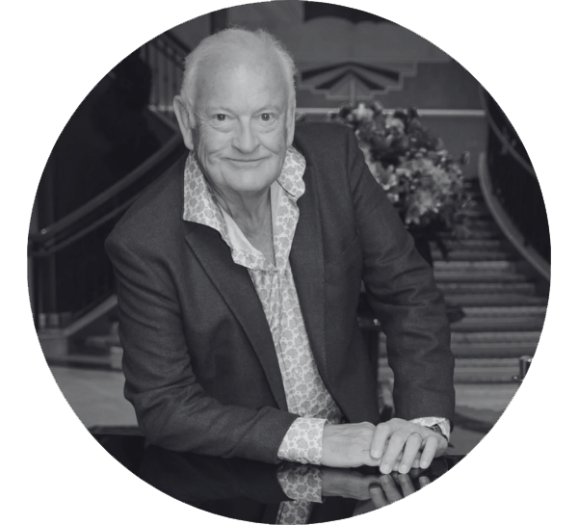
Pip Burley is a veteran television producer, author, novelist, composer and creative industries expert whose career has spanned more than six decades across television, music, theatre, advertising, publishing, business and writing. He founded television production company Excelsior and produced some of Britain’s best-known dramas, including The Darling Buds of May, A Touch of Frost and My Uncle Silas. He also composed the theme music for The Darling Buds of May, receiving an Ivor Novello Award in 1992. As novelist Philip G. Walsh, he is the author of the Harmony Legacy series of thrillers. As Television Production & Generational Affairs Correspondent for The European, he writes on broadcasting, creativity, leadership, ageism, intergenerational affairs and the role older and more experienced people can continue to play in public life.
READ MORE: Can democracy survive the digital age? From manufactured outrage and misinformation to the relentless pressure on politicians to react, the digital public arena is changing the way democracy works. Pip Burley argues that our political institutions must adapt before the loudest voices win out over reason.
Do you have news to share or expertise to contribute? The European welcomes insights from business leaders and sector specialists. Get in touch with our editorial team to find out more.
Main Image: Credit: Alexander Svensson / CC BY 2.0