From Roosevelt’s pince-nez and Gandhi’s iconic frames to Hitler’s carefully managed image, Babak Mehrdadnia explores how something as ordinary as a pair of glasses became a symbol of authority, identity and political influence
Try picturing Mahatma Gandhi without his round spectacles. It’s surprisingly difficult. They are as much a part of the image we carry of him as his walking trademark stick, sandals and simple white clothing.
Theodore Roosevelt’s pince-nez is another familiar sight in the photographs of his presidency, although few people know that his spectacles once played an extraordinary part in saving his life.
Adolf Hitler, meanwhile, needed glasses to read but was rarely photographed wearing them. The man whose propaganda machine controlled almost every aspect of his public image apparently had little room for anything that might suggest ordinary human frailty, even something as commonplace as poor eyesight.
It seems a strange thing to dwell on, given the enormous consequences of these men’s actions, but there is something fascinating about the political history of spectacles. They’ve helped create reputations, conceal identities and turn otherwise unremarkable personal possessions into valuable historical artefacts.
I have long been interested in semiotics, the study of signs and symbols, and particularly in how everyday objects become associated with the people who own them. A pair of glasses is a good example. Most of us wear them because we cannot see properly without them. We choose a frame, perhaps worry a little about how it looks, and then get on with our lives. Yet in some cases those same frames become so closely associated with a person that they are almost impossible to separate from their identity.
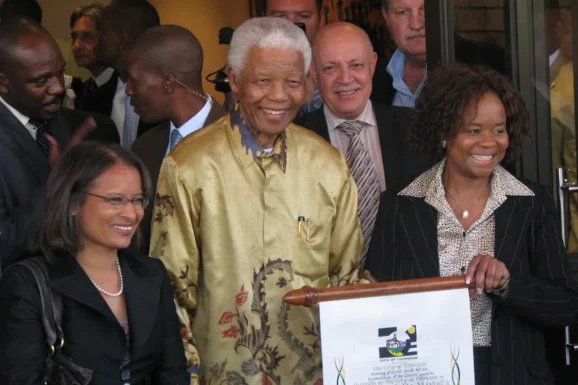
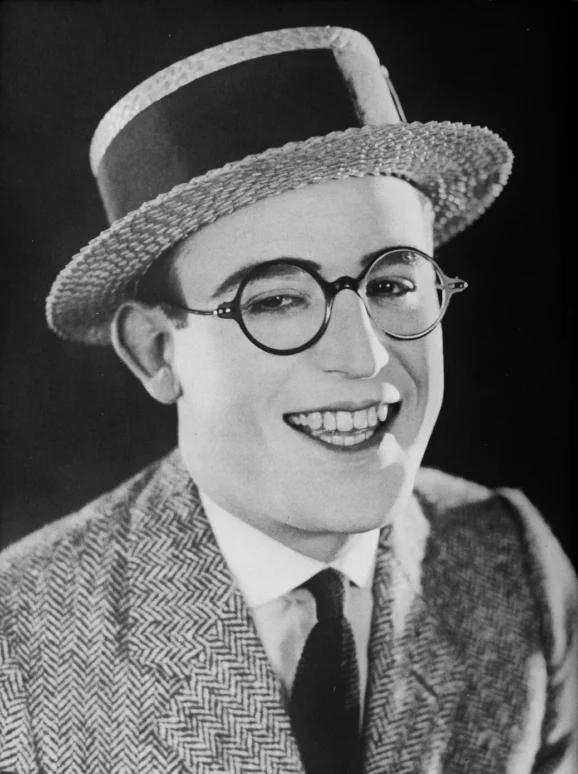
Think of Harold Lloyd, the silent-film comedian whose round glasses were as recognisable as Charlie Chaplin’s bowler hat. Lloyd sometimes wore frames without lenses because the glasses were part of his character, rather than something he needed to see. Nelson Mandela found another use for them, adopting round Mazawattee tea glasses to help disguise his appearance while evading the South African authorities during his underground struggle against apartheid.
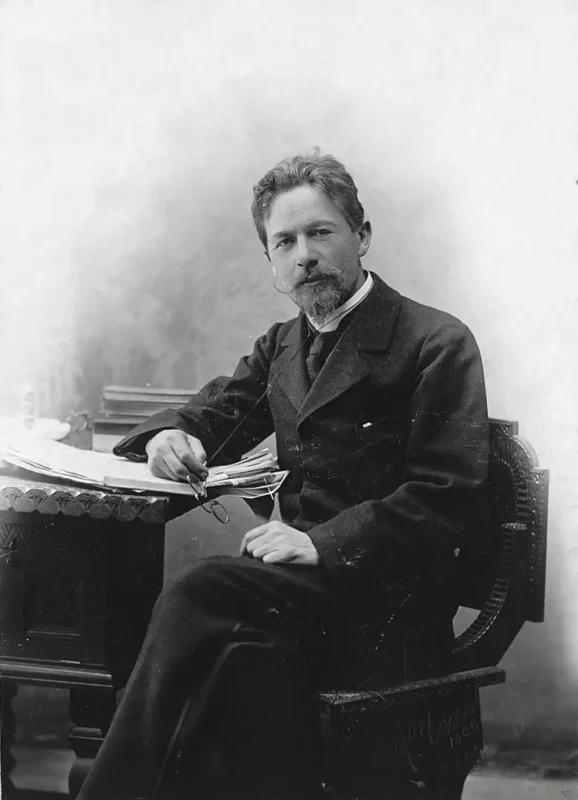
The Russian writer Anton Chekhov had a rather less dramatic problem. Writing to his family from Paris in 1891, he begged his brother to have his spectacles repaired, complaining that his poor eyesight had prevented him from properly appreciating the paintings at an exhibition. Anyone who has lost their reading glasses will sympathise.
These are three very different relationships with the same object. Lloyd used glasses to help establish a character, Mandela to conceal himself, and Chekhov simply wanted to enjoy some paintings. But in politics, where the appearance of a leader can become almost as familiar as the ideas they represent, spectacles have had an altogether more curious history.
Theodore Roosevelt was severely short-sighted from childhood and depended heavily on his glasses. According to accounts of his early life, he was astonished by how much detail he could suddenly see when he first received a suitable pair. The world, which had previously been a rather blurred place, revealed an extraordinary amount of beauty he had never properly noticed.
Roosevelt was hardly a man inclined to sit around worrying about his eyesight. He travelled, hunted, explored and threw himself into physical activities with an enthusiasm that occasionally bordered on the reckless. Knowing how helpless he would be without his spectacles, he carried spare pairs on his expeditions.
On 14 October 1912, however, his glasses became part of a much more serious adventure. Roosevelt was campaigning in Milwaukee when a man approached and shot him in the chest. The bullet passed through the thick manuscript of a speech and the metal spectacle case in his breast pocket before entering his body. Those objects helped slow its progress, possibly preventing a far more serious injury.
Most people, having just been shot, would regard a hospital as the obvious next destination. But Roosevelt, a former cavalry colonel who had led the famous Rough Riders into battle during the Spanish-American War of 1898, was made of sterner stuff.
Believing the bullet had not reached his lung, he insisted on delivering the speech he had come to give. Standing before the audience, he announced: “Friends, I shall ask you to be as quiet as possible; I don’t know whether you fully understand that I have just been shot.”
He then proceeded to speak for more than an hour.
The incident became one of the great stories of Roosevelt’s political career, an extraordinary demonstration of his determination and appetite for public life. His spectacle case and bullet-pierced manuscript survived as reminders of the day an everyday object found itself caught up in an assassination attempt.
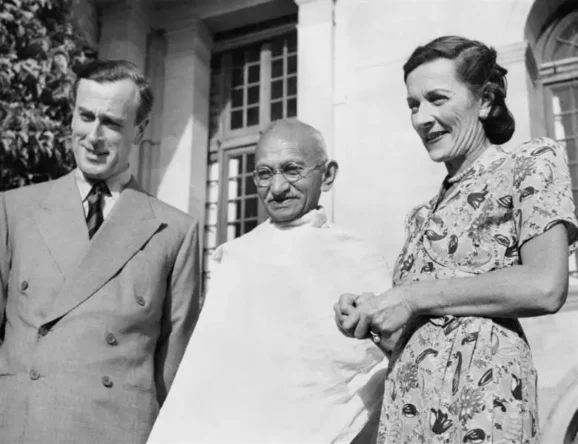
Gandhi’s spectacles tell a very different story, one that has more to do with the gradual transformation of a man’s appearance into an international symbol.
The young Gandhi who travelled to London to study law bore little resemblance to the figure now familiar from photographs and statues. He wore Western clothes, took an interest in fashionable dress and was eager to adapt to the conventions of British society. The simple white clothing and round spectacles that would eventually become so recognisable emerged over years of personal and political change.
As Gandhi’s commitment to Indian independence and non-violent resistance developed, his appearance came to reflect the simplicity he advocated. The spectacles remained, becoming one of the most distinctive features of his face.
There is something rather wonderful about the fact that an object with such a practical purpose should become an enduring symbol of a man who placed so much emphasis on rejecting unnecessary possessions. Gandhi apparently explored ways of improving his eyesight without glasses in 1932, but they remained part of his daily life.
After his death, their significance grew after they began appearing at auction. In 2009, a pair was sold in New York alongside other belongings in a collection that fetched approximately $1.8 million. Another pair, reportedly given to an acquaintance while Gandhi was in South Africa, sold in Britain in 2020 for £260,000.
It is an extraordinary sum for something that would once have been an ordinary necessity. The metal, lenses and workmanship could hardly account for more than a couple of pounds. But collectors were paying for their association with Gandhi, and for the chance to own something that had become part of his place in history.
Hitler understood the importance of appearances too, although the image he presented to the world was constructed with far greater calculation. He needed spectacles for reading but photos of him wearing them are relatively rare. This was, of course, no accident. The Nazi regime invested enormous effort in controlling how its leader was seen, and Heinrich Hoffmann, Hitler’s personal photographer, was central to that process.
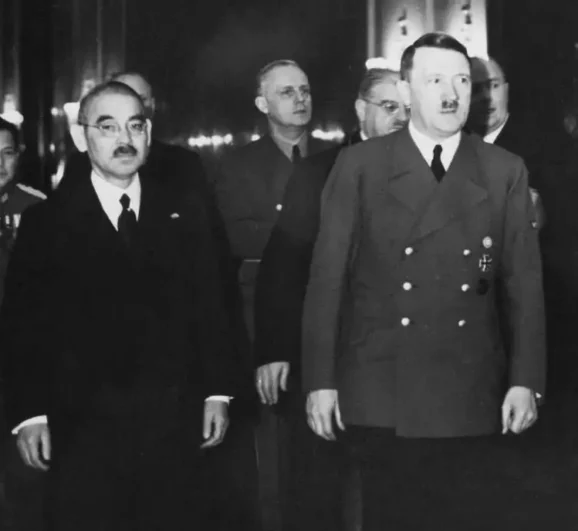
Hoffmann’s photographs helped establish the familiar public image of Hitler, from his carefully arranged expressions and gestures to the poses intended to communicate authority. The glasses he used in private were largely absent.
A censored photograph of Hitler dated 15 March 1939 shows him wearing spectacles, but it was not approved for public release. Other photographs of him reading without glasses became part of the official record, despite his need for them.
It is tempting to imagine that Hitler considered spectacles a sign of fallibility, although the surviving evidence does not establish precisely what he thought about wearing them. What we can say is that his public image was carefully managed and that spectacles were conspicuously missing from it.
Here was a dictator whose decisions would lead to war, mass murder and devastation across Europe, while the machinery responsible for presenting him to the public also concerned itself with whether he should be seen wearing reading glasses.
Roosevelt, Gandhi and Hitler could scarcely have been more different in their politics, characters or historical legacies. Their spectacles had no influence on the substance of their decisions, and it would be absurd to suggest otherwise. Yet the ways in which those objects were used, displayed or concealed offer small but fascinating insights into their public identities.
Roosevelt’s glasses were an indispensable part of his active life, and his battered spectacle case became associated with an extraordinary act of endurance. Gandhi’s modest round frames became symbols recognised around the world. Hitler’s spectacles were kept largely out of official view, a reminder of how thoroughly the Nazi regime sought to control the dictator’s appearance.
The different fortunes of their possessions after death are also interesting. Roosevelt’s damaged spectacle case and speech manuscript, for instance, remain connected with a famous episode in American history. Gandhi’s glasses have become expensive collectors’ items, acquiring an almost symbolic status of their own. Objects presented as Hitler’s spectacles have also appeared in private collections and on the historical memorabilia market, although their authenticity and whereabouts are not always reliably established.
We can see the same phenomenon far beyond politics. Lloyd’s spectacles became almost as famous as his films, while writers, artists and intellectuals have often been remembered through the familiar frames they wore. Sometimes a pair of glasses is enough for us to recognise someone before we have seen their name.
Of course, no political leader acquires authority simply by choosing the right spectacles. Roosevelt’s presidency, Gandhi’s struggle for independence and Hitler’s dictatorship belong to history because of what those men did and the consequences of their actions.
But history is also something we picture. We remember faces from photographs, paintings, films and the objects associated with them. Certain details become fixed in our minds, even when we know little about the people themselves. A moustache, a hat, a walking stick or a pair of spectacles can summon an entire historical figure.
And perhaps that is what I find most interesting about glasses. We put them on because we want to see the world more clearly, rarely considering that they might one day help determine how the world remembers us.

Babak Mehrdadnia is an Iranian researcher, documentary filmmaker, and producer, holding an M.A. in Art Research. As the CEO and founder of Ahura Film, he bridges visual storytelling with cultural semiotics. He is the author of several historical works, including Isfahan: From Roots to Tomorrow. His forthcoming 500-page book examines 7,000 years of beard and moustache history from Mesopotamia and Ancient Iran to modern cultures and religions. His peer-reviewed scholarship includes semiotic studies on masculine facial hair, identity, and social status in ancient civilizations, presented at international academic conferences.
READ MORE: Reclaiming the toothbrush moustache. For more than 80 years, one of the most recognisable moustaches in history has belonged to Hitler. Iranian filmmaker and researcher Babak Mehrdadnia argues that it is time to take it back.
Do you have news to share or expertise to contribute? The European welcomes insights from business leaders and sector specialists. Get in touch with our editorial team to find out more.
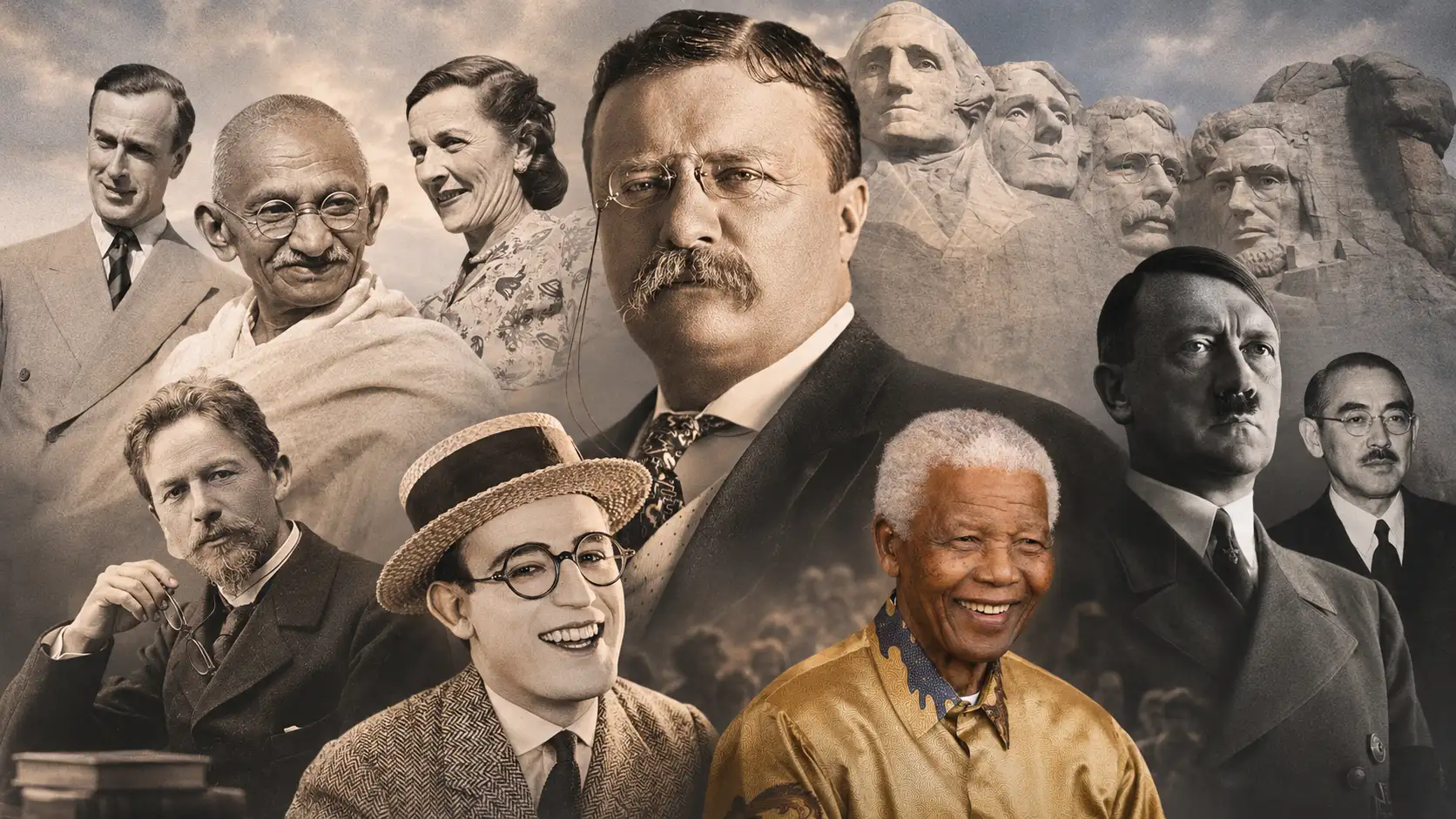
Main image: From Gandhi’s iconic round spectacles and Theodore Roosevelt’s pince-nez to the carefully controlled public image of Adolf Hitler, glasses have played a surprising role in shaping how history remembers its most influential figures. Also pictured are Nelson Mandela, Anton Chekhov and silent-film star Harold Lloyd, whose spectacles became part of their identities. Credits: AI-assisted editorial montage using historical photographs credited to Adam Cuerden / Library of Congress (Public Domain); Bundesarchiv / CC BY-SA 3.0 DE; No. 9 Army Film & Photographic Unit / Imperial War Museums (Public Domain); V. Chekhovskii (Public Domain); Daniel Blum (Public Domain); South Africa The Good News / CC BY 2.0; Dean Franklin / CC BY 2.0; and Keystone-France/Gamma-Keystone via Getty Images (Wikimedia Commons listing: Public Domain)