Donald Trump has made defending free speech a cornerstone of his administration’s dealings with Europe, yet Washington is now putting pressure on the very institutions and researchers whose job it is to question those in power. Here, Eric Heinze and Marc Tuters examine a growing transatlantic row over censorship, political interference and who really gets to decide what people can say
Who should decide what people can say online, what opinions they are allowed to express and which subjects are fair game for public discussion? Donald Trump, for one, appears to believe that Washington should have a considerable say in the matter, including when those discussions are taking place thousands of miles beyond American shores. His administration has accused European governments of censorship, challenged their laws and put pressure on officials and organisations whose activities it considers a threat to American free speech.
For a president who has made such a point of defending the right to speak freely, this presents an awkward problem. European governments have their own laws, their own elected representatives and their own ideas about what freedom of expression should mean. They also have every right to discuss American policies, however irritating the White House might find the conclusions.
The disagreement has been building for some time, largely because the internet has made it almost impossible to keep one country’s rules from affecting another. American technology companies dominate much of the world’s online conversation, while European governments have spent years trying to regulate the services those companies provide. Both sides claim to be protecting democratic rights, and both have made decisions that deserve close scrutiny.
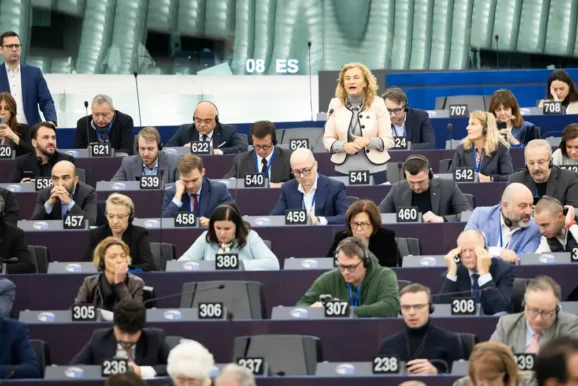
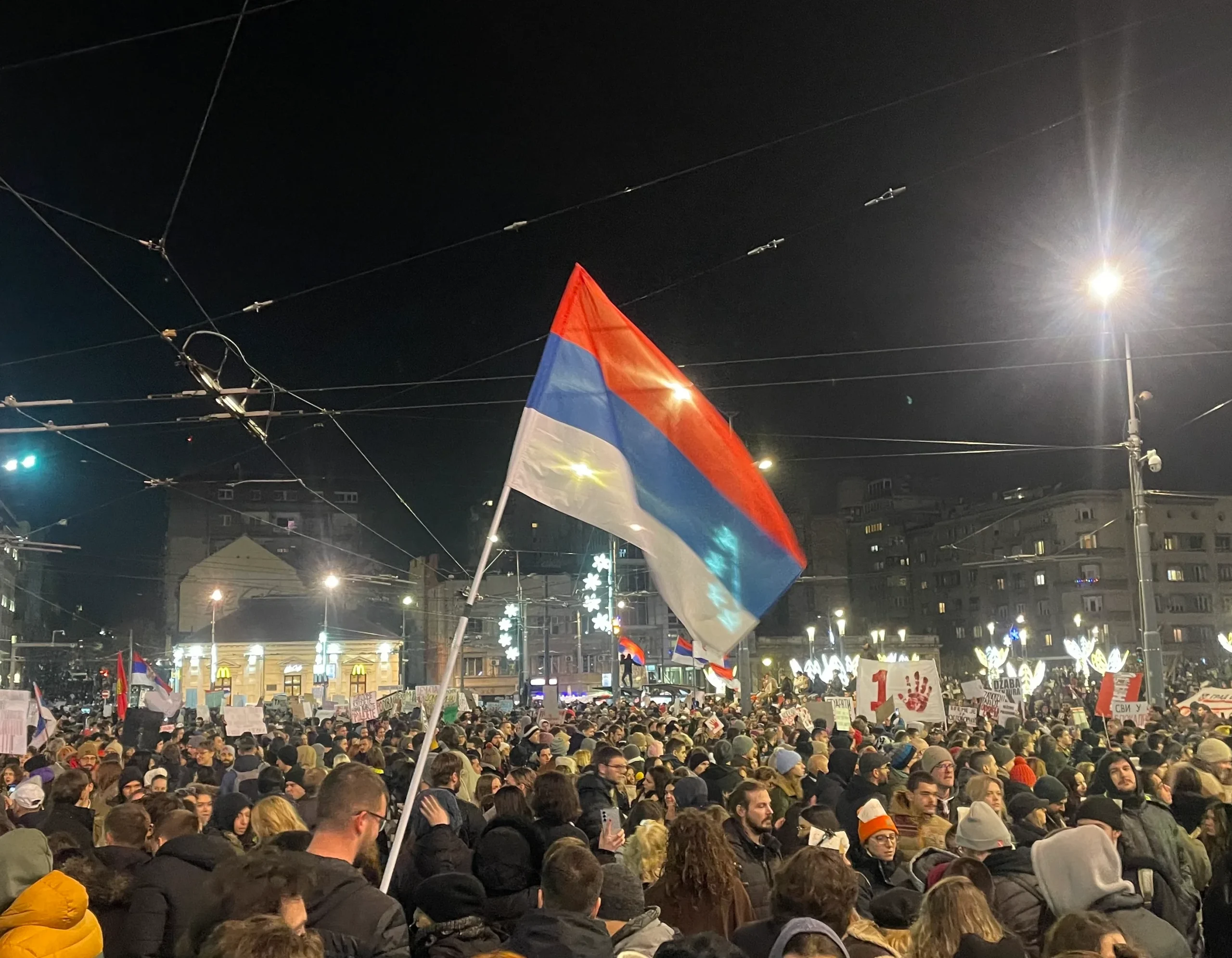
The latest row began last month over a conference in Lithuania and a question that Washington apparently found rather too close to home. Organisers had scheduled a discussion about whether the U.S. itself should be considered a source of foreign information manipulation and interference (FIMI), the kind of activity normally associated with Russia, China and Iran.
The Trump administration pressured European allies over the conference in Vilnius, objecting to a session titled USA as a FIMI Threat. It was inevitably going to provoke a reaction.
Washington’s objections quickly had consequences, with several governments and institutions distancing themselves from the event. Lithuania withdrew its official participation, Canada removed its endorsement while continuing to attend, and the European External Action Service disappeared from the list of supporters. But France maintained its backing, and the conference, #Disinfo2026, organised by the Brussels-based NGO EU DisinfoLab, went ahead.
There was nothing unreasonable about American officials objecting to the proposed comparison with countries accused of systematic information manipulation. The U.S is a democratic ally of the governments involved, and its representatives were entitled to question the fairness of the discussion, challenge the evidence or complain through diplomatic channels. Governments are perfectly capable of defending themselves when they believe they have been misrepresented.
The pressure placed on European allies nevertheless raises a question that deserves a proper answer. How freely can European institutions discuss the behaviour of a powerful foreign government when that government is sufficiently displeased to start contacting its allies and urging them to withdraw their support?
There is also a certain irony in a conference about foreign information interference finding itself at the centre of a diplomatic campaign over what its participants planned to discuss. Washington was entitled to object to the proposed session, and the organisers were entitled to examine American conduct. Such disagreements should be an ordinary feature of debate between people who live in democracies and occasionally disagree about politics.
The fact that several institutions subsequently toned down their support for the event suggests the matter was rather more complicated. Diplomacy has always involved persuasion, pressure and the occasional uncomfortable telephone call, but the freedom to hold a discussion should not depend upon whether a powerful ally happens to approve of its subject.
American concerns about European restrictions on speech are nevertheless serious, and it would be a mistake to dismiss them simply because it is the Trump administration making the argument. Europe’s attempts to regulate the internet have created genuine questions about censorship, political debate and the power of technology companies to decide what the public may read.
Most of the world’s largest social media platforms are American businesses, and they serve people living under very different legal systems. Facebook, Instagram, YouTube and X sometimes maintain different moderation arrangements across jurisdictions. Meta, for example, ended third-party fact-checking in the U.S in 2025 while retaining it in Europe. Their moderation policies can nevertheless extend across borders, meaning regulatory decisions in Europe can affect users in America.
An American posting an opinion about politics may consequently find that the platform carrying it has tightened its rules partly because of concerns about European law. The person concerned may have broken no American law, violated no constitutional principle and said nothing that would ordinarily attract official attention in the U.S.
The EU Digital Services Act (DSA) imposes obligations on online services offered to European users, including those operated by American companies. The legislation generally leaves the definition of illegal content to other European or national laws, some of which provide considerable room for interpretation about what people may legally express.
Technology companies faced with uncertain obligations and the possibility of substantial penalties have an obvious incentive to avoid trouble. Removing a disputed post can be easier and cheaper than defending it, particularly when platforms anticipate regulatory scrutiny. Lawful opinions may therefore disappear from public discussion because a platform decides that keeping them online presents an unnecessary commercial risk.
Such decisions can restrict political debate, and Europeans should be just as concerned about that possibility as Americans. Laws designed to protect people from harm need to be examined carefully when their practical effect may be to discourage companies from carrying legitimate criticism, controversial views or unpopular political arguments.
A Republican-led US House Judiciary Committee has already investigated these concerns, arguing in a 2025 report that European regulatory pressure encourages platforms to impose stricter moderation policies. The committee contends that this threatens forms of speech protected under American law, and the evidence it presents raises questions that European regulators would be wise to address.
Nobody should be particularly comfortable with the idea that a handful of enormous technology companies can decide which lawful political opinions are worth the trouble of allowing. They already exercise considerable influence over the information people encounter, and governments risk giving them even greater discretion when laws leave important questions about permissible expression unresolved.
European governments also have legitimate responsibilities towards the people who elect them, including the duty to establish rules for businesses operating within their jurisdictions. Their laws reflect political choices, legal traditions and historical experiences that differ from those of America. The fact that Washington would prefer a different approach does not automatically make the European one illegitimate.
The real difficulty is deciding what happens when those different approaches collide on platforms used by people around the world. European rules may influence speech in America, while American officials may attempt to influence how European governments regulate and debate online content. Neither side can reasonably expect its decisions to remain confined to its own territory.
Disagreements over the meaning of “disinformation” make the problem even harder, because the term can cover everything from outright fabrication to claims that are disputed or difficult to establish. Political arguments are often messy, evidence can be incomplete and people can reach different conclusions about the same events without necessarily acting dishonestly.
Governments have very good very reasons to worry about deliberate attempts to deceive the public, particularly when foreign actors seek to manipulate elections or undermine democratic institutions. The danger comes when the definition of disinformation becomes so broad that officials or platforms acquire considerable discretion to suppress legitimate disagreement.
Free-speech advocates on both sides of the Atlantic have raised precisely these concerns, and their warnings deserve attention. The freedom to challenge official accounts and question powerful institutions is especially valuable when the prevailing view turns out to be mistaken. Governments do not have an impressive historical record of always recognising such mistakes at the time.
Washington’s response to European regulation has now extended well beyond complaints about social media companies, reaching officials, researchers and organisations involved in the debate itself. That development raises questions about whether the administration’s approach to defending American expression is placing pressure on the freedoms enjoyed by people elsewhere.
The U.S has a proud constitutional tradition of protecting freedom of speech, with the First Amendment allowing forms of expression that are unlawful in European countries. Its approach reflects a longstanding belief that governments should face strict limits on their ability to restrict what people say, particularly when political opinions are involved.
Under Trump, this American understanding of free speech has become an increasingly prominent part of foreign policy. A White House memorandum issued in February 2025 ordered an investigation into whether EU and UK policies were unfairly pressuring American technology companies to restrict constitutionally protected expression.
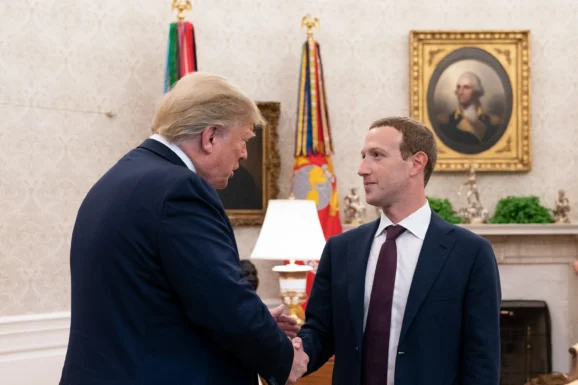
The administration’s widely criticised 2025 National Security Strategy also identified freedom of expression as an issue in America’s relations with Europe. Washington has made clear that it regards the treatment of online speech as an international concern, and European governments should expect their policies to face criticism.
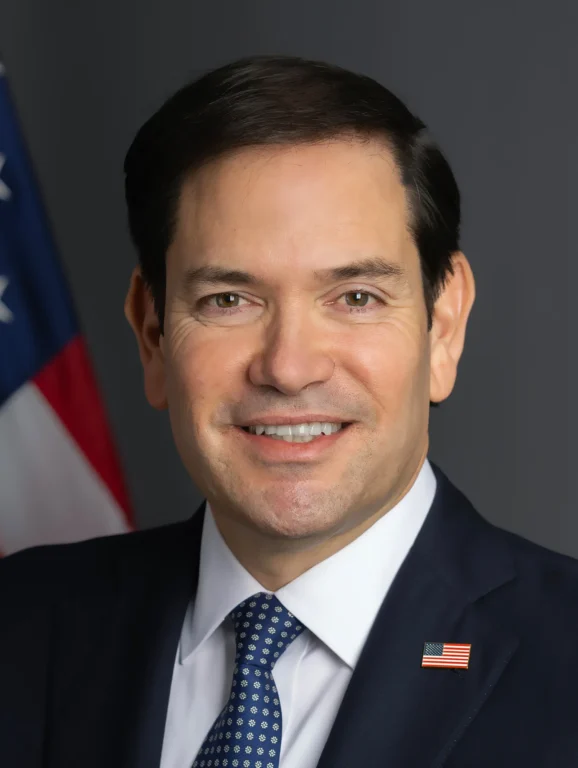
The argument becomes considerably less comfortable when American objections lead to measures against individuals involved in European democratic processes. Secretary of State Marco Rubio announced a visa restriction policy targeting foreign nationals considered responsible for censoring Americans, taking the disagreement beyond regulation and into the personal circumstances of those accused.
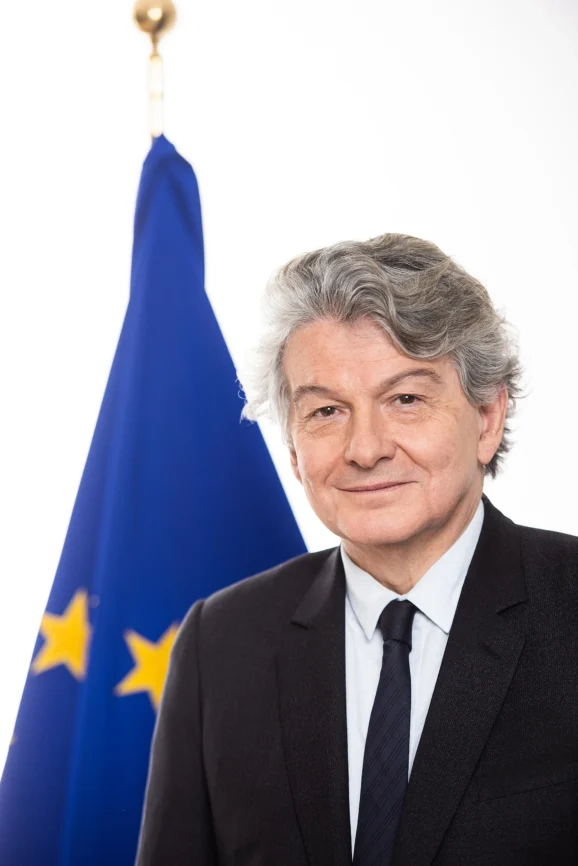
The States subsequently imposed restrictions on former European Commissioner Thierry Breton and prominent figures associated with non-governmental organisations. Whatever Washington’s objections to their activities, these were people who had been involved in the political and regulatory affairs of countries traditionally regarded as close American allies.
A European official should be able to participate in European policymaking without having to wonder whether doing so might result in personal penalties from Washington. Americans would hardly welcome the prospect of European governments imposing comparable measures on their own public officials for pursuing policies adopted through American democratic institutions.
The implications extend beyond politicians and regulators, particularly for academics whose work involves examining politically sensitive questions. Researchers studying disinformation have reported concerns about possible travel restrictions and pressure to censor their own work, raising the possibility that fear of personal consequences could influence what they choose to investigate or publish.
There is an obvious problem when people whose job is to ask uncomfortable questions begin worrying about the reaction of a foreign government. Academic freedom depends upon researchers being able to investigate evidence, challenge assumptions and publish conclusions without calculating whether their work might make them unwelcome in another country.
For an administration that places such emphasis on protecting speech from government interference, these concerns ought to be taken seriously. Washington may believe its measures are justified responses to censorship of Americans, but the possible effect on researchers and democratic institutions elsewhere deserves at least as much scrutiny as the European regulations it criticises.
An American Supreme Court decision from 2024 offers a useful way of examining the boundary between legitimate government persuasion and improper pressure. In NRA v. Vullo, the Court considered allegations that a New York state regulator had threatened businesses with sanctions unless they severed ties with the National Rifle Association, the influential American gun rights organisation.
The Court held that the NRA had plausibly alleged a violation of the First Amendment because government officials cannot use threats of regulatory punishment to suppress protected speech. Officials may criticise organisations, argue against their positions and encourage others to disagree with them, but their authority cannot be used to threaten sanctions for exercising constitutional rights.
The circumstances surrounding the Vilnius conference were materially different, and those differences matter. American diplomats had no comparable regulatory authority over the European organisations supporting the conference, and no threats of sanctions have been established. There is therefore no basis for treating the two situations as legally equivalent.
The ruling nevertheless raises a principle that should concern governments on both sides of the Atlantic. Political leaders have enormous freedom to argue their case, and rightly so, but the power attached to public office requires care when it is used to influence the lawful activities of others.
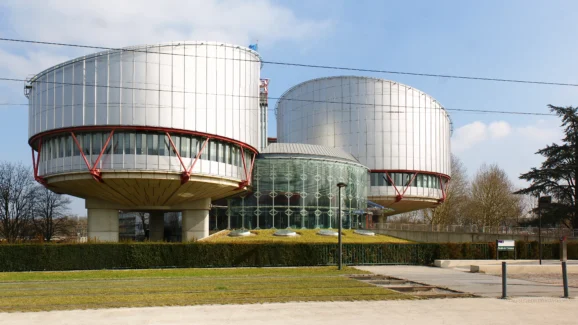
The argument over who should control expression on the internet has been going on for decades, long before Trump returned to the White House or social media became such a central part of political life. The technology may have changed beyond recognition, but governments are still struggling with much the same question about whose laws should apply when information crosses borders.
Twenty years ago, Jack Goldsmith and Tim Wu opened their book Who Controls the Internet? Illusions of a Borderless World with a dispute over French efforts to restrict the online sale of Nazi memorabilia through the American company Yahoo. French authorities wanted to limit access to material that could be offered through an American business, bringing two different legal approaches into direct conflict.
Goldsmith and Wu defended the legitimacy of countries adopting different rules governing expression, recognising that democratic societies can reach different conclusions about what the law should permit. The internet had made those disagreements more difficult to manage, but it had done nothing to erase the political and historical reasons behind them.
Germany, for example, restricts certain forms of Nazi propaganda and Holocaust denial that receive constitutional protection in the U.S. American and European democracies also take different approaches to privacy, hate speech and other issues involving the relationship between individual freedoms and the rights of others.
Those differences have developed through generations of political argument, legal decisions and sometimes painful historical experience. There is no particular reason why every democratic country should eventually adopt the American First Amendment as its own constitutional model, any more than Americans should be expected to embrace every restriction imposed by European governments.
The internet has complicated these disagreements because information now travels across borders almost instantly, frequently through platforms operated by the same small group of companies. A rule introduced in one country can influence decisions affecting millions of users in another, often without those users knowing anything about the legal considerations involved.
Finding a perfect international settlement may be unrealistic, and democratic governments will probably continue to disagree about the limits of permissible expression. They can at least recognise that their own laws and policies are open to criticism, and that other societies have legitimate reasons for reaching different conclusions.
The current confrontation between Washington and Europe has introduced another problem by extending the disagreement into the work of institutions that investigate and debate information manipulation. The organisations responsible for examining political interference are themselves becoming subjects of political pressure, adding an unwelcome complication to an already difficult argument.
The conference in Vilnius illustrates the point rather well, with a proposed discussion about American information policy prompting diplomatic objections and the withdrawal or reduction of support from several governments and institutions. The organisers had raised a contentious question, and Washington was free to challenge it. European institutions also had decisions to make about whether they wished to support the event.
The concern is whether those decisions were made independently or influenced by the prospect of displeasing a government whose political and diplomatic influence is considerable. A democracy ought to be capable of discussing the conduct of a close ally without the discussion becoming a test of diplomatic loyalty.
European governments should be prepared to defend their internet regulations, acknowledge genuine problems and reconsider measures that encourage unnecessary restrictions on lawful speech. The DSA and related laws deserve proper scrutiny, including from Americans who believe their constitutional freedoms are being affected by decisions taken in Brussels.
Washington should be equally prepared to accept that European officials, researchers and institutions have the right to investigate American conduct and reach conclusions the White House dislikes. A government that objects to being criticised may argue its case as forcefully as it wishes, but other democracies must remain free to conduct their own debates.
Freedom of expression faces its greatest test when people say things that those in authority would rather never hear. Politicians of almost every persuasion are happy enough to tolerate criticism that causes them little inconvenience. Their enthusiasm tends to wane when the criticism becomes persistent, embarrassing or comes from people they would dearly like to silence. And those with the power to make life difficult for their critics can find plenty of ways to exercise it without ever admitting that censorship was the intention.
Both America and Europe have responsibilities in this dispute, and neither should assume that invoking free speech settles the argument in its favour. European regulators need to consider whether their rules encourage excessive censorship, while American officials need to consider how their own actions affect the freedom of European institutions and researchers to carry out their work.
Respecting democratic differences means accepting that other countries will sometimes make decisions we consider mistaken, unreasonable or even offensive. And it means allowing arguments to take place, examining their evidence and leaving people free to reach conclusions without unnecessary government interference.
The internet has given governments new reasons to worry about information, influence and the behaviour of enormous technology companies. It has also given them new opportunities to influence what people see and say, sometimes well beyond the countries whose citizens elected them.
For ordinary people, the principle should be straightforward enough in that they should be free to question their governments, criticise foreign leaders, challenge official claims and take part in political discussion without undue pressure from those in authority.
And if Donald Trump genuinely wants to make the defence of free speech a defining principle of American foreign policy, he could begin by accepting that Europeans are entitled to use theirs, including when they have something to say about him.


Eric Heinze, left, is Professor of Law and Humanities at Queen Mary University of London. He writes widely on legal philosophy, free speech, justice theory and human rights, and is the author of several books including The Most Human Right: Why Free Speech is Everything (MIT Press) and Coming Clean: The Rise of Critical Theory and the Future of the Left (MIT Press).
Marc Tuters is an Assistant Professor of Media Studies at the University of Amsterdam and co-founder of the Open Intelligence Lab. His research examines online political subcultures, conspiracy theories and digital propaganda, combining computational methods with critical media theory. He is currently collaborating with Eric Heinze on the Horizon Europe-funded ANTIGONE project, which investigates the contested boundaries of free speech and information manipulation.
READ MORE: Britain’s free speech crisis: the weaponisation of complaints and the erosion of police discretion. Arrests over “offensive tweets” have left officers paralysed by the fear of oversight investigations and activists exploiting the law. What was meant to safeguard the vulnerable is now stifling free expression and eroding the discretion on which policing by consent depends, argues former police officer Phil Cleary.
Do you have news to share or expertise to contribute? The European welcomes insights from business leaders and sector specialists. Get in touch with our editorial team to find out more.
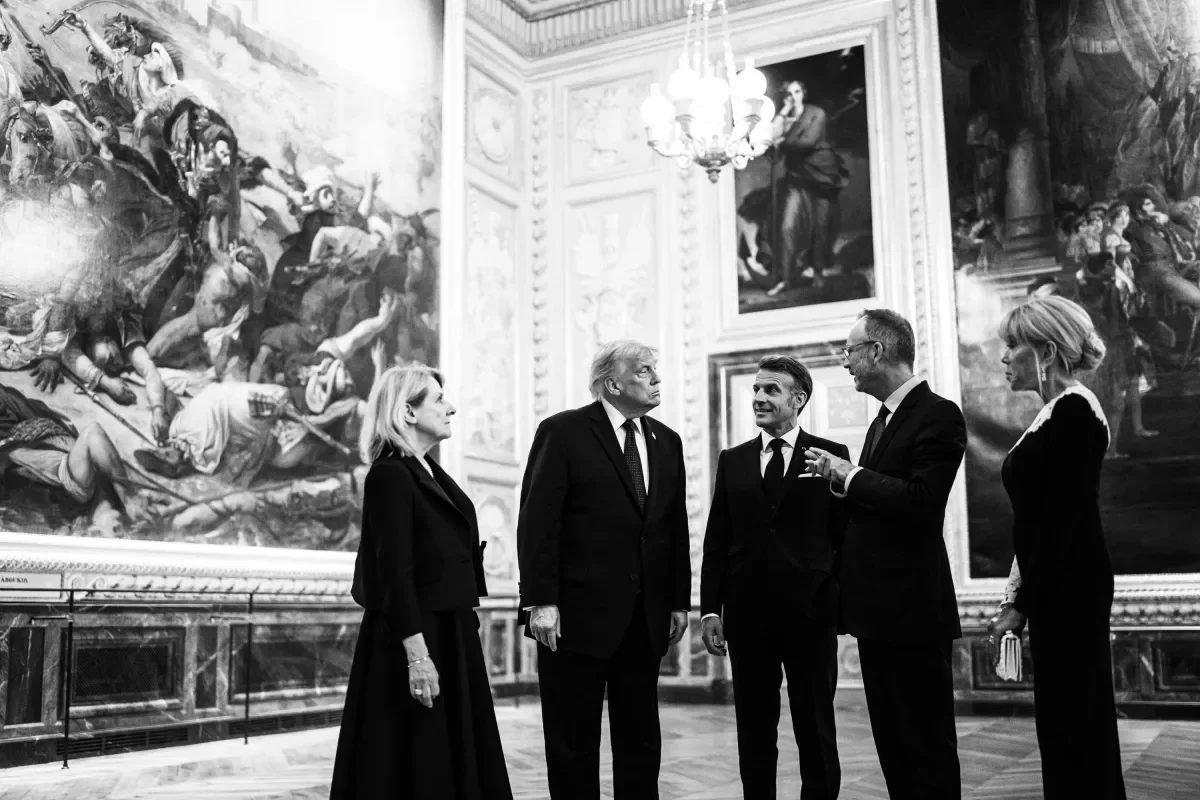
Main image: US President Donald Trump meets French President Emmanuel Macron at the Palace of Versailles on 17 June 2026, during a visit that brought the two leaders together amid growing disagreements between Washington and Europe over free speech and online regulation. Credit: Daniel Torok / Official White House Photo