Raining cats and dogs? Brits have 17 ways to describe a downpour – and some are downright bizarre

John E. Kaye
- Published
- News
From ‘mizzling’ and ‘stair rods’ to the mysterious ‘black over Bill’s mother’s’, a new dictionary analysis reveals some of Britain’s strangest weather expressions and why we love talking about the rain
It never rains but it pours when it comes to the British weather – or, more precisely, the number of ways we have to describe it.
A new study by English-learning app Glite has identified 17 rain-related words and phrases in its dictionary, including several that might leave even lifelong British speakers scratching their heads.
Among the more unusual entries are ‘mizzling’, meaning very light rain, and ‘coming down in stair rods’, an old-fashioned expression for a particularly heavy downpour.
Then there is ‘Scotch mist’, used to describe fine, persistent rain, and no fewer than four versions of the familiar observation that it is lovely weather for ducks.
The findings come from a search of Glite’s dictionary of 243,703 words, covering idioms, verbs and expressions associated with rainfall.
One of the strangest is ‘black over Bill’s mother’s’, a traditional expression used when dark clouds are gathering and rain appears imminent.
Its origins remain uncertain, although variations involving Bill or Will have been recorded across different parts of England for generations. The Oxford English Dictionary traces a version of the saying to at least 1930.
Other expressions are more straightforward. Rain might be ‘spitting’ when only a few drops are falling, ‘bucketing down’ when the heavens open, or ‘pelting’ and ‘sheeting’ when conditions become particularly unpleasant.
Glite also identified variations on familiar phrases, including ‘rain buckets’, ‘bucket down’ and the verb ‘bucket’, illustrating how several entries can describe essentially the same weather.
Vassili Philippov, its chief executive, said: “English is full of colourful expressions that we use every day without really thinking about them. From ‘bucketing down’ to ‘mizzling’, there are so many different ways to describe something as ordinary as rain.”
And there may be a reason why British people are so fond of discussing the weather in the first place.
Stephanie Davies, the founder of workplace training and behavioural consultancy Laughology, said talking about rain provided an easy way to start conversations with strangers without straying into potentially awkward territory.
“The weather is a handy opening with people we don’t know well: neighbours, fellow commuters, or new colleagues. It’s especially useful when we haven’t yet worked out what someone likes talking about,” she said.
“It’s a shared experience that usually doesn’t require anyone to reveal something personal. Asking about someone’s family, job, or weekend can accidentally land somewhere sensitive. The rain generally doesn’t require an explanation of your divorce.”
The 17 ways Britons describe rain
From a little ‘mizzle’ to a downpour coming down in ‘stair rods’, here are the 17 rain-related words and expressions identified in Glite’s dictionary – including several variations on familiar sayings.
- Come down
- Rain buckets
- Come down heavily
- Bucket down
- Rain cats and dogs
- Lovely weather for ducks
- Weather for ducks
- Scotch mist
- Nice weather for ducks
- Fine weather for ducks
- Bucket (verb)
- Black over Bill’s mother’s
- Come down in stair rods
- Pelt (verb)
- Spit (verb)
- Mizzle (verb)
- Sheet (verb)
READ MORE: US researchers develop storm-resistant drone to improve extreme weather forecasting. U.S researchers have developed the world’s first drone capable of flying directly into dangerous weather systems to collect real-time atmospheric data.
Do you have news to share or expertise to contribute? The European welcomes insights from business leaders and sector specialists. Get in touch with our editorial team to find out more.
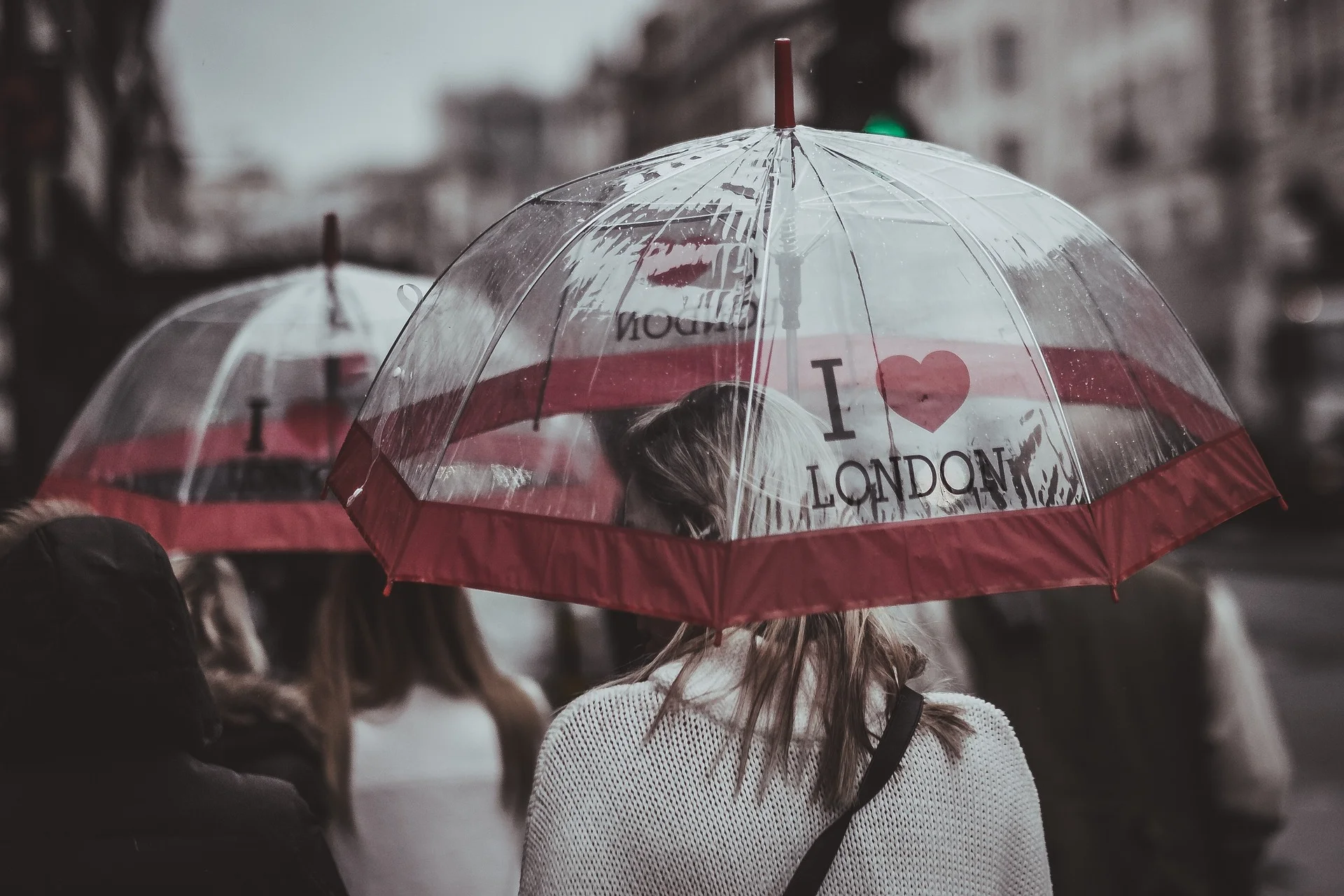
Main image: From ‘mizzling’ to ‘raining cats and dogs’, Brits have 17 different ways to describe wet weather, according to a new dictionary analysis. Credit: StockSnap / Pixabay
TOP STORIES
-
 Raining cats and dogs? Brits have 17 ways to describe a downpour – and some are downright bizarre
-
Rare jewellery returns to Japan after 50 years as German museum lends historic treasures to Kyoto
-
Dan Brown drops tantalising hint about where his next thriller could be set
-
Anthropic warns AI could pose ‘existential risks’ as it files for stock market flotation
-
North Korean agents are infiltrating Western businesses by posing as employees, security chief warns
-
Route 66 turns 100 next month – and there’s never been a better excuse for Europeans to hit the road
-
Serbia erupts in celebration as student protesters end Vučić’s 14-year grip on power
-
Two killed as Storm Boelo batters Britain with 85mph winds and leaves 90,000 homes without power
-
Man arrested on suspicion of arson after fire destroys Hitler’s Eagle’s Nest retreat
-
Britain faces higher winter energy prices as reliance on European electricity imports grows
-
Andy Burnham to make special Gogglebox appearance for Stand Up To Cancer
-
WPSL Golf targets £120 million valuation as billionaire-backed corporate deals and other commercial deals drive explosive global growth
-
Hackers could bring Britain’s essential services to a standstill, security chief warns after global website shutdowns
-
We’re talking to almost twice as many people on the phone as a decade ago, study finds
-
TalkTalk sells majority stake in Telecom Acquisitions as founder Nigel Barnett regains control
-
Company closures soar ahead of tax rises as new Budget looms
-
An Italian affair – Stanley Johnson takes London’s society set on the Silk Road
-
Himalayan mountainside moved 40cm before avalanche killed 1,451 in Nepal, scientists reveal
-
Scientists and engineers quitting jobs as AI changes roles ‘beyond recognition’, study finds
-
UK profit warnings hit near two-year high as businesses struggle with rising costs
-
Microsoft pulls out of major UK AI data centre project amid power grid delays
-
Russia takes control of more European corporate assets amid Ukraine tensions
-
EU leaders resist calls to delay carbon rules as energy costs soar
-
‘A big step forward’ – PM Andy Burnham hails plans for Great British Railways HQ in Derby
-
UK economy grows just 0.1 per cent as construction falls and services stall