
Three centuries before Sir David Attenborough was born, pioneering naturalist John Aubrey was documenting disappearing forests, declining wildlife and the devastating effects of environmental destruction. Now, 400 years after his birth, his groundbreaking work has been published in full for the first time, writes historian Louise Ryland-Epton
Long before Sir David Attenborough became the world’s most famous naturalist, another Englishman was recording the destruction of Britain’s forests, the disappearance of its wildlife and the devastating consequences for people who depended on the land.
His name was John Aubrey, a 17th-century scholar whose extraordinary observations of the natural world anticipated many of the environmental concerns familiar to us today.
Born in the hamlet of Easton Piercy, near Chippenham in Wiltshire, in 1626, almost exactly 300 years before Attenborough, Aubrey began documenting local plants, animals and landscapes at the age of 30. Over the following three decades, he recorded how forests were being cleared, animal populations were declining and centuries-old relationships between people and nature were being destroyed.
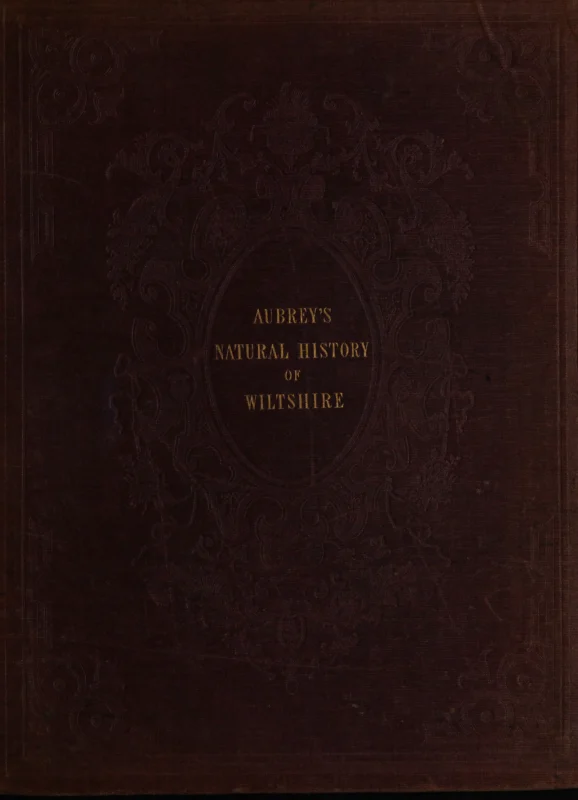
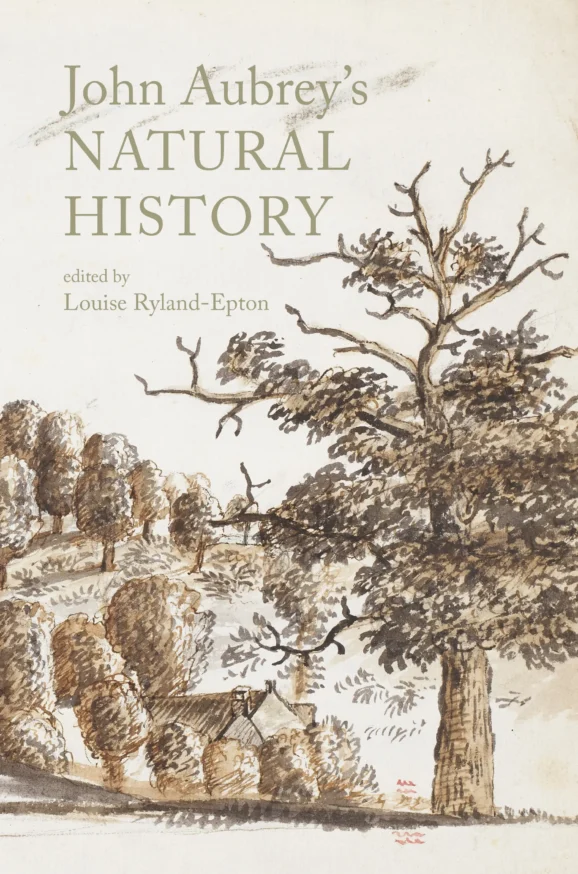
His pioneering study, Natural History, was never published during his lifetime. An incomplete version appeared in 1847, omitting much of his original work. Now, to mark the 400th anniversary of his birth, the complete manuscript has been published for the first time as John Aubrey’s Natural History, revealing the remarkable breadth of his scientific observations.
Aubrey had been fascinated by the natural world from his youth and in 1656 began making notes on plant and animal species he spotted while travelling between family estates in Wiltshire.
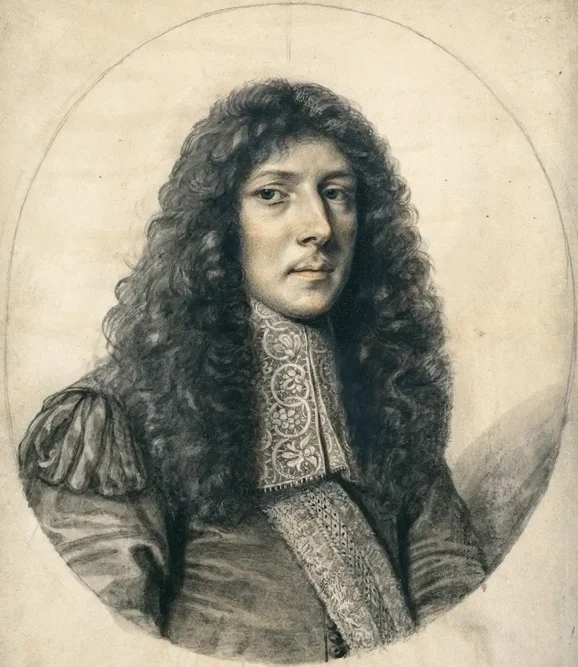
He also travelled regularly to Oxford and London, and sometimes further afield to Wales, Herefordshire, northern England, and even Ireland and the Continent; and he compared what he saw in Wiltshire with nature elsewhere.
He filled in what he did not know by reading widely, speaking and corresponding with like-minded individuals including John Ray and Robert Plot, and local people, such as farmers, gamekeepers and apothecaries.
Aubrey noted that before 1635, a stag could have ranged through a corridor of continuous woodland with barely a break from Braydon Forest in the north of Wiltshire, south to the New Forest in Hampshire through Pewsham, Blackmore, Gillingham, Cranborne Chase and Holt Forest.
By the time he was writing, most of the wooded corridor had gone.
The reason for this loss was disafforestation: the legal process by which James I, and later Charles I, stripped areas of their forest status, extinguished the common rights of those who had depended on them, and handed the land, in Aubrey’s telling, to favoured courtiers.
The clearance of trees followed. Pewsham was stripped of its forest status and handed over to the Duke of Buckingham or his brother the Earl of Anglesey.
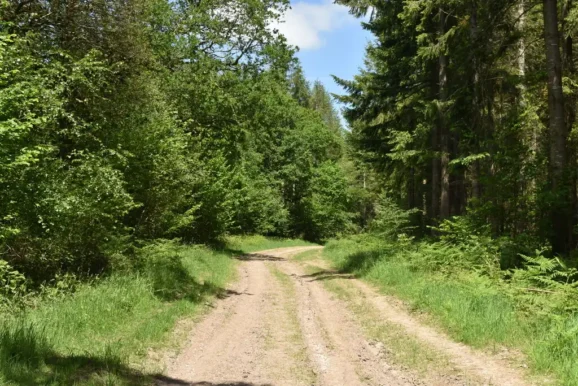
The loss of what had been common land deprived families in Chippenham of an important grazing area for livestock and brought hardship to many. The poor marked its passing in verse:
When Chipnam stood in Pewsham’s Wood
Before it was destroy’d
A cow might have gone for a groat a year
But now it is deny’d
Aubrey wrote, ‘The metre is lamentable, but the cry of the poor was more lamentable’. He understood that human activity was changing the landscape and not for the better.
Grovely Forest, the great hunting ground of the Earls of Pembroke, ran along the ridge above the Wylye valley; it was felled as late as 1683/4, the Earl having been persuaded by the Attorney General, Sir Robert Sawyer, against the better judgement of almost everyone else.

The destruction of trees had profound effects on local people and wildlife across the county, and Aubrey described the decline in pine marten numbers in north Wiltshire, the near extinction of the red squirrel there, and the collapse of deer populations, all of which he associated with the loss of woodland.
His Natural History, a survey of Wiltshire wildlife begun in 1656, was created over more than three decades. In 1691, the Royal Society, recognising the scientific importance of Aubrey’s Natural History, paid for his manuscript notes to be copied; this ‘fair copy’ was added to its library, where it remained until this year, when it was lent to Chippenham Museum for several months for an exhibition of the life and work of its author.
Aubrey died in 1697 without the work being published, and although a version was eventually published in 1847 (and reprinted in 1969), its editor cut so much of Aubrey’s text that the significance of the original was lost.
The complete book was finally published in September 2026, in the 400th anniversary year of Aubrey’s birth, restoring what its Victorian editor had set aside. The Natural History is a remarkable ecological baseline for Wiltshire and the wider region. The plant inventory records approximately 150 distinct species, precisely located across the county and beyond – herbs, wildflowers, ferns, fungi, shrubs and trees.
Aubrey’s Natural History considers the county’s flora and fauna, but also its air, springs, soils, minerals and people, as well as the world they created, including Wiltshire’s economy, culture and society.

The text is a mixture of precise observation, unresolved queries, embedded medicinal remedies, folklore and personal reminiscence that resists easy summary. But read Aubrey’s chapter on plants carefully, and it reveals its author as a figure of genuine significance in the development of British botanical science.
On trees, Aubrey noted both where tree species were and where they were not. He recorded differences in species characteristics across locations and noted that some preferred certain soil types.
He noted singular examples and oddities and conjectured close kinship between species. His treatment of elms perfectly demonstrates his method. He had noticed something that no one else appears to have recorded up to that point: he had never seen an elm growing spontaneously in a wood, as oaks, ashes and beeches did.
From this single observation, he suspected elm trees were not indigenous and built a careful argument, concluding, after a process of elimination, that elms had been introduced to Britain by the Romans.
The Natural History is organised into two parts. The first moves from the inanimate foundations of air, springs, rivers, soils, minerals and stones, through formed stones and the history of the Earth, into living things, and culminates in human beings and their health.
The second concentrates on what people made of this environment: agriculture, the downs, wool, rents, clothing, fairs, sport, the law, architecture, and so on. The hinge between the parts is the human body, the point at which air and soil worked their way inward. Each chapter illuminates the others. Aubrey did not compile a catalogue of Wiltshire’s natural world; rather, he was describing a system.
The engine of that system was environmental determinism. The geological substrate and air, for example, produced particular plants; those plants fed animals and people; and the properties of soil and air, entering the body through food, milk and the very air breathed, shaped human health, temperament, behaviour and even speech.
The environment shaped people, and people also shaped the environment. In about 1666 Edmund Waller put a question to the Royal Society to which Aubrey responded: whether Salisbury Plain had always been a grassland.
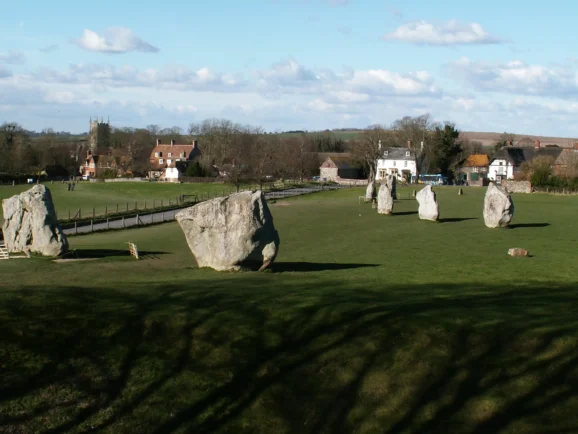
Walter Charleton reported local tradition that the whole plain from Stonehenge to Amesbury had been a forest full of great trees within the previous two hundred years. Aubrey then reached for a comparison drawn from the other side of the Atlantic.
In Jamaica and Virginia, he had learned from Mr Watson of Yarmouth, ‘the natives did burn down great woods, to cultivate the soil with maize, and potato-roots, which plains were there made by firing the woods to sow corn’.
They do call these plains, savannas.’ His conclusion was a question, as it sometimes was: ‘But Salisbury plains etc might be made long time ago, after this manner, and for the same reason?’
In time of old, he reasoned, when ‘this whole nation was but a great forest,’ why should the Romans not have burned the beeches from the downs to make pasture and corn ground? Thus, one of the most quintessential landscapes in Wiltshire might have been an artefact of human labour.
Running through Aubrey’s text was an unease that a modern reader will recognise. Places had changed and were changing. Landscapes had been deforested, grasslands enclosed, marshland drained; species had grown scarce or vanished.
Elsewhere Aubrey recorded monuments and buildings that had been damaged or destroyed; and local practices which were dying out. Aubrey was hopeful about improvement and genuinely enthusiastic about innovation. But he did not assume that change was for the good, and he set down what was being lost.
But not everything was lost. In the old hedges marking the boundary between the lands of St Mary’s Priory at Kington St Michael and the Abbot of Glastonbury’s west field, Aubrey found ‘a great number of barberry-trees, which (I suppose) the nuns made use of for confections… they taught the young ladies that were educated there such arts.’
The hedge outlived the priory it once enclosed by a century and a half after its dissolution.
Through the 18th and 19th centuries, barberry was rooted out of hedgerows across England once it was found to carry wheat stem rust, and by the twentieth century it had become a genuinely rare plant in Britain. By the 1980s, Kington St Michael was one of only a handful of Wiltshire sites where it still grew. It is still growing in the ancient boundary hedge of the Priory today.
John Aubrey’s Natural History is the first complete publication of Memoires of Naturall Remarques in the County of Wilts, derived from the fair copy prepared for the Royal Society in 1691, which until 19 September was on display in Chippenham Museum’s exhibition, Wiltshire and the World: John Aubrey and the Quest for Knowledge.
The full transcript retains Aubrey’s spelling, his original drawings and illustrations, and boasts a detailed index. It replaces the misleading partial edition of 1847 by John Britton, and reveals for the first time the enormous range of Aubrey’s interests, as scientist, naturalist, topographer and much more, extending far beyond Wiltshire.

Louise Ryland-Epton is a historian and editor specialising in early modern social history and local history research. Her interest in John Aubrey began while researching parish histories in north Wiltshire for the Victoria County History. She subsequently held a visiting fellowship at Oxford’s Bodleian Library to support her research and co-curated the exhibition Wiltshire and the World. Her latest work, John Aubrey’s Natural History, is published by Hobnob Press and is available online and in all good bookstores.
READ MORE: Scientists develop new chemicals to tackle devastating oil spills at sea. Researchers in Italy and Azerbaijan have completed initial tests on two chemical treatments designed to contain oil slicks and remove oil from contaminated water, in a project backed by Malta-based energy trader Alkagesta.
Do you have news to share or expertise to contribute? The European welcomes insights from business leaders and sector specialists. Get in touch with our editorial team to find out more.
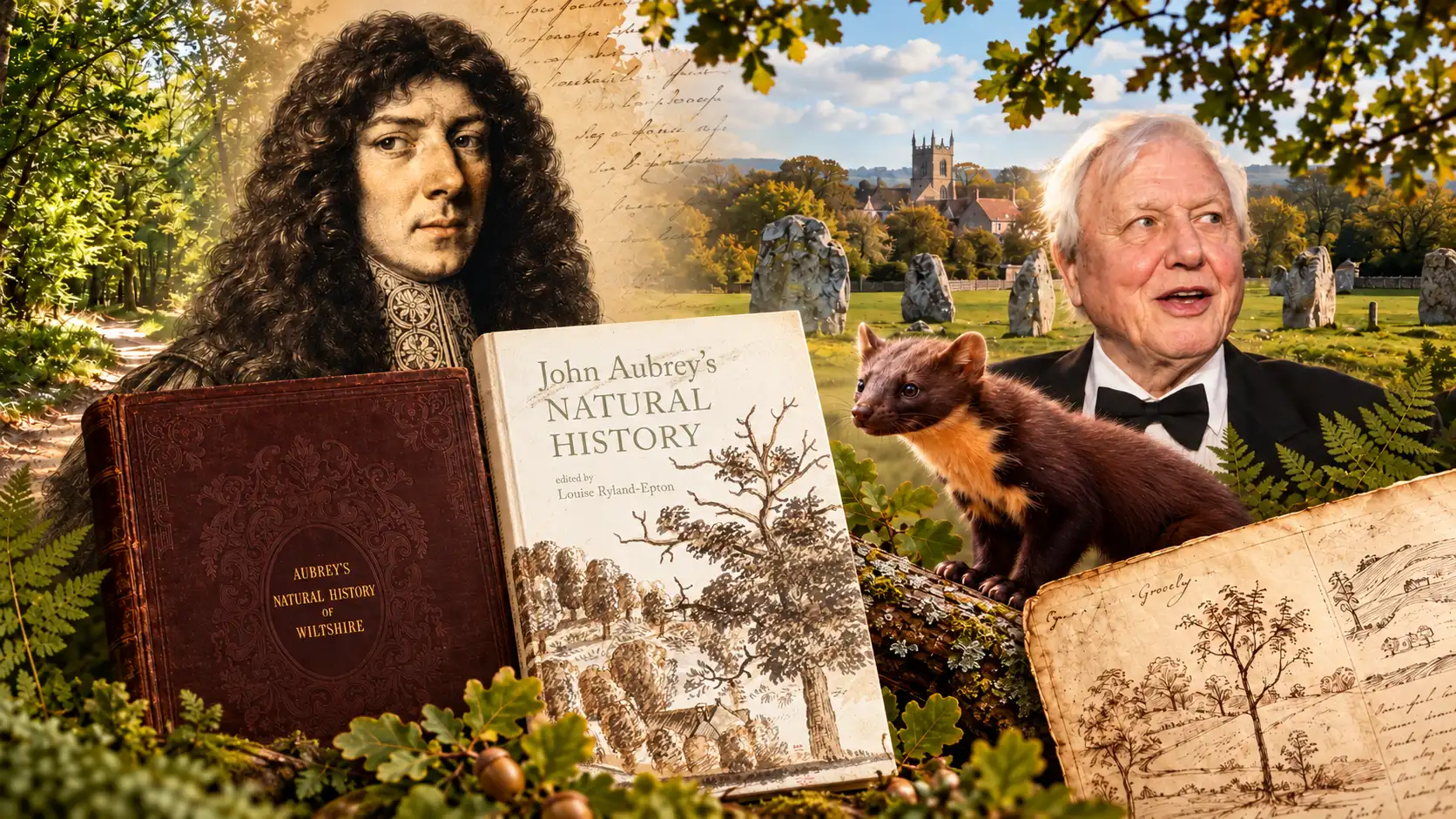
Main image: Four centuries of natural history brought together in a specially created illustration featuring 17th-century naturalist John Aubrey and Sir David Attenborough, alongside Wiltshire’s ancient Avebury stone circle, a pine marten and the county’s woodlands. At the centre are the incomplete 1847 edition of Aubrey’s Natural History of Wiltshire and the newly published complete edition, John Aubrey’s Natural History, edited by Louise Ryland-Epton. The composite celebrates the remarkable parallels between two naturalists separated by 300 years, both concerned with the destruction of the natural world and the disappearance of Britain’s wildlife. Credit: Wikimedia Commons contributors, Caroline Legg, David Martin, Danielwilke1 and Louise Ryland-Epton (The European)