Their’s something wrong with how we was taught grammar. Grammar expert David Lott, author of Organic Grammar, explains why generations of schoolchildren have struggled with the rules – and how a radical rethink of grammar teaching could help put things write
Children spend years at school learning how to read, write and understand the English language. They are taught nouns, verbs, adjectives and a host of grammatical rules, yet many still struggle to construct a sentence or make sense of what they read. It raises an important question about whether the way we teach grammar is part of the problem.
Lack of literacy is not just a problem within English-speaking countries, of course; it is a global problem and one that causes many, many people to fail to achieve their potential.
The Organisation for Economic Co-operation and Development (OECD), an international body that researches and compares economic and social conditions across countries, conducts a major study of education standards worldwide.
Known as the Programme for International Student Assessment (PISA), it tests 15-year-olds on their reading, mathematics and science skills, measuring how well they can apply what they have learnt to everyday situations. The results allow countries to compare their education systems and track changes in pupils’ abilities over time.
In its 2025 literacy assessment, China ranked highest with a score of 597. England achieved a score of 497, Scotland 488, Northern Ireland 482 and Wales 459. The U.S scored 490, as did Canada.
When one drills down into how these scores are achieved, it becomes apparent that a significant proportion of the population in each country is barely literate. In England, the PISA data shows that 19 per cent of pupils failed to achieve Level 2 literacy; this indicates that almost one-in-five 15-year-olds lack the functional literacy skills needed to navigate daily life in the modern world.
It is also interesting that England’s PISA score is largely unchanged from its 2003 level. Georgia Gould, the schools minister for England, stated: “While we are doing well comparatively to other countries, we are also plateauing.” According to the World Population Review, most countries are described as having a literacy rate of 99 per cent, but all that means is that “one can write a simple statement about oneself”.
In our lives, we can often find ourselves struggling with text that is substandard in its literacy. Here is an example from an official website:
“Please note you may receive this email if you are on extended sick leave, please disregard.”
It would have been better to say:
“Please note that you may receive this email even if you are on extended sick leave; in that case, please disregard it.”
Here is another example of poor literacy:
“I am sending this chart to the team now; any missing items please bare with”
Obviously, this is an informal text, which is often acceptable between close colleagues, particularly when time is short, but it shows a serious lapse. The word bare means “uncovered”, whereas what the writer meant to say was bear with, meaning “put up with”.
The adjective “bare” has been confused with the phrasal verb “bear with” simply because the two words (“bare” and “bear”) sound the same.
There is clearly a serious literacy problem in the UK and in much of the world.
What are the possible solutions?
The PISA report itself recommends the following interventions:
· Explicitly instructing students on how to critically question, verify and interpret evidence generated by AI rather than letting it think for them;
· Teaching students how to cross-examine multiple pieces of information from multiple sources, thus enabling them to differentiate fact from opinion;
· Increasing investment in dedicated book clubs and libraries to enable students to rebuild their stamina for deep reading of long-form content;
· Increasing funding for under-resourced schools, given that poorer socioeconomic groups tend to have lower literacy levels;
· Reducing teacher shortages so that teachers can better support lower-performing cohorts.
As can be seen, these are predominantly cultural and resourcing changes.
Alternatively, some organisations focus on content and curricular initiatives. The Department for Education, for example, produced The Writing Framework in 2025, in which it recommends the primacy of sentences in relation to literacy improvement. It states:
“… the best way to teach pupils to write is by teaching them to master sentences. Sentence-level teaching, which focuses on pupils’ understanding about how to construct sentences, should be a key component of any writing curriculum. … Once pupils have a good understanding of how to write a sentence, paragraphs can be composed with much greater ease.”
Later in the same document, the authors state:
“… a sentence consists of a subject (such as a noun or pronoun) and a verb (action, occurrence or state of being). A subject and a verb lie at the heart of any sentence. All the other word classes add additional information. … It is worth emphasising that grammar teaching will improve writing only if pupils apply what they have been taught to their writing.”
Further on, it states: “foundational knowledge about single-clauses sentences helps pupils to control multi-clause sentences, should they choose to add more clauses (or phrases).
‘Jack, who was at the top of the beanstalk, was hoping to find the gold, but he ran away when he saw a terrifying giant.’
Pupils’ knowledge of the grammar of this sentence (fronted adverbial, relative clause, expanded noun phrase, and so on) will be both implicit from what they have learned as native speakers (and readers) and explicit from what they have been taught.”
It is a little worrying that the authors have described “Jack” in the quoted sentence as a fronted adverbial when it is, in fact, the subject, but there we are!
So, we are talking about sentences, or sentence grammar, as a tool for developing writing, but why only writing?
Could sentence grammar not be equally useful in enabling us to analyse and better understand sentences when we are reading, particularly when we are not immediately sure how to interpret a particular sentence or sentences?
And then there is another question: what approach to grammar should we use?
In that context, it is worth looking at what David Crystal says in the third edition of The Cambridge Encyclopedia of the English Language, in a section called “The Paradox of Grammar”. According to Crystal, the paradox of grammar is that while grammar is fundamental, dynamic, relevant and real – sitting at the very core of communication and the heart of language – its actual study and teaching are widely perceived as complex, dry and boring. Classroom instruction often reduces it to sterile definitions (such as “a noun is a naming word”) that create an unnecessary disconnect for students.
He says: “There is no gainsaying the fact that the relationships of grammar are abstract and at times intricate, and its terminology imposing and at times abstruse.
“The accessibility of geography or chemistry is the result of a long pedagogical tradition, in which the selection and grading of information has been tried and tested. Modern approaches to English grammar are not yet in that position”.
Here is the crux of the issue. Grammar can help with understanding, but it is difficult to use. We need to make grammar much easier to understand and easier to use.
That is precisely what I have tried to do in my new book, Organic Grammar: A new look at British English, I have sought to show that there is a sentence system (of subjects, objects, and so on) and a word system (of nouns, verbs, adjectives, and so on), and that the two systems are distinct but also work closely in conjunction with each other.
I have taken on board the fact that sentence grammar needs to be explained as one complete system rather than fragmented across other topics, just as the word system needs to be explained as one complete system.
The explanation of the sentence system needs to start with a fundamental distinction, which I define as a contrast between linear sentences and loop-back sentences. A linear sentence is one in which each sentence part leads on to the next, hence its linearity. A loop-back sentence is one in which the latter part of the sentence describes an earlier part. Here is an example of a linear sentence and a loop-back sentence:
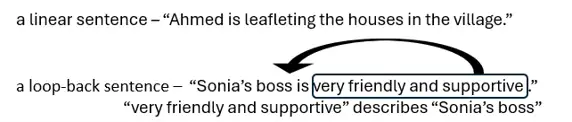
Both types of sentence have traditionally been treated as not requiring contrasting nomenclature – wrongly! The reason linear sentences and loop-back sentences have been treated as largely identical is, I think, because of the notion of the predicate. The predicate is anything that follows the subject.
It has been such a widely accepted notion that, even when it is not specifically discussed in a grammar book, few, if any, have apparently ever felt the need to distinguish between these two sentence types.
In the context of that fundamental distinction, we need to be able to understand the component parts of every sentence. The established terms for sentence parts range from adequate to deeply opaque. That needs solving. Two terms, subject and object, are “okay”.
The subject is the topic of the sentence; the object is the focus of an action (as in “I picked up the phone”, where “the phone” is the object) or a state (as in “I enjoy thinking”, where “thinking” is the object).
The remaining terms are currently verbs, complements, adverbials and indirect objects.
No wonder many people struggle with grammar.
I took the liberty of replacing these with the terms verbal or verbal part (to distinguish the sentence-system verbal from the word-system verb). I replaced complement with describer, adverbial with clarifier and indirect object with receiver.
The intention here has been to make the terminology straightforward and clear rather than confusing and uninformative.
For example, the traditional grammatical term complement, which simply means something that completes another element, is replaced with describer to show explicitly how a describer describes a subject or an object. (“He is worried” and “They elected him president” both contain describers; “worried” describes the subject “he”, while “president” describes the object “him”.)
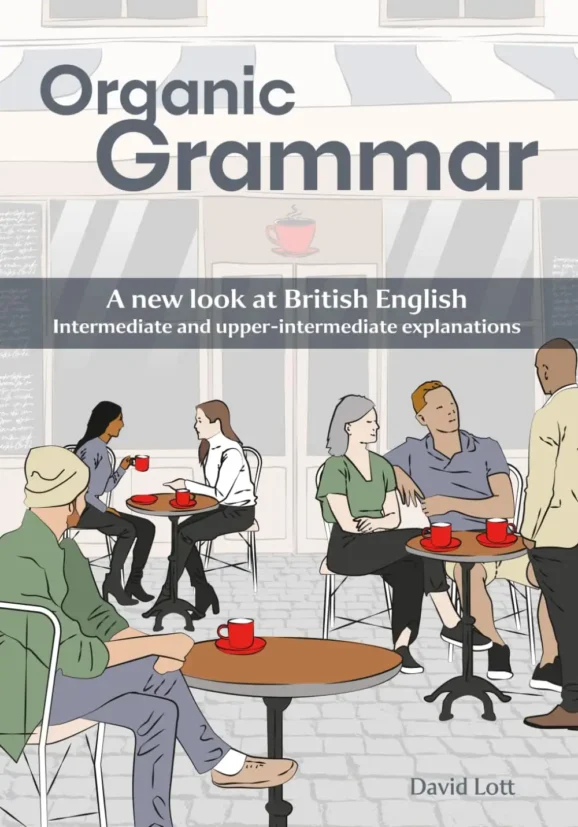
That is just a taste of all the new ideas that appear in Organic Grammar, but I hope it strikes a chord and prompts renewed interest in the wonderful world of grammar.
If some people still feel inclined to reject the assertion that grammar is a primary contributor to literacy, they might consider this:
Can you explain the difference in meaning between these two sentences?
“The report leading analysts published yesterday caused concern worldwide.”
“The report leading analysts to panic yesterday caused concern worldwide.”
In the first sentence, the report was published by leading analysts – the analysts created the report. In the second, the report caused analysts to panic – the analysts were deeply troubled by the report.
If you figured that out, you are pretty literate and can give yourself a pat on the back!

David Lott is a British author and former publishing editor and manager whose work explores language, literacy, grammar and creative writing. Born in Finland, he spent his early childhood in India before moving to England, where he attended school in Dorset and later studied English at university. Following a career in publishing and a period living in Italy, he turned to writing, producing poetry, children’s stories and works examining literacy and grammar. His latest book, Organic Grammar, challenges conventional approaches to grammar and proposes a clearer, more accessible system for understanding how sentences work. It is available to purchase on Amazon and in all good bookstores.
READ MORE: A close shave with evolution – why humans are so hung up on hair. Humans have evolved an extraordinary patchwork of body hair, yet we spend much of our lives cutting, plucking and shaving it away. A fascinating new book, Anxious and Hairy, explores the science and cultural anxieties behind our curious relationship with hair, although some evolutionary mysteries remain unresolved, says Oxford zoologist Tim Coulson.
Do you have news to share or expertise to contribute? The European welcomes insights from business leaders and sector specialists. Get in touch with our editorial team to find out more.
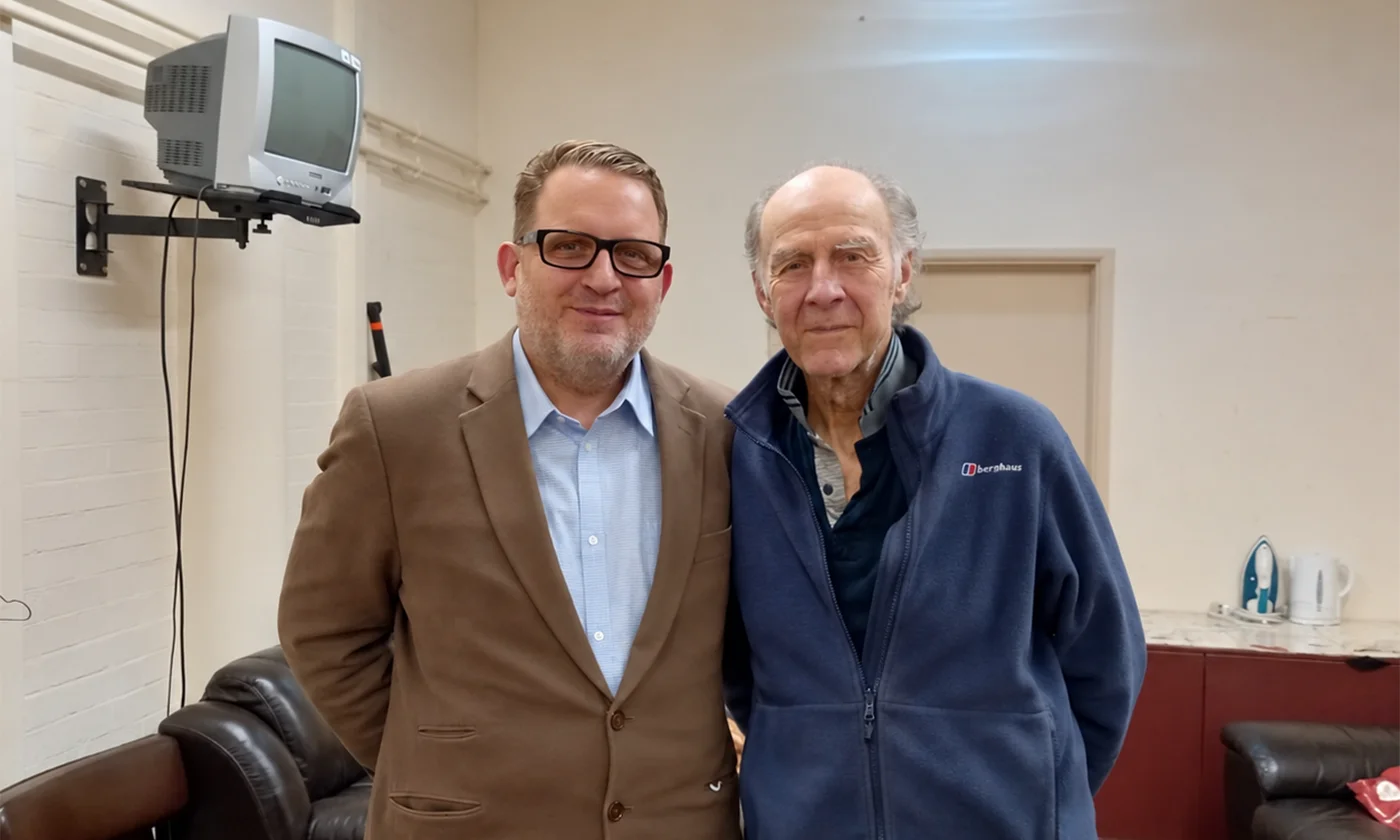
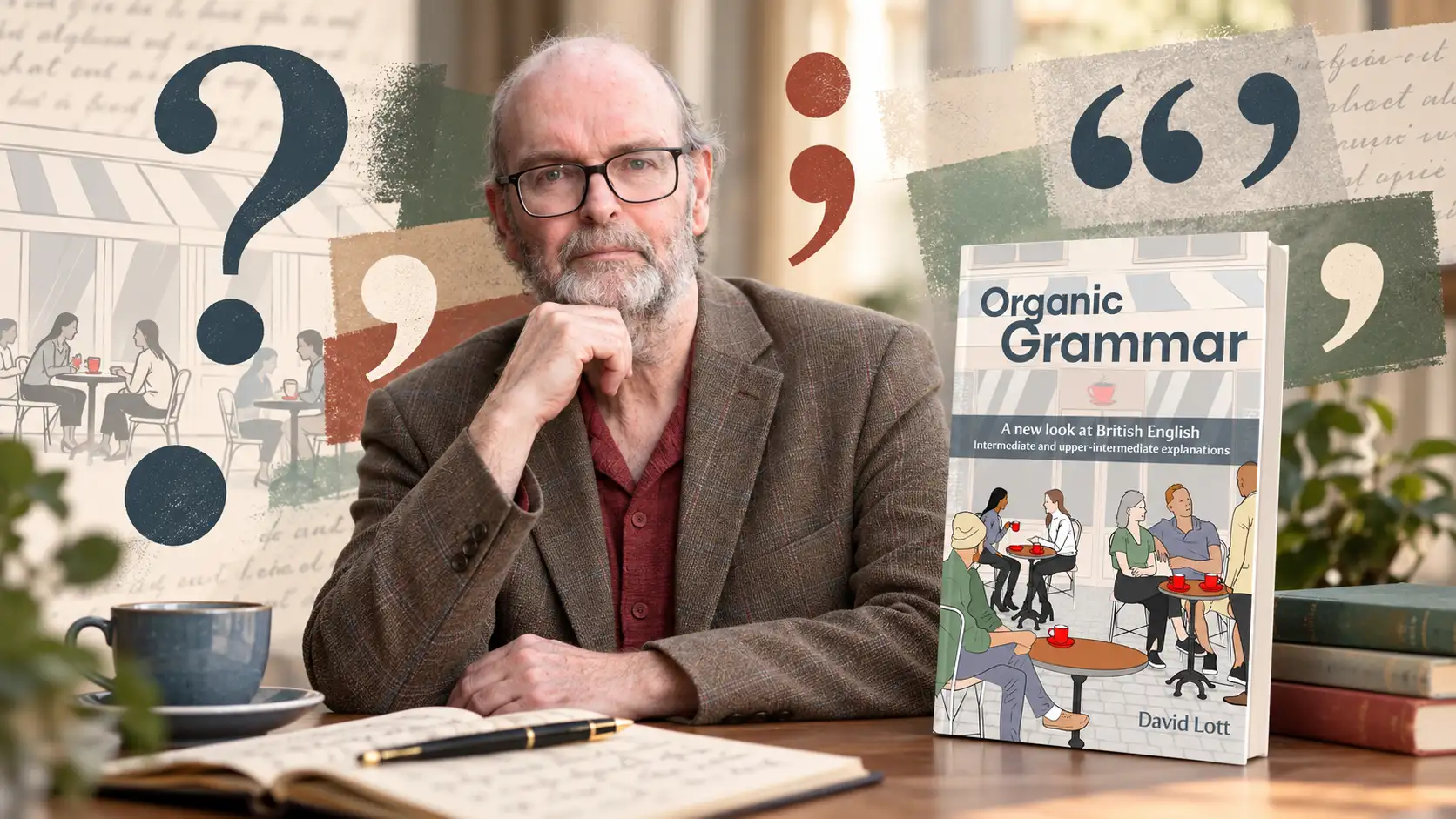
Main image: Grammar expert David Lott, author of Organic Grammar, believes the way children are taught to read and write needs a radical rethink. Credit: The European / The Double Agents