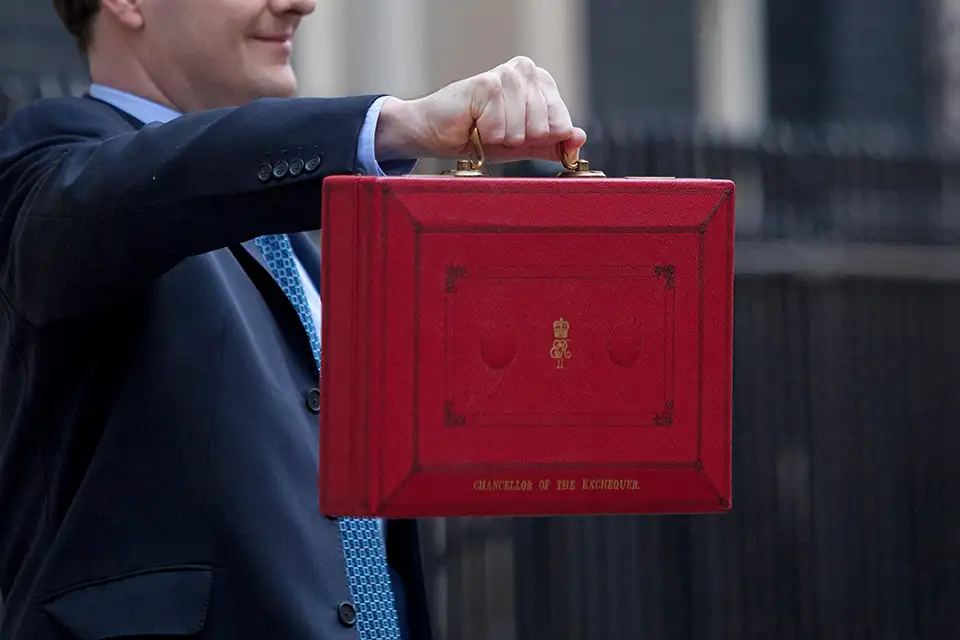
The Autumn Budget has offered UK households welcome help with bills but, according to Matthew Kayne, the Chancellor has missed an opportunity to address the extra costs and inadequate services that leave millions of disabled people struggling for independence. A dedicated NHS wheelchair fund, better social care and targeted financial support should be priorities, he says
If I had been standing at the dispatch box on October 28 unveiling the autumn Budget, I would have asked how much Britain could save in the long term by helping disabled people live healthier, more independent and fulfilling lives.
For while the latest Budget provides some worthwhile short-term relief – such as the announced £100 Household Energy Payment for eligible English households in council tax bands A to D from January 2027 – it misses an important opportunity to present a coherent, disability-focused programme with specific funding, measurable standards and clear accountability.
According to the Department for Work and Pensions’ Family Resources Survey 2024–25, approximately 16.7 million people in the UK are disabled, representing around a quarter of the population. We are part of Britain’s workforce, communities, families and economy, and our needs should inform the major economic decisions.
The most serious gaps in the recent Budget, from my perspective, concern working-age adult social care, NHS wheelchair provision and targeted support for disability-related costs. My central criticism is that it doesn’t set out a sufficiently detailed, funded plan to tackle the additional costs, unsuitable equipment and fragmented services that can prevent disabled people from living independently.
My first priority, then, if I were Chancellor, would be targeted financial support for disability-related costs. Scope’s Disability Price Tag 2025 research estimated that disabled households need an additional £1,095 every month, on average, to achieve the same standard of living as non-disabled households. It estimated average Personal Independence Payment income across households at £465 per month, leaving a substantial gap.

These are statistical estimates, not the precise expenses of every disabled household. A £100 energy payment is helpful but it’s not designed to cover those broader costs.
So as Chancellor, I would create a targeted disability energy and essential-costs support programme, beginning with people who depend on powered medical equipment, electric wheelchairs or other essential technology. I would ask the Treasury and Department for Work and Pensions to develop eligibility criteria using evidence of additional needs rather than assuming every disabled household faces identical costs.
I would also protect the purpose of disability benefits: helping people meet additional costs and maintain independence. Personal Independence Payment should not be treated as though it were simply another form of unemployment support. Reforms should improve support and independence, not merely move costs from the Treasury onto disabled households.
Adult social care would be my second priority. The Chancellor has announced a longer-term ambition to create a National Care Service in England, including personal care free at the point of use for older people. But why should the ambition for high-quality, dependable care be framed principally around old age when working-age disabled people may need care throughout their lives?
I require support day and night. My carers help me live independently, attend appointments, maintain friendships and participate in the community. Without that support, my independence would be severely restricted.
I have also experienced how frustrating it can be when concerns about care arrangements are not followed up promptly or communication between people and organisations is inadequate. For someone who relies on care every day, these problems can affect almost every aspect of life.
I would, then, establish a dedicated programme to improve community-based care for working-age disabled adults, alongside the proposed reforms for older people. My priorities would be reliable staffing, better training, stronger communication between agencies and greater control for people receiving support.
I would commission an independent assessment of the funding required to improve care-worker recruitment and retention. Every council receiving additional funding would have to report whether waiting times, continuity of care and user satisfaction are improving. Disabled people should have meaningful involvement in their care plans, including the ability to raise concerns without feeling that doing so might jeopardise their relationships with carers.
My third priority would be NHS wheelchair provision. As someone who has used a wheelchair throughout my life, I believe one of the Budget’s most serious omissions is the absence of a specific new national programme to address it.
Personal wheelchair budgets and a national quality framework already exist. My proposal is for a ring-fenced improvement fund in England, accompanied by a national review of waiting times, repairs and equipment suitability.
I’ve spent years dealing with unsuitable equipment, delays and difficulties obtaining a wheelchair that properly meets my needs. As such, I’ve experienced problems with seating height, positioning and equipment that can make everyday activities and transfers more difficult.
A wheelchair affects whether I can sit comfortably, position myself at a table, participate in activities and be supported safely by my carers. Poor equipment can create risks to health and safety, restrict participation and increase demands on care services.

Before setting the fund’s full budget, I would require NHS commissioners to publish reliable data on demand, delays, unmet needs and the cost of repeated assessments and repairs. I would then allocate funding according to demonstrated need, with particular attention to people waiting for essential equipment.
I would also support enforceable service standards, with clear deadlines for assessment, provision and urgent repairs, subject to clinically justified exceptions. Patients should have straightforward routes to challenge unsuitable equipment and obtain independent reassessment.
Better initial provision could potentially reduce repeated expenditure and avoidable health complications. The Government should commission an economic evaluation to establish the scale of those savings rather than assume they will automatically occur. If it’s serious about improving NHS efficiency, it should examine the cost of getting essential equipment wrong in the first place.
My fourth priority would be faster treatment and better support after hospital discharge. The Budget provides an additional £190 million to help the NHS in England manage winter and other pressures in 2026–27. I welcome investment in modern healthcare, but technology and hospital capacity must be matched by better access to treatment and effective coordination with social care.
I was diagnosed with bladder cancer in December 2022 and subsequently underwent major surgery. Since then, I’ve experienced further infections, hospital admissions and ongoing health problems. I’m also awaiting additional surgery, and as anyone waiting for treatment will know, it can interrupt personal care arrangements, social activities, work and plans for the future.
I would, therefore, prioritise targeted funding for patients facing prolonged waits, particularly where delays risk deterioration or repeated emergency admissions. I’d invest in better hospital discharge coordination for people with substantial care needs, requiring local NHS organisations and councils to work together on measurable discharge standards. No patient should leave hospital without appropriate arrangements for essential care, equipment and follow-up support.
Employment and accessibility would be my fifth and final priority. Higher wages mean little to someone who cannot access a workplace, obtain suitable equipment or find an employer willing to make reasonable adjustments.
I’d strengthen funding and administration for employment support, including faster access to workplace adjustments and assistive technology. An accessibility improvement programme for small employers would help them understand their legal responsibilities and meet the costs of reasonable adaptations.
These proposals would need clear eligibility rules, spending limits and independent evaluation. At the same time, I would protect support for people whose disabilities or health conditions mean employment is not currently possible.
Where would I find the money? I won’t pretend that these reforms could be delivered without additional resources. I would begin with a properly costed, phased programme, establishing first the financial requirements of improving wheelchair provision, community care and support for disabled people with particularly high essential living costs.
Repeated wheelchair assessments, avoidable hospital admissions, delayed discharges and poorly coordinated care may create costs that better services could reduce. Any savings, though, would need to be demonstrated through evidence. They should not be counted in advance to justify unfunded promises.
Where additional expenditure was necessary, I’d identify the funding through explicit choices in future spending reviews, including reallocating lower-priority expenditure where justified. I would protect essential services from speculative savings targets and ensure that new commitments were affordable over several years.
I do not expect the Chancellor to solve every problem in one Budget, but I do expect the Government to recognise that independence requires accessible services, reliable support and the opportunity to make choices about our own lives.
I don’t want a future in which disabled people spend their lives fighting simply to maintain their independence. I want a country where the right support allows us to get on with living.
Matthew Kayne is a broadcaster, political campaigner and disability rights advocate who has turned personal challenges into platforms for change. He is the founder and owner of Sugar Kayne Radio, a DAB and online station dedicated to uplifting music and meaningful conversations, and the leader of a national petition calling for reform of the UK’s wheelchair service. Living with cerebral palsy and a survivor of bladder cancer, Matthew channels his lived experience into advocacy, broadcasting and songwriting. His long-term ambition is to bring this experience into politics as an MP, championing disability rights, healthcare access and workplace inclusion.
READ MORE: Why disabled musicians are still struggling to get a fair hearing from record labels. Disabled musicians still face barriers that can prevent their talent from reaching record labels, from inaccessible studios and venues to problems with funding and promotion. It is time for the music industry to change the record and give them the same opportunity to compete, says Matthew Kayne.
Do you have news to share or expertise to contribute? The European welcomes insights from business leaders and sector specialists. Get in touch with our editorial team to find out more.
Main Image: Credit: HM Treasury / OGL v3.0