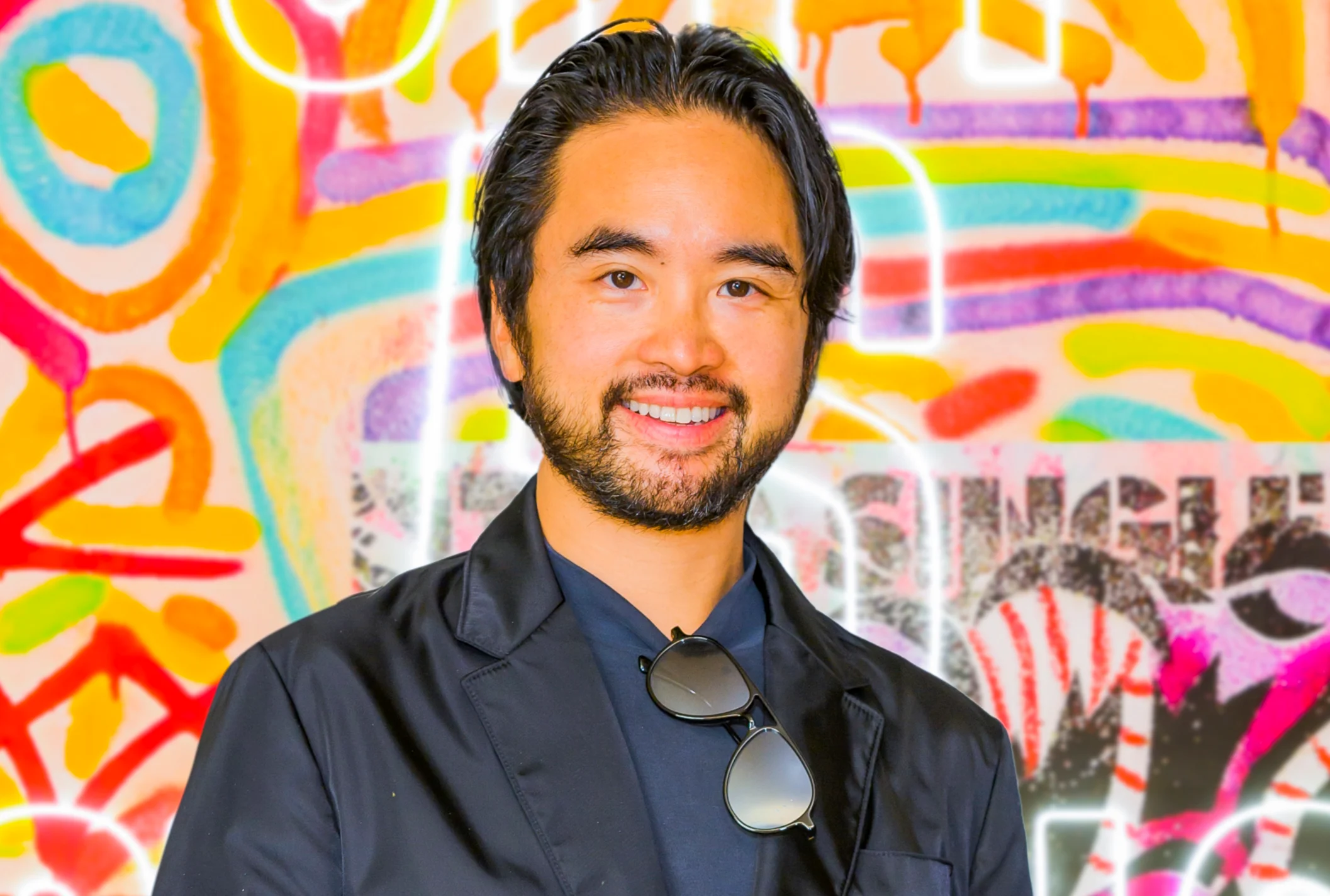
Two years after stepping down as chief executive of his family’s property group, New World Development, Hong Kong entrepreneur Adrian Cheng is building new business interests of his own. Dr Stephen M. Whitehead, who once advised him, says that escaping inherited expectations can give heirs the freedom to follow their own path
The last time I met entrepreneur Adrian Cheng, he complimented me on my shoes. It was our second meeting, more than 10 years ago now, in Hong Kong. He had brought me in to advise on an idea close to his heart: an international school, built from scratch, that would educate a new kind of Asian child. Global in outlook, rooted in Chinese culture, comfortable in both. We talked for an hour about pedagogy, identity and what young people would need in a century already tilting east. Then, as we walked to the lift, he glanced down and said he liked my Adidas.
The school never happened. Plenty of projects pitched in boardrooms never do. But the remark has stayed with me, because it told me something the hour of conversation had not. Here is a man who has run one of Asia’s great family empires, and his eye still goes to the trainers.
In Hong Kong he’s known, half admiringly and half not, as ‘the prince’. The grandson of Cheng Yu-tung, who built New World Development and the Chow Tai Fook jewellery empire, and the eldest son of Henry Cheng, he was the anointed third generation. Everyone knew it, including him.
Yet he has never quite been the heir the script calls for. He studied at Harvard, and took East Asian Studies, not business. He speaks the language of the global creative class as fluently as that of the Hong Kong tycoon, and moves between Paris fashion weeks and Shenzhen land deals without apparent strain. In the vocabulary I use as a sociologist, his is a hybrid identity: Chinese family capital, Western cultural capital and a personal sense of style that belong to neither.
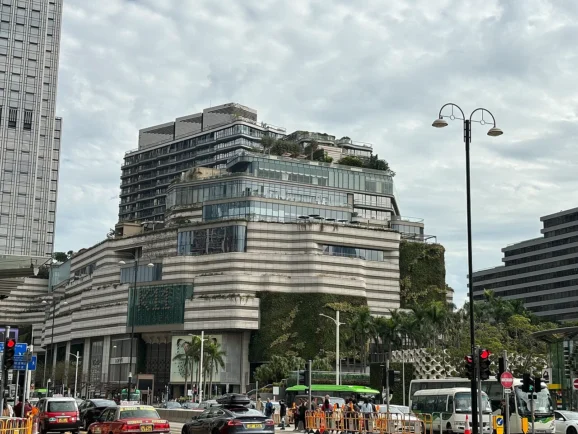
His real creation is K11, founded in 2008. The idea was simple and, at the time, faintly absurd: put serious contemporary art inside shopping malls and call it ‘cultural commerce’. It worked. K11 has grown from a single mall in Tsim Sha Tsui into a brand across Greater China, culminating in K11 Musea on the Victoria Harbour waterfront. It is the clearest expression of who he is. The family business has made its money from buildings and he wants to make meaning from them.
Then the money ran the other way. Hong Kong’s property market soured, interest rates climbed and New World, which had borrowed heavily to fund its ambitions, found itself carrying more debt than its major Hong Kong rivals. In the financial year to June 2024 it posted a record loss of almost HK$20 billion, its first annual loss in two decades.
On September 26, 2024, Adrian Cheng stepped down as chief executive, remaining as non-executive vice-chairman. The official reason was a wish to devote more time to public service and personal commitments. His father had already said publicly that the family might bring in an outsider to run the wider business. New World’s chief operating officer, Eric Ma, took over the top job.
For a dynastic son, that goes beyond being a career setback, representing a public verdict on whether you are worthy of the name. In the family firm, leadership and lineage are fused; to lose one is to have the other questioned. I’ve spent my working life studying how men carry inherited expectations, and few inheritances are heavier than one with a stock exchange listing attached.
What interests me is what he took with him. On the day he stepped down, AC Group, a company he owns outright, agreed to buy five companies and management-related rights from New World for HK$209 million. The deal was completed in November 2024. A separate, royalty-bearing agreement gave AC Group a 30-year licence to use the K11 trademark, subject to New World’s reserved rights. New World retained its properties and ownership of the trademark. Cheng has acquired a business through which he can develop the idea.
It was a quiet but telling choice. The family’s wealth has been in property; his own identity has always been in K11.
There is a generational logic in that, too. His grandfather’s wealth came from owning: land, towers, the physical fabric of a city. Adrian’s instinct has always been for curating: deciding what goes inside the building, who it is for, how it feels to walk through it. Owning ties up capital and binds you to the cycle of the property market while curating travels. A brand can open in Xiamen on someone else’s balance sheet whereas a tower cannot.
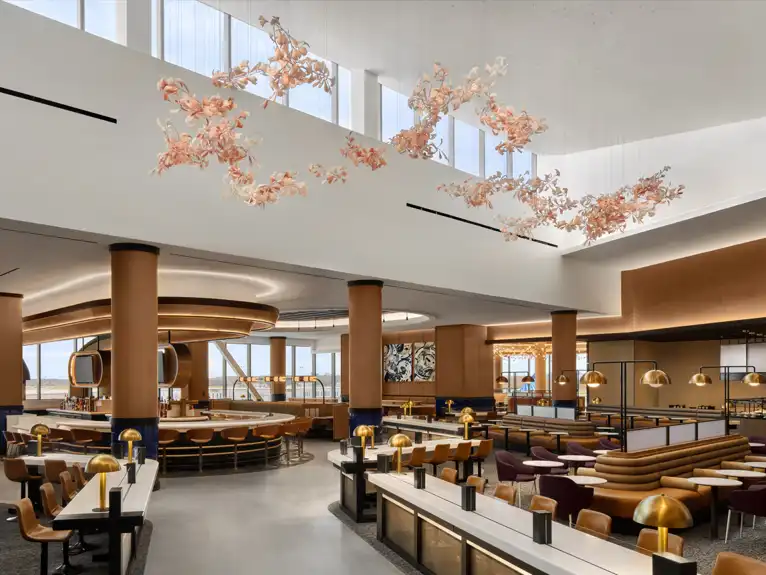
On September 22, 2026, K11 Select opened in Xiamen, the first K11 project in Fujian province. The mall spans 95,000 square metres, just over 1 million square feet, and sits within a metro-linked wetland park development. Developed with state-owned Xiamen Rail Transit Group, it is managed by K11 by AC. The project was announced in 2022 and appeared in New World’s 2024 pipeline as a mall managed for another owner. Its opening is the fruition of a venture begun before he left the top job. It houses around 200 brands, including about 80 making their national, provincial or regional debuts.
In September 2025, Cheng launched Almad Group, a new venture aimed at entertainment, sports, media and cultural tourism, with K11 by AC part of its portfolio. It’s pursuing expansion in mainland China and the Middle East, where it announced a partnership with Dubai’s Wafi Group in December 2025. Cheng’s majority investment in the luxury streetwear label 1017 Alyx 9SM came earlier, in November 2023. The man who noticed my trainers at the lift bought a piece of the streetwear world he has always admired.
It’s too early to call this a comeback. One mall in Xiamen does not erase a record loss, and a fee-earning operator carries far less risk, and far less power, than a property owner. Hong Kong will judge him on the next five years, not the next five openings.
There is an old Chinese saying that wealth does not survive three generations. The English have their own version: “clogs to clogs”. The first generation builds, the second holds, the third loses it. Hong Kong has watched the Cheng story through exactly that lens.
But I think the saying misreads what’s happening. Cheng Yu-tung built his empire in a post-war Hong Kong of refugees, factories and land hunger, where the surest bet was to own the ground beneath people’s feet. His grandson came of age in a different world: global, digital and brand-led, where the young spend on experience and identity rather than square metres. The grandfather’s playbook was never going to work for him. Perhaps the third generation isn’t meant to keep what the first built. Perhaps, instead, it’s meant to build differently.
In my research on men and masculinities I see the same pattern far from the boardroom. Men who define themselves by what they inherited, whether a title, a trade or a family role, are often the most brittle when it’s taken away. Those who come through loss tend to be the ones who can locate their worth in something they made themselves.
I don’t know whether he still remembers the sociologist with the Adidas. I suspect not. But the man I remember is more interested in what people wear, read and dream about than in square footage. That young man, it seems, has survived his time as the prince.
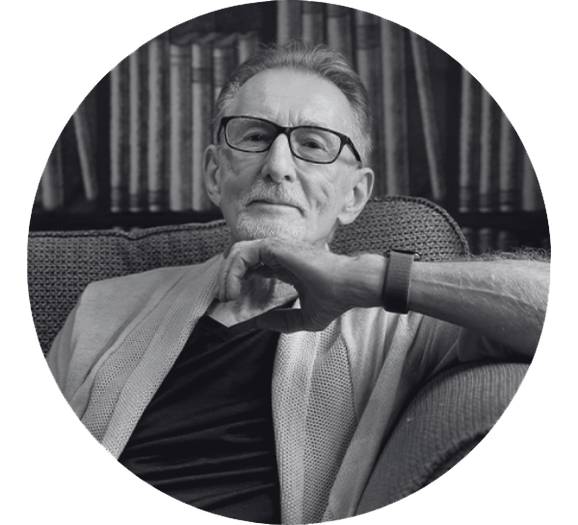
Dr Stephen M. Whitehead is a British gender sociologist and the author of more than 20 books, published by Routledge, Polity, Oxford University Press and Random House. A foundational figure in masculinity studies with over 35 years of research, he co-developed the concept of toxic masculinity and originated the frameworks of Total Inclusivity and healthy self-love. He was Senior Lecturer at Keele University from 1997 to 2015. He currently leads the Global AI Intimacy Study, an international investigation into how AI is reshaping human relationships, with fieldwork across Latin America and India. His next book, Where Have All the Good Men Gone? The Reordering of Intimacy, co-authored with Constanza Fernández Arce, will be published in 2027. He is The European’s Leadership and Organisational Culture Correspondent and lives in Thailand.
READ MORE: AI threatens the careers our schools still teach children to expect. AI is disrupting routes into work, putting the identity and security built around employment at risk. Schools must help children develop self-worth that can withstand an uncertain working future, says Dr Stephen Whitehead.
Do you have news to share or expertise to contribute? The European welcomes insights from business leaders and sector specialists. Get in touch with our editorial team to find out more.
Main Image: Hong Kong entrepreneur Adrian Cheng. Credit: New World Development (CC0).