Elon Musk predicts that AI and robotics could create a world of plenty and make currency irrelevant. But according to Harry Margulies, greater abundance can never truly eliminate scarcity and some system will always be needed to allocate finite assets and resources
ABBA sang that money “must be funny” in a rich man’s world. That may be true.
Elon Musk, speaking at the U.S-Saudi Investment Forum last year, predicted that artificial intelligence and robotics will make the economy so productive that currency could eventually become irrelevant. He has also predicted that AI and robotics could “saturate all human needs,” producing such an abundance of goods and services that work itself becomes optional.
It’s an attractive vision. If machines can produce almost everything at negligible cost, the amount of money people need could fall dramatically.
Yet abundance does not eliminate scarcity. Even if AI makes many everyday goods extraordinarily cheap, some things will remain limited in supply. As long as people continue to compete for those things, some mechanism will still be needed to decide who gets what and what one scarce asset is worth relative to another.
Imagine robots producing food, clothing, computers, cars and countless other goods at almost no marginal cost. Many things would become dramatically cheaper, while land, desirable locations, waterfront property, natural resources and energy would remain scarce. People would still want different things, and some of those things would remain impossible to provide in unlimited quantities.
Geography also does not disappear – scarce resources are unevenly distributed between countries. Some have oil, gas, iron ore, copper, lithium, rare earths, farmland or hydroelectric resources that others do not. AI cannot make those resources equally distributed. Countries that possess them will still expect something in return when others want access to them.
Canada, for instance, cannot tell another country to take its minerals for free simply because currency has become obsolete. Both sides would still have alternative uses for what they own, so some mechanism of exchange will remain necessary.
Even water may one day become a traded commodity. In one sense, it already is: when Canada, for example, exports wheat, it is also indirectly exporting the water used to produce it.
AI could nevertheless raise living standards dramatically. If housing, food, transport, entertainment and manufactured goods became much cheaper, people could enjoy a material standard of living that would seem extraordinary today. But greater prosperity would not make everyone economically identical.

People have different abilities, education, talents, ambitions and willingness to work. Some will create more value, take greater risks or be exceptionally good at something others value. Many people want those differences reflected in their ability to obtain more of what matters to them.
Money is one way society expresses those differences. It’s not a perfect measure of human worth: the richest person is not necessarily the most talented or admirable. But money does provide a generally recognised measure of economic success and purchasing power in a free society.
If AI makes almost everything cheaper, the amount of money required for a comfortable life may fall sharply, but that would make money less important rather than unnecessary. It may become far less important than it is today yet remain necessary for allocating things that are still scarce.
Suppose ordinary goods fell by 90 per cent in price. That would be genuine abundance. People, however, might still want the larger house, the better location, the private island, the rare artwork, the newest technology, the best schools or teachers, exclusive experiences or a greater share of some other scarce resource.
If two people want the same scarce thing, there must still be a way of deciding who gets it. That could be through markets, ownership rights, government allocation or some combination of them. If basic needs can be met very cheaply, money may therefore change its role, becoming less a tool of survival and more a mechanism for allocating scarce goods and reflecting differences in achievement, preference and status.
AI could make almost everyone richer while still leaving substantial economic differences between people. Someone living on the equivalent of today’s US$50,000 income might live extraordinarily well, while someone else might still want, and be able to afford, a much larger share of scarce resources. Both could be vastly better off than people are today. There’s nothing contradictory about that.
Musk may therefore be right that AI could produce an unprecedented rise in prosperity, make intelligence and productive capacity abundant and raise living standards dramatically.
But so did the Industrial Revolution, computers and the internet. They all raised productivity yet none eliminated scarcity or money. Instead, they changed what was scarce and created new forms of value. AI may take that process much further but some valuable things will remain limited however far production costs fall.
And even if currency itself did become irrelevant, owners of AI systems, robots, land, energy and other scarce assets would still need a way to determine ownership, access and the relative value of one scarce resource against another. That mechanism might take the form of credits, ownership rights, rationing, tokens or something else but it would still perform the same underlying function.
In the future, then, money may become less important but it won’t become unnecessary, just as economics may change profoundly but will still be economics.

Harry Margulies is a journalist, author, commentator and public intellectual whose work interrogates religion, politics and morality with sharp wit and fearless clarity. A second-generation Holocaust survivor, he was born in Austria and spent time in an Austrian refugee camp before moving to Sweden. Educated by Orthodox rabbis throughout his childhood, he ultimately abandoned faith in his teens – a journey that has shaped his lifelong commitment to secularism, critical thinking and freedom of expression. His latest book, Is God Real? Hell Knows, has been described by ABBA’s Björn Ulvaeus as “funny, sharp, and unafraid.”
READ MORE: Britain must treat every person’s view by the same standard. Protecting people from hatred must never mean placing religions, political causes or governments beyond criticism. Harry Margulies argues that Britain’s liberal democracy depends on applying the same standards of protection, scrutiny and accountability to everyone, regardless of their beliefs.
Do you have news to share or expertise to contribute? The European welcomes insights from business leaders and sector specialists. Get in touch with our editorial team to find out more.
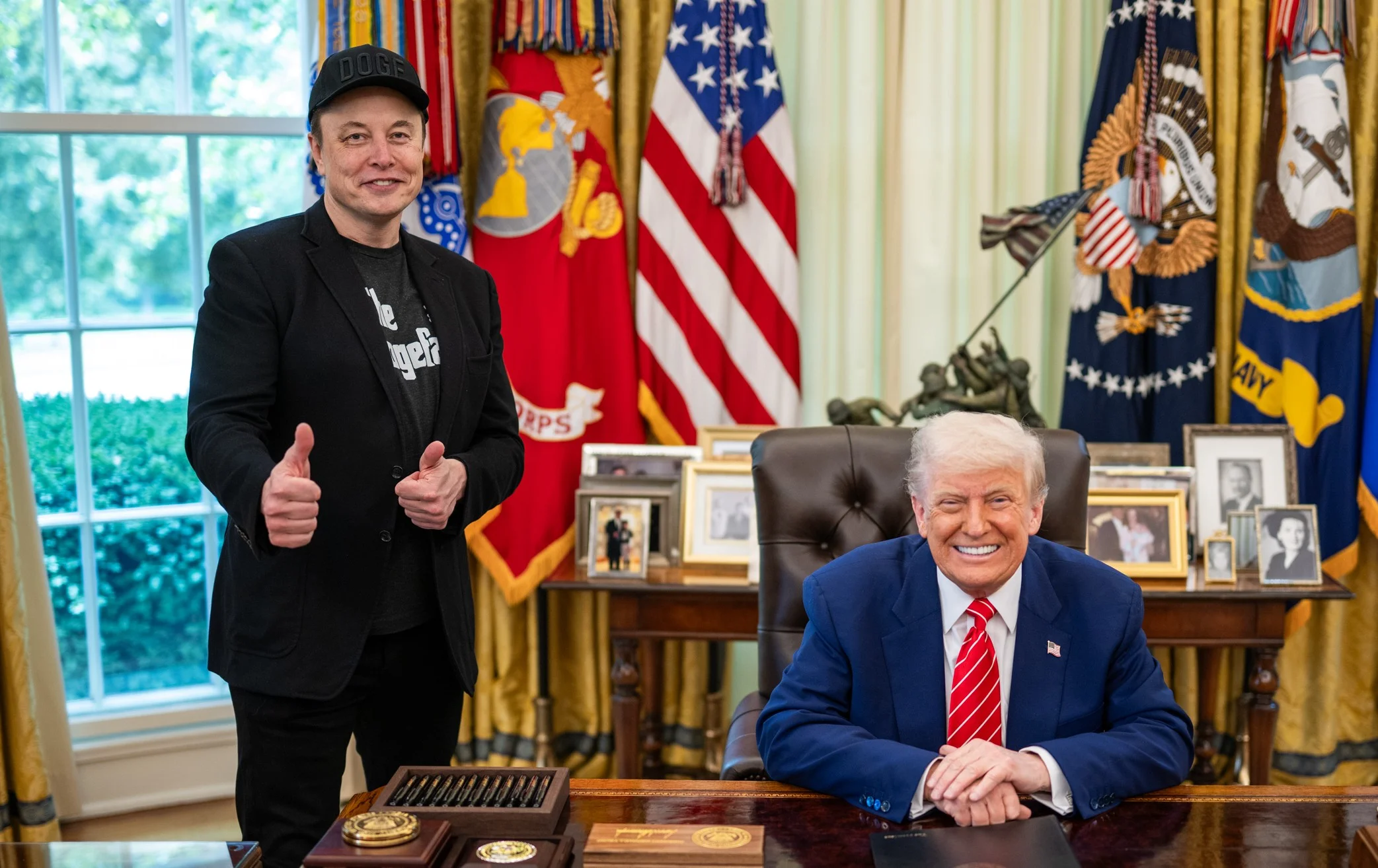
Main Image: Musk, pictured here with President Donald Trump in May 2025, has predicted that AI and robotics could create such abundance that money eventually becomes irrelevant. But the scarcity of some resources will mean money always has a place, argues Harry Margulies. Credit: Daniel Torok/The White House, Public Domain