Corporations spent years presenting diversity and inclusion as core institutional values, with many women reorganising their careers around them. Companies across Europe and America, however, are now increasingly retreating from DEI commitments. In the first of a two-part series, Elle Lorenzoni asks what responsibility institutions bear when they benefit from promises they were never legally required to honour
Across Europe and America, corporations are quietly rolling back on the diversity and inclusion (DEI) commitments they spent years presenting as core institutional values.
In Europe, corporate DEI often looks less like a retreat than a return to form: quieter, harder to measure, and closer to continuity than change. Across the Atlantic, the American DEI pullback has at least been loud enough to document in real time.
The question in both cases is what responsibility institutions bear when they benefit from public promises they can later abandon without consequence.
The more revealing question in Europe is what was meaningfully built in the first place.
In the United Kingdom, Ofcom’s December 2024 broadcasting report found that women hold just 42 per cent of senior television management roles and 36 per cent of senior radio roles — both below benchmark — and have higher churn rates than any other group. Former BBC Head of Creative Diversity Dr Joanna Abeyie MBE stated in August 2024 that diversity in UK film and television had gone into reverse.
In France and across much of continental Europe, constitutional limits on collecting ethnic or racial workplace data make exclusion harder to measure and easier to deny. The EU’s Corporate Sustainability Reporting Directive was then weakened by the December 2025 Omnibus package, removing 90 per cent of companies from scope. Europe talks about inclusion while quietly dismantling the few tools that might have made it measurable.
Europe, then, has often preferred softer language and thinner obligations: belonging, culture, inclusion across the business. The vocabulary travelled well because it committed so little, couched in a managerial language of fairness with no durable mechanism attached
The American retreat has been easier to see because American corporations made louder promises. In February 2025, Disney’s Chief Human Resources Officer announced that Diversity and Inclusion would be removed from executive pay metrics and replaced with a new “Talent Strategy”. By November, Disney’s annual 10-K — the detailed financial report publicly traded U.S companies submit to regulators and investors — contained no mention of “diversity,” “inclusion” or “DEI” — a first since 2020.
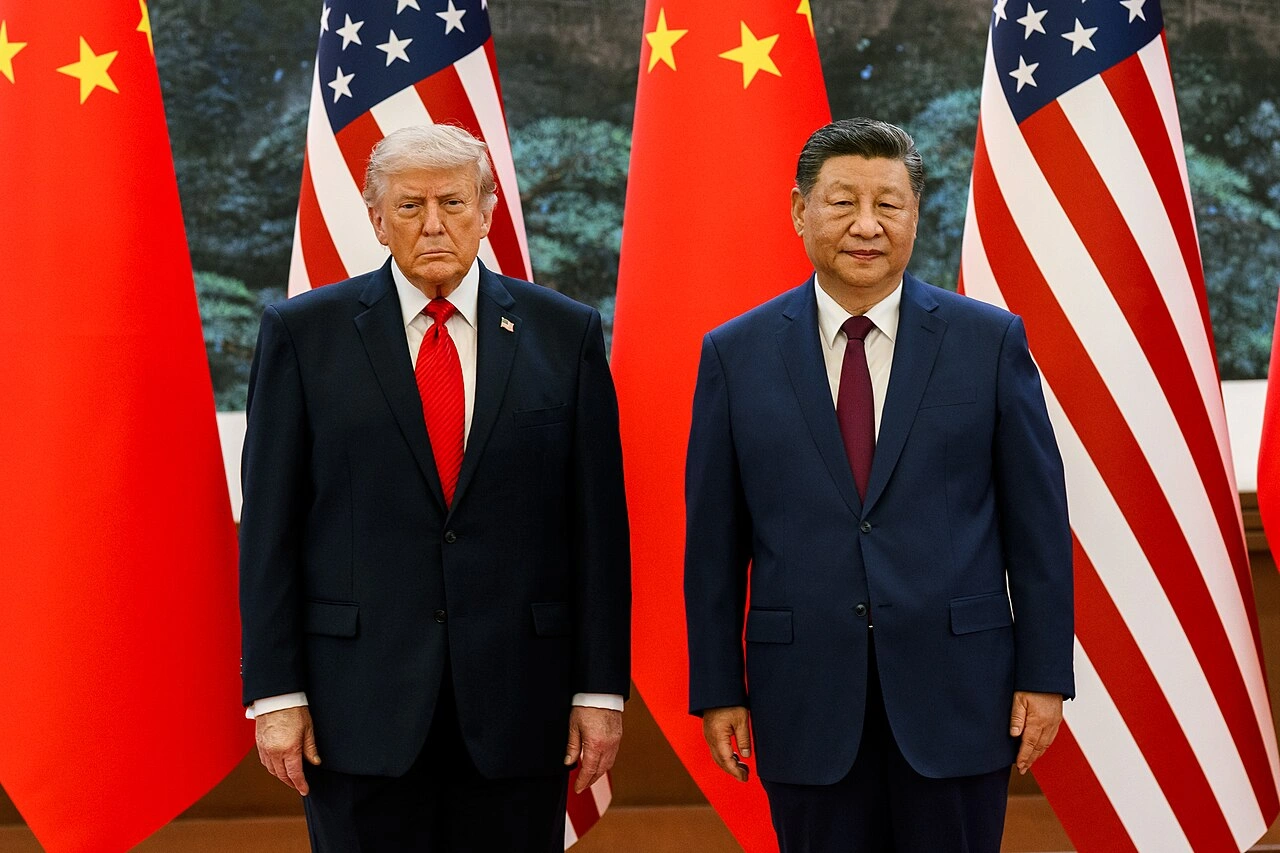
Following Donald Trump’s 2024 election victory, more than half the Fortune 100 have altered or eliminated public DEI commitments.
However you frame it, these are entities that make representations to society but are never held to them and face no meaningful consequence for the gap between what is stated and what is done.
When a company publishes DEI targets, ties them to executive compensation, and discloses them to investors as material to performance, it has made a representation — a statement of fact made to induce reliance. Women reorganised their professional lives around those commitments. They chose one employer over another, stayed where they might otherwise have left, and organised their ambitions around institutions that had publicly declared both the means and the intention to honour what they had said.
Those representations were made not only to employees or investors but also to an industry and to the public whose trust companies were actively seeking to earn. A representation of that scope is not a legal contract, but it is a social one, and while social contracts have no courts, they have consequences, or they should.
The Sex Discrimination Act 1975, the Race Relations Act 1976 and the Equality Act 2010 in the United Kingdom, and Title VII of the Civil Rights Act 1964 in the United States, were direct legislative responses to documented, systemic exclusion. They set a floor. In the United States, that irony has only sharpened: Title VII remains on the books but recent executive and regulatory moves have narrowed the practical reach of civil rights enforcement, preserving the formal commitment while weakening some of the machinery that once gave it force.
Nothing in either jurisdiction requires DEI targets or the kinds of public commitments that defined the post-2020 corporate moment. Those were voluntary. But once made publicly, and once used to attract labour, goodwill and institutional legitimacy, they ceased to be mere aspirations. They became representations capable of inducing reliance.
The doctrine of misrepresentation exists because a statement made to induce reliance carries an obligation. DEI statements induced precisely the reliance the doctrine contemplates. That no legal claim has been brought is not evidence that no wrong occurred. It reflects how thoroughly accountability was designed out of the system before those affected had any realistic means of invoking it.
Across Britain, Europe and the United States, the language tells the same story of “evolving our approach”, “embedding inclusion across the business” and “belonging”, but while the language evolved, the underlying obligation did not survive.
The human consequences are already visible. In the United Kingdom, the BBC alone has seen at least seven senior diversity executives depart since 2019, and its diversity department has been restructured repeatedly. In the U.S, Candace Byrdsong Williams spent nearly 20 years building a career in diversity, equity, and inclusion before being laid off in August 2024. The promotion she had been working toward — Chief Diversity Officer — now feels like a title that will never exist for her, she told NPR.
She is not an outlier. Her experience is becoming structurally familiar.
The UK median gender pay gap stands at 13.1 per cent — 87 pence per pound — and the Trade Union Congress projects it will not close until 2044. McKinsey’s Women in the Workplace 2024 report found that for every 100 men promoted to manager, only 81 women were promoted in 2024. The gap narrowed during the years DEI structures were in place and is widening as they are removed. The timing is difficult to ignore,
What has been lost is more than a career trajectory: it is the reasonable expectation that institutional representations are made in good faith.
These companies calibrated their commitments to the zeitgeist. When the mood shifted, the representation evaporated. Corporations benefited from women’s labour, ambition and symbolic usefulness, and when the reputational return expired, so did the commitment. A board can dissolve a representation in a meeting but the woman who reorganised her career around it has no equivalent instrument.
The boilerplate phrasing we now hear repeatedly —“The business environment has evolved. We are focused on our people and our performance. We remain committed to an inclusive workplace.” — is coherent, but it also functions as a shield. The representations were inexpensive to make and costly to rely upon. A company whose public statements track the mood rather than its values does not have an ethos so much as a brand position.
Brand positions are, after all, designed to be revised, and the collateral damage is someone else’s problem.
Corporations are granted legal personhood without the personal accountability that personhood elsewhere implies. They can make public commitments, build reputations on them, and then withdraw when conditions change.
What do you call an entity that profits from the trust its promises create and walks away when those promises become inconvenient?
In law, we call it a ‘corporation’. In another context, we might call it an opportunist.
Elle Lorenzoni is an entrepreneur whose work spans media, law, and communications. She holds a BA in Rhetoric from the University of California, Berkeley, a Juris Doctor from Loyola University Chicago School of Law, and an LL.M. from the University of Fribourg in Switzerland. Her early career began at the William Morris Agency in Los Angeles, where she worked as a television literary assistant before going on to develop her own ventures, including Planning Pretty Picnics and The Spoken World. As Women, Work and Enterprise Correspondent for The European, she writes on female entrepreneurship, workplace culture, and leadership, with a focus on how power operates in professional environments and how it shapes women’s opportunities, decisions, and outcomes.
READ MORE: “Britain Is Falling Into the ‘Trump Trap’“. Donald Trump’s return to the centre of American political life is not just an American story. As trust in institutions declines on both sides of the Atlantic, Britain risks falling into a ‘Trump trap’ where reactive politics replaces effective governance, public anger overrides long-term reform and vulnerable communities are pushed further to the margins, writes Matthew Kayne.
Do you have news to share or expertise to contribute? The European welcomes insights from business leaders and sector specialists. Get in touch with our editorial team to find out more.
Main Image: Pavel Danilyuk/Pexels