Germany could run on full renewables by 2045, study reveals

John E. Kaye
- Published
- News, Sustainability
Fraunhofer analysis says solar, batteries, hydrogen storage and flexible demand can provide reliable low-carbon electricity
Germany could achieve a fully renewable, climate-neutral energy system by 2045 if solar power, battery storage, hydrogen and flexible electricity demand are expanded together, according to researchers.
A study by the Fraunhofer Institute for Solar Energy Systems ISE found the country could maintain a reliable electricity supply throughout the year by combining renewable generation with large-scale energy storage, hydrogen reserves and more flexible electricity demand, even during prolonged periods of low wind and sunshine.
Researchers said those so-called “dark doldrums” account for only about one per cent of the year and could be covered by 100GW of dispatchable power generation supplied using seasonal hydrogen storage.
Dr Charlotte Senkspiel, one of the study’s lead authors, added: “Yes, we still need 100 gigawatts of dispatchable power generation for these periods, and seasonal hydrogen storage is the key to operating it.”
The findings were presented at the Renewables 24/7 special exhibit during The smarter E Europe 2026.
It comes as solar power and battery storage continue to expand faster than many earlier forecasts predicted.
The event’s organisers said the industry is already providing many of the technologies needed for a resilient, climate-neutral and cost-effective energy system, but wider deployment will depend on investment in electricity grids, storage and market reforms.
Jaran Rystad, founder and chief executive of Rystad Energy, said photovoltaic forecasts, including those produced by his own company, had repeatedly underestimated the pace of deployment.
SolarPower Europe said a record 664GW of new photovoltaic capacity was installed worldwide in 2025, taking global installed capacity above 3TW for the first time. Solar generated more electricity than wind globally during the year and became the largest driver of growth in power generation.
Europe also installed 36GWh of new battery storage in 2025, a 48 per cent increase on the previous year, taking total installed capacity above 100GWh for the first time. Annual installations are forecast to reach 138GWh by 2030.
Markus Elsässer, chief executive of Solar Promotion GmbH, said: “We are entering the battery age.”
READ MORE: A new energy era: full renewable energy supply is possible. Solar power, battery storage and digital energy technologies are converging into an integrated energy system that could deliver reliable renewable electricity around the clock, writes The smarter E Europe.
Do you have news to share or expertise to contribute? The European welcomes insights from business leaders and sector specialists. Get in touch with our editorial team to find out more.
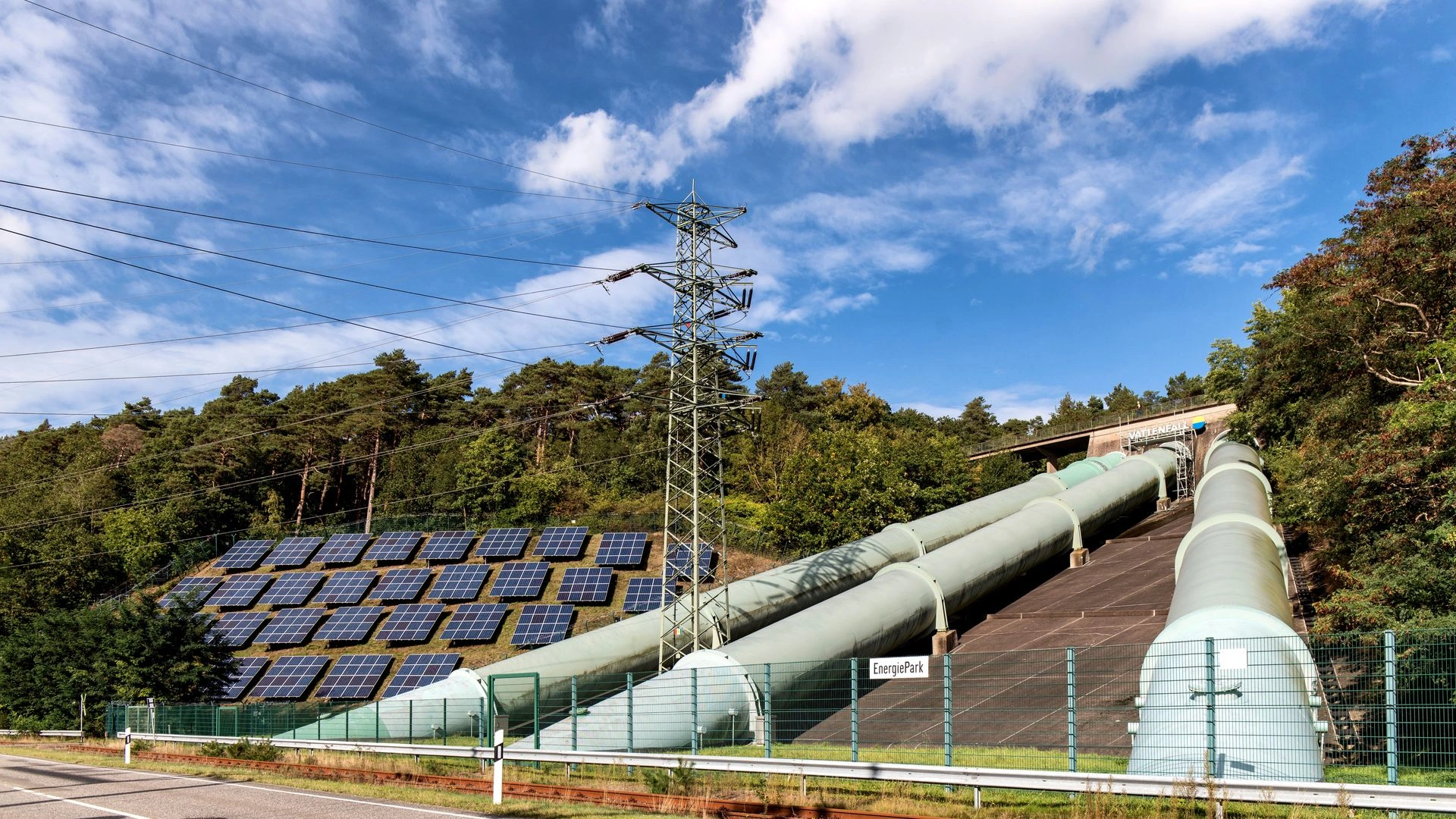
Main image: Wolfgang Weiser via Pexels
TOP STORIES
-
 Britain faces higher winter energy prices as reliance on European electricity imports grows
 -
Andy Burnham to make special Gogglebox appearance for Stand Up To Cancer
-
WPSL Golf targets £120 million valuation as billionaire-backed corporate deals and other commercial deals drive explosive global growth
-
Hackers could bring Britain’s essential services to a standstill, security chief warns after global website shutdowns
-
We're talking to almost twice as many people on the phone as a decade ago, study finds
-
TalkTalk sells majority stake in Telecom Acquisitions as founder Nigel Barnett regains control
-
Company closures soar ahead of tax rises as new Budget looms
-
Russia takes control of more European corporate assets amid Ukraine tensions
-
EU leaders resist calls to delay carbon rules as energy costs soar
-
‘A big step forward’ – PM Andy Burnham hails plans for Great British Railways HQ in Derby
-
UK economy grows just 0.1 per cent as construction falls and services stall
-
Germany risks losing €155bn a year under tighter AI data rules, new study warns
-
Pope Leo XIV diagnosed with lung cancer after surgery in Rome
-
France faces freezer meltdown as hackers strike supermarket chains
-
Bumble shares soar 50% amid $1bn takeover talks
-
China slump drives Volkswagen to sharpest quarterly fall in more than four years
-
Hollywood mega-powerhouse created as Paramount completes Warner Bros Discovery takeover
-
Gamers face gridlock as latest Grand Theft Auto download 'nears two days'
-
Samsung profits soar ninefold to record £61bn amid AI chip boom
-
New Springer books put the UN’s struggling sustainability goals to the real-world test
-
Europe’s solar boom set for two-year slowdown after record growth
-
Let it pea. Musicians turn vegetables into instruments at Beatles' Abbey Road studios
-
Golden naked Trump statue unveiled at European Parliament
-
Jaguar puts controversial rebrand on the road with £130K 1,030PS Type 01
-
Deepfakes and identity fraud drive new wave of post-hire background checks