Europe’s worst wildfires in modern times could cost billions

John E. Kaye
- Published
- News
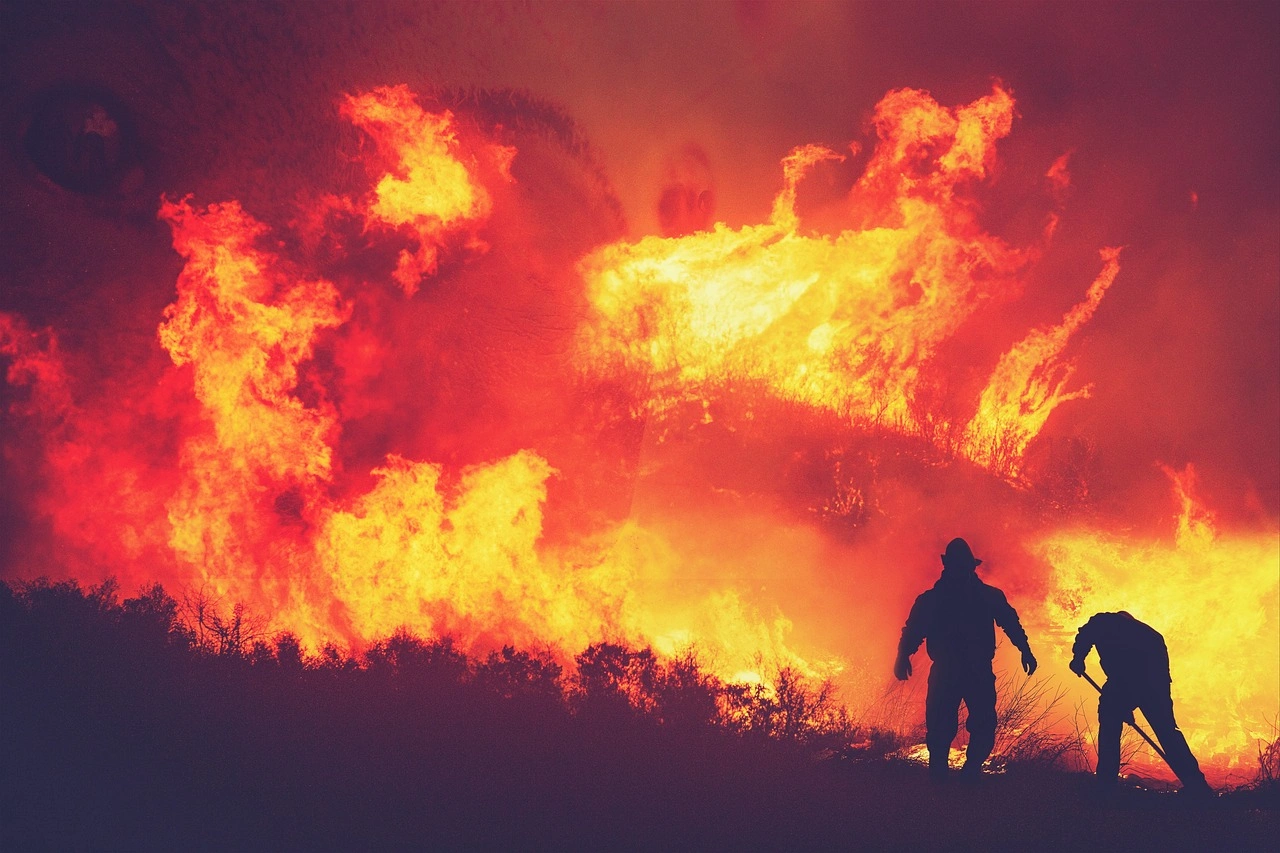
Massive wildfires sweeping France and Spain have forced more than 300,000 people from their homes, destroyed vast areas of land and left businesses, insurers and governments facing a mounting economic toll
France and Spain are counting the human and financial cost of some of their worst wildfires in modern times as flames consume forests, disrupt businesses and threaten major cities and infrastructure.
The wildfires raging in southwestern France have been described by President Emmanuel Macron as the worst since Second World War, while officials in Madrid have called the blazes west of the Spanish capital the worst the region has ever experienced.
More than 300,000 people have so far been evacuated across the two countries, hundreds of homes and other buildings have been destroyed and vast areas of commercially valuable forest and farmland have been scorched.
Around 220,000 people have been evacuated in France, while nearly 100,000 have been forced to leave their homes in Spain, according to Reuters.
The cost of fighting Spain’s fires alone could already stand at between €1.72 billion and €3.28 billion, according to an analysis published by Euronews Business.
No official estimate has yet been placed on the total cost of the French fires, raging in the region of Nouvelle-Aquitaine, but their economic reach is widening rapidly.
In Gironde, the region surrounding Bordeaux, a fire burning south of the city has consumed about 42,000 hectares – an area four times the size of Paris – and advanced to within 15 km of the city.
Around 14,500 businesses are reported to have been affected, with evacuations and transport disruption hitting tourism, hospitality, retail, forestry and industrial activity across area,
Gironde is one of France’s most commercially important forestry regions, while the wider south-west forestry sector generates about €5 billion in annual turnover – comparable with the region’s wine industry – according to a French Senate report.
The present blaze, which started on July 22, has already burned across a greater area than the Gironde fires of 2022, where about two million cubic metres of timber were destroyed, equivalent to more than a quarter of the Landes de Gascogne forest’s annual harvest.
Bordeaux’s vineyards are not thought to have suffered significant direct damage so far but wine tourism and businesses serving the region’s estates have been disrupted during the peak summer season.
Holiday resorts including Lacanau, Cap Ferret and Biscarrosse have also been affected by evacuations, smoke and travel disruption.
The cost to the French state is also mounting.
Around 2,500 firefighters, 1,500 military personnel and 1,200 police officers and gendarmes have been involved in fighting the Gironde blaze.
Aircraft have dropped water and fire retardant, while heavy machinery has been used to construct firebreaks up to 100 metres wide around threatened communities.
The Gironde fire, which officials say could take months to fully extinguish, has become so powerful that it has created its own giant fire thunderstorm.
The rare phenomenon, called a pyrocumulonimbus, occurs when heat from a wildfire causes smoke, ash and water vapour to rise rapidly, forming storm clouds that can produce strong winds and lightning capable of starting further fires. It has
France’s national firefighters federation have said that it has never been recorded before in the country
Spain has faced similarly historic destruction.
Separate fires outside Madrid merged into a vast fire covering about 770 sq km – an area larger than the Spanish capital itself.
Francisco Martin, the Spanish government’s delegate in Madrid, described it as “undoubtedly the largest fire in the history of the Madrid region”, according to BBC News.
Spain’s government has had to mobilise extensive resources under the country’s first national emergency declaration linked to a wildfire. More than 270 emergency personnel, 40 ground units and Military Emergency Unit contingents have been deployed, Reuters reported.
Tourism and agriculture are expected to be among the sectors hardest hit by the Spanish wildfires. Evacuations, road closures and smoke have disrupted holiday areas, while the fires have destroyed farmland, grazing land, timber, mushrooms and resin-producing forests.
The danger could increase further as France and Spain enter another period of extreme heat, with temperatures forecast to rise above 40C in some areas.
Across Europe, there have been record-breaking heatwaves this summer with minimal rainfall. This has led to the regions becoming dry and susceptible to wildfires.
The long-term financial impact of the summer blazes is not yet clear but a 2023 study published in the Journal of Environmental Economics and Management found that major fires reduce annual GDP growth in affected southern European regions by between 0.11 per cent and 0.18 per cent.
In the most severe years, the cumulative reduction can reach between 3.3 per cent and 4.8 per cent, Euronews Business reported.
READ MORE: ‘EU moves to make Europe’s tinderbox landscapes less prone to wildfire‘. Brussels says fields, forests and scrubland must become harder to burn, with more mixed terrain, restored ecosystems and less unmanaged fuel, after more than one million hectares were scorched in Europe’s worst fire year on record.
Do you have news to share or expertise to contribute? The European welcomes insights from business leaders and sector specialists. Get in touch with our editorial team to find out more.
Main Image: ELG21/Pexels
TOP STORIES
-
 Britain faces higher winter energy prices as reliance on European electricity imports grows
 -
Andy Burnham to make special Gogglebox appearance for Stand Up To Cancer
-
WPSL Golf targets £120 million valuation as billionaire-backed corporate deals and other commercial deals drive explosive global growth
-
Hackers could bring Britain’s essential services to a standstill, security chief warns after global website shutdowns
-
We're talking to almost twice as many people on the phone as a decade ago, study finds
-
TalkTalk sells majority stake in Telecom Acquisitions as founder Nigel Barnett regains control
-
Company closures soar ahead of tax rises as new Budget looms
-
Russia takes control of more European corporate assets amid Ukraine tensions
-
EU leaders resist calls to delay carbon rules as energy costs soar
-
‘A big step forward’ – PM Andy Burnham hails plans for Great British Railways HQ in Derby
-
UK economy grows just 0.1 per cent as construction falls and services stall
-
Germany risks losing €155bn a year under tighter AI data rules, new study warns
-
Pope Leo XIV diagnosed with lung cancer after surgery in Rome
-
France faces freezer meltdown as hackers strike supermarket chains
-
Bumble shares soar 50% amid $1bn takeover talks
-
China slump drives Volkswagen to sharpest quarterly fall in more than four years
-
Hollywood mega-powerhouse created as Paramount completes Warner Bros Discovery takeover
-
Gamers face gridlock as latest Grand Theft Auto download 'nears two days'
-
Samsung profits soar ninefold to record £61bn amid AI chip boom
-
New Springer books put the UN’s struggling sustainability goals to the real-world test
-
Europe’s solar boom set for two-year slowdown after record growth
-
Let it pea. Musicians turn vegetables into instruments at Beatles' Abbey Road studios
-
Golden naked Trump statue unveiled at European Parliament
-
Jaguar puts controversial rebrand on the road with £130K 1,030PS Type 01
-
Deepfakes and identity fraud drive new wave of post-hire background checks