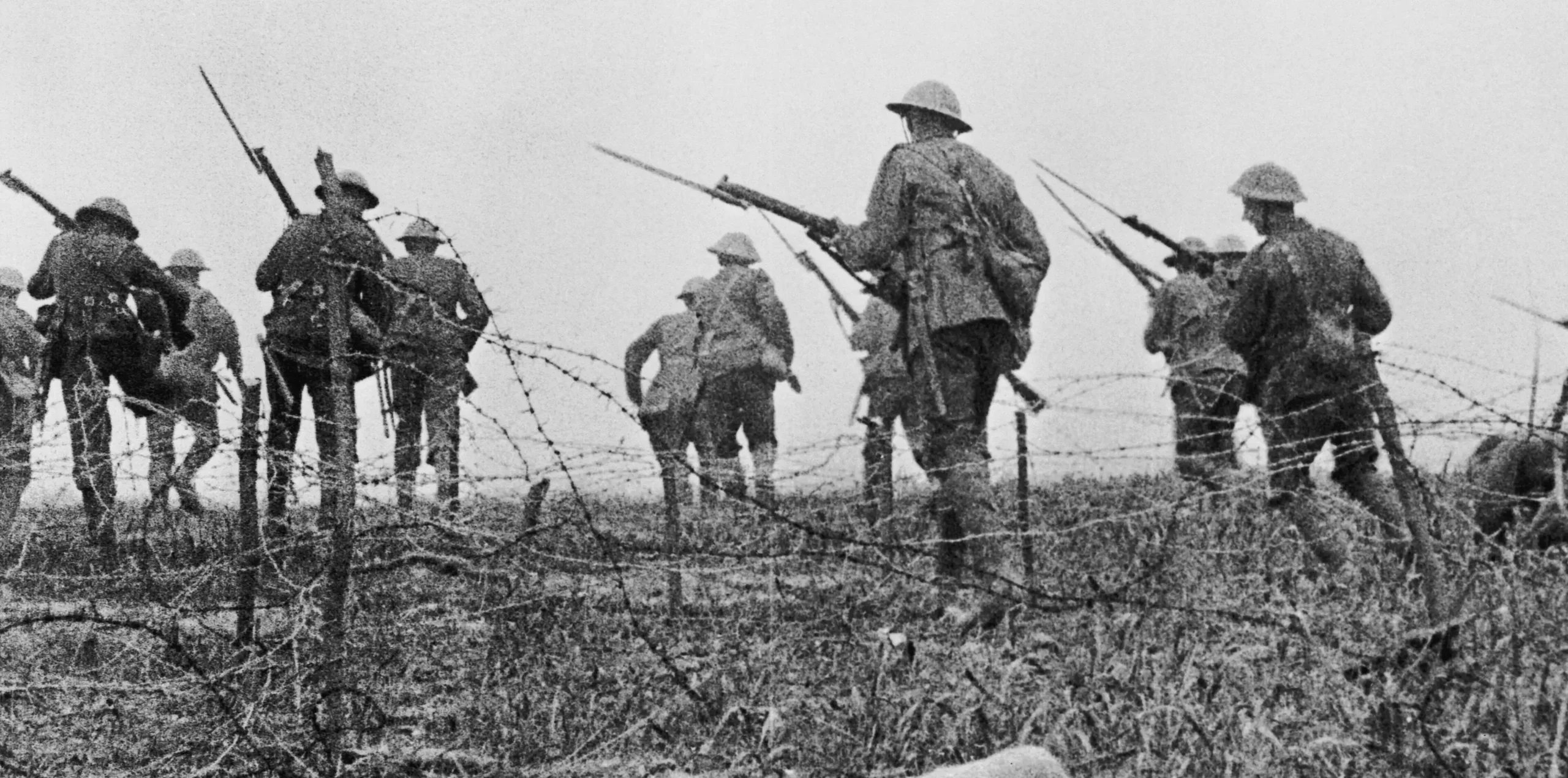
This month marks the 110th anniversary of the Battle of the Somme, one of the bloodiest battles of the First World War. The five-month struggle proved a major turning point of the war, but the Somme also transformed the role of military chaplains in the British Army, shaping a modern ministry ready to accompany troops onto the front line, writes Dr Linda Parker
In the same way that the Battle of the Somme has been described as a learning curve for the British Army, for the military chaplains who served alongside them it was a turning point in the development of their work. It led to new strategies and organisation, along with an enhanced realisation of their value to commanders and men.
The Chaplains’ Department, like the rest of the British Army, began its operations under-equipped, under-prepared and with no general appreciation that the fighting in prospect would be as bloody and protracted as it turned out to be. At the outbreak of war there were 117 chaplains in the department. By November 1918 there were 3,600 chaplains serving. A further 166 chaplains had died, three had won Victoria Crosses and many had won DSOs and Military Crosses.
At first, many commanders seemed to think that chaplains were mainly for taking funerals. Roger Lloyd, a Church of England historian, has said of the chaplain’s position: “He could indeed become necessary, but he must create that necessity himself.”
That is what the Great War forced chaplains to do. They took services, conducted funerals — often under fire — wrote letters home for the men and played a part in their social and physical welfare, organising entertainment and opening tea tents. This social work element was one which some chaplains initially decried, calling it “holy grocery”.
Their position was made difficult, especially for Anglican chaplains, as they had orders not to go into the front lines in battle with their units. Padre EC Crosse, on arriving at his division in France, remembered: “My senior chaplain told me that it was absolutely forbidden to go into the line at all.”
Yet the logic of the battlefield pulled chaplains forward. The Revd Geoffrey Studdert Kennedy, popularly known to troops as “Woodbine Willie”, gave this advice to a fellow chaplain, Theodore Bayley Hardy, who went on to win a Victoria Cross: “Your place is at the front …. work in the front and they will listen to you when they come out to rest, but if you only preach and teach behind, you are wasting your time, the men won’t pay the slightest attention to you. The men will forgive you anything but lack of courage and devotion.”
The Battle of the Somme, which took place between July 1 and November 18 that year, showed what this new front-line ministry meant in practice.
Studdert Kennedy decided to accompany the men going forward. He remembered: “Of course, I had to go. We crept out.” Making progress along the flooded trench, crowded with men, was slow. “I whispered some inane remarks as I passed by,” continued Studdert Kennedy, “and was rewarded all along the line with a grin and … often when I had passed, with the muttered comment ‘Gaw blimey if it ain’t the parson. Vaguely I felt that this journey was worthwhile.”
Crosse was involved with his regiments, the 8th and 9th Devons, in the run-up to the Somme. He went with the stretcher bearers, being an extra strong pair of hands to bring back casualties. He would take a whistle so he could alert the bearers to casualties he found.
He also assisted in recording the dead, thus making the casualty lists more accurate: “It was worth any amount of labour to avoid reporting a man missing unnecessarily”. He inspected every single man to make sure his identity tag and belongings had been properly stored. The following day he buried them as the guns continued to thunder around them. He then helped fill in their graves.
This practical work was not separate from spiritual care. Many of the MCs awarded to chaplains in the war were for gallantry during their practical efforts in bringing in the wounded and for the spiritual care of those in ambulances and hospitals.
The religious role itself also changed under battlefield conditions. Chaplains spent far more time than previously with individuals, in trenches, dugouts and aid posts. They accepted more readily the sometimes-inarticulate religion of the ordinary soldier without too much emphasis on the correct liturgy or following the rules. The Revd FR Barry said: “We had to reexamine our fundamentals and hammer out a working theology which could stand the test of battlefield conditions and give men a faith that could overcome the world.”
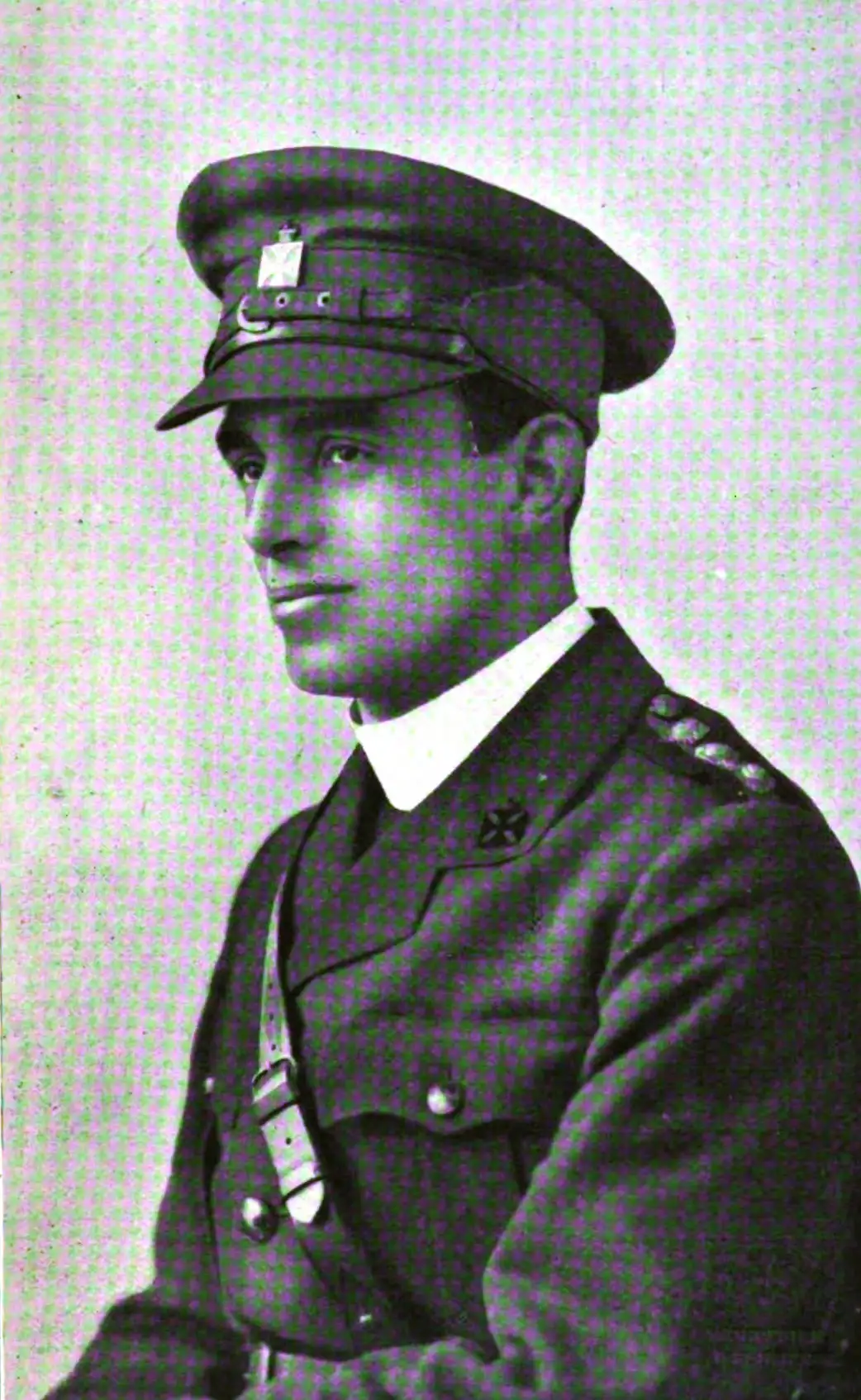
The burden on chaplains was immense. Chaplain Michael Stanhope Walker, on the first day of the Somme, reported the casualties streaming into the field ambulances: “We have 1,500 and still they come 3-4 hundred officers. It is a sight – chaps with fearful wounds lying in agony …. One goes to a stretcher , lays a hand on the forehead. Strike a match, it is cold, he is dead. Here a communion here a drink, there a madman, there a hot water bottle and so on. One madman was swearing and kicking. I gave him a drink, he tried to bite my hand and squirted the water from his mouth into my face.” Walker found the strain enormous: “It keeps coming over me like a wave – the madness and futility of it all.”
There were moral burdens too. Guy Rogers, who was on the Somme with the Guards Division, remembered one occasion: “It has just fallen to my lot to prepare a deserter for his death. This meant breaking the news to him, helping him with his last letters, passing the night with him on the straw of his cell, and trying to prepare his soul for meeting God, witnessing the execution and burying him immediately.”
The question of morale has always complicated the role of the military chaplain. There has been criticism of chaplains as force multipliers, and of their work as giving legitimacy to warfare. However simple this association of chaplains with good morale may have been to the generals, it was a difficult and ambiguous matter for the chaplain.
After the war, Studdert Kennedy seemed to have been aware of unresolved tensions in his wartime role and of an element of what his nephew, Gerald Studdert Kennedy, called “Personal guilt about the war”. Speaking in Central Hall Westminster on Armistice Day 1921, he said: “If they killed your husband – in Christ’s name forgive, they were mad. I was mad – crazy. We got decorated for doing things that we did when we were mad.”
Crosse wrote much in his diary about morale. He believed that the growing practice of chaplains being closer to their men in battle had a good effect on the morale of chaplains and men alike: “It was a great thing to think that the church was ready to go where the men to go …. they alone are not under orders to be there and as such could hardly fail to encourage the rest who had no option in the matter “
He realised that chaplains were considered important for “improving general morale” by their pastoral and material care and sometimes their sermons and talks, and considered that religion was important in encouraging “inner discipline”.
But he did not equate this to instilling bellicosity or glorifying war under a religious banner. He considered that there were two very different types of morale — the “fighting spirit” needed for battles and the “spirit of endurance” needed to survive life in the trenches. He stressed that their religious and pastoral duties were uppermost in the minds of the chaplains.
Although the Somme is now over a century away, its influence on the work of chaplains has been immense.
The Great War was the first in which chaplains took part in modern technological warfare waged by massed armies and resulting in heavy casualties. The chaplains had to forge a role which was spiritual, pastoral and social, as well as defending their utility and necessity to army commanders.
The work of chaplains in the wars that have followed, including the Second World War and Afghanistan, has built on that fearless service. The presence of chaplains on the front line, offering spiritual, material and sacramental support, has been described to me by Michael Peterson, a former Canadian chaplain, as “a model of pastoral care for chaplaincy that still stands today”.
But their lasting influence also extends outside of the military. On returning home after the Great War, many chaplains spent the rest of their ministry honouring the men killed by working towards improvements in church and society. According to the Revd FR Barry, “The social and religious revolution started on the Somme”.
But above anything else, the chaplains of the First World War were simply endeavouring to bring God to the lives of men in the trenches in whatever way they could, and they should be remembered as such.
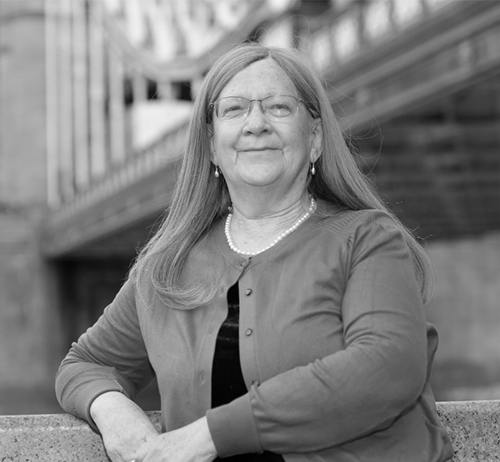
Dr. Linda Parker is widely considered to be one of Britain’s leading polar and military historians. She is the author of six acclaimed books, an in-demand public speaker, the co-founder of the British Modern Military History Society, and the editor of Front Line Naval Chaplains’ magazine, Pennant, which examines naval chaplaincy’s historical and contemporary role.
READ MORE: ‘What history can teach Trump about the Strait of Hormuz crisis‘. As tensions continue to disrupt global shipping through the Strait of Hormuz, Dr Linda Parker argues that the present crisis cannot be fully understood — or resolved — without examining the centuries-long struggle for control of the Persian Gulf.
Do you have news to share or expertise to contribute? The European welcomes insights from business leaders and sector specialists. Get in touch with our editorial team to find out more.
Main Image: Imperial War Museums/Wikimedia Commons