Artificial intelligence has transformed the way millions of professionals work, with many now relying on free AI tools every day. But the age of free AI services is unlikely to last, and the streets of Hanoi, Vietnam, offer a glimpse of the unequal future that could lie ahead, writes Dr Stephen Whitehead
Stand on any corner of Hoan Kiem, the beating heart of Vietnam’s capital, Hanoi, for thirty seconds and you will understand more about the future of artificial intelligence than a year of Davos panels can teach you.
Traffic never pauses. Instead, it flows – a churning, honking, unbroken river of two-wheeled machines, each one carrying a family, a fridge, a stack of egg trays or a schoolgirl in white ao dai, balanced side-saddle behind her father. Hanoi has more than 6.9 million registered motorbikes competing for road space with barely over a million cars, on a street grid built for rickshaws and bicycles. It is chaos with a rhythm and, I would argue, the most honest economic picture on the planet of what happens when a transformative technology matures, and a perfect analogy for where AI is heading.
At the turn of the last century, the automobile did something almost no invention before it had managed: it collapsed distance, restructured cities, created entire industries and rewired the rhythm of daily life. It was, genuinely, a civilisational moment. Henry Ford didn’t just build a car. He built the idea that a transformative technology could become ordinary, that the extraordinary could be domesticated into the driveway of an ordinary household.
But look closely at that promise, more than a century on, and the fine print becomes visible. The car became ubiquitous without ever becoming universal. Today, Vietnam has roughly 77 million registered motorbikes – around 770 per 1,000 people, one of the highest ratios on earth – because the car remains out of reach for most Vietnamese households. A basic new car in Vietnam still runs to VND 200–300 million (roughly £6,000–£9,000), a genuinely large sum against median incomes, so ordinary families do what ordinary families across Thailand, Indonesia, the Philippines, much of Latin America and swathes of Africa have always done: they buy the scooter instead. Car ownership in Vietnam has crept up from around two per cent of households in 2005 to something closer to 8–9 per cent nationally today. Everyone can move, but not everyone can move the same way. The car was available to everyone in principle, but only those who could afford it enjoyed its full benefits. That pattern defines the automobile’s history.
Now look at AI. Right now, in the summer of 2026, anyone with a smartphone and a data connection can open ChatGPT or Claude and have something approaching a research assistant, a therapist, a copywriter and a coding partner, largely gratis. It feels universal because it is heavily, deliberately and unsustainably subsidised.
Consider what that ‘free’ tier actually costs to run. Anthropic, maker of Claude, is projected to spend roughly US$19 billion on training and inference compute in 2026 – a sum that roughly matches its entire annual revenue. Its gross margins, despite improving sharply from deeply negative levels in 2024, still sit around 40 per cent, some 10 points below where the company wants them, after inference costs ran 23 per cent over internal projections.
And by Anthropic’s own account, the overwhelming majority of its user base – some 95 per cent – sits on the free tier, converting almost nothing into revenue while consuming vast amounts of the very compute that is bankrupting the business model.
OpenAI’s numbers are, if anything, starker: analysts expect its compute spending to reach US$121 billion by 2028, with cumulative losses that could exceed US$200 billion before the company reaches sustained profitability, which it is not projecting before 2030.
This is a land grab. Every free query is a customer-acquisition cost, paid for by venture capital and, soon, by public shareholders, because both companies are now racing towards the exit. Anthropic filed confidentially for a US listing on 1 June, 2026 at a reported US$965 billion valuation, targeting an October debut; OpenAI followed a week later at roughly US$852 billion, with Sam Altman said to be holding out for a US$1 trillion floor. Between them, along with SpaceX’s parallel listing, the three companies are asking public markets to absorb something in the region of US$200 billion in fresh capital in a single year – in a US IPO market that raised just US$45 billion in the whole of 2025.
Private investors will forgive burn in exchange for a story about tomorrow. Public markets, however, are far less romantic. They want margin, not mythology. Once quarterly earnings calls replace investor memos and 10-Qs replace glossy growth narratives, the ‘cheap AI for everyone’ phase starts looking like what it has always been: a pre-IPO growth hack, designed to build habit and market share before the bill comes due.

We know the sequel because we have watched it before, on a smaller screen. Netflix launched its standalone streaming plan in 2010 at US$7.99 a month and held the line, more or less, while it built an audience and a content library nobody could yet match. Once it had 300 million subscribers and had proven the model, the increases came steadily, then relentlessly: 2019, 2020, 2022, twice in 2025 and again in early 2026, when its premium plan reached US$26.99 a month – a rise of well over 200 per cent from where it started, timed precisely to when the company had leverage rather than gratitude to spend. Streaming became tiered, expensive and increasingly closed to free-riders, who were left with ads instead of full content.
AI is likely to follow the same pattern, only faster and with greater consequences, because unlike a film library, AI capability increasingly determines who gets hired, who writes faster, who diagnoses sooner and who out-competes whom. Expect a familiar choreography: free tiers that quietly degrade – older models, throttled usage, more advertising, more upsell – while genuine frontier capability migrates behind subscription walls that climb year on year, the way OpenAI’s US$200-a-month Pro tier and Anthropic’s premium Max plans have already begun to signal. The honeymoon discount was always a marketing expense, and it ends when the marketing has done its job.
This returns us to Hanoi, and to the true cruelty of the analogy. AI becoming expensive is only part of the problem. The deeper issue is that expense, once it arrives, will not fall evenly. Some 2.2 billion people worldwide are still not online at all. In low-income countries only around one in five people has internet access, against roughly nine in ten in wealthy nations, and a basic connection can already eat up 1.5 per cent of per-capita GDP for the poorest users – the digital equivalent of Hanoi’s poorest households sinking a disproportionate share of income into a second-hand Honda Wave just to get to work. Add a genuinely capable AI subscription on top of that connection cost, priced for Silicon Valley margins and Wall Street patience, and you have manufactured, quite precisely, the two-tier transport system I see outside my window every single day: a scooter class getting by on what’s cheap, throttled and increasingly outdated, and a car class riding in comfort on what actually works.
The motorbike never disappeared when the car arrived. Instead, it became the permanent condition of those who couldn’t afford the alternative: dignified, resourceful, essential and second-best. That is very likely the fate of ‘free’ AI once Anthropic and OpenAI answer to public shareholders instead of patient venture funds: not abolished, but relegated. A serviceable scooter of a product for the many, and a chauffeured, frontier-grade car for the few who can pay what it actually costs to build.
Use the free tier while it lasts. Ask it everything. Push it hard. Somewhere between an October IPO and a 2028 profitability target, the honeymoon ends – and the streets of Hanoi are already showing us exactly what happens next.

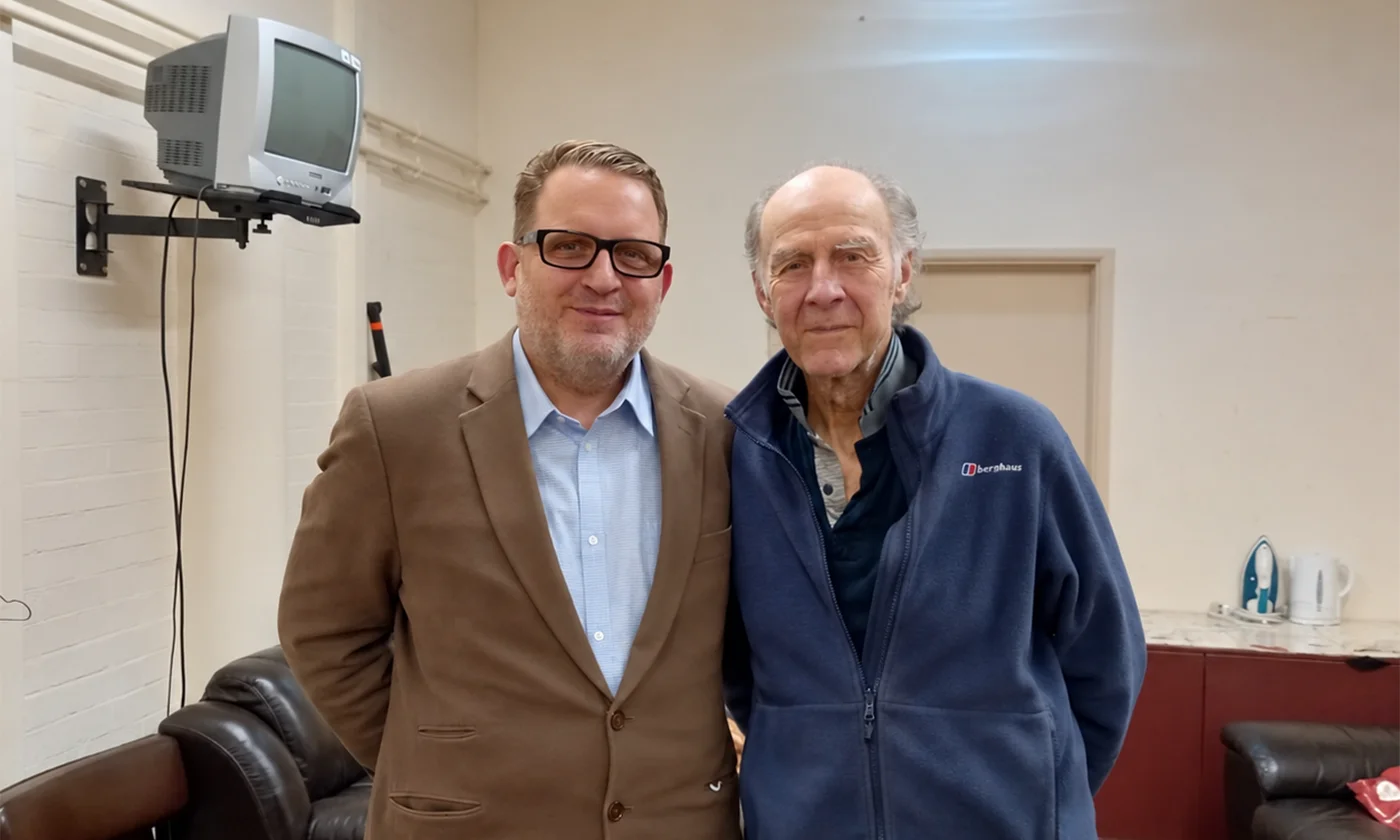
Dr Stephen Whitehead is a gender sociologist and author recognised for his work on gender, leadership and organisational culture. Formerly at Keele University, he has lived in Asia since 2009 and has written 20 books translated into 17 languages. He is based in Thailand and is co-founder of Cerafyna Technologies. His forthcoming book, co-authored with Constanza Fernández Arce, is Where Have All the Good Men Gone?
READ MORE: ‘Healthy leadership means letting go of the myth of male certainty‘. As AI transforms work, geopolitical instability grows and trust in institutions declines, the traditional image of the all-knowing male leader is no longer fit for purpose. Gender sociologist Dr Stephen Whitehead argues that healthier organisations will be built through leadership that is more reflective, relational and accountable.
Do you have news to share or expertise to contribute? The European welcomes insights from business leaders and sector specialists. Get in touch with our editorial team to find out more.
Main Image: Tuvictor/Pexels