More Western men are travelling to Thailand in search of supposedly submissive partners. But these so-called ‘passport bros’ are mistaking emotional restraint for weakness, and overlooking the hidden labour and social cost borne by the women they claim to admire, writes Dr Stephen Whitehead
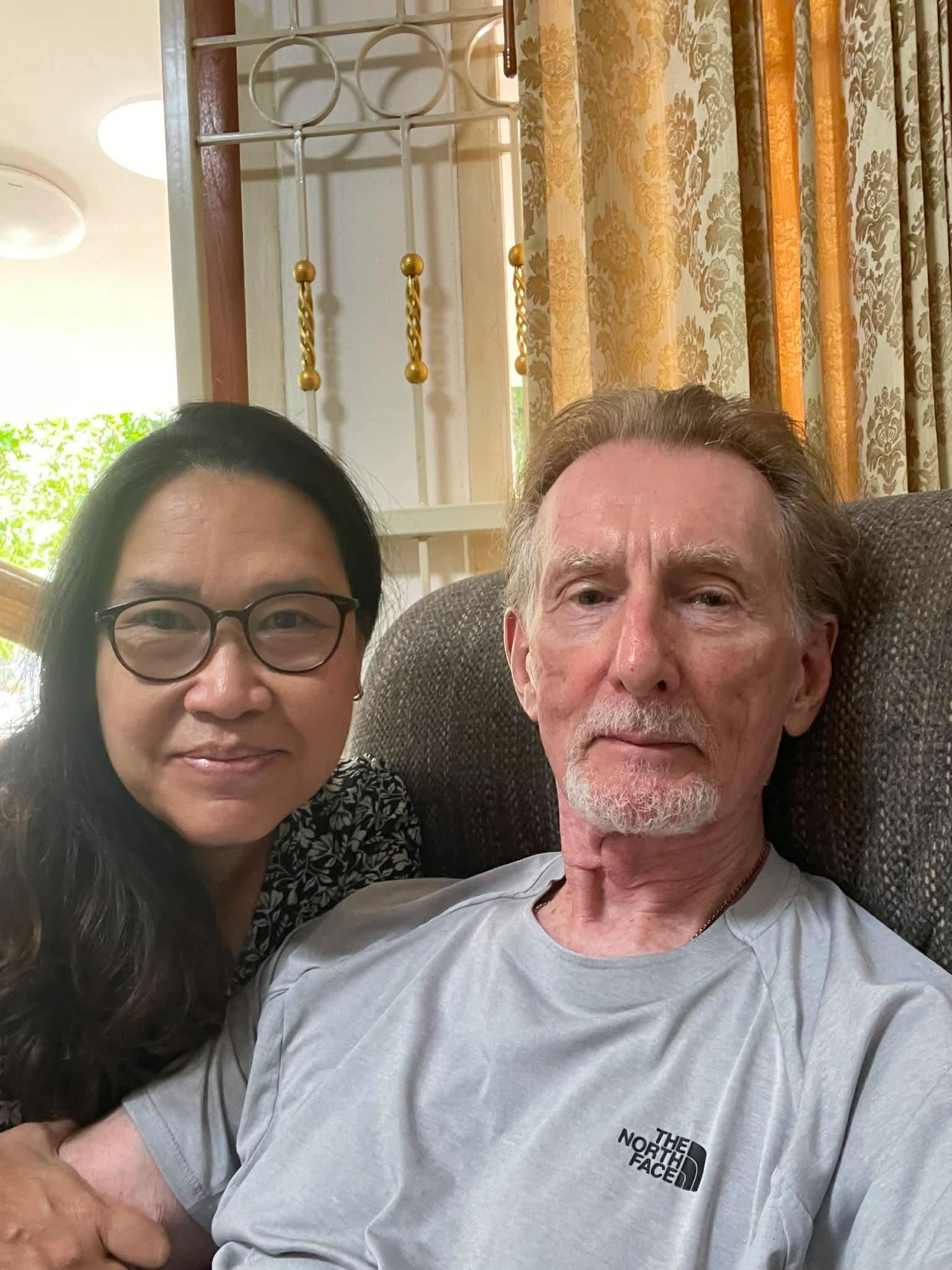
My wife and I have been married for nearly 20 years. She holds two Masters degrees in science – one from Hamburg University – and is a director of one of Thailand’s major beverage corporations. She is in her mid-50s, formidably intelligent and carries herself with the quiet authority of decades of earned competence.
Yet should we walk into hotel lobby together anywhere in Thailand, you will see it happen: the glance that lasts a half-second too long. The recalibration in the eyes of strangers – Thai and Western alike – as they absorb the image: a Thai woman with a much older Western man. The narrative writes itself instantly. They are reading a template before they have read us.
My wife notices every single time whereas I usually don’t notice at all. That asymmetry – her hyperawareness, my near-total blindness – points to something profound. The Thai idea of rók nâa, literally ‘face-love’, comes closest to naming it: the ingrained imperative to protect one’s own dignity and the dignity of everyone around you. It opens a window onto an emotional reality many Western men struggle to see, just as more of them are arriving in Southeast Asia for a very particular reason.
I have written before about the West’s dating crisis. Roughly six in 10 American men under 30 are now single, against barely a third of their female peers. Marriage rates sit at historic lows while reported sexlessness among young adults has doubled since 2010. Beneath the numbers runs the great gender divergence: women surging ahead on degrees and earnings while a widening cohort of men report no romantic prospects at all.
Out of that crisis has come the ‘passport bros’: a loose online movement of Western men who have declared the Western dating market broken beyond repair and reached for the geographic solution. The #passportbros hashtag has drawn close to half a billion views on TikTok while videos carrying the tag had passed 200 million views on YouTube by mid-2023, and polling suggests 15 per cent of American men have expressed interest in seeking a partner abroad. The phenomenon has crossed into legacy media too, with The Economist this spring dispatching a reporter to the passport bro hotspot of Da Nang. Get the passport, board the plane and find in Asia the woman feminism supposedly abolished.
The passport bro seeks a version of womanhood that is compliant, passive, erotic and subservient; one that privileges his masculinity rather than challenges it. He is looking for reassurance for a masculinity the dating crisis has left bruised and fragile. In the bars of Pattaya, Da Nang and Cebu, within a week of landing, he believes he has found it: the smile, the attentiveness and the absence of argument, seemingly on offer for the price of a drink and a visa run.
He believes he has found the pliable femininity the West no longer produces. Instead, he has encountered a highly disciplined and resilient form of composure, produced under pressure and according to cultural rules he cannot read.
Western men tend to translate the Thai concept of nâa – face – as embarrassment-avoidance. That is a caricature. Nâa is closer to one’s entire social existence: a currency that can be given, earned, maintained and catastrophically lost. Rók nâa is the lifelong work of protecting that currency, for oneself and everyone in one’s relational orbit. Beneath it sits kreng jai: a practised restraint, a deep reluctance to impose one’s negative feelings on anyone perceived as higher status – older, male, foreign, financially stable.
Above both sits the famous Thai smile, which Western men routinely misread as happiness, ease and agreement. It can be all of those, but it can also mask grief, anger or a silent refusal. The smile is less a window into the emotional interior than a door kept courteously, firmly, almost permanently closed. The passport bro on his Pattaya bar stool looks at that smile and sees everything he came for.
In Thai culture, emotional restraint is coded as strength. Losing one’s temper, being publicly critical, displaying visible distress – these cause both parties to lose face. The passport bro believes he has escaped a femininity too strong for him and found one agreeably weak. He has it backwards. This emotional regime demands self-command. He left home because he could not withstand women who said what they felt. He has arrived among women strong enough, in many situations, to withhold what they feel.
In practice, kreng jai means the woman is in pain but does not mention it, because she does not want to worry him. She dislikes something he does but says nothing, because correcting him would humiliate him. She defers to his preferences because asserting her own feels like an imposition. She performs contentment, because her unhappiness would make him feel like a failure.
The Western man living inside this dynamic experiences it as harmony and the refreshingly low-drama partnership the passport bros fly east to purchase, and they duly report back to the algorithm: “I found her, boys – she’s real!” He is experiencing the product of her invisible labour: the exhausting work of subordinating her emotional reality to protect his comfort. Her discipline, performed by her culture’s rules, has nothing to do with his masculinity. He mistakes her discipline for his contentment.
The template the passport bros are thickening with every bar-stool TikTok has consequences they never see. Some years into our marriage, my wife told friends from her university days that she had married a Westerner. Their response was a single word, dressed as a question: why?
Not “how did you meet?” Just “why?” This from educated, professional Thai women who had shared a campus with her – precisely the women who might be expected to look past the template. They didn’t, and the presumption was instant: a bar in a downtown Thai city, a transaction masquerading as romance. For a woman who built everything through her own intelligence and labour, that assumption is a particular kind of wound. She must absorb it without visible distress, because showing distress would cost her face. Kreng jai means she will not impose the wound on me, and rók nâa means the composure must hold. It is why so few middle-class, educated Thai women will marry a Western man at all.
Ask yourself which is the more resilient feminine identity: the one that names the injury, or the one that carries it in silence. The men fleeing the former in search of something softer have arrived in the territory of the latter.
I am a UK male boomer, raised in an expressive individualist tradition: feelings should be named, processed and resolved. We take the surface of a relationship as an accurate guide to its depths. If she’s smiling, she must be fine. That makes us precisely the wrong kind of reader for a woman operating within rók nâa – and the passport bro, whose bruised masculinity requires her smile to mean what he needs it to mean, is the wrongest reader of all. When a Thai woman says “maybe”, she often means no. When she says mai pen rai (“never mind”), nothing is necessarily fine.
Nearly two decades of marriage have given me, at best, a partial literacy. My wife’s emotional world is not more repressed than mine, nor more serene. It is differently structured – and more complex, because it must be so elaborately managed, weighed constantly against the social costs of expression. The Land of Smiles, as Thailand is often referred, is not a land of simple emotions. It is a land of extraordinary emotional complexity, carried mostly in silence.
That is the lesson of rók nâa, and the lesson waiting, unlearned, for the passport bros. The man fleeing the West’s dating crisis believes he is flying toward a pliable femininity that will finally reassure his fragile sense of himself. In fact, he is flying toward a feminine identity tougher, more resilient and more confounding than anything he left behind. It will smile at him warmly, defer to him graciously, and remain, for as long as he refuses to learn its language, entirely beyond his reach.
The journey east will not reinforce the passport bro’s masculinity. Instead, if he stays long enough and pays close enough attention, it will quietly take it apart.

Dr Stephen Whitehead is a gender sociologist and author recognised for his work on gender, leadership and organisational culture. Formerly at Keele University, he has lived in Asia since 2009 and has written 20 books translated into 17 languages. He is based in Thailand and is co-founder of Cerafyna Technologies. His forthcoming book, co-authored with Constanza Fernández Arce, is Where Have All the Good Men Gone?
READ MORE: ‘How I would close the sociology gap inside AI companies‘. If AI companies are serious about reducing bias and building technology that works across different cultures and communities, employing a resident sociologist is only the first step. Here, Dr Stephen Whitehead explains how he would embed sociology across product development to identify hidden assumptions before they become costly, embarrassing failures.
Do you have news to share or expertise to contribute? The European welcomes insights from business leaders and sector specialists. Get in touch with our editorial team to find out more.
Main Image: Nu Wachara/Pexels