The UK’s new overheating guidance is a first step towards accepting a hotter future, writes Ravi Balgobin Maharaj, who argues that the Caribbean offers practical lessons in how homes, schools and public institutions must adapt to heat
Britain’s latest guidance on overheating asks architects and developers to design homes for the climate people are likely to inherit in the 2050s, not the climate the country used to know. For a nation whose housing debate has long centred on keeping people warm, not cool, it marks an important shift.
British homes have traditionally been designed around winter. Insulation, airtightness and heat retention made sense in a colder climate. But in hotter summers, like those currently affecting the UK and Europe, those same qualities can trap heat indoors and make homes difficult to live in. The homes being built in the UK today will still be standing in 50 or 60 years. If they cannot cope with the temperatures ahead, they will become expensive evidence of poor planning.
In the Caribbean, extreme and often relentless heat is a part of daily life. You learn which side of the house catches the harsh afternoon sun, why errands should wait until evening, why people move towards shade and why verandas fill after sunset. Heat has shaped homes, schools, hospitals, government offices and ordinary habits on these islands long before ‘climate adaptation’ became a policy phrase.
Traditional Caribbean architecture was shaped around those realities. Wide verandas create shade before walls heat up, tall ceilings allow hot air to rise, windows encourage cross-ventilation, and roof overhangs protect walls from the sun. Even the landscaping and trees form part of the overall cooling system.
Necessity, as they say, is the mother of invention and how heat is dealt with here is a good case in point. Buildings in the Caribbean either work with heat or spend their lifespan fighting it.

It will come as no surprise that air conditioning also became essential across much of the region. Government offices need it because paperwork, meetings and decisions slow down when people are simply trying to endure the temperature. Hospitals depend on it because medicine, recovery and patient safety are all affected by oppressive heat. And schools can’t cope without it because children cannot concentrate properly in classrooms that become too hot to use.
There is an older lesson in the long summer holiday. Closing schools during the hottest weeks was an early form of adaptation, created long before modern cooling. Today, when Caribbean governments install cooling systems in classrooms, they are following the same logic in a changed climate. Children still need to learn, and buildings need to make that possible.
Europe is now beginning to face the same reality. New homes built to retain warmth in winter are becoming unliveable in summer, thanks in part to stone streets and dense building materials that trap and release heat long after sunset.
Air conditioning has long carried cultural and environmental baggage across much of Europe, viewed as it is as a sign of excess, a failure of design or a sidestep from climate responsibility. The concerns behind that view are real. Cooling uses electricity, strains power grids during heatwaves and can cause environmental damage when systems are inefficient or powered by dirty energy.
Heavy reliance on mechanical cooling can also weaken the case for better buildings, shade, smarter ventilation, lighter roofs, trees and improved urban design. These measures are essential in that they reduce heat before it enters a building and help keep streets and neighbourhoods cooler.
The Caribbean understands this balance and recognises that good design comes first. Shade, airflow, orientation and materials all matter. But air conditioning is still viewed as an integral part of a wider response, used where passive measures cannot keep people safe, productive or well.

That is the lesson Europe needs to absorb quickly. Cooling should be cleaner, better regulated and powered by cleaner electricity. Buildings should be designed so that air conditioning is needed less often. Public institutions still need to accept that there are times when mechanical cooling is necessary. There is, after all, nothing virtuous about avoidable suffering. A child who cannot concentrate in an overheated classroom is not helping the planet. An elderly patient struggling through a hot night in a hospital ward is not proof of environmental seriousness. Public policy exists because individual endurance has limits.
Britain’s revised guidance is encouraging because it moves the argument onto practical ground, recognising as it does that people cannot be expected to manage overheating through perfectly timed window opening or by accepting unsafe indoor temperatures. Buildings themselves – and the designers behind them – need to carry far more responsibility.
This applies across Europe. Heatwaves are arriving often enough to reshape public health, employment, housing and city planning. Public authorities are opening cooling centres, employers are reconsidering working practices and health systems are preparing for hotter summers. The least visible adaptation may also prove the most important: the homes, schools, hospitals and offices being built now must be able to function in the decades ahead.
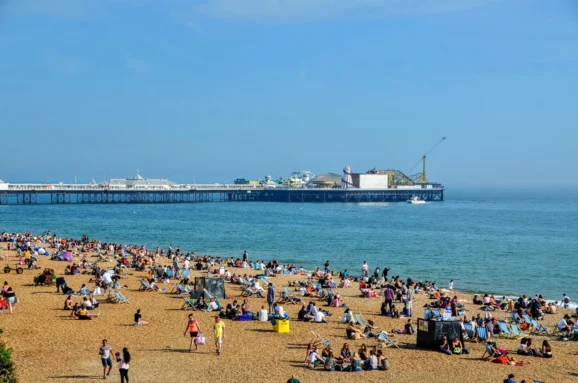
Europe has an opportunity to combine lessons from hotter regions with modern engineering. Dynamic thermal modelling, climate projections and updated building standards can help designers understand how homes will perform in future conditions. Caribbean experience adds a practical lesson learned over generations: architecture, shade, airflow and cooling all have a role.
Adaptation and climate responsibility belong in the same conversation. Emissions must fall because every fraction of a degree avoided makes future heat easier to manage. Existing heat also has to be faced. Lower emissions will not cool the classroom, hospital ward or home that is already unsafe this afternoon.
The climate has already changed and the bigger question now is whether our buildings will change with it. The Caribbean has long understood that resilience means shaping homes, communities and public institutions around the world as it exists. Britain’s new guidance suggests Europe is beginning to reach the same conclusion.
The old divide between countries that lived with heat and countries that holidayed in it is fading thanks to climate change. The Caribbean has shown that adapting to heat is an act of realism, and Britain’s new standards suggest Europe is starting to understand the same lesson.

Ravi Balgobin Maharaj is a geopolitical commentator and international affairs analyst with a focus on security strategy, alliance systems, and emerging global power structures. His work explores the intersection of military capability, political sentiment, and diplomatic alignment in an increasingly multipolar world. Drawing on a global perspective, he provides analysis on shifting coalition dynamics, regional security frameworks, and the evolving role of Western institutions in contemporary conflict.
READ MORE: Britain to rank among Europe’s hottest places as 40C heatwave closes in. Forecast peak put parts of England and Wales among Europe’s hottest places this week, below the worst-hit areas of France and Spain and above or level with Rome, Athens, Marseille and Nicosia.
Do you have news to share or expertise to contribute? The European welcomes insights from business leaders and sector specialists. Get in touch with our editorial team to find out more.
Main image: Hansi via Pexels