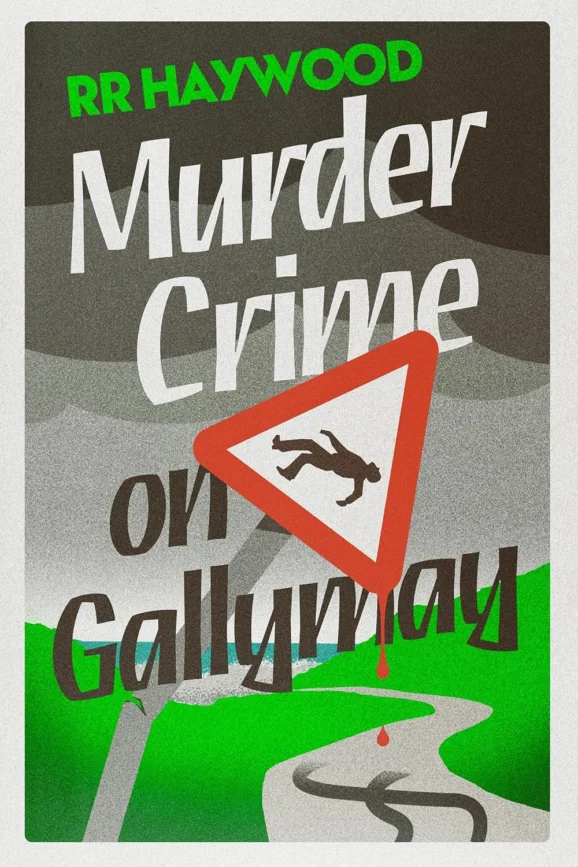
Publishers told bestselling author RR Haywood his latest novel, murder mystery Murder Crime on Gallymay, was a great read but wasn’t realistic, despite his 20 years as a policeman. Why? Because when it comes to crime fiction, we’re more used to fantasy than fact
My new novel, Murder Crime on Gallymay, is, by my own admission, an “almost cosy” murder mystery. I thought it sat quite firmly in the genre of police procedurals, and I say that with a degree of confidence, because I was a police officer for twenty years.
I’ve served on all sorts of teams, from neighbourhood policing to drugs disruption teams, to public order units and more specialised investigative roles. And having now written a fair few novels, topped a few charts, and sold a few million books, I thought I also had a reasonable handle on fiction. So my aim with Murder Crime was simple: tell a good story, build engaging characters, make it entertaining – but make it as accurate as possible.
And in that accuracy lies the heart of the story.
The main character, Jim Greene, is a working detective constable taking a break on a remote island when he finds a body. He reacts how any real copper would: calmly, methodically, and with a sense of dread about all the paperwork to come.
Throughout the book, Jim tries to follow the Police and Criminal Evidence Act, respect continuity of evidence, apply the rules of disclosure, and generally do things the way they’re meant to be done. Even when chaos unfolds around him. And as the reader learns more about Jim, they also learn what real-life policing actually involves.
When I sent the finished novel to my pre-readers, the feedback was overwhelmingly positive. They loved the story, the characters, the way I’d used pocketbook entries, body-worn video logs, and statements to tell parts of the narrative. But most of all, they said the book felt real. And that, it turns out, is what made it strange.
Because when I sent it to a few publishers, they adored it too, the feedback was brilliant, but said they couldn’t publish it. It wasn’t what readers expect from a crime novel, they said. It didn’t feel “realistic.”
Which was odd. Because it is.
That’s when it hit me: crime fiction has created a kind of parallel universe. A place where DCI mavericks run around solving murders alone, often while battling a troubled past and clutching a hip flask. Where uniformed officers stomp through active crime scenes and poke at bodies with pens. Where detectives shout “Bag it!” at crime scene investigators, and everyone seems to be seconds from a breakdown or a revelation.
In reality, detective constables do most of the investigatory work, supported by sergeants. Senior officers (inspectors, chief inspectors, superintendents) are managers. They attend briefings, oversee the process, and generally don’t run through alleyways after suspects.
As for CSIs — or Scenes of Crime Officers — they’re highly trained professionals, many of them civilian staff, who don’t need anyone telling them how to do their job. They don’t wait to be yelled at. They know exactly what to do, but they also stick to their job and don’t also run around getting into gunfights with baddies.
There are also things that underpin real policing which are rarely shown at all. The Police and Criminal Evidence Act is one of them. It governs what powers we have, how we gather evidence, when we can detain someone, how we treat people in custody, and more.
Continuity of evidence is another. The chain of custody, from the moment an item is seized to the moment it’s presented in court. Then there’s disclosure. When someone is charged, the prosecution has to show what material has been gathered — even the stuff that might undermine their case. Hide something, even by accident, and the case can collapse. And they often do.
All of these things matter. They aren’t optional extras. They’re the difference between a conviction and a mistrial — or worse, a wrongful one.
And then there’s the tone. Real policing is stressful, pressured, and sometimes terrifying — but it’s also full of humour. Not humour in the cruel sense, but ordinary, human humour. It’s a coping mechanism. Most emergency service workers I knew joked constantly. You work long hours for not a lot of pay, dealing with life-or-death situations, and you keep each other going with laughs.
TV and fiction rarely capture that. They make it all look so po-faced and dark. I’ve had countless discussions with editors and publishers telling me what policing ‘should’ look like when I’ve included crime elements in previous books. Even when I explained my twenty-year police career, they’d often carry on—so entrenched is the fantasyland of crime thrillers. It’s a kind of real-world Dunning-Kruger effect, where people become so immersed in fiction that they mistake it for expertise.
In the end, I knew Murder Crime wouldn’t work under a traditional deal unless I agreed to massive changes.
And I just couldn’t do it. I didn’t want to invent a maverick DCI with a tortured past. I didn’t want Jim Greene to suddenly turn into a private investigator.
I just wanted to show what it’s actually like to be a good, capable copper trying to do the right thing, while the world refuses to play along.
So I published it myself.
I’m proud of it. I’m proud of the story, and the characters, and I’m proud that it has made people laugh and feel good while reflecting the realism of actual real-world policing.
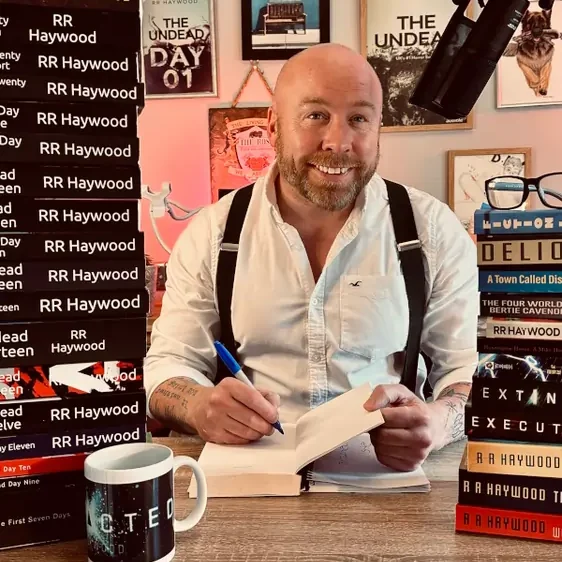
RR Haywood is one of the world’s bestselling fiction authors, known globally for his zombie and science-fiction series of books. His work, much of which was self-published, has sold millions of copies around the world, making him one of Britain’s most successful ever self-published novelists in these genres. As an Amazon “All-Star” author, RR Haywood’s books have consistently featured in the retailer’s top 100 sales chart since 2017. He has had 30 Kindle Bestsellers and is a Washington Post, Wall St Journal, Amazon & Audible bestselling author. His books Fiction Land and DELIO were nominated for the best audio book at The British Book Awards and won the Discover Sci-Fi Best New Book 2023 respectively. His latest novel, cosy murder-mystery Murder Crime On Gallymay, is out now.
Main image: Courtesy, MagnusGuenther/Pixabay