In her acclaimed new book, Jing Zhao Cesarone, The European’s Global Impact Correspondent and founder of the Global CSR Foundation, argues for a model of leadership built around balance, partnership and long-term responsibility in an age of disruption
In an era shaped by economic disruption, technological acceleration, and social fragmentation, the world’s institutions are being asked, again and again, to produce better leaders. I believe that question is incomplete. The real task, I would argue, is to redefine what leadership itself means for a civilisation in transition, and to look beyond the search for stronger individuals to occupy positions of power.
That argument is the spine of my new book, Women’s Civilizational Leadership: A New Paradigm for the Golden Age of Humanity, released globally on International Women’s Day 2026. The book moved quickly into the spotlight, reaching the number one position in Amazon’s New Releases in General Gender Studies while also ranking among the Top 10 in Social Policy, and has since been made available across 50-plus publishing platforms worldwide. For a debut work of this kind, that reception signals a genuine hunger for leadership models built on shared responsibility, balance and purpose.
My path to this argument grew out of practice and lived experience. It began over three decades ago as a business journalist at China Daily, continued through a public relations role at Siemens Ltd. China, and led to the founding of ChinaWise, my Chicago-based cross-border advisory firm, in 2001. Along the way I built ChildWise, a social enterprise that trained earlychildhood educators across China and the U.S., and later founded the Global CSR Foundation in 2018, convening leaders across sectors on sustainable development, women’s empowerment, and partnerships aligned with the UN Sustainable Development Goals.
What runs through all of it is a dual vantage point I often describe in my writing: an insider-outsider position, shaped by growing up in China and building a life and career in the U.S. That in-between perspective, formed across both cultures, became the lens through which I began to see leadership itself differently. I started asking how societies as a whole heal, rebuild, and evolve through periods of transformation, and how individuals rise within systems capable of serving that wider purpose.
Women’s Civilizational Leadership moves beyond the form of a conventional leadership manual. It blends ancient philosophy, modern innovation, and international dialogue into a broader meditation on collective responsibility. The book proposes an approach centred on collective responsibility and balanced partnership, emphasising life-centred and human-centred leadership, ethical governance, and longterm thinking. It also considers how Eastern and Western wisdom traditions might be integrated, and what principles are needed to guide humanity through the emerging age of artificial intelligence.
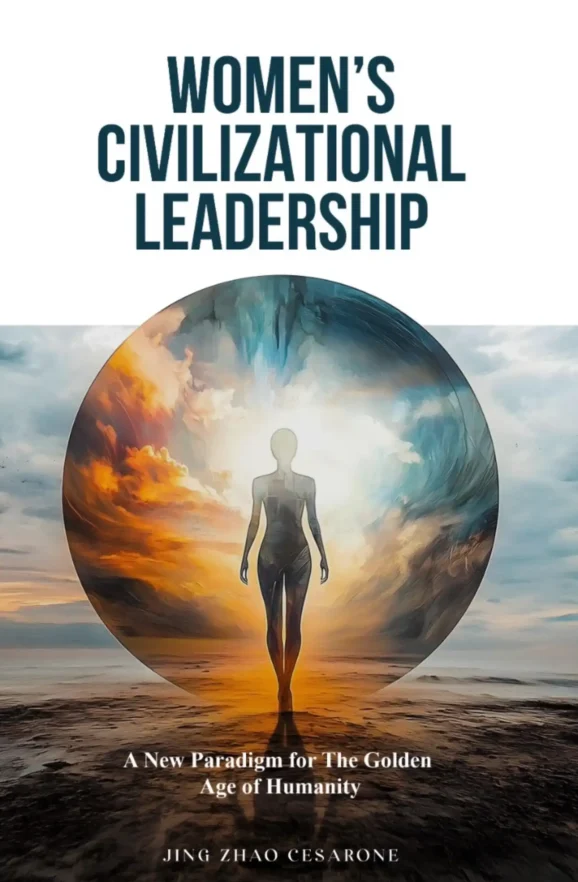
At the centre of the book sits a set of four civilisational archetypes – Nüwa, Sophia, Athena, and Arctoria – each representing a distinct dimension of feminine leadership through history and myth. Nüwa, the mother-creator figure from Chinese mythology who mends the sky, has become a particular touchstone in my recent writing: an image of the original civilizational leader, the one who repairs what is broken so that life can continue. It is a fitting emblem for a book that treats women as originators of leadership itself, with a place at the root of leadership models.
“The golden age begins when men and women lead together, in balance and purpose,” I write, a line that captures the book’s central claim: this is a conversation about women and men creating a partnership model neither has fully practised.
This is a distinction European readers may find familiar in a different register: the same debate that has long animated European conversations about co-determination in corporate governance, or about parental leave as shared civic infrastructure rather than a private family matter. My contribution is to lift that instinct out of policy and into myth, arguing that the partnership I describe belongs to a pattern civilisations have practised and then forgotten, one I believe is now due for recovery.
The response to that argument has been substantial. I received the International Impact Book Award’s Outstanding Literary Achievement Award in the category of Global Leadership, an honour that recognises the book’s influence on contemporary conversations surrounding leadership, governance, ethics, and humanity’s future. The award ceremony is set for July 19, 2026, in Phoenix, Arizona.
I have taken the ideas on the road as well, presenting them during the UNESCO Intangible Cultural Heritage General Assembly in Paris, the World Future Technology Development Conference in London, where I shared the stage with figures including Baroness Uddin, and the IASC World Changers for Peace conference in Assisi. That circuit reflects how deliberately I have placed the book’s ideas within international conversations about leadership. It is a pattern I have continued this year with the 11th Sino-US Investors Reception in Omaha and a Global AI Adoption Day event hosted at the Global CSR Foundation’s Chicago offices, each treated as another point of contact for the same underlying argument.
The movement built around the book has continued to widen since its spring launch. Around Mother’s Day 2026, I expanded the project with Women’s Civilizational Leadership for Mothers, a companion volume that turns the same framework toward a constituency I consider leadership’s most overlooked source: mothers themselves. The timing was deliberate. The companion book argues that mothering was civilisation’s original leadership practice, one modern institutions have spent generations failing to recognise as such.
Books create a moment of attention; sustaining a movement requires something else. That is the role I have assigned to The Golden Age newsletter, published on LinkedIn to keep the conversation around women’s leadership alive and engaging within the community between larger public milestones. The newsletter has surpassed 1,600 subscribers within just a few weeks, evidence that the appetite for this line of thinking extends well beyond those who have read the book itself. It operates as an ongoing space for reflection and dialogue, a way of keeping readers inside the framework’s questions as world events continue to test them.
I am now extending the book’s reach into new markets, including a Chinese-language edition in development with a major Beijing publisher, and into new arenas of global convening, among them the COP31 100 Global Impact Leaders initiative ahead of the UN Climate Conference in Antalya this November, produced jointly with The European and the UN World Women Organization. It is, in a sense, the book’s thesis playing out in real time: an insider-outsider figure, moving between civilisations, arguing that the next era of leadership needs both.
As I have put it elsewhere, a golden age has to be actively led into being. For me, that has become both an argument and an instruction, one I am testing on the page, across institutions, and through the conferences and conversations I continue to convene globally.
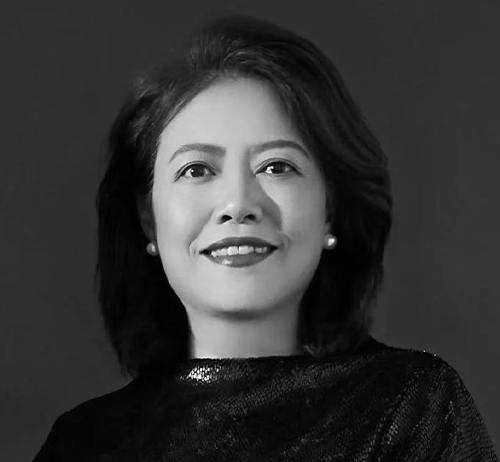
Jing Zhao Cesarone is an author, leadership thinker and founder of the Global CSR Foundation, a U.S.-registered nonprofit established in 2018 to advance sustainable development, responsible leadership, women’s empowerment and cross-sector partnerships aligned with the United Nations Sustainable Development Goals. She writes for The European on climate change, women’s leadership, responsible business, sustainability, social impact and the changing role of leadership in a more interconnected world.
Her book, Women’s Civilizational Leadership: A New Paradigm for the Golden Age of Humanity, is available on Amazon or from www.jingzhaocesarone.com
READ MORE: ‘The World Cup that changed Europe’s view of the U.S‘. European supporters arriving for the 2026 World Cup have found a country shaped by scale, hospitality, food and civic pride, with the tournament giving visitors a first-hand experience of everyday America beyond the impressions formed by politics, television and social media, writes Jing Zhao Cesarone.
Do you have news to share or expertise to contribute? The European welcomes insights from business leaders and sector specialists. Get in touch with our editorial team to find out more.