
Democrats have captured both houses of Congress in the U.S. midterm elections, but Donald Trump retains millions of supporters who may reject his behaviour without abandoning his political agenda. Europe should not mistake the result for a lasting shift in American politics or a guarantee of renewed transatlantic stability, says Mike Bedenbaugh
Democrats won both chambers of Congress in the United States midterm elections last week. When the new Congress takes office in January, it will be better placed to check President Donald Trump. For Europeans hoping for stronger support for Ukraine, a steadier commitment to NATO and a more predictable American foreign policy, there seems to be reason for relief. But as an American constitutional conservative who has spent much of his life studying our nation’s political institutions, I would offer my European friends a warning: not so fast.
The Associated Press survey of midterm voters found that about two in 10 people who backed Democratic candidates viewed the party unfavourably. About seven in 10 voters said Congress was doing too little to check presidential power. The result gives Democrats an opportunity to govern, and those numbers tell them something about what voters expect of them.
My home state of South Carolina provides a revealing example. Democrat Annie Andrews defeated Republican Darline Graham for the Senate, while Republican Alan Wilson won the race for governor. Some voters may have rejected Graham’s candidacy without embracing Democratic policies. Others may have stayed home rather than lend their support to either party. In Texas, Democrat James Talarico defeated Republican Ken Paxton. Those are striking victories in states where Republicans have long dominated. They tell us less about whether voters will stay with the Democrats when the candidates and the circumstances change. The University of Florida’s Election Lab puts preliminary turnout at about 124 million, just under half of eligible voters.
The distinction should be noted. An election result can reflect dissatisfaction with individual candidates or the government of the day without signalling a durable change in political beliefs. My concern is that Europeans will read these victories as evidence of a transformed American electorate when they may tell us more about the circumstances of this particular election. Historic results do not necessarily create permanent political realignments.

Trump still has a substantial constituency. A Reuters/Ipsos poll put his approval rating at 32 per cent just after the election. His supporters can separate frustration with the man from support for his agenda. Europeans who confuse the two risk a profound political miscalculation. His appeal draws on frustrations over immigration, industrial decline, federal bureaucracy, political elites and cultural change. Trumpism is not dependent upon Donald Trump’s continued political relevance. A politician who inherits that movement could advance the same agenda with greater discipline, more strategic calculation and fewer of Trump’s personal liabilities.
We are discussing tens of millions of Americans who view Trump as an expression of resistance to institutions they distrust. They may have grown weary of his erratic behaviour, rambling speeches and impulsive pronouncements without abandoning the issues that drew them to him. The anti-establishment forces unleashed in 2016 extend beyond any one politician. Ambitious successors may inherit those grievances while proving more adept at turning them into a coherent political programme.
Americans are also losing the ability to agree on what has happened, before we even get to what ought to be done about it. In a 2025 Pew Research Center study of trust in news sources, 56 per cent of Republicans and Republican-leaning independents trusted Fox News, while 64 per cent of Democrats and Democratic-leaning independents distrusted it. For CNN, 58 per cent of the Democratic group trusted the outlet and the same proportion of the Republican group distrusted it.
Podcasts, partisan websites and social media make it easy to spend the day hearing from people who confirm what we already believe. In the most committed factions, questioning presidential authority can cost a Republican standing with their own side. A Democrat who challenges an expansion of federal power can find themselves in much the same position. A constitutional republic depends on citizens willing to judge government actions by constitutional principles rather than political loyalties.
These divisions are not simply disagreements about which policies would work. Increasingly, Americans disagree about the facts upon which those arguments depend. Contrary evidence is dismissed as propaganda, and political opponents are treated as enemies rather than fellow citizens with different priorities. The methods and severity of misinformation are not necessarily equivalent across the political spectrum, but neither party is immune to the temptation to value loyalty above independent judgement.

Former U.S. President John Adams, writing to fellow Founding Father Benjamin Rush in 1812, recalled the colonies before independence as roughly a third loyal to Britain, a third committed to independence and a third hesitant. That was his recollection, and the parallel that interests me, 250 years after independence, is the space between the camps. Today’s less firmly aligned voters are not necessarily moderates. Some Americans in that space are constitutional conservatives who reject Republican leadership. Others are Democrats uncomfortable with their party’s direction. Many are politically exhausted, responding to household costs or the perceived character of individual candidates; others sit the election out altogether. As that electorate shifts, each party in power claims a mandate to reverse the last administration. Long-term problems such as the national debt and the influence of money in politics go unresolved.
We keep changing captains while neglecting the condition of the ship. We expect presidents to control prices, settle social disputes, initiate military operations and personally deliver prosperity. When they fail, we elect someone who promises to exercise those powers more effectively. Under the Constitution, Congress makes the laws and controls federal spending. The president is responsible for executing the laws, and the Tenth Amendment reserves undelegated powers to the states or the people. That division is a restraint on the people we elect, including the ones we vote for.
Yet Americans increasingly judge constitutional conduct by whether it produces their preferred outcomes. Executive overreach becomes acceptable under a favoured president and intolerable under an opponent. Both parties have contributed to the erosion of that restraint. Trump’s personal approach to presidential power has made it particularly visible. In his 1796 Farewell Address, George Washington warned that political factions could threaten the stability of the republic.
The irony, 250 years after American independence, is that the country has acquired an enormously powerful national government without a corresponding public understanding of its constitutional limits. Our founders designed institutions to restrain factions. Today, those factions too often treat the institutions as instruments for achieving their own ends. Washington’s warning remains relevant precisely because the temptation is not confined to one party.
The incoming Democratic Congress should investigate wrongdoing where evidence warrants it, reassert its constitutional authority over war and public spending, and make legislating its first priority. It has an opportunity to confront the entrenched interests that have weakened our republic: the influence of wealthy donors, the protection of incumbents, and the steady concentration of power in Washington. But meaningful reform requires more than winning an election. It demands a willingness to surrender political advantages that both parties have grown accustomed to enjoying.
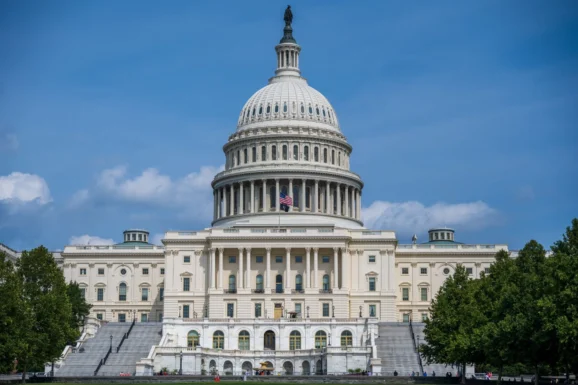
The true test of these reforms is whether Democrats are willing to impose the same restraints on themselves that they demand of Republicans. Constitutional principles cannot change with the party in power. Democrats must also resist the temptation to turn Congress into a theatre of endless subpoenas, partisan investigations and political spectacle. Legitimate oversight is a constitutional responsibility, but using congressional power primarily to humiliate political opponents is not governing. If Democrats mistake their victory for a mandate for retribution rather than an opportunity to restore responsible government, they risk repeating the very failures that brought them to power. The voters have given them an opportunity, not a blank cheque.
Europeans remember a post-war America whose commitment to its allies was reinforced by the shared demands of the Cold War. This election gives Congress a chance to show that it can govern and check the president. For Europe, the test is whether those checks hold when power changes hands again. Our ideological factions remain entrenched, our information environments fragmented and our constitutional institutions weakened.
The election has changed who holds power, but it has not resolved how America governs itself. Until Americans demand long-term constitutional responsibility rather than immediate partisan satisfaction, Europe should not mistake another reversal at the ballot box for a lasting political awakening.

American author, political thinker and U.S. Navy veteran Michael Bedenbaugh is a respected voice in constitutional principles and American governance. Based in South Carolina, he contributes to national discussions on American politics, historic preservation and civic reform. He is the author of Reviving Our Republic: 95 Theses for the Future of America and host of the podcast Reviving Our Republic. He previously ran as an independent candidate for Congress.
READ MORE: BBC loses bid to throw out Trump’s $10bn defamation lawsuit over doctored Panorama speech. Florida judge rules US president can pursue his claim over a misleading edit of his January 6 speech, while dismissing a separate allegation against the broadcaster.
Do you have news to share or expertise to contribute? The European welcomes insights from business leaders and sector specialists. Get in touch with our editorial team to find out more.
Main Image: Credit: Elena / Pexels