PLD Space’s €180 million Series C, led by Mitsubishi Electric, marks a turning point for European launch independence, writes Marco Ryan. As ESA’s budget surges to a record €22 billion and Spain doubles its space investment to become the agency’s fourth-largest contributor, a Spanish company is building the continent’s biggest private rocket manufacturing facility and preparing to compete in a market projected to reach $27 billion by 2033
There is a common assumption in the global space industry, particularly among those watching from Silicon Valley, that the launch market has already been decided. SpaceX, with its reusable Falcon 9 rockets launching on an almost weekly cadence and its Starship programme promising costs as low as $10 million per flight, has established a dominance so complete that European alternatives can seem almost quaint by comparison. Arianespace, once the world’s leading commercial launch provider, now manages fewer than 10 missions a year whereas SpaceX routinely exceeds 100.
And yet, something is shifting. On 4 March 2026, PLD Space, headquartered in Elche, Spain, announced the closing of a €180 million Series C equity funding round led by Mitsubishi Electric Corporation. The Japanese industrial giant is not merely investing but joining as a strategic launch customer, contracting PLD Space to deliver small satellite launch services using its MIURA 5 rocket across Japan and the broader Asian market. With over €350 million raised to date, PLD Space has quietly positioned itself among a select group of private companies worldwide developing complete launch systems from design through manufacturing to orbital delivery. When a manufacturer of Mitsubishi Electric’s scale selects a European launch provider for its Asian operations, it is making a statement about industrial credibility that no amount of government rhetoric can replicate.
The global small satellite launch services market reached $8.2 billion in 2024 and is projected to hit $27.2 billion by 2033, driven by the proliferation of satellite constellations for communications, earth observation and remote sensing. The sheer scale of planned deployments — Amazon’s Kuiper constellation alone has contracted Arianespace for 18 Ariane 64 launches — means demand for reliable launch capacity is growing faster than any single provider can absorb. PLD Space is not attempting to replicate SpaceX; it is targeting the small and medium payload segment where institutional requirements for launch diversity and the strategic imperative of non-American, non-Chinese alternatives create genuine commercial opportunity. MIURA 5 is on track for its first test flight in 2026, with plans to exceed 30 launches per year by 2030.
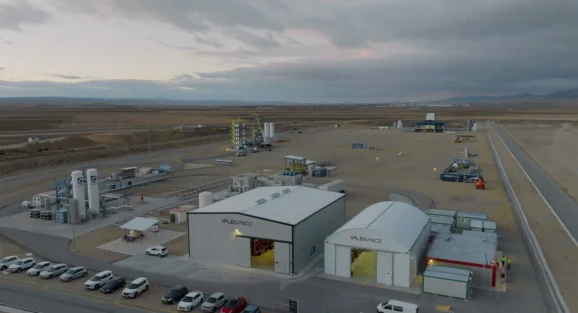
What distinguishes PLD Space from many small launcher ventures is the depth of its industrial commitment. The company is constructing Europe’s largest private rocket manufacturing facility in Elche, designed for serial production — a first for Spain. It has made substantial progress on its launch complex at the Centre Spatial Guyanais in Kourou, French Guiana, and operates across 188,000 square metres of facilities spanning Spain, French Guiana and Oman. The geographic spread is itself strategic: multiple launch locations reduce dependency on any single site and provide the operational redundancy that constellation operators increasingly demand. Its team of more than 400 employees, its successful MIURA 1 technology demonstrator launch in October 2023 and its selection for ESA’s European Launcher Challenge all point to methodical execution rather than headline-chasing.
PLD Space’s rise cannot be understood in isolation from the broader transformation of Spain’s position within the European space ecosystem. At ESA’s Council of Ministers in Bremen in December 2025, Spain committed €1.854 billion for 2026–2030, becoming the agency’s fourth-largest contributor for the first time, overtaking the United Kingdom, Belgium and Switzerland. The country’s average annual ESA contribution has risen from €202 million in 2018 to €455 million. Within that package, Spain committed €169 million specifically to PLD Space’s MIURA 5 through the European Launcher Challenge — a competitive framework modelled loosely on NASA’s approach with SpaceX, positioning ESA as a strategic customer rather than a design authority.
The Spanish Minister of Science, Innovation and Universities, Diana Morant, said: “The closing of this series consolidates a strategic project with global impact born in our country, reinforcing Spain’s key position within the space economy. The Spanish Government has backed PLD Space’s growth plans, because investing in space means investing in technological sovereignty, strategic autonomy and qualified employment generation.”
For years, the case for European launch independence rested on abstract strategic arguments. Russia’s invasion of Ukraine in 2022 changed that overnight. The loss of Soyuz rockets from Arianespace’s fleet forced ESA to contract SpaceX — its primary commercial rival — for critical science missions. Europe’s space agency, built on the principle of independent access to orbit, found itself booking rides on American rockets because it had no viable alternative.
That experience reshaped the political calculus. ESA’s record €22 billion budget, agreed at Bremen, saw 24 of 27 contributing nations increase their commitments. Germany pledged over €5 billion, including for the first time a contribution from its Ministry of Defence. France announced €4.2 billion in additional military space spending for 2026–2030. ESA Director General Josef Aschbacher said the message from member states was clear: Europe needs to “catch up, step up, and literally elevate the future of Europe through space.”
In this context, PLD Space’s funding round represents something more than a single company’s growth story. It demonstrates that European space sovereignty is attracting private and international capital alongside public investment, that the industrial base is being built not only in France and Germany but in Spain, and that global customers see European alternatives as commercially credible. The round was further supported by CDTI through its INNVIERTE fund, COFIDES through its FOCO investment fund and Nazca Capital’s Aeroespatial and Defence fund, blending public strategic investment with private market confidence in a combination that would have been difficult to assemble even five years ago.
The race that matters
Europe will not out-space SpaceX. That contest was lost before it was joined, and pretending otherwise serves no one. The structural fragmentation of Europe’s space industry — where rockets, satellites and services are built and operated by separate companies across separate national programmes — remains a persistent disadvantage that no single funding round can resolve. What Europe can do — what it is now doing — is build a diversified, sovereign launch capability that ensures no geopolitical shock, no commercial dispute and no single company’s strategic priorities can deny the continent access to orbit. In a world where satellite constellations underpin military communications, precision agriculture, climate monitoring and financial systems, independent access to space is foundational infrastructure in the same category as energy grids and telecommunications networks.
PLD Space’s €180 million raise, backed by the industrial weight of Mitsubishi Electric and the strategic commitment of the Spanish state, demonstrates that European space sovereignty is no longer just a policy aspiration articulated at ministerial conferences. It is being built, physically, in manufacturing halls in Elche, on launch pads in Kourou, and in commercial contracts stretching from Europe to Asia. The money is flowing, the rockets are being assembled, and the question facing European space is no longer whether the continent is serious about competing, but whether it can sustain the urgency.

Marco Ryan is a board-level advisor, author and former FTSE 100 executive specialising in digital transformation, leadership strategy and ethical oversight in the age of AI. He has held senior global roles including Chief Digital Officer at BP, Wärtsilä and Thomas Cook, and now serves as Cyber Leader in Residence at Lancaster University Management School. He is co-author of Rewire or Retire: AI for Leaders, a candid guide to navigating AI’s impact on work, leadership and ethics, and has published widely on cybersecurity and AI literacy for executives. An angel investor, mentor and regular conference speaker, Marco is an active voice in the global conversation on digital intelligence, governance and leadership in an AI-driven world.
READ MORE: ‘Europe’s space ambitions are stuck in political orbit‘. Despite having world-class scientists, engineers and space technology firms, Europe’s commercial space sector continues to fall behind the United States and China. Martin Halliwell of NewSpace Capital argues that political fragmentation, regulatory inertia and decision-making by committee are stifling innovation, driving entrepreneurs away and weakening the bloc’s strategic position in a space economy that underpins security, growth and long-term stability.
Do you have news to share or expertise to contribute? The European welcomes insights from business leaders and sector specialists. Get in touch with our editorial team to find out more.
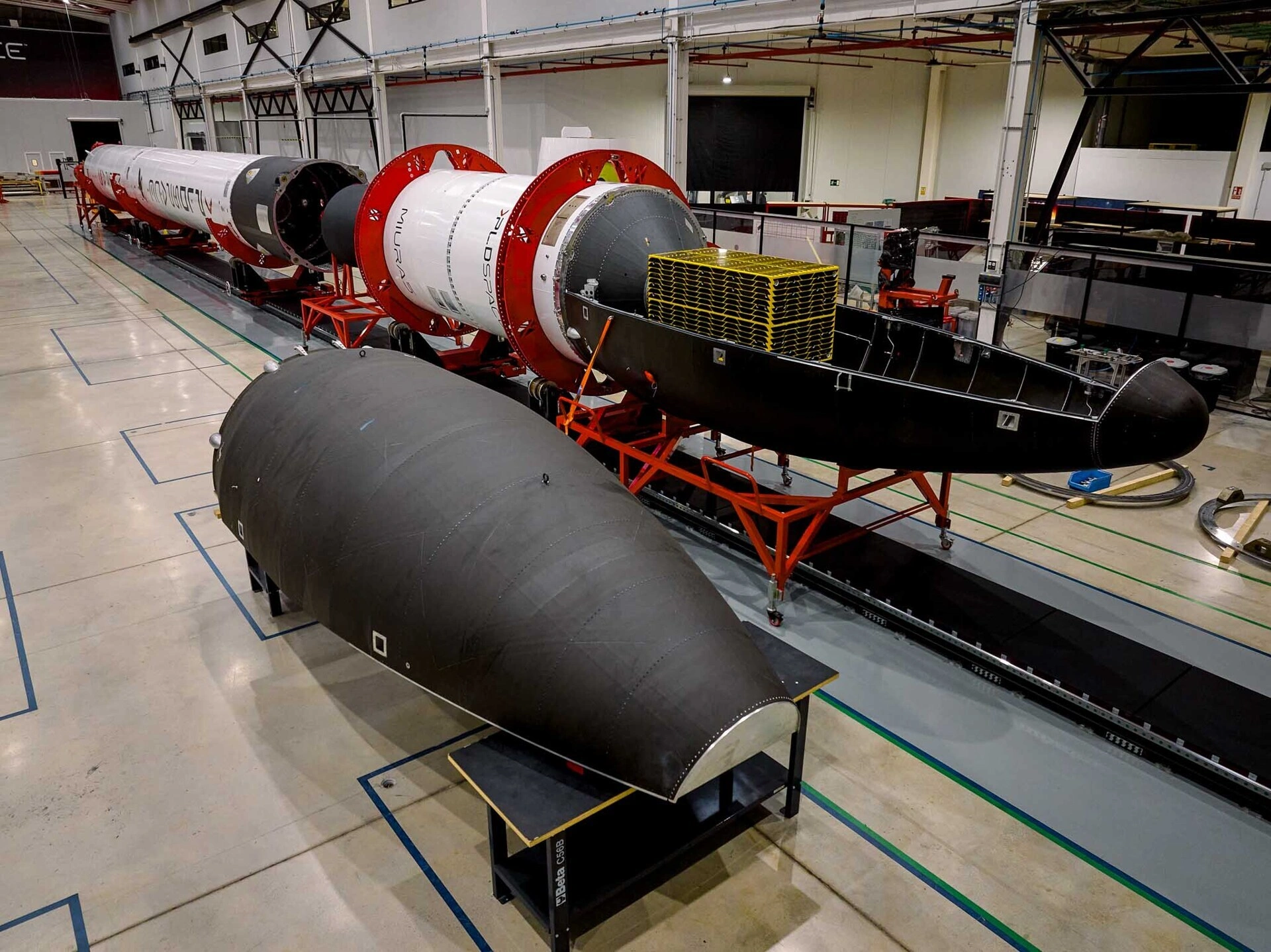
Main image: PLD Space’s MIURA 5 Qualification Model 1 (QM1), the first fully integrated test unit used to validate rocket subsystems ahead of the launcher’s first test flight scheduled for 2026. Credit: PLD Space