For generations, Iranian women have carried intricate carpet designs in their eyes, memories and hands, passing them from mother to daughter through watching, touch and repetition. Documentary filmmaker and researcher Babak Mehrdadnia has filmed weavers whose fingers can reproduce patterns that were never written down. With Iranian carpet exports collapsing from more than US$2 billion a year to below US$40 million and war bringing fresh disruption and uncertainty to communities at the heart of the trade, he reflects on an extraordinary form of cultural memory whose future now depends on the hands that still possess it
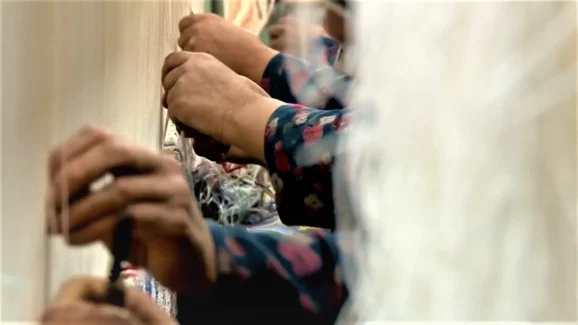
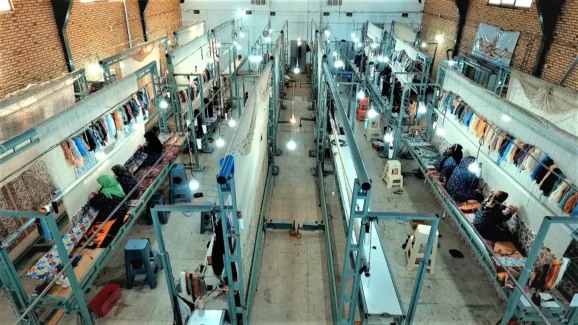
Years ago, while filming Iran’s hand-woven carpet makers, I watched women reproduce intricate designs from memory, their hands following patterns they had learnt from their mothers, who in turn had learnt them from generations before.
A few worked from paper designs, but most relied entirely on memory, tying colours and shapes into place with barely a glance away from the loom.
They had absorbed this intricate knowledge through years of watching, repetition and touch, until their hands seemed to know what to do almost instinctively.
I asked one of the weavers, “How do you weave without a pattern? How do you remember the colours and the placement of the knots?”
She smiled and said, “These patterns are in our eyes and our fingertips; they don’t fit on paper. My mother taught me this way until my hands learned.”
I have thought about her words many times since, along with her kind face and her hands. She was much older than me at the time – in her 60s, perhaps – with fingers as strong and supple as those of someone decades younger. They glided across the loom with the ease of someone who had repeated the same motions for most of her life. She had learnt by sitting beside her mother, watching closely, copying each movement and practising until the pattern became something her own hands simply knew.
The woman – I never did ask her name – was an artisan, and watching her work was much like listening to a gifted musician. Pure joy.
Watching her, I began to understand that the pattern itself was only part of what had been passed down. Her mother had also taught her how tightly to pull each knot, how to spot a line going wrong, when a colour looked out of place and when to stop and undo the work. Years of repetition had turned hundreds of tiny decisions into instinct.
The flowers, colours and shapes she wove were part of that inheritance too. She had grown up seeing them, learning them and eventually reproducing them herself, just as generations of women before her had done.
Those designs often carry something of the landscape in which the weaver lives. Iran stretches across deserts, mountains, forests and plains, and carpets made in different parts of the country have developed their own forms, colours and imagery. In arid areas, gardens, birds, lotus flowers and flowing streams can cover a carpet, creating scenes of water and vegetation far removed from the dry landscape outside.
Among tribal and mountain communities, the patterns can be more geometric and draw on animals, migration and the surrounding natural world. In Fars, UNESCO records that women traditionally take responsibility for the design, choice of colours and weaving itself, incorporating scenes from nomadic life and working without any drawn design. The organisation says the skills are passed orally and by example, with mothers teaching their daughters.
That is almost exactly what I had witnessed through my camera.
The economic world supporting those women has, sadly, contracted with extraordinary and worrying speed. Iranian hand-woven carpets, known more informally as Persian rugs, earned more than US$2 billion in export revenue in 1994. Exports were still worth US$426 million in 2017, then fell to US$39.7 million by March 2024. Industry forecasts subsequently put earnings below US$40 million for the year to March this year, following six consecutive years below US$100 million. Persian carpets that once travelled to around 80 countries now reach only a handful of significant export markets.
U.S sanctions, restrictive Iranian currency rules, inflation, weaker overseas demand and growing competition from producers in India, Turkey, China, Afghanistan and Pakistan have all played a part. Machine-made carpets exert another pressure, reproducing elaborate-looking patterns at a speed and price no woman working knot by knot can match.
America, ironically, once provided one of the most important destinations for the work. In 1987, the States imported US$88 million worth of hand-knotted carpets from Iran, representing 27 per cent of all American hand-knotted carpet imports. The following year, after an embargo took effect, that figure collapsed to US$7 million. By 1992 it stood at just US$209,000.
Iranian carpets eventually returned to the American market under sanctions relief linked to the nuclear agreement. Washington withdrew from the agreement in 2018 and the U.S Treasury ended the general authorisation for Iranian-origin carpets after a short wind-down period, closing that route again.
The numbers become much more human when you look at what has happened to the people at the looms. In Fars province, the number of carpet weavers has reportedly fallen by around 80 per cent, from roughly 6,000 in 2018 to about 1,000 this year. A local industry official described rural women spending six months making a single carpet, paying for their raw materials and fitting the work around family responsibilities, only to discover that there was no buyer for the finished piece.
For a craft passed from one pair of hands to another, every departure from the trade also represents somebody who may no longer teach the next generation.
War has now reached some of the places most closely associated with that tradition.
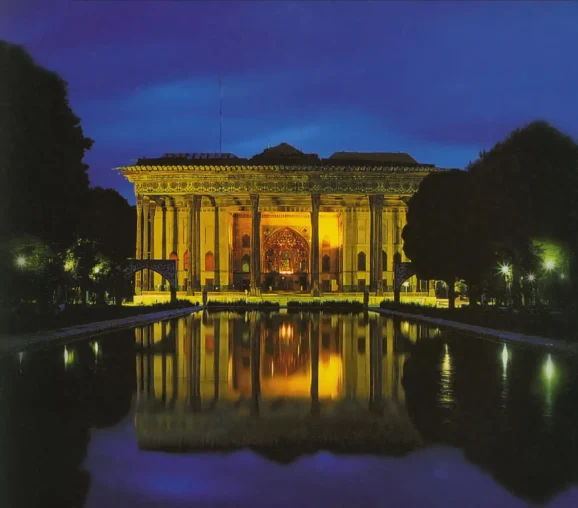
In Isfahan, where I live, Israeli air strikes on 7 and 9 March shook the historic centre around Naqsh-e Jahan Square and the 400-year-old Chehel Sotoun Palace. The provincial governor’s building, around 200 metres from the palace, was partly destroyed, and the force of the blasts damaged historic buildings around the area.
Naqsh-e Jahan and its roughly 400-year-old bazaar remain at the heart of Isfahan’s carpet trade. Weavers, including the woman I interviewed many years ago, have worked in and around the area for generations, alongside merchants, dyers, designers, finishers and repairers whose knowledge supports every stage of the craft.
The bombing has reached other important carpet-making cities too. Kashan was among the places struck during the war, and by April the Associated Press was reporting that carpet-making there had nearly collapsed amid disrupted trade, soaring costs and the wider economic damage caused by the conflict.
Kashan gives some idea of the number of people connected to this one traditional craft. When UNESCO inscribed its carpet-weaving skills on the Representative List of the Intangible Cultural Heritage of Humanity in 2010, it recorded almost one-in-three residents as being employed in carpet-making. More than two-thirds of its carpet makers were women.
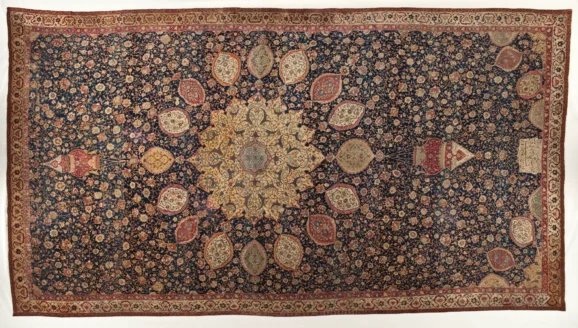
UNESCO also recorded the same mother-to-daughter tradition I had seen myself: girls learning carpet weaving through apprenticeship to their mothers and grandmothers. Natural dyes were still being produced from materials including madder root, walnut skin, pomegranate skin and vine leaves, and the distinctive Farsi knot remained at the heart of Kashan weaving.
Tabriz, another name known around the world for its carpets, has also been drawn directly into the fighting. U.S forces struck a military area on the outskirts of the city during renewed attacks in July, as the American campaign spread into north-western Iran.
Much of Iran’s carpet weaving takes place in homes and small workshops, with larger organised workshops also operating in towns and cities. In many families the loom has formed part of everyday domestic life, allowing children to grow up beside the work and absorb skills from parents and grandparents.
The effects of war can reach those domestic looms, too, without a bomb ever landing on one. Closed bazaars, interrupted transport, rising prices for wool and dyes, falling tourism, lost customers and disrupted exports all travel through the same chain until they reach the person weaving the carpet. In Fars, one industry representative said around 90 per cent of the handicrafts sector depended on tourism and reported shops going an entire week without making a sale.
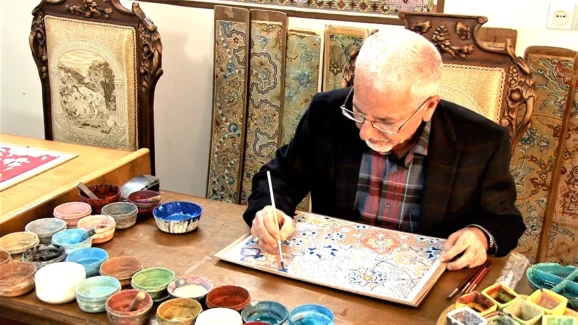
A woman can spend six months or longer producing something that eventually travels thousands of miles. An Iranian carpet may leave a modest home or workshop and end up in a palace in the Persian Gulf, an apartment in Paris, a townhouse in London or a home in America. Its eventual owner may appreciate the pattern, workmanship and sense of history without knowing anything about the woman who spent month after month creating it.
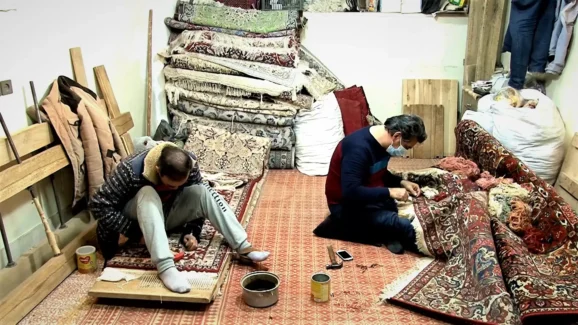
That physical journey is one of the most remarkable things about these objects. Something learnt from a mother in Iran can eventually become part of a stranger’s home on another continent.
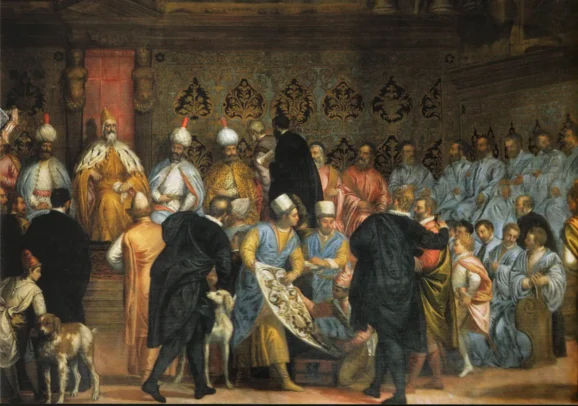
The history stretches much further back than any modern export market. One of the oldest surviving knotted-pile carpets, the Pazyryk carpet, for instance, was discovered in southern Siberia and dates from around 2,500 years ago. Its horsemen, animals, floral forms and extraordinary geometric precision have prompted long-running comparisons with the artistic world of ancient Persia, with its precise origins still debated by scholars.
For me, the most intriguing people connected with an object like that are the people whose names we will never know. Someone prepared its fibres, someone made its colours, someone understood its design and someone possessed the patience and skill to turn that design into thousands upon thousands of individual knots.
The carpet survived for millennia but the people who made it disappeared from the record – if they were ever on it at all.
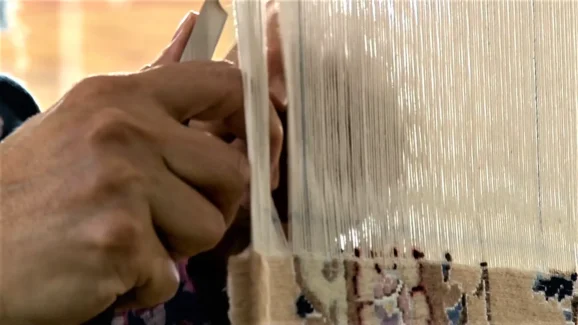
That thought returned to me during my own filming because patience is one of the hardest parts of carpet weaving for an outsider to comprehend. Days and weeks of work can produce only a few centimetres, and the image held in the weaver’s mind can take a long time to become recognisable to anybody else.
I asked another weaver, “How is it possible that after days and weeks of work, when only a few centimetres of the carpet have been woven, you do not get tired?”
“Our true pleasure is exactly in that moment; when we see that a few centimetres have gradually turned into the image of a flower or a garden. That is when we forget the fatigue,” she replied.
History has carefully preserved the names of kings, commanders, architects and celebrated painters. The names of the women who touched the wool, tied the knots and spent months or years turning remembered designs into physical objects have disappeared far more easily. Documentary makers like me have contributed to that too. I filmed one of those women, listened to her, watched her work and somehow never asked her name. I regret that now.
The future of this ancient art will depend on whether women like her still have the security, income and reason to continue weaving, and whether another generation spends enough time beside them for its own hands to learn.
Somewhere, the carpet I watched her weave may still exist. Somebody may walk across it every day without knowing who made it, where she lived or that part of its design once existed only in the memory of an Iranian woman and the mother who taught her.
Who knows? It may even have ended up on the floor of the White House.
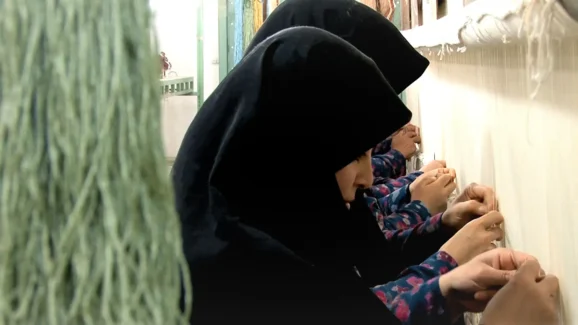
“These patterns are in our eyes and our fingertips; they don’t fit on paper,” she told me.
She was right. She was carrying generations in her hands.
War is now placing further pressure on the communities in which knowledge like hers survives. The workshops themselves remain safe and operational – for now, at least – but the economic consequences of conflict, disrupted trade and uncertainty are adding to pressures that already threaten the passing of these skills to the next generation.

Babak Mehrdadnia is an Iranian researcher, documentary filmmaker, and producer, holding an M.A. in Art Research. As the CEO and founder of Ahura Film, he bridges visual storytelling with cultural semiotics. He is the author of several historical works, including Isfahan: From Roots to Tomorrow. His forthcoming 500-page book examines 7,000 years of beard and moustache history from Mesopotamia and Ancient Iran to modern cultures and religions. His peer-reviewed scholarship includes semiotic studies on masculine facial hair, identity, and social status in ancient civilizations, presented at international academic conferences.
READ MORE: Lost in translation: can Europe’s publishing industry sustain its linguistic diversity? English accounts for as much as 70 per cent of translated titles in some European markets, raising questions over whether funding, changing reader tastes and new technology can help the continent’s smaller languages reach wider audiences, writes Isabella Russell.
Do you have news
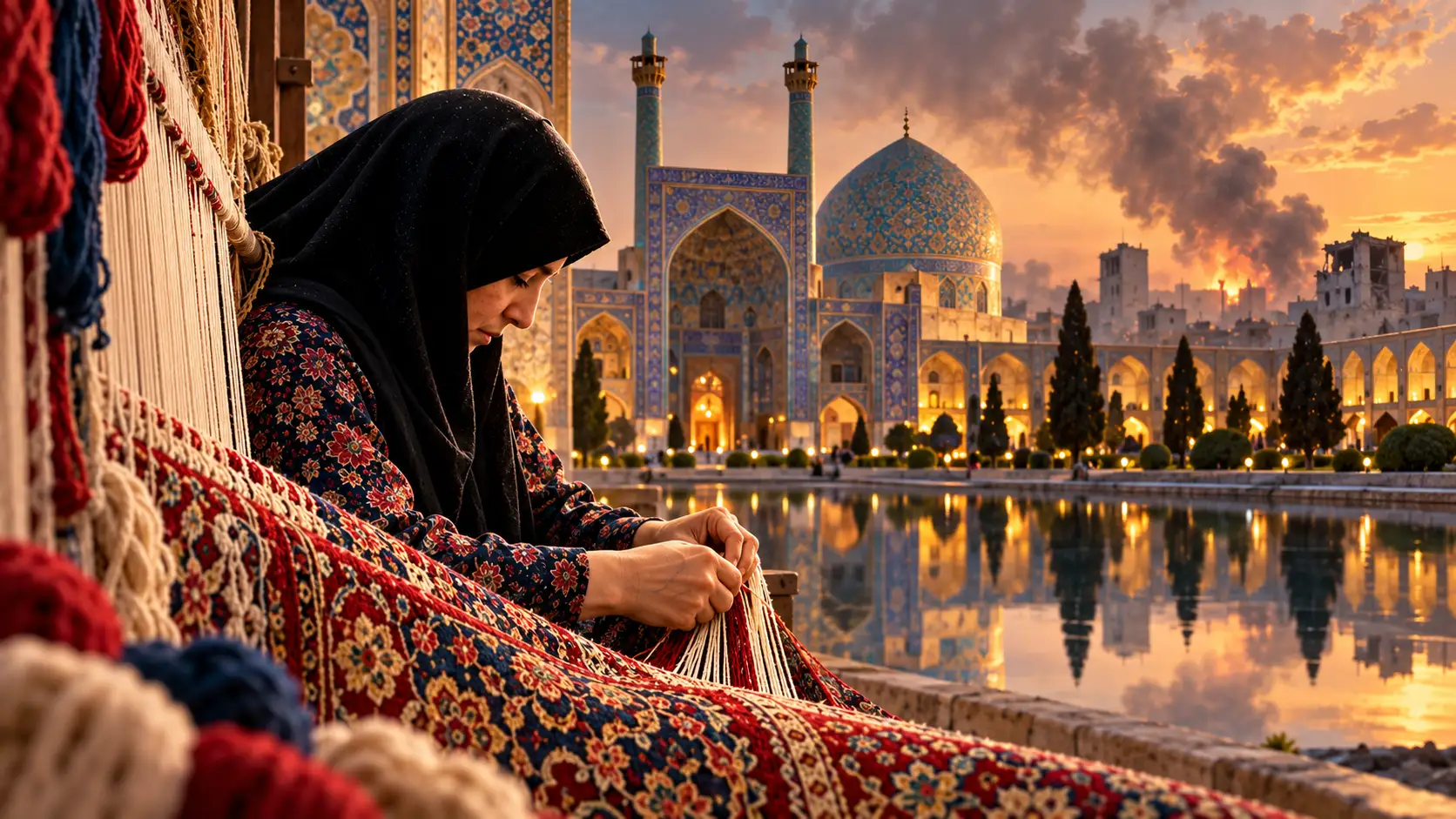
Main image: An Iranian carpet weaver works beneath the splendour of Isfahan’s Islamic architecture as war looms in the background. (The European)