The AfD’s 43.8 per cent vote in Saxony-Anhalt exposed a political divide that reunification never fully erased. German journalist David Fleschen argues that its strength in the East cannot be understood without the upheaval, lost status and unresolved grievances that followed 1990
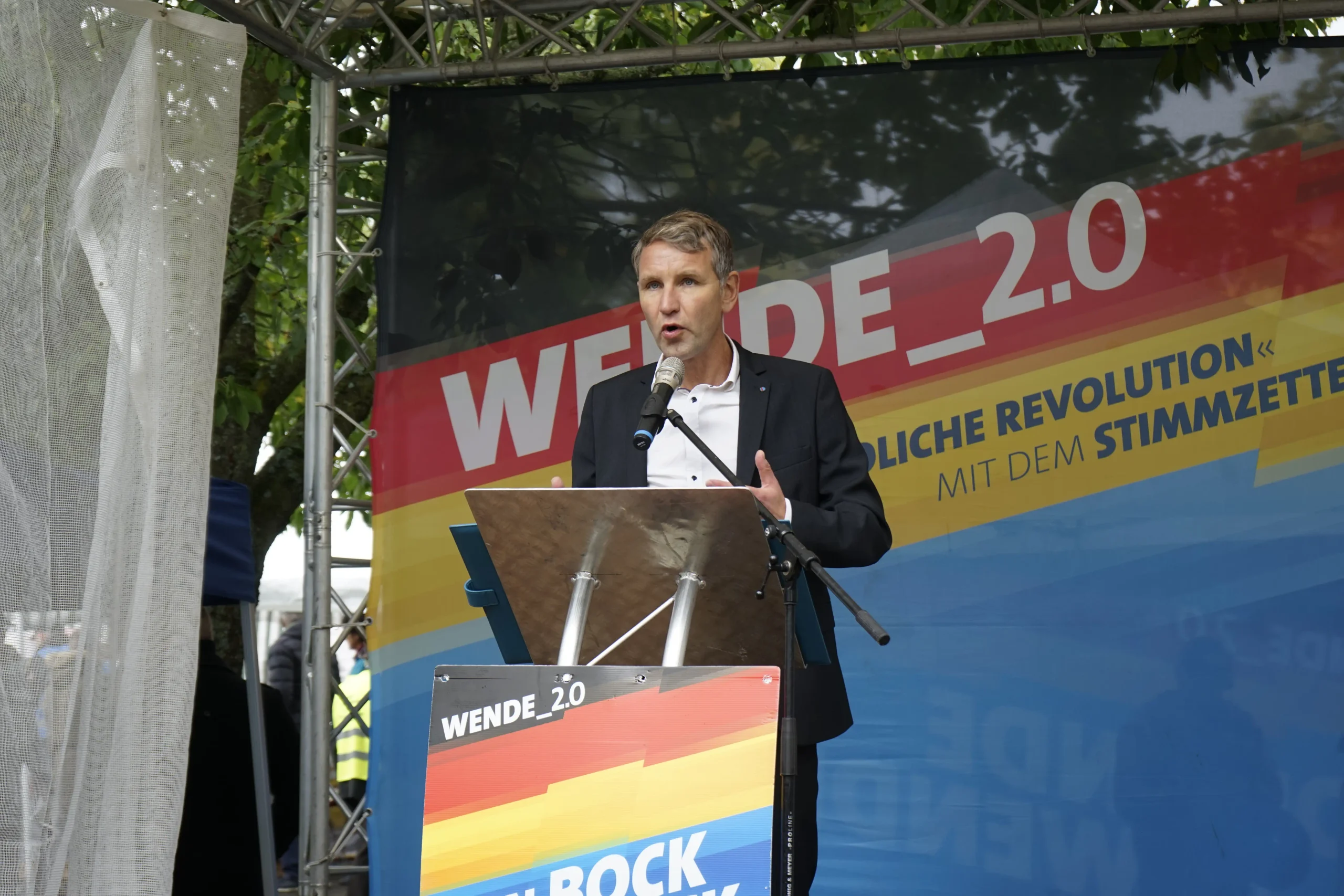
Are Germans turning authoritarian again? After the state election in Saxony-Anhalt, the question is no longer entirely absurd. The Alternative for Germany (AfD) won 43.8 per cent of the vote. Germany’s history makes the AfD’s repeated use of rhetoric associated with the Nazi era particularly alarming; Björn Höcke, one of the party’s most prominent hard-right figures, was convicted twice in 2024 for using the banned Nazi slogan ‘Everything for Germany’ at separate party events. He was reportedly fined €13,000 in May and €16,900 in July.
Despite the scale of the AfD’s support, its voters clearly do not all think alike or share the same concerns. The geographical pattern of that support, however, is highly significant.
Thirty-six years after reunification, the AfD remains much stronger in the former East. Part of the explanation may lie in the way reunification was experienced there. After 1990, East Germany’s political, economic and institutional system was rapidly dismantled and replaced by the western model.
Reunification brought greater freedom and higher living standards, but it also produced large-scale industrial closures, unemployment, disrupted careers and the loss of professional status. Qualifications were reassessed, institutions disappeared and experience accumulated under the GDR often carried less weight in the new system.
For some eastern Germans, reunification therefore involved not only economic change but a loss of status, continuity and recognition. The AfD has been effective at turning those unresolved grievances into political support by presenting itself as the party of those who believe the post-reunification order never fully represented them.
One unusual place to see this is Adlershof in south-eastern Berlin. Today, with its university campus, research institutes and technology companies, it looks like a showcase for successful reunification. Yet it had already been a centre of scientific prestige in the GDR. Some of the country’s leading scientists worked there, including Angela Merkel, then a young physicist who would later become Germany’s chancellor.
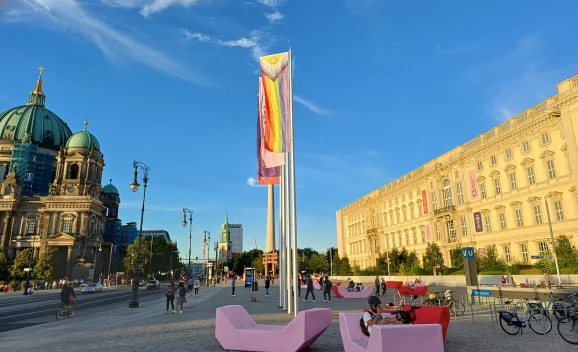
After 1990, Adlershof prospered, but many of the people who worked there faced major upheaval. Institutes closed or were reorganised, posts were reassessed and western academics arrived. Some eastern scientists found new opportunities, while others saw careers, status and expertise built under the GDR sharply devalued.
That experience was repeated across much of the former East. Reunification undoubtedly improved living standards but it also left many people feeling that the lives they had built before 1990 suddenly counted for less.
A woman I once met explained the same phenomenon through something much smaller. When the Wall fell, she told me, she was only a few months’ wages away from finally being able to afford a colour television.
It sounds like an odd, almost trivial, thing to regret. But the TV represented years of work, saving and anticipation, and finally buying it would have marked a real personal achievement. Reunification changed the value of that achievement almost overnight, as better consumer goods became widely available and something she had worked towards for years suddenly meant far less.
In other words, she was becoming materially better off while something she had spent years working towards had lost its meaning.
That loss of meaning is difficult to quantify, but the economic legacy is much clearer: East and West entered reunification with very different levels of wealth, ownership and accumulated capital, and those differences remain clearly visible today.
For instance, median net household wealth is around €143,000 in western Germany, compared with roughly €36,000 in the East. Among retired households, monthly net incomes are now strikingly similar – around €2,350 in the West and €2,270 in the East – yet 61 per cent of western retirees own their homes, compared with only 44 per cent in the East.
Those differences persisted even as Germany poured enormous sums into the East, improving infrastructure and raising living standards. Much of the private capital behind that transformation came from the West, where households entered reunification with property, savings and businesses already accumulated under a market economy. The result was a rise in prosperity without an equivalent rise in eastern ownership.
A further imbalance lay in the fact that some of the skills and experience eastern Germans brought into reunification became less valuable under the new system. A clear example is eastern Germany’s relationship with Russia and the former Soviet Union. Thousands of young East Germans worked on Soviet pipeline projects, where they learned Russian, travelled extensively and formed friendships and relationships. Those experiences gave them knowledge and connections that had real value in the GDR, but much of that value diminished after reunification as Germany’s political and economic focus moved west.
The projects were presented through communist propaganda, yet the memories people brought home were often far more personal: hard work, good pay, travel and direct experience of a Soviet society that did not always resemble the official version. Those memories did not disappear with the GDR, and for some eastern Germans they still shape attitudes towards Russia today.
Since 2022, some of these old eastern connections have acquired an additional political awkwardness in debates about Russia’s invasion of Ukraine. For many western Germans, attitudes towards Russia are shaped by politics and the war in Ukraine. In the East, however, some older Germans also draw on direct experience of the Soviet Union through work, language, travel and personal relationships formed before reunification.
That history may also help explain why some eastern Germans are suspicious of claims that a particular political course is alternativlos – “without alternative”. Many have already lived through a period in which institutions, careers and assumptions once presented as permanent disappeared or lost their value almost overnight, giving them good reason to be wary when governments present today’s policies as inevitable.
The AfD has been able to appeal to some of that scepticism by telling voters that their experiences have been ignored and that the accepted version of events is not always the only one, while pushing those grievances towards more sweeping conclusions. Criticism of reunification can become a claim that the East was effectively colonised by the West, a more complicated view of Russia can slide into sympathy for the Kremlin, concerns about migration can harden into hostility towards migrants themselves, and Germany’s taboos around Nazi language can be presented as restrictions imposed by an establishment that should be challenged.
The election result also reinforces the divide from the western side, where the East can still be viewed as Germany’s problem region, poorer, angrier, more politically extreme and not yet fully integrated into the Federal Republic.
Strong AfD support in the East can reinforce western stereotypes about the region, while those reactions in turn deepen the sense among eastern Germans that they are being judged rather than understood. In Saxony-Anhalt, 62 per cent say they feel treated as second-class citizens because they are eastern German.
Some reactions to the election have made the division more concrete. People in western Germany, for example, have told me that they will avoid Saxony-Anhalt when travelling south on holiday. A petition launched on election day went further, arguing that the result raised concerns about the safety of migrants, Jews, Muslims, LGBT people and other groups considered potential targets of far-right hostility. It called for greater security on public transport and even suggested that trains between western Germany and Berlin could, if necessary, cross Saxony-Anhalt without stopping.
There is an irony here: many high-speed trains already rush through large parts of eastern Germany without stopping.
If such a measure were ever introduced, and there is no indication that it will be, it risks widening the very divide it is intended to address. Thirty-six years after reunification, Germans still know surprisingly little about the lives on the other side of the old border.
Maybe the solution is not to pass through Saxony-Anhalt and other parts of eastern Germany more quickly, or to find ways of bypassing them altogether.
Maybe it is to stop.
David Fleschen is a German journalist whose work focuses on social change, the media and Europe. He studied European Studies in Maastricht, Salamanca, Magdeburg and St Petersburg, and has published in regional, national and international media for around 20 years.
READ MORE: Why the Dover blockade was about far more than migrants. The recent protests at the Port of Dover, which brought traffic to a standstill, have been attributed to migrant crossings. But according to Dr Stephen Whitehead, they fundamentally reveal how men who feel they have lost status, security or purpose can be drawn to displays of collective power. Addressing that insecurity early may prevent such movements from escalating.
Do you have news to share or expertise to contribute? The European welcomes insights from business leaders and sector specialists. Get in touch with our editorial team to find out more.
Main image: Björn Höcke speaking at an AfD rally during the 2019 state election campaign. The party has built particularly strong support in eastern Germany, where its success has reopened debate over the political and social legacy of reunification. Credit: PantheraLeo1359531/Wikimedia Commons, CC BY-SA 4.0