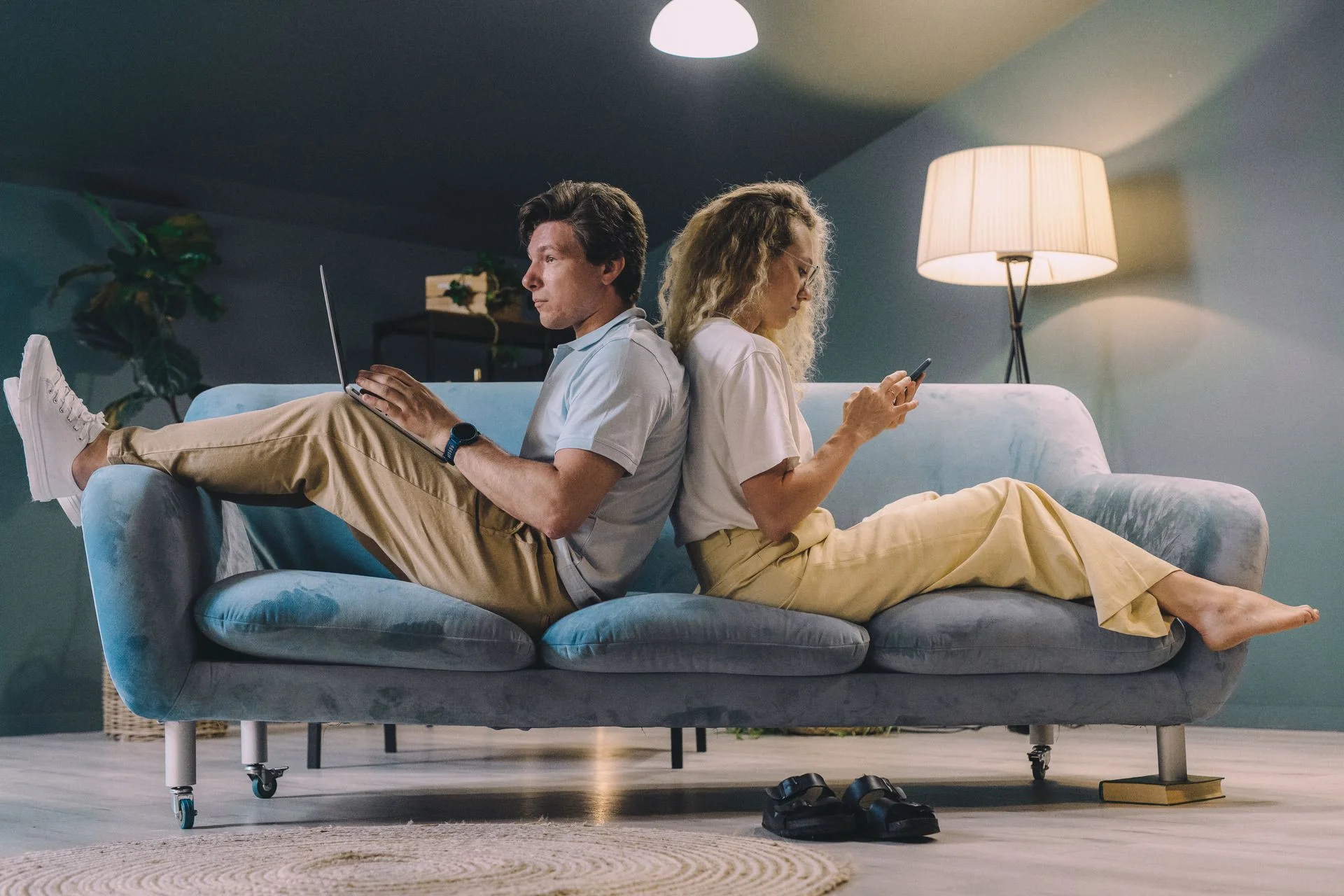
Data suggests that millions are walking away from dating apps. Dr Stephen Whitehead argues that profound changes in women’s expectations, combined with many men’s failure to adapt, have created a widening relationship gap that the dating industry is failing to confront
There is a crisis in modern dating, and most of the industry built around it is either unaware of it or too invested in making sure nothing changes. That crisis has a name: ‘gender divergence’, as I label it. It is the story of two populations — women and men — moving at different speeds, in different directions, toward increasingly incompatible futures. And the numbers, for anyone willing to look honestly at them, are stark.
The dating app industry recorded its first annual revenue decline in 2025, with global income slipping to just over US$6 billion after years of growth. Global installs dropped four per cent and sessions fell seven per cent year-on-year, according to Adjust’s 2026 State of Dating Apps report. Tinder’s paying subscribers fell from 9.6 million to 8.8 million by Q4 2025; Bumble lost 16 per cent of its paying users in the same period. In the UK alone, 1.4 million people abandoned dating apps between 2023 and 2024. Far from being blips, they are the market’s verdict on a product that is not working.
What is not working, specifically, is the product’s relationship with the people who use it. A 2024 Forbes Health survey found that 78 per cent of dating app users reported feeling emotionally exhausted by online dating. Pew Research found that 48 per cent of users had experienced at least one form of unwanted behaviour on a platform, with women reporting harassment at significantly higher rates than men. Only seven per cent of the 350 million people worldwide who have downloaded a dating app go on to pay for a premium subscription, and fewer than 15 per cent renew it for a second term.
The business model, in short, depends on dissatisfaction. Users who find lasting relationships stop subscribing. The incentive to solve the underlying problem is, at best, ambiguous.
Whitney Wolfe Herd, the founder and CEO of Bumble, put it plainly in an interview in the New York Times: “I’ve thought long and hard about this, and I think a lot of the dysfunction around dating has to do with men having the control.” That observation, from the entrepreneur who built a billion-dollar business by forcing women to make the first move, is a market diagnosis. The architecture of traditional digital dating was designed around male initiative and female passivity. That architecture is now badly misaligned with the woman it is supposed to serve.
Over the past 50 years, women have undergone a revolution in education, expectation and economic independence. Most men have not undergone any comparable revolution at all. The result is what I call ‘independent femininity’: a generation of women who no longer need a man to validate their existence, fund their lives or complete their identity. A relationship, for the modern woman, is a choice rather than a destiny. Her grandmother married out of necessity. She partners, if at all, out of preference.
Most dating platforms are still built on a 1990s assumption that women are searching for Mr Right rather than asking whether any relationship is worth the cost. The modern woman is not desperate to be chosen. She is, rather, deciding whether to choose. Any platform that treats her as a prize to be won rather than a discerning consumer has fundamentally misread its market.
The data reflects this misread. Pew Research found that 51 per cent of women report negative experiences on dating apps, compared to 42 per cent of men. In our own survey research at Cerafyna Technologies and across the published literature, women tell us that the experience feels like a second job: screening for danger, decoding intentions, carrying the conversational weight and managing fragile male egos, all before a first date. The apps have simply digitised emotional asymmetry. When dating becomes labour, women do what any rational worker does with a bad job. They quit.
Look at what male self-presentation on these platforms actually consists of. Status signals. Height. Muscles. Salary. Performed confidence rather than genuine curiosity. Matching treated as conquest rather than conversation. These men are selling a version of masculinity that women stopped buying decades ago. They were raised to believe that being a provider was enough. Nobody told them the job description changed.
That job description now includes emotional intelligence, vulnerability, genuine partnership and the capacity to meet a woman as an equal rather than a project or a prize. The tragedy is that many men do not even know why they keep failing. The app shows them the rejection but withholds the explanation. They swipe again with no new information, repeating the same behaviours millions of times.
The consequences are accumulating. A 2022 Pew Research survey found that 63 per cent of men under 30 in the United States were single, compared to 34 per cent of women of the same age — a gap without modern precedent. Young men are using dating apps extensively and failing on them. The apps have become an engine of male rejection at industrial scale, with no corrective mechanism built in.
This is what I mean by the semantic gap: men and women can use the same words — love, commitment, respect, understanding — and mean entirely different things by them. A man’s understanding of ‘commitment’ may be primarily logistical: showing up, providing, being physically present. A woman’s understanding is more likely to be emotional: being seen, being heard, being chosen every day. Two people can negotiate a relationship using these words, both believing they are speaking the same language, and discover years later that they were never in the same conversation. Close that gap and you begin to transform relationships. Ignore it, and you simply watch the divergence accelerate.
The semantic gap has structural consequences as well. Educated women face a shrinking pool of men they consider genuine equals, and are increasingly choosing singlehood over settling. In country after country, women now outnumber men in universities by significant margins. Women have historically partnered across or up the status ladder, rarely down. The arithmetic alone guarantees millions of educated, independent women alongside millions of left-behind men — a social configuration that produces principled solitude on one side and resentment on the other.
The industry’s response to this crisis has been more features, better algorithms, gamified engagement mechanics and AI-powered matching tools. None of these address the underlying problem. They address retention, not resolution.
Stop designing for engagement and start designing for understanding. Build platforms that help men and women bridge the semantic gap rather than monetise their failure to understand each other. The future belongs to whoever solves genuine connection, not whoever maximises swipes. Right now the industry’s business model quietly depends on users not finding lasting relationships — and users have worked that out, which is why trust and downloads are falling.
The single most urgent thing any platform CEO could do is take male development seriously. Comfort means giving men what they want. Development means giving men what they need: honest feedback on why they are failing to connect with modern women, and a genuine opportunity to change. Platforms should design for male emotional literacy, not simply police male bad behaviour after the fact. Banning angry, resentful men treats a symptom. Helping men understand why they are failing with modern women treats the cause. The platform that takes that seriously will be safer for women and more commercially durable.
It should also dare to optimise for successful exits. That sounds counterintuitive in a subscription economy. The first platform brave enough to measure its success by relationships formed rather than sessions logged will build the one thing the industry currently lacks entirely: trust. Trust converts, retains and generates the word-of-mouth that no marketing budget can manufacture.
This is a story about what happens to a society when women and men stop being emotionally intelligible to each other. Birth rates are falling across the developed world. Governments throw money at the symptoms — baby bonuses, tax relief, parental leave — and the numbers keep declining. You cannot raise birth rates when women and men no longer want the same lives, and when women rationally conclude that partnership and motherhood will cost them the independence they have spent a lifetime building.
AI companions are already beginning to fill the gap, a development that should concentrate minds in the industry. Our own survey research found a significant minority of respondents already open to AI emotional companionship. They are not fantasists; they are realists responding to a failing human market. A Stanford Medicine study found that half of Tinder users were not actually interested in meeting anyone offline. The platform is already functioning, for millions of users, as a social surrogate rather than a dating tool. AI companions are simply a more honest version of the same thing.
AI will not replace love. But it will increasingly compete with loneliness, and loneliness, as the numbers confirm, is a very large market indeed. That is not a comfortable place for the dating industry to find itself. But discomfort, honestly confronted, is usually where change begins.

Dr Stephen Whitehead is a gender sociologist and author recognised for his work on gender, leadership and organisational culture. Formerly at Keele University, he has lived in Asia since 2009 and has written 20 books translated into 17 languages. He is based in Thailand and is co-founder of Cerafyna Technologies.
READ MORE: ‘Why Sting’s Last Ship theory on masculinity runs aground‘. Pop star Sting has suggested that the decline of manual labour may be fuelling toxic masculinity in the UK. But, according to gender sociologist Dr Stephen Whitehead, the problem runs far deeper, rooted not in deindustrialisation but in centuries-old cultural ideas about what it means to be a man.
Do you have news to share or expertise to contribute? The European welcomes insights from business leaders and sector specialists. Get in touch with our editorial team to find out more.
Main Image: Mayara Klingner/Pexels