The manosphere sells boys an ideal of male dominance that leaves little room for vulnerability or dependence as they get older. Grandfathers should share their experiences of ageing and regret to help boys understand the lasting value of female relationships, says sociologist Dr Stephen M. Whitehead
Writing recently in The Lancet, researchers called the manosphere what it is: a public health problem – a business that profits from the anger and loneliness of boys and young men.
The manosphere is a loose network of online communities promoting misogyny and male grievance. The debate has been about platforms, regulation, schools and role models. All are necessary, but there’s one thing the manosphere never mentions to the 14-year-old it is courting, and it may be the most important thing of all: he is going to grow old.
From his bedroom, phone in hand, he can scarcely imagine that future as a man with a ring light and a rented Lamborghini tells him that women are the enemy and that weakness is the one unforgivable sin. But it will happen, years or decades from now, and when it arrives it won’t come with a manosphere message attached.
I’ve been researching men and masculinities since 1990. Across 35 years, a shelf of books and countless conversations with men, and now through my own life as a man of 77, one conclusion has become inescapable. There is a masculinity that every man who lives long enough will enter, whether he likes it or not. I call it the ‘last masculinity’. It doesn’t care what a man believed at 20, how many followers he had, how hard he trained or how many women he claimed to have ‘mastered’.

Since July 2026, I’ve conducted more than 70 hours of recorded qualitative interviews with 20 men aged 60 – 82 from around the world, most of them British or American. Most have been interviewed twice, several more often, and the research is continuing. The research will inform two new books: Old Men: The Last Masculinity and Officially Old: Nine Men and the Masculinity They Never Saw Coming, which follows nine participants over a year.
In the interviews, I’ve been listening to the participants talk about what ageing has done to them. They didn’t show me anything new so much as confirm what decades of research, and my own ageing, had already taught me.
What the last masculinity does, above all, is strip away the props. The physical strength goes. The sexual confidence can go. The job, the title and the status can go, usually earlier than men expect. The body begins to deliver its verdict, and it is not open to appeal. What’s left is the man himself, often for the first time.
What struck me most in those recent conversations was clarity rather than bitterness. Again and again, men described seeing their earlier lives with an honesty they’d never managed when they were younger. Many carried guilt: about selfishness, about the people they had hurt, about the time they had wasted proving something to other men who, they now realised, were never really watching. Most had never spoken to another man about their fears, their health or their sexual worries until they spoke to me.
These were not manosphere men. Most were ordinary, decent men who had simply lived the traditional masculinity they inherited. And still, old age taught them that much of it had been for nothing.
Imagine the 14-year-old 60 or 70 years from now. He’s in a care home, or in a hospital bed, or in his own living room, unable to get himself to the bathroom. Who comes when he presses the buzzer? It may be a woman who washes him, a woman who changes him, a woman who helps him to the toilet and cleans him afterwards, without judgement. It may be a nurse, a care worker, a daughter or a wife, if he has managed to keep one.
These are the women he was taught to despise, the women the manosphere told him were manipulative, worthless, out to take everything from him. In the end, he may depend on their care.
I don’t say this to shame anyone, but because it’s true, and because nobody is telling young men. The manosphere sells them a masculinity built for a body of 25, and then leaves them to find out for themselves that bodies don’t stay 25. It sells dominance to boys who may one day be entirely dependent. It sells contempt for women to boys whose final years may rest in women’s hands.

Old age has a way of auditing a man’s life. When the noise stops, he gets to look at what all the posturing actually bought him. He may find that the anger he carried for decades cost him his marriage, his friendships, often his relationship with his own children. The hatred he poured out left him alone. Having refused to show weakness, he had no language for it and no one to share it with when the real weakness came, as it does for every man.
The manosphere harms women, and badly. It also robs boys of the very things they will need most when they’re old: the ability to love and be loved, to ask for help, to accept care with grace, to have friends who know them.
Almost all the men I interviewed did, in the end, soften. The bravado thinned, the selfishness eased and something gentler emerged. The pity is that it took them so long, and that for some of them it came too late to repair what they had broken.
So perhaps part of the answer is to tell boys the long story. Many have learned to tune out ‘this content is harmful’ or ‘respect women’. Tell them where life actually goes: one day the muscles will soften, the status will fade and the world will stop watching. Tell them that what matters then is who loves you, who you can talk to and whether you have been the kind of man people want to sit with.
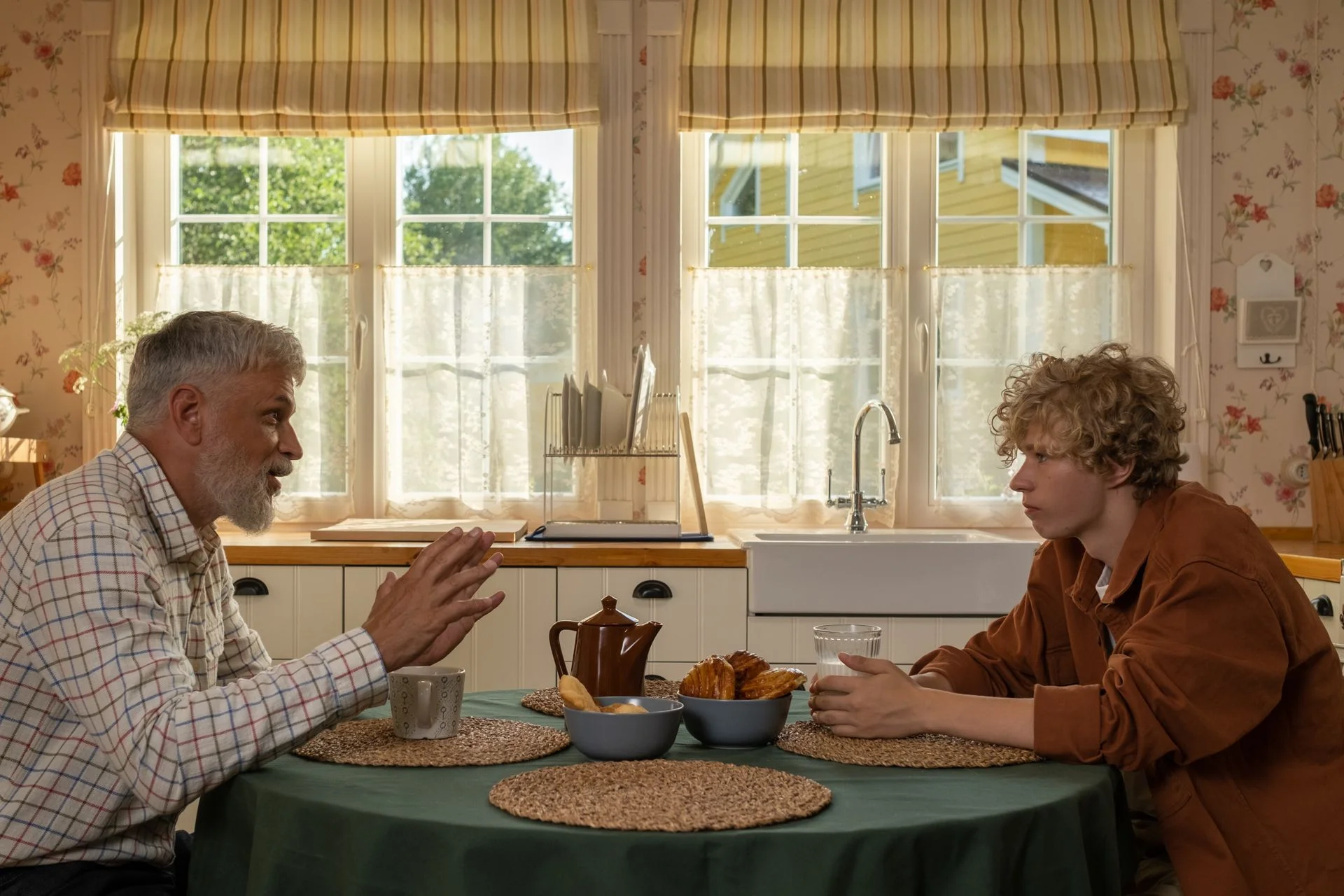
Parents can tell that story. Grandfathers especially can tell it, if they are brave enough to be honest about their own regrets. A boy who sits with an old man and hears him say “I wish I’d been kinder” learns something no influencer will ever teach him.
The 14-year-old has time. The last masculinity is coming for him whatever he believes. The only question is whether he’ll arrive there with a life worth looking back on, or with a lifetime of anger and nobody left to hold his hand.

Dr Stephen M. Whitehead is a British gender sociologist and the author of more than 20 books, published by Routledge, Polity, Oxford University Press and Random House. A foundational figure in masculinity studies with over 35 years of research, he co-developed the concept of toxic masculinity and originated the frameworks of Total Inclusivity and healthy self-love. He was Senior Lecturer at Keele University from 1997 to 2015. He currently leads the Global AI Intimacy Study, an international investigation into how AI is reshaping human relationships, with fieldwork across Latin America and India. His next book, Where Have All the Good Men Gone? The Reordering of Intimacy, co-authored with Constanza Fernández Arce, will be published in 2027. He is The European’s Leadership and Organisational Culture Correspondent and lives in Thailand.
READ MORE: For Your Eyes Only. Why the new Bond needs a woman’s perspective. The announcement of the next actor to play superspy James Bond could be made by the close of the year. But according to Dr Stephen M. Whitehead, as AI takes over more technical tasks, emotional intelligence and experience should define the next 007. His choice: a woman in her 40s.
Do you have news to share or expertise to contribute? The European welcomes insights from business leaders and sector specialists. Get in touch with our editorial team to find out more.
Main Image: Credit: Ron Lach / Pexels