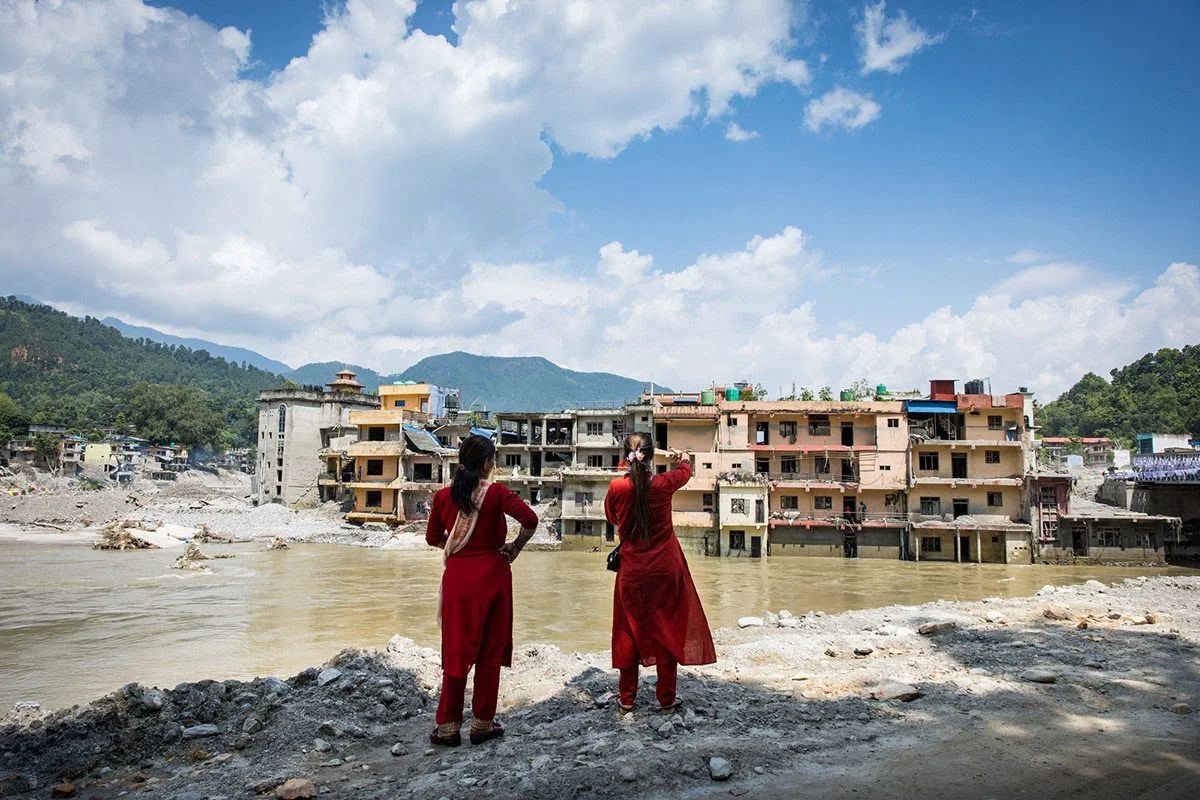
EXCLUSIVE: Nepal and Bhutan press world leaders for climate funding and disaster protection at COP31 as a major UN-backed report warns global warming could reach 1.8°C even if governments fulfil their climate pledges
Nepal and Bhutan have demanded urgent international action to protect Himalayan communities from deadly floods and avalanches, as a major UN report warns that global warming could peak at 1.8°C even if governments fully implement their climate plans and net-zero pledges.
The warning came at the COP31 climate summit in Antalya, Türkiye, following a series of devastating mountain disasters and new scientific evidence showing that satellite observations detected movement on a Himalayan mountainside weeks before a catastrophic collapse.
Representatives from both countries called for greater climate funding, improved disaster preparedness and coordinated early warning systems, warning that melting glaciers and increasingly dangerous mountain conditions threaten millions of lives and livelihoods.
The latest findings from the United Nations Environment Programme and the International Cryosphere Climate Initiative suggest the world is likely to exceed the Paris Agreement’s 1.5°C warming threshold within the next few years.
Even under an optimistic scenario in which governments implement all their current climate plans and additional net-zero pledges, global temperatures are projected to peak at 1.8°C above pre-industrial levels.
The report warns that glaciers worldwide could lose more than a quarter of their mass by 2100 under some warming scenarios, threatening water supplies and contributing to rising sea levels.
Even if global warming is brought back down to 1.5°C, some environmental damage will be permanent, it adds.
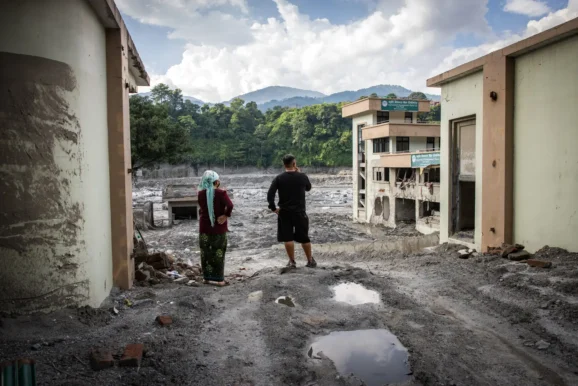
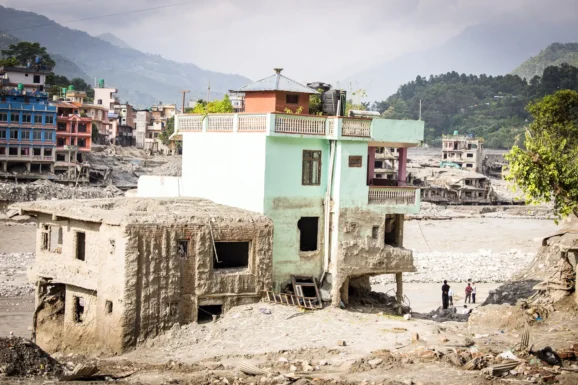
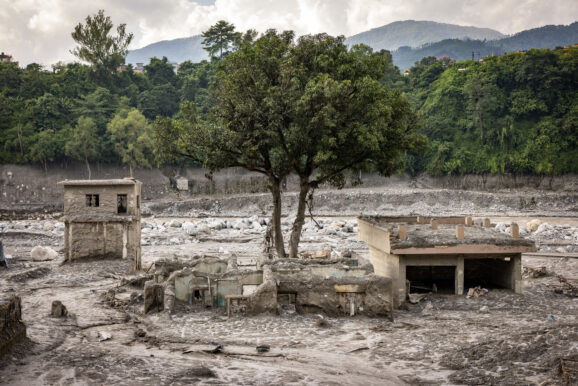
The warnings follow a catastrophic rock-and-ice collapse above Nepal’s Rasuwa district on 26 August, which sent floodwaters tearing through the Trishuli valley and across the Nepal–China border corridor, causing significant loss of life and billions of dollars in damage.
Another avalanche struck Nepal’s Gorkha district in October, while a glacial lake outburst flood in Bhutan’s Shintaphu region damaged roads, bridges and livelihoods.
An October report by the International Centre for Integrated Mountain Development (ICIMOD), a Kathmandu-based organisation specialising in the Hindu Kush Himalaya, highlighted satellite observations showing significant movement on the Langtang Lirung mountainside in the weeks before the Rasuwa disaster.
The flood surge reached the border corridor within minutes, demonstrating how quickly mountain hazards can overwhelm conventional warning systems and cross international boundaries.
Dr Pema Gyamtsho, ICIMOD’s director general, said: “Every time there’s a disaster in the Himalayas, we tend to call it a wake-up call.”
He added: “The question before us is: what will it take for us to wake up and take action?”
Pam Pearson, director of the International Cryosphere Climate Initiative, warned that exceeding 1.5°C could have consequences lasting generations.
“There is no negotiating with the melting point of ice. Ice melts at zero degrees,” she said. “Overshoot should not be normalised. For the world’s ice, it means emergency situations.”
The Hindu Kush Himalaya stretches 3,500 kilometres across eight countries and is vital to the food, water and energy security of up to two billion people.
Sonam Tashi, Bhutan’s director of environment and climate change, warned: “The Himalayas are often seen as a Shangri-La, a place of peace and meditation. But climate change is affecting us, and that Shangri-La is under threat.”
The COP31 press conference followed a high-level meeting convened by Bhutan, Nepal, Kyrgyzstan and Tajikistan on 12 November to press for greater recognition of mountain-specific climate risks.
Manjeet Dhakal, a member of Nepal’s COP31 delegation and lead adviser to the Least Developed Countries Group, said: “The multilateral system must respond at the scale of the challenge. The needs on the ground far exceed the resources currently available.”
Stanley Johnson, The European’s Editor-at-Large and a long-standing environmental campaigner, attended the press conference remotely.
Welcoming the intervention by Nepal and Bhutan, he said: “It is brilliant to see that countries like Nepal and Bhutan which have been so badly affected by recent mountain disasters are now fighting hard alongside ICIMOD.”
Johnson warned that the summit must address the accelerating impact of climate change across the Hindu Kush Himalaya and other high mountain regions, where warming is occurring at rates above the global average.
READ MORE: Himalayan mountainside moved 40cm before avalanche killed 1,451 in Nepal, scientists reveal. Satellite images reveal possible warning signs weeks before 132 million cubic metres of rock and ice crashed into a Himalayan valley, unleashing a catastrophic flood that left thousands missing. The European’s Editor-at-Large Stanley Johnson has visited the disaster zone as scientists investigate whether global warming contributed to the collapse.
Do you have news to share or expertise to contribute? The European welcomes insights from business leaders and sector specialists. Get in touch with our editorial team to find out more.
Main image: Two women survey flood-damaged buildings along a Himalayan river valley in Nepal, where devastating mountain disasters have prompted renewed calls for urgent climate action and improved early warning systems at COP31. Credit: ICIMOD