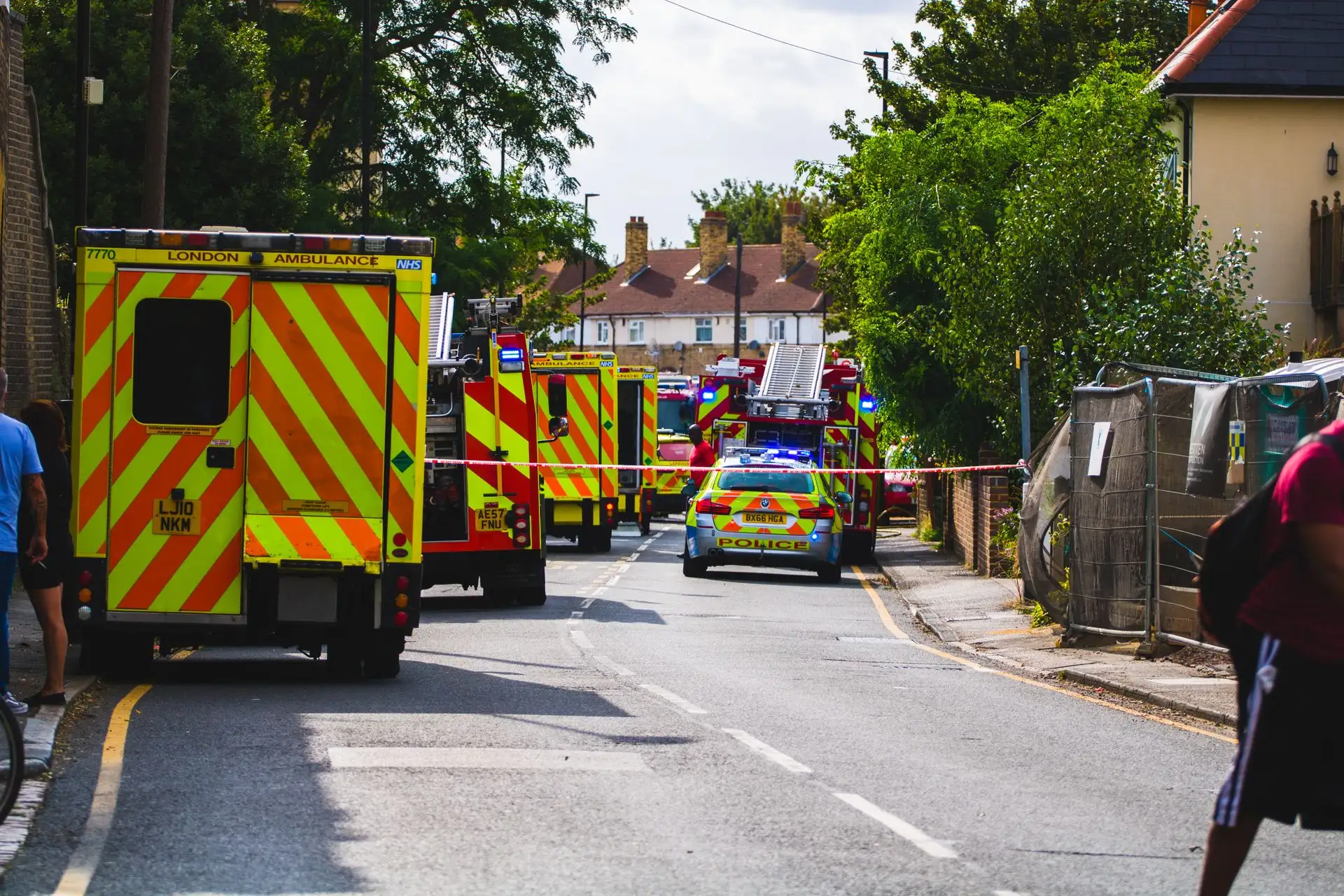
Britain’s Armed Forces and essential public services are competing for increasingly stretched resources. The solution, according to Phil Cleary, is to create a National Resilience Service that would put thousands more professionals into frontline services while creating a trained civilian force ready to support the military in a national emergency
Imagine leaving school or university today. Every week brings another headline about artificial intelligence transforming jobs that, until recently, seemed secure. Young people are understandably asking which careers will still offer purpose, stability and opportunity 20 years from now.
At the same time, Britain faces a different challenge. Every Spending Review becomes a contest for the same pound of taxpayer money. The Armed Forces warn of growing international threats. The NHS seeks more staff. Police forces, prisons, ambulance services and fire and rescue services all make compelling cases for additional investment. The Chancellor cannot satisfy everyone, so departments compete with one another.
I believe that competition rests on a false assumption. These priorities are all part of the same national mission: protecting the British people.
National security is no longer confined to the battlefield. The war in Ukraine, cyberattacks and the COVID-19 pandemic have all shown how Britain’s military and civilian institutions can reinforce one another.
So why do we continue funding them as though they were unrelated?
The answer, I believe, is a National Resilience Service – an additional resource for both the military and civil essential services, operating under a national framework designed to strengthen existing public services in peacetime and support Britain’s military in times of crisis.
Every member would first be recruited, trained and employed in a frontline public-service profession. They would join as police officers, firefighters, prison officers, nurses, doctors, paramedics or other designated specialists – not as military personnel. They would spend their careers serving their communities in those civilian roles.
Departments would continue to recruit, train, employ and manage their own staff. The NHS would remain responsible for nurses and doctors, while police forces, fire and rescue services and HM Prison Service would continue to recruit their own staff. Ambulance trusts would recruit paramedics. Nothing would change in their professional careers.
Only after qualifying professionally would volunteers undertake resilience and military training appropriate to their civilian expertise. Working closely with the Home Office and the Department of Health and Social Care, the Ministry of Defence would identify the support roles most useful to them in times of crisis, maintain training and mobilisation records, provide specialist equipment where required and deliver periodic refresher training.
Those called upon would normally apply the skills they already possess: police officers supporting military policing and security, nurses and doctors serving in military medical facilities, paramedics reinforcing military medical units, firefighters supporting emergency operations and prison officers contributing to detention and security functions. Britain would be mobilising existing professional expertise for familiar roles.
Based on current police, Prison Service and NHS public-sector pay scales, together with employer National Insurance and pension costs, as well as indicative training, equipment and infrastructure expenditure, I estimate that annual funding of around £2–2.5 billion, alongside approximately £0.6–1 billion in phased capital expenditure, could enable the recruitment of approximately 30,000 additional frontline professionals across policing, fire and rescue, prisons, nursing, paramedicine, medicine and other essential services.
The annual funding would cover employment costs, training, uniforms, communications, administration and the continuing support required to operate the framework, while the capital expenditure would fund equipment and the infrastructure needed to establish it.
This differs fundamentally from today’s Reserve Forces. Reservists may come from almost any civilian occupation and are recruited primarily to reinforce the Armed Forces. The National Resilience Service would recruit only designated frontline professionals whose primary role is to strengthen Britain’s public services every day, while maintaining a resilience commitment for times of national emergency.
The proposal also addresses another challenge: the future of work. Artificial intelligence will change many occupations but it is unlikely to replace the judgement, compassion, leadership and physical presence that policing, firefighting, prison work, nursing, medicine and emergency response require. AI is likely to remove some of the administration surrounding those professions, allowing skilled people to spend more time on what only people can do.
That could create clear, secure career pathways into professions that society will always need. Young people could build a worthwhile career while remaining ready to serve their country when needed.
Instead of asking which department should receive the next pound, Britain should ask how the same pound can deliver greater value. Through the creation of a National Resilience Service, just one investment could strengthen our Armed Forces, reinforce essential public services and truly invest in the next generation.

Phil Cleary is one of the UK’s leading technology entrepreneurs and a former covert operations specialist in British policing. He is the co-founder and former CEO of The SmartWater Group (now DeterTech), the world’s foremost forensic marking company, whose technologies are used by millions across more than 20 countries. A Fellow of the Royal Society of Arts and a recognised expert in security and modern warfare, Phil also holds a Master’s in Military History. His debut political thriller, Elixir, has received critical acclaim for reimagining humanity’s quest for immortality as a global threat greater than AI.
READ MORE: ‘Britain must defend its streets as well as its borders‘. As defence spending rises in response to global threats, the UK risks overlooking a more immediate danger: the erosion of the services that keep people safe at home. True national security must be defined as much by policing and social safeguarding as by military strength, writes Phil Cleary.
Do you have news to share or expertise to contribute? The European welcomes insights from business leaders and sector specialists. Get in touch with our editorial team to find out more.
Main Image: Ian Probets/Pexels