Heart Aerospace says its record-breaking 27-minute test flight could pave the way for cheaper, cleaner regional flights as it develops a 30-seat hybrid-electric airliner for commercial service
A glimpse of a cheaper future for air travel has taken to the skies after the world’s largest battery-electric aircraft completed its first flight using just US$5 worth of electricity.
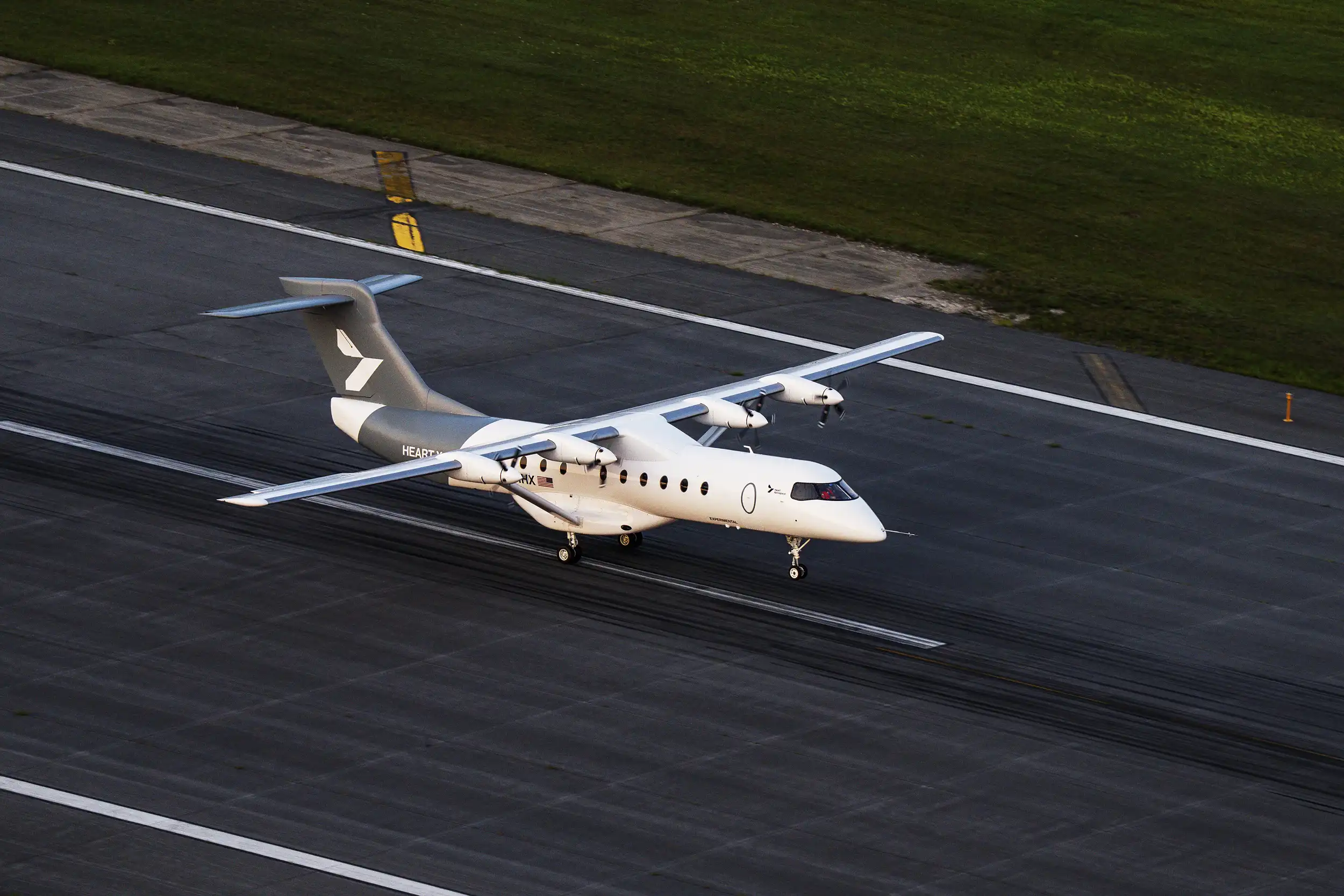
Heart Aerospace’s X1 demonstrator spent 27 minutes in the air over upstate New York, in a test designed to show that electric propulsion can work on aircraft approaching the size needed for commercial passenger services.
The aircraft itself will never carry holidaymakers, but the technology being tested aboard it is destined for Heart’s planned 30-seat ES-30 regional airliner.
Heart, which is based in Los Angeles, says the ES-30 could cost more than 40 per cent less to operate than older regional aircraft when it enters service, which is currently targeted for 2031.
Those savings could eventually help airlines offer cheaper flights on shorter routes connecting smaller cities and regional airports with major hubs.
The X1 took off from Plattsburgh International Airport on Wednesday weighing more than 25,000lb and powered entirely by batteries.
During the flight it climbed to 1,100ft and its electric propulsion system delivered more than one megawatt of power.
Its electricity bill was approximately US$5.
Heart highlighted the figure against soaring jet fuel prices, which it said averaged US$3.50 a gallon in the week ending August 7 – 63 per cent higher than a year earlier.
Airlines remain heavily exposed to fluctuations in the price of oil, with fuel forming one of their biggest operating costs.
Electric and hybrid-electric aircraft could reduce that dependence on shorter routes while cutting emissions and maintenance costs.
Anders Forslund, founder and chief executive of Heart Aerospace, said: “With the first flight of X1, Heart Aerospace has demonstrated electric flight at the scale of a commercial airliner.
“Electric commercial aircraft have the potential to fundamentally reshape airline economics and, ultimately, lower the cost of air travel for passengers.
“This is at the heart of our vision for abundant air travel, with electrification enabling more affordable, frequent, and cleaner air service to and from airports closer to home.”
There are still major obstacles before electric aircraft become an everyday sight at airports. Batteries are heavy, their range remains limited and new commercial aircraft must undergo years of testing and certification before passengers can fly aboard them.
But the X1 moves electric aviation beyond the small experimental aircraft that have dominated the technology so far.
It has a wingspan of 106ft, measures 76ft from nose to tail and is the largest battery-electric aircraft yet flown.
The X1 was flown under an FAA Special Airworthiness Certificate in the Experimental Category and completed taxiing, take-off, climbing, manoeuvring and landing during the test.
Heart is using the aircraft to test aerodynamics, flight performance and other technology for the ES-30.
Unlike the battery-only X1, the production aircraft is being developed as a hybrid-electric airliner, allowing it to overcome some of the range limitations of batteries while still reducing its reliance on conventional fuel.
Heart expects lower energy costs, simpler electric propulsion and reduced maintenance requirements to drive much of the claimed 40 per cent reduction in operating costs.
The company says further improvements in battery technology could widen that gap over time.
United Airlines, Air Canada and JSX have already made commitments for the ES-30.

Michael Leskinen, chief financial officer of United Airlines, said: “The first flight of X1 is a major technical achievement for Heart Aerospace, a company United has been proud to support.
“Electric commercial aircraft have real potential to deliver a better travel experience for passengers while strengthening our business, and we look forward to Heart’s continued development of the ES-30 and its potential future role in United’s network.”
Heart is now developing its first pre-production ES-30 at its pilot manufacturing plant in Los Angeles, with flight testing scheduled to begin in 2028.
The company says it has US$9.4 billion in customer commitments from airlines including United and Air Canada.
READ MORE: Passenger jet flies on fuel made from waste CO₂ in aviation breakthrough. Engineers have turned waste carbon dioxide into jet fuel that has already helped power a commercial passenger flight, in a breakthrough that could help airlines cut emissions without replacing existing aircraft.
Do you have news to share or expertise to contribute? The European welcomes insights from business leaders and sector specialists. Get in touch with our editorial team to find out more.
Main image: Heart Aerospace’s X1 demonstrator aircraft flies toward the rising sun above upstate New York’s Champlain Valley during its first flight. (Photo: Heart Aerospace)