Long before people enter the workplace, they learn to adapt themselves to the expectations of others. Hamed Amiri argues that when employees feel compelled to play it safe and mask aspects of themselves, organisations often lose the very insight, challenge and honesty they need in order to grow
At this time of year, thousands of students are sitting exams that will shape more than their grades.
For many, exams become an early lesson in how other people judge them. Who is considered bright, and who is considered average. Who belongs at the top of the class, and who does not.
Most people eventually leave the classroom for the workplace, but they do not necessarily leave behind the habit of measuring themselves through the eyes of others.
By the time people enter organisations, many have already become highly skilled at reading the room. They learn to adjust themselves to different environments, understand what is rewarded and what attracts criticism, and decide which parts of themselves feel safe to show.
As a result, being yourself at work can still feel surprisingly difficult, despite the language many organisations now use about openness, inclusion and authenticity.
The challenge is rarely obvious. Most people are not walking into workplaces feeling actively unsafe. What they are often doing is trying to understand how they will be interpreted.
I speak from experience. Early in my own career, I spent far more time thinking about perception than I realised.
I was constantly aware of how I came across in meetings, how I spoke and whether I fitted the environment around me. Looking back, I can remember overthinking interactions long after they had happened and paying attention to small details that had very little to do with the quality of my work. Even simple things, such as whether I was behaving appropriately in social situations or making the right impression, occupied more mental space than they should have done.
What I did not recognise at the time was how much attention was being diverted away from the work itself. A portion of my energy was always reserved for managing perception.
That experience is far more common than many organisations realise.
When people are uncertain about how they will be judged, they often become more cautious. They think harder about what they say. They test ideas privately before voicing them publicly. They become more selective about disagreement. Sometimes they remain silent altogether.
Over time, that caution carries a cost. Ideas remain unspoken. Questions go unasked. Contributions become more carefully managed than they need to be.
Yet organisations often misread what they are seeing.
A quiet employee may be viewed as lacking confidence. A cautious employee may be viewed as disengaged. Someone who contributes selectively may be assumed to have less to offer than colleagues who speak more freely.
In reality, people are responding to the signals around them.
Research points to the importance of those signals. A 2026 survey of 2,000 UK employees conducted for Mental Health First Aid England found that almost half (45 per cent) did not feel comfortable raising issues at work, including mistakes or potential risks, while 15 per cent admitted making preventable mistakes because they felt unsafe speaking up. The findings suggest that when employees fear judgement or negative consequences, silence can become a workplace habit rather than an individual choice.
The turning point for me came when somebody pointed out something I had never properly considered: No matter which room you enter, there will always be people who dislike the way you speak, look, dress, behave or joke. Spending excessive energy trying to manage every perception is exhausting and ultimately impossible. A more useful question is whether you are making a meaningful contribution.
Once I became more comfortable with that idea, a surprising amount of mental noise disappeared. I spent less time second-guessing interactions and more time focusing on the work itself.
That experience has influenced how I think about leadership. Organisations often encourage people to speak up, challenge ideas and bring their whole selves to work. Whether people actually do so depends less on what leaders say and more on what they consistently demonstrate.
People learn very quickly what is safe. They learn whether disagreement is welcomed or merely tolerated, whether mistakes become learning opportunities or lasting labels, and whether different perspectives are genuinely valued or simply encouraged in principle.
When people feel confident that they will be treated fairly, they spend less time managing perception and more time contributing.
That benefits individuals, but it also benefits organisations.
Organisations lose valuable insight when people decide it is safer to stay quiet. Challenges go unraised. Ideas remain unspoken and potential is left untapped, not because employees lack capability but because they are responding rationally to the environment around them.
By contrast, and as the Chartered Institute of Personnel and Development has noted, when people feel able to speak openly, organisations are more likely to benefit from higher productivity and innovation, while employees report greater wellbeing, motivation and job satisfaction.
Long before people enter the workplace, they learn to adapt themselves to the expectations of others. The organisations that get the best from people are usually those that give them fewer reasons to keep doing so.
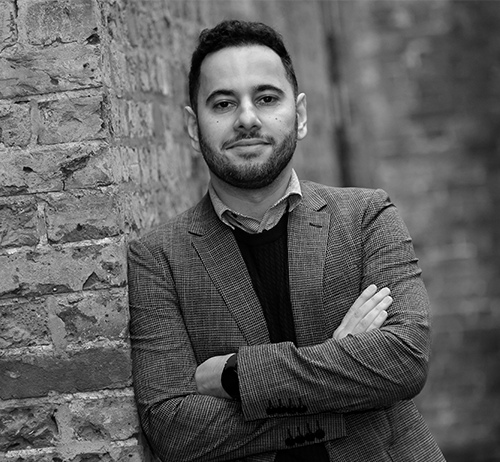
Hamed Amiri is a speaker and technology leader whose work explores leadership, resilience and identity in a rapidly changing world. A senior leader in technology and transformation at PwC, he combines corporate experience with lived perspective, informed by his journey from Afghanistan to the UK.
READ MORE: ‘The hidden workplace inertia trap – and how leaders can overcome it‘. The demands of life with a newborn offer a sharp reminder that responsibility changes behaviour. Hamed Amiri argues that blurred responsibility and slow decision-making can leave even capable staff doing little beyond what is necessary. Here, he sets out six practical steps leaders can take to build teams that take ownership, act decisively and stay fully engaged.
Do you have news to share or expertise to contribute? The European welcomes insights from business leaders and sector specialists. Get in touch with our editorial team to find out more.
Main Image: MART PRODUCTION/Pexels