Canada’s proposed multi-billion-dollar GlobalEye deal marks an intention to reduce reliance on the United States and deepen defence cooperation with Europe. Harry Margulies asks whether America’s neighbour is ready to pay the price of turning that ambition into lasting strategic policy
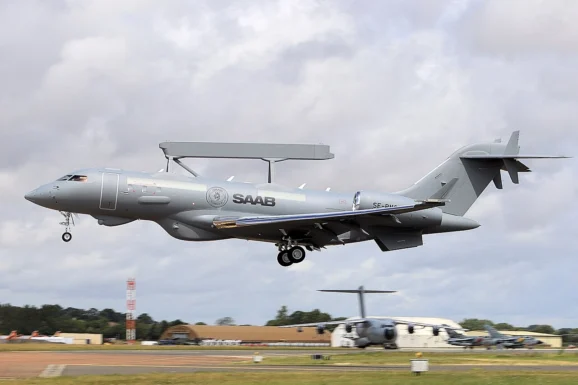
When Canada announced that it had selected Swedish aerospace and defence company Saab as the preferred supplier for its future airborne early warning and control (AEW&C) capability, the immediate focus was on the aircraft itself.
The proposed acquisition of Saab’s GlobalEye platform – expected to be worth around C$6.5 billion – would replace the nation’s ageing surveillance capability with one of the world’s most advanced command-and-control systems.
For Saab, the deal could become one of the largest export successes in the company’s history and another demonstration that decades of Swedish investment in technological expertise and industrial self-reliance can still produce strategic rewards.
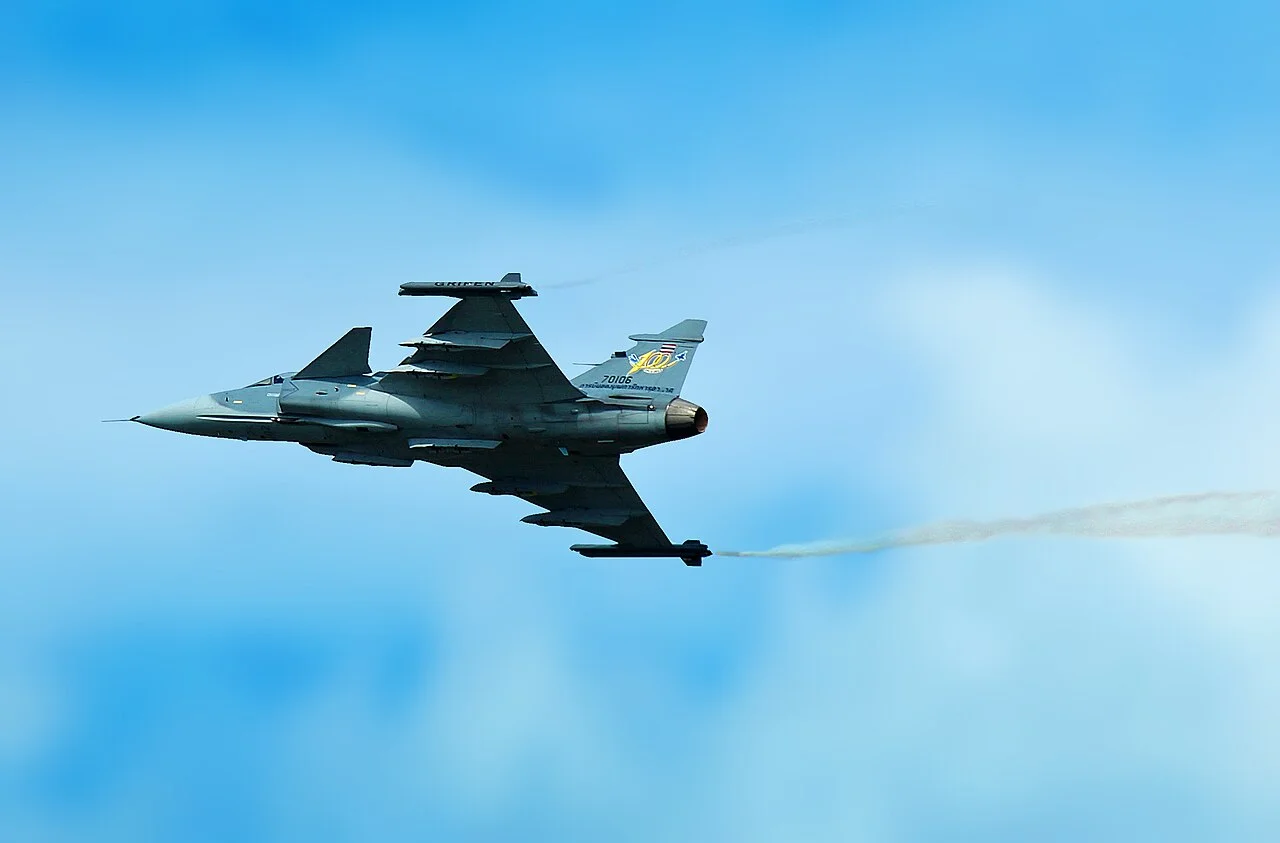
From a military perspective, the case is straightforward. GlobalEye – a modified Bombardier Global 6500 business jet – combines long-range airborne radar, maritime surveillance and ground target detection, giving commanders a comprehensive picture of activity across vast distances. For a country such as Canada, with the world’s longest coastline and growing strategic responsibilities in the Arctic, the need for modern airborne early warning capability is becoming increasingly difficult to ignore.
Yet the deal is not done. The Swedish excitement surrounding GlobalEye is understandable, but Canada’s choice represents far more than which surveillance aircraft to purchase. The decision may prove to be one of the first meaningful tests of Canada’s broader strategic ambitions, determining whether Ottawa is prepared to translate them into long-term policy.
Since the post-war era, Canada has been deeply integrated with its U.S neighbour, economically, industrially and militarily. Access to the American market has delivered prosperity, albeit with risks stemming from that same dependence, while Washington’s security umbrella has reduced the incentive to develop domestic alternatives in many strategic sectors.
When American firms, technologies and military guarantees were readily available just across the border, integration appeared more efficient than building complete Canadian industrial ecosystems.
But the return of Donald Trump to the White House has forced difficult conversations in Ottawa about the risks of relying too heavily on any single partner. Recent trade disputes have highlighted this vulnerability. Whether the issue is supply chains, forced labour, energy, defence, or industrial regulation, Ottawa finds itself responding when Washington signals dissatisfaction. Sovereignty becomes harder to exercise when so much of the national economy is tied to the United States.
None of this suggests that Canada is completely turning its back on the U.S. Such a notion would be neither practical nor desirable. The economic and military integration built over generations cannot simply be unwound, nor is there any serious appetite to do so.
What appears to be emerging instead is a more subtle shift in thinking. Rather than placing all of its strategic weight on one increasingly volatile relationship, negotiating with a president who proudly presents himself as unpredictable, Canada seems to be gradually building a second centre of gravity across the Atlantic.
Seen through that lens, GlobalEye becomes a symbol of strategic diversification.
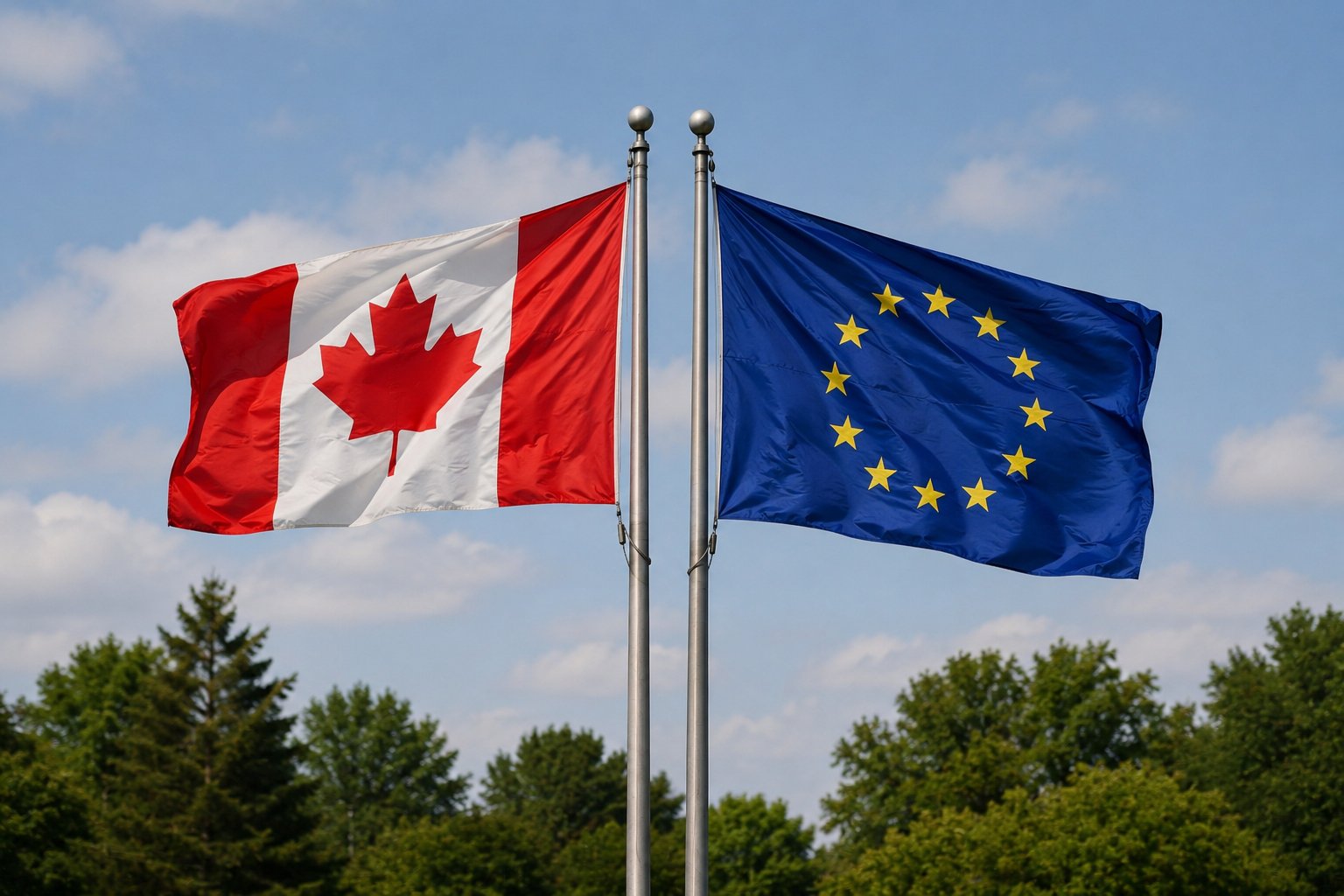
The timing is hardly coincidental. Canada recently signed a Security and Defence Partnership with the European Union covering cooperation on cyber security, maritime security, defence capability development and industrial collaboration. Even more significantly, Canada has become the first non-European country to participate in the European Union’s €150 billion Security Action for Europe (SAFE) programme, opening new opportunities for joint defence procurement and industrial cooperation between Canadian and European companies.
These developments suggest that Europe is no longer viewed merely as Canada’s historical ally but as a practical strategic partner in its own right.
And such a relationship could be as important for Europe as Canada. Modern security increasingly depends upon resilient supply chains, advanced manufacturing, critical minerals, artificial intelligence, cyber resilience and technological sovereignty. Canada’s world-class aerospace sector, abundant reserves of strategic minerals and extensive Arctic expertise complement precisely the capabilities Europe is seeking to strengthen as it develops a more resilient defence industrial base.
During the Cold War, the Scandinavian nation built a highly capable domestic defence industry because it could not assume that anyone else would guarantee its security. Neutrality was not merely a diplomatic position; it required Sweden to take national capability seriously. The result was a world-class industrial base producing advanced fighter aircraft, radar systems, submarines, sensors and electronic warfare capabilities.
Canada may not be seeking to emulate Sweden’s model, but it does appear to be drawing a similar conclusion: that resilience is strengthened when a country retains options and avoids placing too much reliance on any single relationship.
If the GlobalEye purchase proceeds, it will represent a significant step toward greater Canadian strategic flexibility. The platform’s connection to Canadian aerospace manufacturer Bombardier also gives the decision a domestic industrial dimension that a purely foreign purchase would not have.
Yet until a final contract is signed, enthusiasm both in Canada and Europe should be tempered by realism. The easy approach is for Ottawa to speak warmly about sovereignty and diversification. The harder answer is to admit that there is a price.
Greater self-reliance means friction with Washington. Rubio’s admiration for Swedish self-reliance does not eliminate the possibility that Washington will pressure Canada to choose an American alternative as broader trade negotiations unfold.
It likewise means Ottawa supporting domestic and allied alternatives even when American options are cheaper, closer, and politically easier, and accepting that strategic autonomy cannot be purchased at a discount.
Canada has, therefore, to confront what price it, and its citizens, are willing to pay for greater freedom of action and how much room its negotiators believe exists within the broader Canada–U.S relationship.
One aircraft programme will not reverse generations of U.S integration, but the GlobalEye decision is nevertheless an early test of whether Canada is prepared to accept the costs of greater strategic autonomy.
Independence is not a slogan but an investment measured in decades. The question is whether Ottawa is willing to make that investment, and the answer may prove just as important for Europe as for Canada.

Harry Margulies is a journalist, author, commentator, and public intellectual whose work interrogates religion, politics, and morality with sharp wit and fearless clarity. A second-generation Holocaust survivor, he was born in Austria and spent time in an Austrian refugee camp before moving to Sweden. Educated by Orthodox rabbis throughout his childhood, he ultimately abandoned faith in his teens—a journey that has shaped his lifelong commitment to secularism, critical thinking, and freedom of expression. His latest book, Is God Real? Hell Knows, has been described by ABBA’s Björn Ulvaeus as “funny, sharp, and unafraid.”
READ MORE: ‘If profit is immoral in healthcare, why stop there?‘. As ministers increasingly rely on private providers to help tackle NHS waiting lists, critics argue that healthcare should never be a source of private profit. But if outcomes, access and quality are what ultimately matter, then the case against profit in healthcare may be weaker than many assume, writes Harry Margulies.
Do you have news to share or expertise to contribute? The European welcomes insights from business leaders and sector specialists. Get in touch with our editorial team to find out more.
Main Image: Artwork: Belters News. Credits: Based on a photograph by Brian Forsyth, via Pexels.