BBC Radio 4’s Missing Presumed Drowned airs today as families mark 86 years since the Arandora Star was torpedoed on its way to Canada with Italian and German civilian internees aboard. Here, the investigative journalist Giovanni Ulleri argues that the tragedy, which killed 743 people, deserves recognition alongside the national disasters Britain has chosen to remember
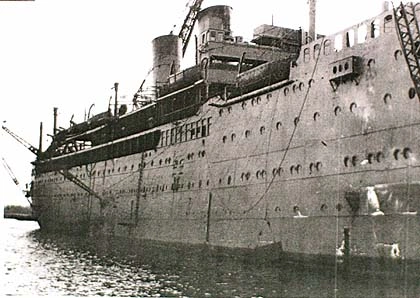
Eighty-six years ago today, on July 2, 1940, the liner the SS Arandora Star was torpedoed by a German submarine off the north-west coast of Ireland while transporting civilian Italian and German internees from Britain to Canada.
Within hours, the Liverpool-based former Blue Star passenger liner had sunk with the loss of 743 lives, including 442 Italians, 150 Germans and Austrians, 92 British military guards, two Canadian guards and 57 crew members. It remains one of the largest civilian maritime disasters involving Britain during the Second World War.
In Italy, the Arandora Star is finally receiving the official recognition that eluded it for more than eight decades. In February, the Italian Chamber of Deputies approved legislation establishing a National Day of Remembrance to honour the victims, with the bill now before the Senate. But as Italy prepares to formally commemorate the tragedy, an uncomfortable question remains: why has Britain never accorded the Arandora Star the same national recognition?
Most of the Italians on board were innocent civilians and long-term residents of Britain. Many had lived in the country for decades, running cafés, restaurants, ice cream parlours and small businesses. They had built their lives in Britain long before Benito Mussolini came to power as Italy’s Prime Minister in October 1922. Some had left Italy to escape the growing threat of fascism, while others had emigrated simply in search of a better life. Yet, after Mussolini declared war on Britain and France from the balcony of the Palazzo Venezia in Rome on June 10, 1940 – more than eight months after the Second World War had begun with Adolf Hitler’s invasion of Poland on 1 September 1939 – they suddenly found themselves treated as enemy aliens by the country they had come to call home.
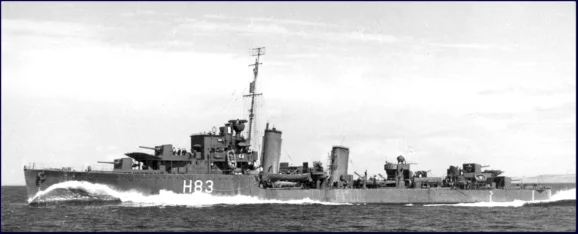
Shortly after Italy entered the war, the British Prime Minister Winston Churchill is widely reported to have instructed officials to “collar the lot” as fears of spies, saboteurs and a Nazi “fifth column” swept Britain following the fall of France. In the weeks that followed, thousands of Germans, Austrian and Italian nationals, many of them innocent civilians and long-term residents of Britain, were rounded up and interned. Most were eventually sent to camps on the Isle of Man, although many first passed through temporary camps elsewhere in Britain before some were deported overseas to Canada and Australia.
The consequences reached far beyond internment. Fathers were taken from their homes in the middle of the night, families were torn apart and livelihoods built over decades collapsed almost overnight. Across the country, Italian-owned premises became targets of hostility. Windows were smashed, property was looted and, in some cases, buildings were set alight. Communities that had contributed to British life found their loyalty questioned overnight.
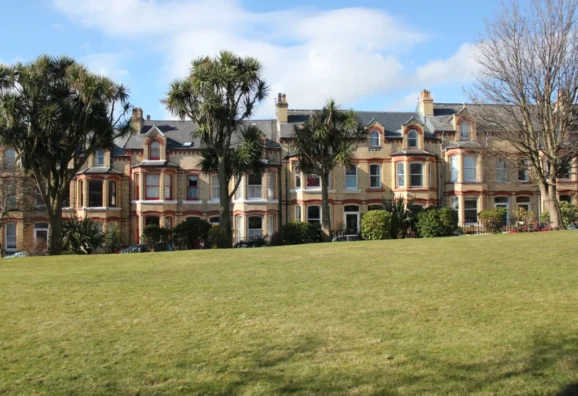
Few of those detained posed a genuine threat to Britain’s security. Fear had stripped them of their individual lives and reduced them to labels, a danger still visible today when suspicion is directed at people because of where they come from. Recent attacks on hotels housing asylum seekers and migrants have shown how quickly entire groups can become targets when anxiety hardens into prejudice.
It is little surprise that today, almost nine decades later, the descendants of the men who were deported aboard the Arandora Star continue to ask why one of Britain’s greatest civilian wartime maritime tragedies remains largely absent from the nation’s collective memory.
For more than 30 years, I have investigated stories in which ordinary people ask difficult questions of those in power. In many ways, the Arandora Star is the oldest unresolved investigation I have ever undertaken.
My connection to the storycame through Manchester’s Italian community, where its legacy was still deeply felt. My father, Pietro Ulleri, arrived in Britain in 1952, 12 years after the disaster. Like thousands of Italians who came before and after the war, he helped rebuild the country that became his home. Growing up in Manchester’s Italian community, I soon learned that the Arandora Star lived on in families as a very deep wound that never fully healed. Survivors rarely spoke of what they had witnessed, but the silence itself told a story. Their memories, and those of the families who lost fathers, brothers and sons, were passed quietly down from one generation to the next.
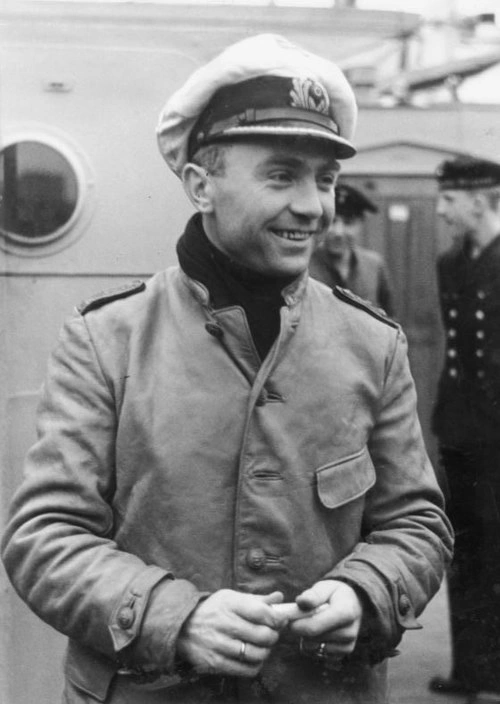
As the son of Italian immigrants who chose Britain as their home, and as an investigative journalist committed to uncovering forgotten truths, I have long been drawn to the unanswered questions surrounding this tragedy. Why were hundreds of innocent civilians deported? Why were many rounded up without any court hearing or fresh individual assessment to determine whether they posed a genuine threat as spies, saboteurs or members of a so-called Nazi “fifth column”? Why was an unescorted passenger ship carrying civilian internees sent across the North Atlantic, one of the world’s most dangerous wartime sea routes, where German U-boats had already sunk scores of Allied and merchant ships in the months before Italy entered the war? And why, despite the scale of the disaster, has it remained so little known outside the communities it devastated?
By the time my father arrived here, many Italian families in Britain already knew about the Arandora Star. Some had lost relatives. Others knew survivors or families who had been affected. People rarely spoke about it openly, but the story was passed on at home and in the wider community.
Beyond the Italian community, however, there were no dramatic speeches, no national acts of remembrance and little lasting place for the Arandora Star in the story Britain tells itself about WW2. Instead, the memory survived in fragments: in conversations after Mass, in stories exchanged at family gatherings, and in the names of the men who never came home.
One of my father’s closest friends in Manchester was Fortunato “Nato” Granelli, a tailor who, like many Italian men living in Britain during the war, was interned on the Isle of Man. In Italian, Fortunato means fortunate or lucky. By a cruel irony, Nato lived up to his name. Unlike many of his friends from Manchester, he was not among those deported aboard the Arandora Star. He had been scheduled to leave on the next deportation ship, escaping the fate of those on the Arandora Star by little more than chance. He survived, but those who knew him believed he carried the burden of survivor’s guilt for the rest of his life.
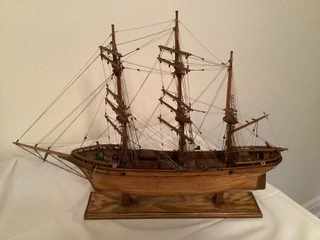
Nato rarely spoke about his internment. In the glass cabinet of his home in Didsbury stood an exquisitely crafted sailing ship, complete with sails painstakingly made from hundreds of matchsticks. It was a silent reminder of a past he seemed reluctant to revisit. Only years later did I begin to understand why. Several of his close friends from Manchester had perished aboard the Arandora Star, and although he had escaped their fate, the disaster was never far from his thoughts.
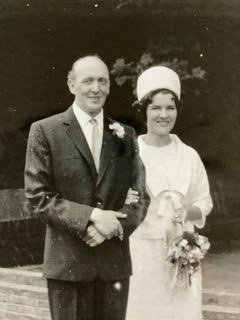
The loss went far beyond the sinking itself. For many families, the men who died aboard the Arandora Star also disappeared from Britain’s public account of the war, leaving relatives and researchers to preserve their names, their stories and the unanswered questions surrounding their deaths. Alfonso Pacitti’s archival reconstruction has helped restore that human record and shown the scale of the tragedy across the Italian, German, Austrian, British, Canadian and crew families affected.
Some disasters become central to the communities most affected by them. Aberfan, for instance, remains a defining loss in Wales, Hillsborough in Liverpool, Pan Am Flight 103 in Lockerbie, Grenfell in North Kensington and the New Cross fire in south-east London. For Britain’s Italian community, the Arandora Star holds a similar place as a defining loss, a lasting injustice and a story that deserves national acknowledgement.
Consider the fact that families were not even properly told what had happened to missing loved ones. Some received little information from the authorities but most learned of the disaster through rumours moving through close-knit Italian communities. Parliamentary records from the time show the anguish of relatives trying to discover whether the men they loved were alive or dead. One family told MPs: “We found that he was on the Arandora Star and posted as missing. Up to the present, we have not had any news from the authorities at all.”
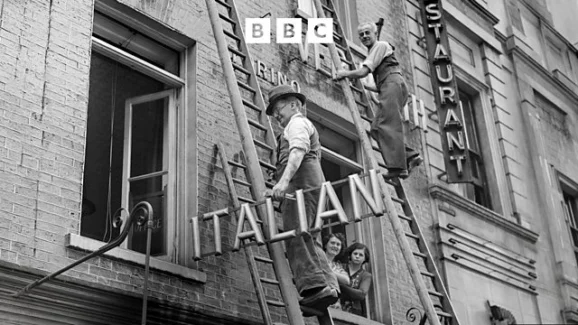
It is hard to imagine such a response being accepted after any other major national tragedy. Hundreds of people had died, many of them civilians who had built their lives in Britain, and their families were left to piece together the truth for themselves.
For survivors, the ordeal continued. Some men who lived through the sinking were later put aboard the Dunera, one of the ships used to remove internees from Britain and send them to camps overseas. They were sent to Australia under the same wartime policy that had already placed them on the Arandora Star, carrying the trauma of one disaster into another ordeal thousands of miles from home.
Given the scale of the tragedy, the human drama and the unanswered questions surrounding it, the absence of the Arandora Star from popular culture is striking. There have been no major television dramas, feature films, Netflix-style series or landmark BBC documentaries about it, for example, despite the story’s clear cinematic force and obvious potential for the screen.
The exception is Missing Presumed Drowned, a BBC Radio 4 drama airing today to mark the anniversary of the sinking. Inspired by Stefano Paolini’s book and written by Nicholas McInerny, it suggests that the Arandora Star may finally be beginning to reach a wider public audience.
Elsewhere, the history has been kept alive by Italian families, churches and local groups. Each 2 July, commemorations are held in London, Cardiff, Glasgow, Liverpool, Teesside and Bardi, Italy, including the annual Mass at St Peter’s Italian Church in Clerkenwell and remembrance around local memorials. In Teesside, a plaque at Middlesbrough Town Hall records the names of the Italian men, aged between 16 and 60, who died that night. In Bardi, in the province of Parma in northern Italy, where many of the victims came from, their names and stories are still passed on.
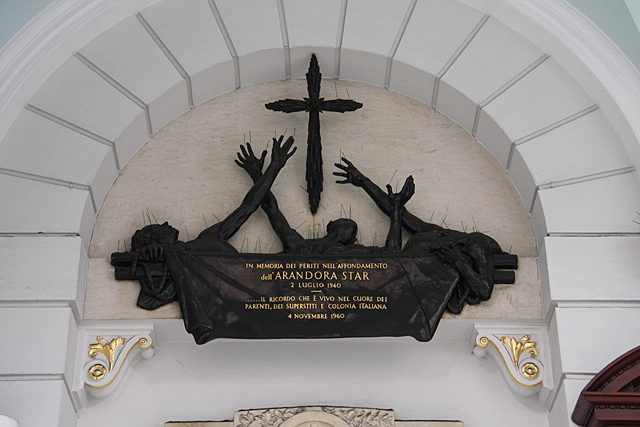
Among those who have worked to preserve the memory of the victims is Domenico Pini, chair and founding trustee of the London Arandora Star Memorial Trust, the son of Arandora Star survivor Serafino Pini. Like many descendants and campaigners, he has argued for remembrance, recognition and a fuller public understanding of what happened.
For many descendants, the search for answers has become an act of remembrance in itself. The central demand is official recognition and a formal apology. Families point to apologies given by successive Prime Ministers for historic injustices and institutional failures, from Bloody Sunday and Hillsborough to Windrush, infected blood and Grenfell. Their question is simple: if those tragedies deserved acknowledgement by the British state, why should the innocent victims of the Arandora Star remain outside that tradition?
For me, the Arandora Star also raises questions about how history is taught and remembered. At school, I learned much about the heroics of the Blitz, Dunkirk, D-Day and Churchill’s wartime leadership but nothing of internment or the disaster that followed. It was my father, and men like Nato who introduced me to that missing history. Their memories helped shape the journalist I became and reinforced a lesson that has guided my work for more than three decades: democracies are strengthened when they confront uncomfortable truths.

Giovanni Ulleri is an award-winning investigative journalist and producer-director whose career has spanned more than three decades in British and international broadcasting. Born and raised in Manchester, he is the son of Italian immigrants, Pietro and Francesca Ulleri. He dedicates this piece to his father, Pietro, whose love of Britain never diminished his pride in his Sardinian roots, and who taught him that remembering history is part of understanding who we are.
READ MORE: ‘Global leaders enter 2026 facing a defining climate choice‘. The climate and energy decisions taken during 2025 have limited the broad options now facing governments to two, setting up a decisive moment for global policy in 2026, writes Gary W. Yohe.
Do you have news to share or expertise to contribute? The European welcomes insights from business leaders and sector specialists. Get in touch with our editorial team to find out more.
Main image: The SS Arandora Star, which was torpedoed by a German U-boat while carrying Italian and German civilian internees from Britain to Canada. Built on the River Mersey at Birkenhead by Cammell Laird, the Arandora Star became one of Britain’s most elegant cruise liners before sailing from Liverpool on her final and fateful voyage on 1 July 1940. Credit: Royal Navy/Public Domain