A US$31 billion infrastructure project spanning southern Thailand’s narrow isthmus has been stirring in political imagination for centuries. Now, with the Strait of Hormuz under pressure and global shipping routes in flux, Bangkok is moving fast. But getting this right means listening to the people who already call this coastline home, writes Dr Stephen Whitehead
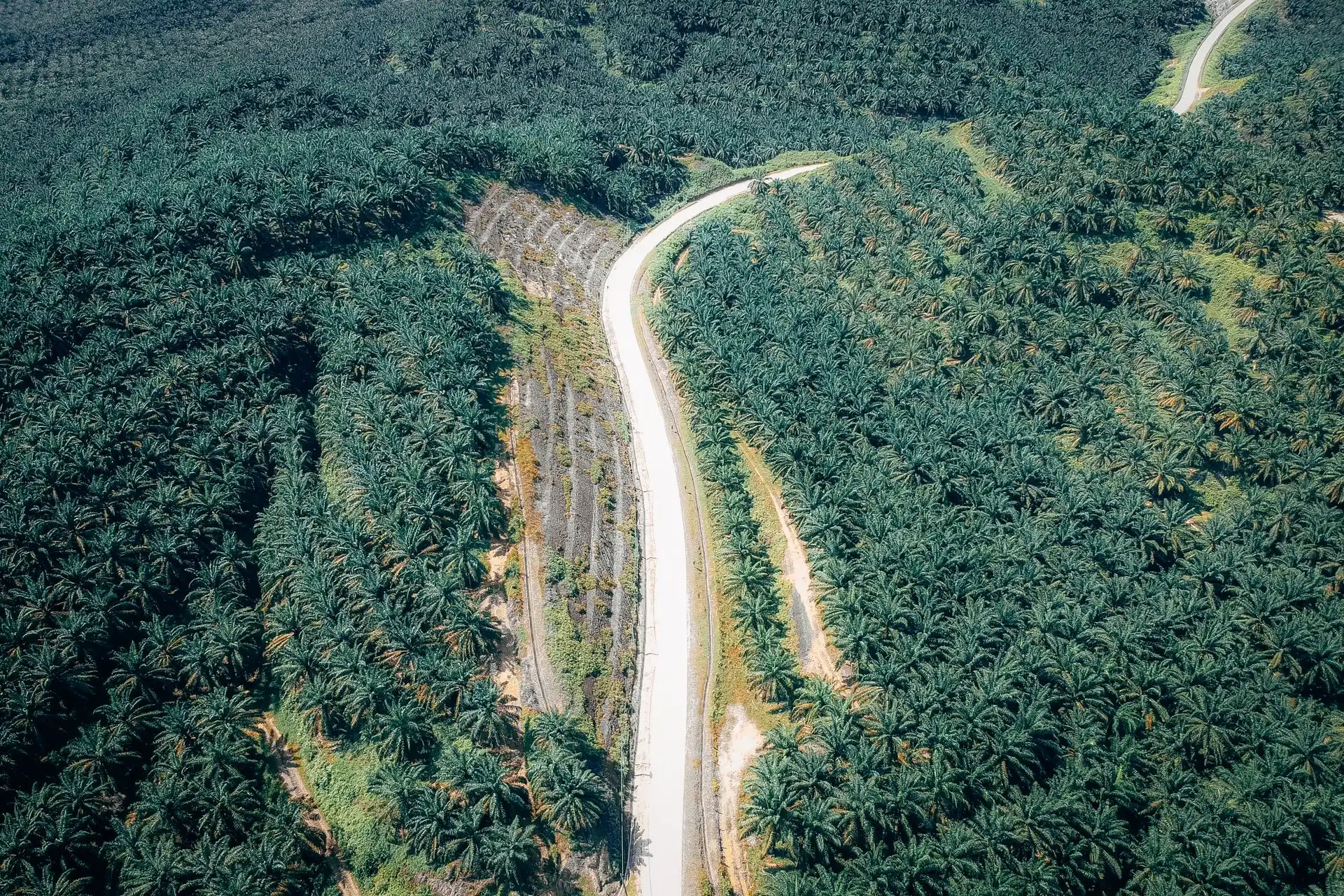
There is a road in southern Thailand that I have never forgotten. I drove it some 20 years ago, heading south from Hua Hin, winding down through Chumphon on the Gulf coast then turning south west across the Kra Isthmus to Ranong on the Anderman coast. It was one of those journeys that stays with you, not because of what was on the road but because of what was not.
There were no motorways, container terminals or industrial sprawl, just the lush, improbable green of the Thai interior, with rubber plantations giving way to durian orchards, fishing villages barely visible behind coconut palms and the occasional monastery shimmering in the heat. The sky was enormous. The road was quiet. The isthmus felt, in the best possible sense, like the edge of the known world.
I live in Hat Yai now, in the deep south of Thailand, close enough to that country to feel its pulse.
And the pulse, these days, is quickening.
Thailand’s government has just announced that it intends to accelerate the planning phase of its long-discussed Land Bridge project, a transformational infrastructure scheme that would connect deep-water ports on the Gulf of Thailand at Chumphon with a new port on the Andaman Sea at Ranong, linked by a 90-kilometre corridor of motorway and dual-gauge railway. The price tag is approximately one trillion baht, or US$31 billion. The ambition is nothing less than to rewire the trade arteries of Asia.
The immediate trigger for Bangkok’s renewed urgency is geopolitical. Deputy Prime Minister Phiphat Ratchakitprakarn has been explicit: the closure of the Strait of Hormuz, deepened by the ongoing Middle East conflict, has demonstrated with sudden clarity the strategic value of alternative shipping routes.
“The Middle East conflict has demonstrated the advantage of controlling a transport route,” he recently told reporters, announcing that enabling legislation would be placed before cabinet before the year’s end.
He is right to press the point. The Strait of Malacca — the bottleneck through which roughly a third of global maritime trade currently passes — is geopolitically precarious. A viable overland crossing at the Kra Isthmus would reduce the Pacific-to-Indian Ocean shipping distance by approximately 1,000 kilometres, cutting voyage times by an average of four days and, according to government projections, trimming transportation costs by around 15 per cent. The project is expected to generate some 58 billion baht (US£1.8 billion) in its first year of operation, largely from fuel sales to vessels transferring cargo. Construction, the government estimates, would be complete by 2039.
This is not a new idea. Versions of it stretch back to the reign of King Rama I in the late 18th century, when Thai strategists first contemplated a canal across the isthmus. What has changed is the confluence of factors now bearing down simultaneously: a volatile Middle East, a more assertive China reshaping Belt and Road connectivity, and a global shipping industry desperate for resilience. Thailand has positioned itself, with some justification, as the answer to a question the world is only now formulating.
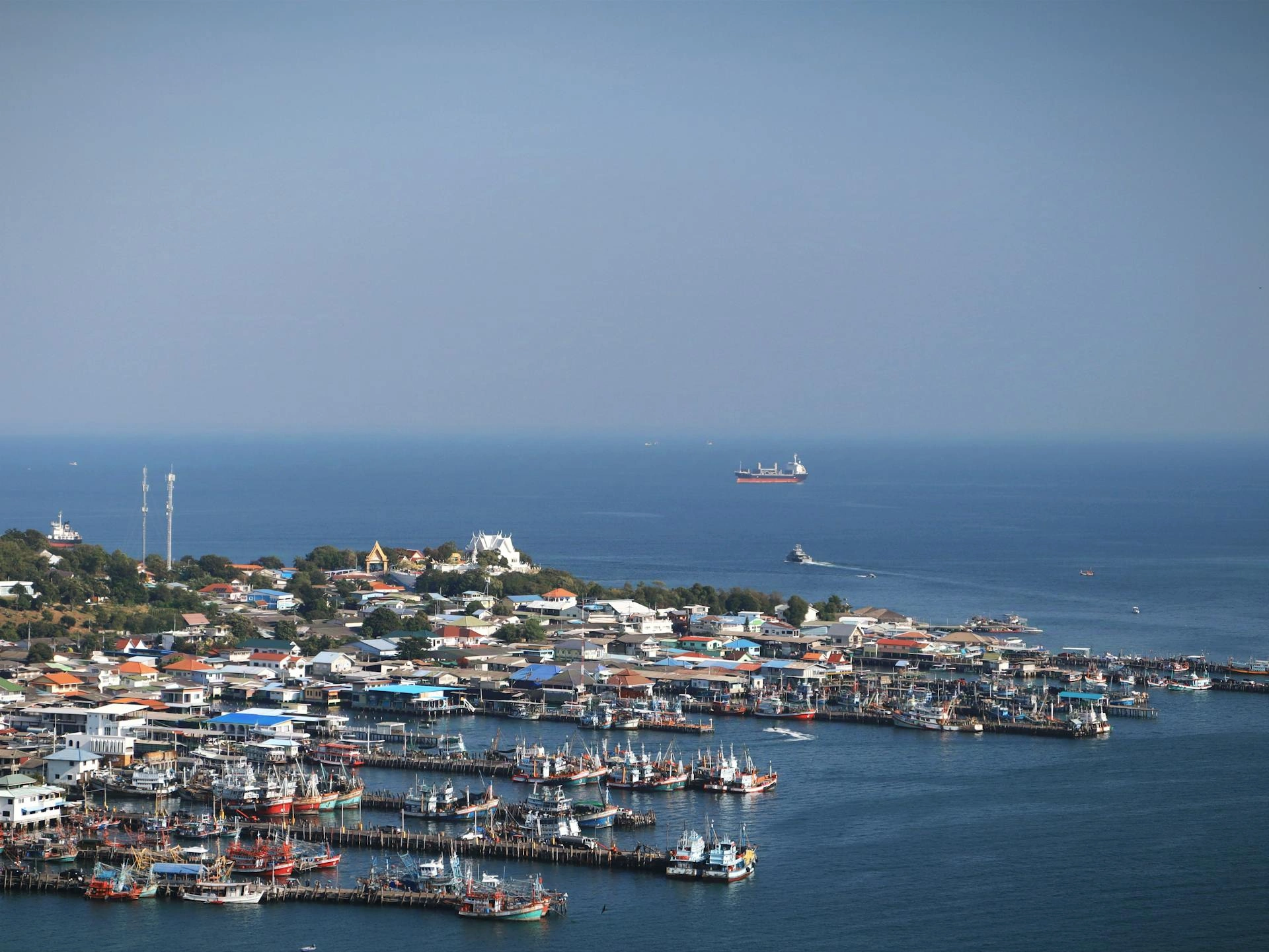
I think back to that drive. Chumphon, when I passed through it two decades ago, was a modest provincial town — charming precisely because it had not yet been noticed by the wider world. Its coastline was extraordinary: long, barely developed beaches giving on to the Gulf of Thailand, caressed by a wind that smelled of salt and possibility. Ranong, on the Andaman side, was similarly untouched — a border town of modest ambition, its mangroves intact and its pace unhurried.
Now both provinces are to become the twin pillars of what the Thai government is calling the Southern Economic Corridor. They plan to build deep-sea ports at Laem Riow in Chumphon and Laem Ao Ang in Ranong, with a six-lane motorway and double-track railway connecting them. Smart port technology. Automated container handling. Green port certification. A public-private partnership on a fifty-year concession. The scale is almost impossible to fully imagine, standing on those quiet beaches.
But I can imagine it, because from Hat Yai, I can see what rapid, unmanaged development does to a landscape. I can also see what well-managed development looks like when governments and communities work together rather than past each other. The difference, for a coastline like this, is everything.
Here’s where the analysis must become honest, because economic projections have a habit of rendering invisible the people who actually live in the path of progress. The Land Bridge as currently planned would require approximately 1,120 hectares of coastal land in Ranong and 928 hectares in Chumphon. In May 2024, residents from both provinces rallied to protest. Fishing communities fear for their livelihoods. Farmers who have grown durian on that land for generations are asking hard questions about compensation and resettlement. Environmental groups have raised serious concerns about the impact on mangrove ecosystems and marine biodiversity.
These are the legitimate claims of communities whose lives are bound up in a landscape that, for a Bangkok minister or a Singapore shipping executive, is simply a transit corridor. The tension between national economic ambition and local environmental reality is one of the defining fault lines of development in Southeast Asia, and Thailand has not always navigated it well.
There is also a subtler concern. Chumphon, that quiet durian hub I passed through all those years ago, has already seen an influx of Chinese investors buying fruit at local warehouses for export. The Land Bridge, with its Chinese Belt and Road adjacency, would intensify this dynamic considerably. The spectre of what observers have called ‘neo-colonialism’ — however contested the term — is, in this context a rational reading of recent history.
None of this means the Land Bridge is the wrong project. On the contrary, the strategic logic is sound, the geopolitical moment is real, and Thailand’s opportunity is genuine. A project of this magnitude, executed well, could lift southern Thailand from middle-income to high-income status within a generation, funding schools, hospitals, and sustainable infrastructure for communities that have long been peripheral to the country’s economic story.
But ‘executed well’ is the operative phrase. The Thai government’s own planning documents refer to ‘green port’ principles and automated, sustainable infrastructure. The compensation fund proposed under the Southern Economic Corridor Bill, requiring winning bidders to pay into a community fund before construction begins, is a promising mechanism. The Environmental and Health Impact Assessment process must be rigorous, transparent, and genuinely participatory, not a bureaucratic formality designed to reach a predetermined conclusion.
What the project requires, in short, is not merely technical excellence but political wisdom — the capacity to hold economic ambition and environmental protection as complementary obligations. The mangroves of Ranong are not an obstacle to progress but part of what makes the coast worth having. The fishing families of Chumphon are not a legacy problem to be compensated and relocated but the custodians of a shoreline that, once destroyed, cannot be rebuilt.
I will probably drive that road again. It will be different. Perhaps very different. The port lights will be visible long before the town. The lorries will outnumber the tuk-tuks. The sky will still be enormous, but what lies beneath it will have changed irrevocably.
That is not, in itself, a tragedy. Change is not the enemy of beauty, and development is not the enemy of dignity. What matters is who makes the decisions, who benefits from them, and who is heard before the concrete is poured.
Thailand has an extraordinary opportunity here. The world is watching the Strait of Hormuz with anxiety, and Bangkok has correctly read what that anxiety means for countries with alternative routes to offer. The government is right to act, accelerate planning and push enabling legislation through cabinet.
But it must act with the same seriousness of purpose toward the people of Ranong and Chumphon as it brings to the shipping projections and the investor roadshows.
Because 20 years from now, someone else will drive that road. What they find there — and what has been lost, and what has been preserved — will be the true measure of whether Thailand got this right.

Dr Stephen Whitehead is a gender sociologist and author recognised for his work on gender, leadership and organisational culture. Formerly at Keele University, he has lived in Asia since 2009 and has written 20 books translated into 17 languages. He is based in Thailand and is co-founder of Cerafyna Technologies.
READ MORE: ‘The AI lover who received a funeral speaks volumes about modern intimacy‘. The recent case of a woman who decided to hold a funeral for her AI partner may sound extreme, writes Stephen Whitehead, but it reflects a deeper shift in how intimacy is experienced, with human relationships increasingly considered by women to be falling short.
Do you have news to share or expertise to contribute? The European welcomes insights from business leaders and sector specialists. Get in touch with our editorial team to find out more.
Main Image: Anton Stepanov/Pexels