As the energy demands of artificial intelligence intensify, Japan’s northern city of Sapporo is emerging as a proving ground where renewable power, advanced infrastructure and government policy converge to test whether large-scale AI growth can align with decarbonisation, writes Andrea Busfield
One of the major takeaways from this year’s Davos World Economic Forum was the growing urgency – amid rising tensions – for corporations and government leaders to accelerate clean energy and broader climate action initiatives.
While the question of how to combat climate change remains a complex and frequently polarising issue, the consensus is that further posturing away from decarbonisation will likely result in compounding adverse impacts on our environment and those who inhabit it. The development of energy-intensive data centres and other infrastructure needed to support the rapid global adoption of artificial intelligence only raises the stakes higher.
Against this backdrop, attention is beginning to turn to where these challenges can be addressed in practice.
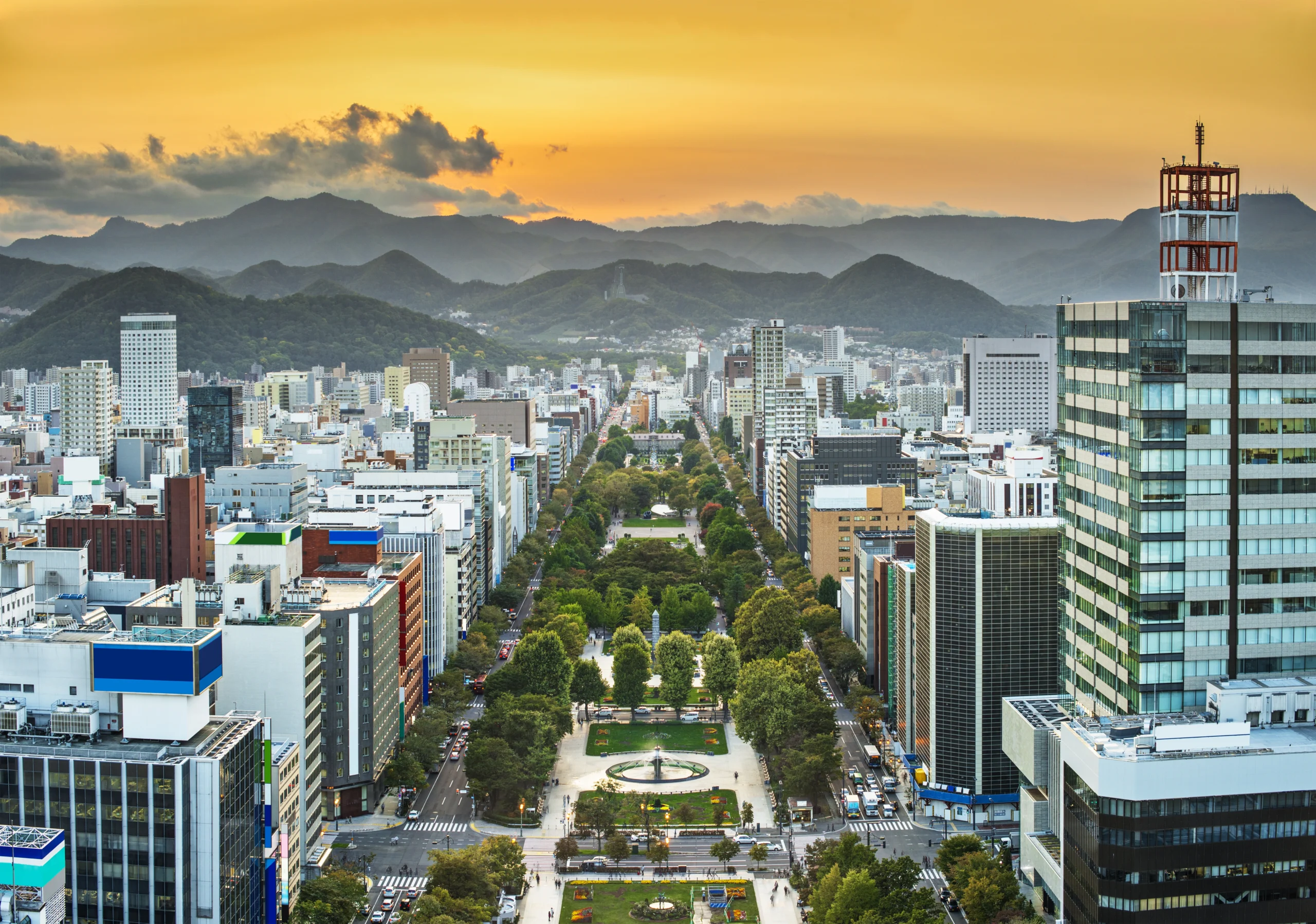
Hiding in plain sight amid these debates is the city of Sapporo, a bustling urban hub nestled in the energy-rich region of Hokkaido, Japan, which is quickly emerging as one of the most attractive green transformation testbeds for both domestic and international organisations.
As host to the lion’s share of the country’s renewable energy potential via wind, solar, and hydropower, and featuring an infrastructure ripe for supporting both decarbonisation and positive economic growth, Sapporo and the wider Hokkaido region expect to rake in more than $253 billion in combined public-private investments by 2033.
Sapporo might be best known for its annual snow festival and as the birthplace of Sapporo beer, but it is now demonstrating a shrewd ability to recognise trends and generate diverse new business.
Despite majority agreement around the need for action, much debate and uncertainty remain over the conception and replication of effective climate strategies in the age of AI. Given the convergence of widespread technological advancement – with the growing challenges of food, energy and economic security – a holistic approach grounded in Japan’s innovative GX Green Transformation policy seems increasingly necessary for the safe and sustainable expansion of infrastructure.
GX is one of Japan’s major efforts to transform its fossil-fuel reliant economy into a new structure driven by clean energy with no CO2 emissions. The dilemma for policymakers and industry alike is that there is little clarity on how and where to test emerging decarbonisation operating models to assess their real-world impacts and scalability. This is where Sapporo shows unique potential – as a test ground for new strategies that simultaneously support the three key pillars of food, energy, and economic stability.
In addition to its naturally cold climate and abundance of renewable energy sources, Sapporo’s urban centre also features many of Japan’s strongest universities and an expansive set of research and development opportunities for businesses across industries, all while being situated in the country’s leading agricultural region.
Similarly, industry leaders at the forefront of AI innovation might best view Sapporo in the context of its ripeness for the effective use of renewable energy alongside data, AI systems, and communications infrastructure. In other words, by targeting an energy-rich region like Hokkaido for the build-out of new data centres, leaders can confidently focus on driving economic growth and digitalisation while still accelerating decarbonisation and other clean energy and GX-based initiatives.

More broadly, the city continues to set itself apart as one that, rather than treating GX and climate action in isolation, hopes to serve as a rare destination in which growing AI utilisation and the development of next-generation semiconductors and data centres can forge a mutually beneficial relationship with its underlying green energy infrastructure. Again, this means technological advancement can potentially serve not as a hurdle to, but as an enabler of positive transformation, ultimately helping to address and solve a variety of complex real-world challenges, from agriculture and climate adaptation to supply chain logistics and labour shortages.
Moving forward, alongside the accelerated development of these industries by leveraging globally leading technologies, Sapporo is working to further attract overseas capital, talent and technology to support both hard infrastructure and digital ecosystem-building.
A key draw for overseas companies considering entry into the Japanese market is the STEP (Sapporo Transnational Expansion and Partnership) programme. In addition to highlighting new tax incentives emerging from Hokkaido and Sapporo’s ‘Special Zone’ designation for financial and asset management companies, programme leaders hope to support overseas businesses facing the complex barriers to entering Japan, such as registration, banking, and regulatory requirements, through STEP’s long-term, hands-on approach. This includes end-to-end assistance, opportunities for personalised business matchmaking, and exclusive access to real-world testbeds.
Certainly, as climate action becomes increasingly urgent, Sapporo offers an unparalleled, energy-rich environment for sustainable AI infrastructure.

Andrea Busfield is an international bestselling author and journalist. Her books include Aphrodite’s War and Born Under a Million Shadows. She has held senior editorial roles across the British press and reported from conflict zones including Afghanistan, where she later worked as a civilian editor with NATO/ISAF. She currently resides in Ireland.
READ MORE: ‘What Germany’s Energiewende teaches Europe about power, risk and reality‘. As Germany’s celebrated energy transition confronts hard questions about cost, resilience and emissions, Clean Energy & the Energy Transition Correspondent Zion Lights draws on her own journey from climate activism to nuclear advocacy to examine what the Energiewende reveals about how Europe should power a low-carbon future.
Do you have news to share or expertise to contribute? The European welcomes insights from business leaders and sector specialists. Get in touch with our editorial team to find out more.