Trump rowed back on force in Davos, but not on pressure, leaving NATO to confront a stark question: what happens when an ally treats another’s territory as negotiable?
Donald Trump spoke in Davos and, once again, Greenland was on the table. While he took direct military intervention off the table, he left open other coercive tools — tariffs, economic pressure, and political intimidation — to force compliance from allies.
For more than 75 years, NATO has existed as a shield against external aggression. It rests on a simple assumption: allies do not threaten allies. Today, the most serious challenge to that assumption does not come from Moscow or Beijing, but from the White House.
NATO was founded in 1949 on two pillars. Article 5, the best known, declares that an attack on one member is an attack on all. Article 1 is just as fundamental. It binds members to respect each other’s sovereignty, territorial integrity, and to resolve disputes peacefully.
Together, these articles form an agreement not only to defend one another, but to leave each other alone.
An example of how NATO countries can peacefully handle borders and territorial disputes already exists — and it involves Greenland and Canada. For decades, the two sides had an unresolved maritime boundary in the Nares Strait, centred on the tiny, uninhabited Hans Island. Rather than escalating the issue, Danish and Canadian forces engaged in what became known as the “Whisky War,” leaving bottles of Danish schnapps or Canadian whisky for one another whenever a flag was changed. In 2022, the matter was formally resolved through negotiation, resulting in a mutually agreed land division that gave Canada its first land border with Denmark (through Greenland). No threats, no coercion, no tariffs — just diplomacy, restraint, and respect for sovereignty. This is precisely the behaviour NATO’s founding principles were designed to encourage.
That internal restraint is what makes NATO work.
Denmark is a founding NATO member. Greenlanders are Danish citizens with self-governance and a legal right to determine their own future. Canada is also a founding member. Yet Trump has repeatedly floated the idea of acquiring Greenland and has even voiced a desire that Canada could become the 51st U.S. state.
When Washington speaks of taking over allied territory in the name of U.S. security, alliance obligations become subordinate to American whims. If the most powerful member of NATO disregards its own commitments, what remains of the alliance beyond paperwork?
An alliance can be described, tongue-in-cheek, as two pickpockets so deep in each other’s pockets that neither can steal from a third without full cooperation. NATO functions because its members bind themselves so tightly against external threats that internal conflict never enters the picture. Once internal coercion becomes acceptable, the logic collapses.
The United States already enjoys extensive military access to Greenland. Apart from what NATO allows, the U.S. also has a complementary defence agreement with Denmark, signed in 1951 and updated in 2004. It has bases, early warning systems, and space surveillance.
What, exactly, would purchasing Greenland add? From whom would it be bought, at what price, and who would receive the money?
The same absurdity applies to Canada. Any hypothetical purchase price would ultimately flow back to U.S. coffers once Canada ceased to exist as a sovereign state. To highlight the nonsense, one might counter-offer that the United States become 50 new Canadian provinces — or territories, if preferred.
Trump is known for maximalist demands and last-minute reversals. But when the leader of the world’s most powerful country speaks, even a whisper can sound like a roar. Threats must be taken seriously because no one knows what demand comes next. If Greenland is fair game, why not Iceland? Why not Gotland (A Swedish Island in the Baltic)?
There is no mechanism to expel a NATO member. There is only voluntary withdrawal. The real danger is not that the United States leaves NATO tomorrow, but that it stays long enough to make a future NATO without the United States inevitable. If mistrust becomes permanent, other members may eventually choose to leave and rebuild.
History offers context. The United States once purchased Louisiana, Alaska, and the Danish West Indies — at a time when self-determination could be ignored. That era is over.
Denmark cannot sell Greenland on its own. Any transfer without Greenlandic consent would violate international law, Danish constitutional law, and the very norms NATO claims to defend.
Europe has already been subjected to tariff threats and trade coercion. These non-military tools are now openly framed as acceptable means of extracting concessions from allies. Europe and Canada face uncomfortable choices:
● Draw a red line: making clear that coercion against allied territory ends the alliance.
● Wait it out: hoping rhetoric never becomes action.
● Prepare for exit: by designing a NATO replacement without the United States.
Canada’s Prime Minister, Mark Carney, has already stated that Canada stands fully behind Greenland and Denmark, and that middle powers must resist coercion from aggressive superpowers. This stance comes at real economic cost, after years of dependence on U.S. trade.
Threats and intimidation must not be normalised. The United States is right to complain about burden-sharing, and Trump’s pressure has produced results. But coercion among allies is something else entirely.
Who would defend Greenland if deterrence fails? Britain once went to war for 3,000 Falkland Islanders. Greenland has nearly 60,000 people. What lessons will Russia draw for Ukraine? What lessons will China draw for Taiwan?
The situation is fluid. After Trump had a meeting with the Secretary-General of NATO, he removed the remaining threats of tariffs on NATO members who refuse to allow him to take over ownership of Greenland.
White House coercion has led to a vague agreement about potential U.S military access or cooperation in small areas of Greenland. The vague reporting, so far, indicates there would be no territorial transfer of ownership. The Secretary-General has no authority to make any deal on behalf of Denmark. Do we now have the final U.S position? History gives us no certain answer. The question remains if the U.S is going to use its position inside NATO as a member to destroy it from the inside.
Alliances rarely die with explosions but when trust is replaced by fear. In these uncertain times, the question is no longer whether NATO can survive external threats — but whether it can survive one of its own members deciding that sovereignty itself is negotiable.

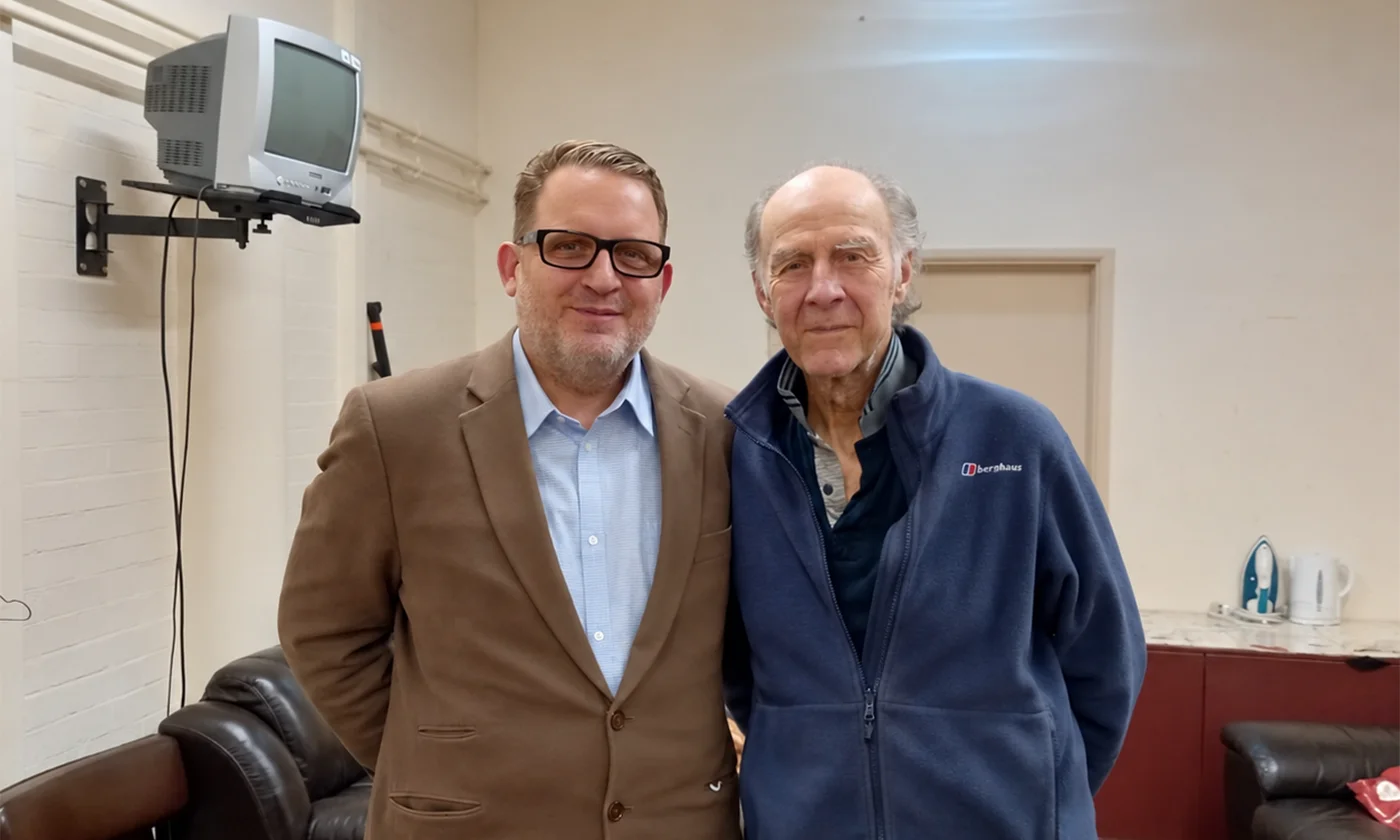
Harry Margulies is a journalist, author, commentator, and public intellectual whose work interrogates religion, politics, and morality with sharp wit and fearless clarity. A second-generation Holocaust survivor, he was born in Austria and spent time in an Austrian refugee camp before moving to Sweden. Educated by Orthodox rabbis throughout his childhood, he ultimately abandoned faith in his teens—a journey that has shaped his lifelong commitment to secularism, critical thinking, and freedom of expression. His latest book, Is God Real? Hell Knows, has been described by ABBA’s Björn Ulvaeus as “funny, sharp, and unafraid.”
READ MORE: ‘The fight for Greenland begins…again‘. Greenland became a strategic prize during the Second World War, when the United States occupied the island to block Nazi advances, shield Atlantic convoys and gather the meteorological intelligence that helped time D-Day. It later formed the backbone of NATO’s Arctic early-warning system during the Cold War. Trump’s latest claim that America “has to have” Greenland has revived that history, alarmed Denmark and unsettled the alliance. Yet Greenland’s future remains a matter for Greenlanders, not Washington, writes historian Dr Linda Parker.
Do you have news to share or expertise to contribute? The European welcomes insights from business leaders and sector specialists. Get in touch with our editorial team to find out more.
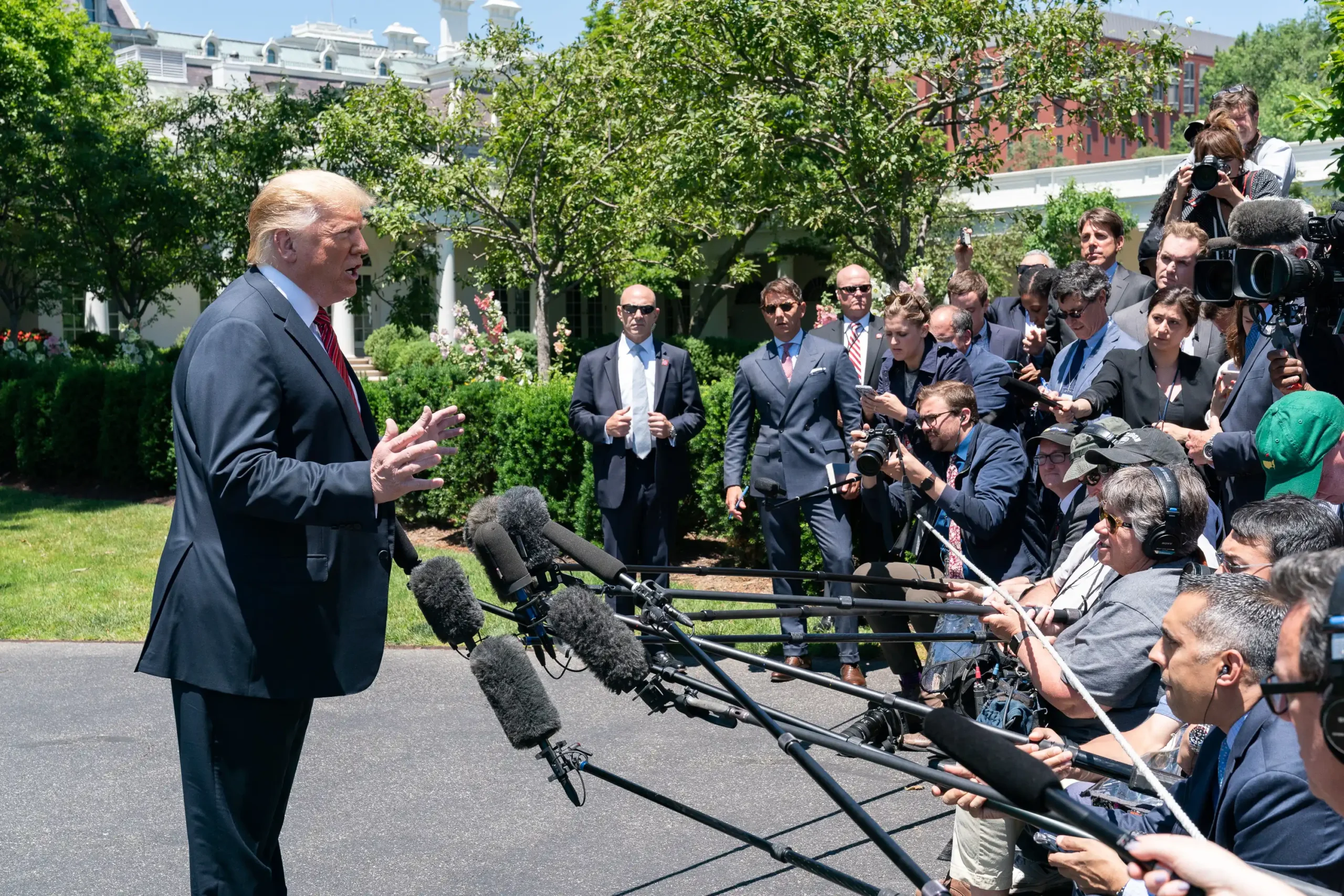
Main image: President Trump talking with the press in 2019. Credit: White House photograph (Public Domain), via Wikimedia Commons.