
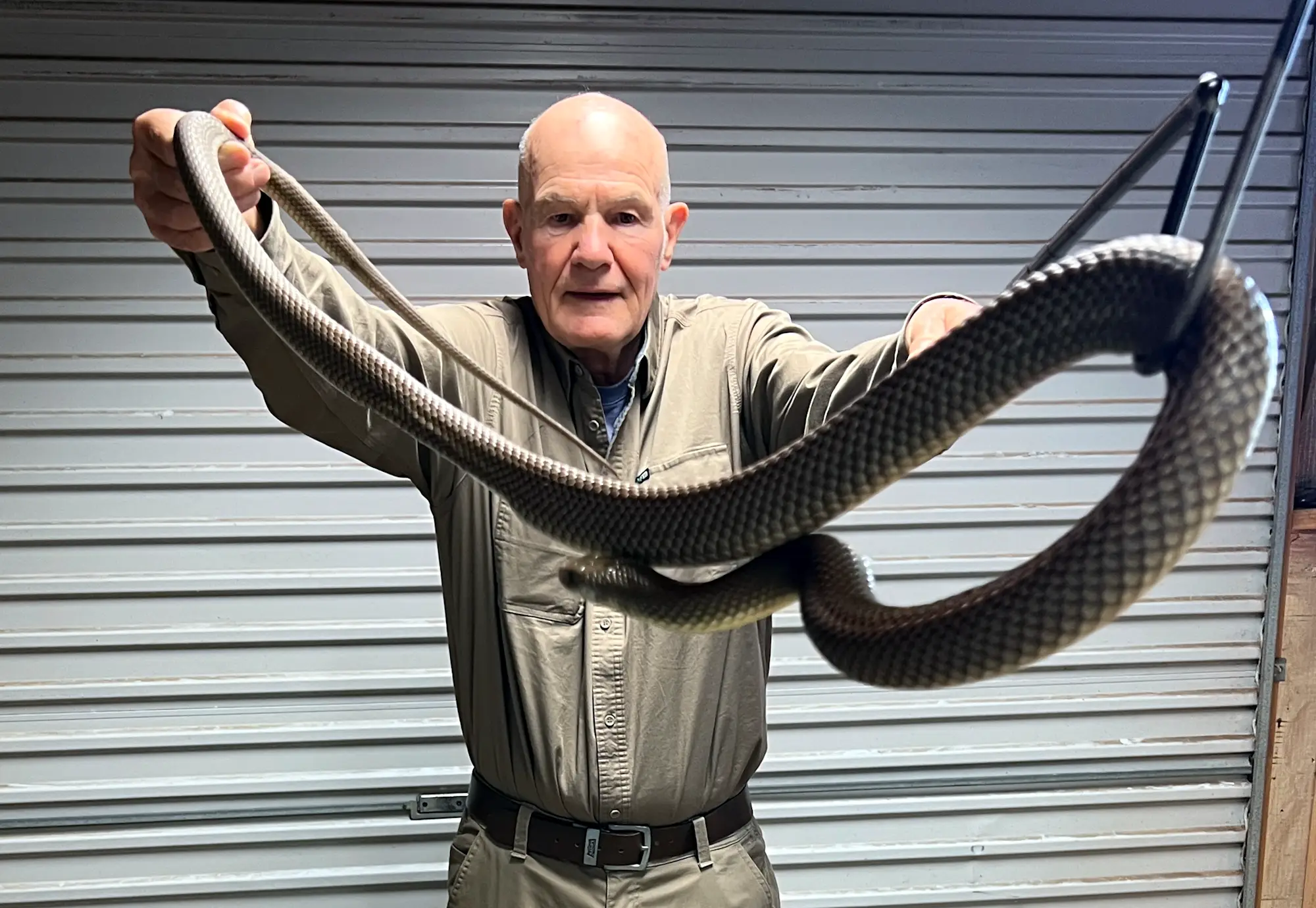
After a lifetime of fearing snakes, performance coach Dr Steve Simpson confronted some of Australia’s most venomous species on a specialist handling course. As he reveals, he discovered that anticipating danger can be more debilitating than facing it, and that decisive action can help us overcome even our deepest fears
Australia is certainly an interesting place to live when you have ophidiophobia (a fear of snakes). It has more than 210 known species, around 100 of them venomous, and is home to 20 of the world’s 25 most venomous snakes, including the entire top 10. Among them is the inland taipan, whose venom is considered the most toxic of any snake.
So having recently moved to Australia with my wife, to be closer to our grown-up children, I finally plucked up the courage to challenge my lifelong fear of snakes and enrol on a course to learn how to handle some of the country’s most venomous species.
Having spent much of my professional life helping people develop confidence, overcome challenges and perform at their best under pressure, I was going to find out how well I could apply some of that advice to myself.
Going into the course, I fully expected the experience to be frightening, but the disclaimer was enough to make me wonder whether I was about to make a terrible mistake. It warned about snake bites, deaths and life-changing injuries. By signing, I was accepting responsibility for whatever happened to me during the course.
It was September, and I had travelled several hundred miles from my home to the New South Wales Central Coast, where John and Tina Mostyn run a specialist venomous snake training facility. There were just three students and two instructors on the two-day course, the ratio they normally use to ensure close supervision.
The first morning began with introductions, followed by a slideshow covering the snakes we might encounter. We were also shown photographs of injuries people had suffered after running into a snake. To describe those images as graphic would be an understatement.
By the afternoon, we were ready to handle live snakes under supervision. Crunch time was here.
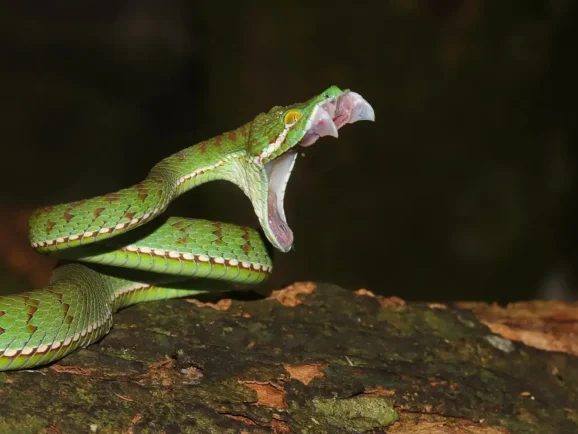
I struggle to explain precisely what has always frightened me about snakes. Their slithering movements are unsettling, and the sight of a snake hissing with its mouth open even more so, but my fear was more visceral than that.
Over the years, there have been encounters that have done little to improve matters. Once, while running after work in a swampy part of Africa, I was confronted by a large black snake crossing a narrow path. I almost had to jump over it, and it took several minutes for my heart rate to return to normal.
Later, during regular visits to Australia, I occasionally encountered snakes while cycling. Neither I nor the snake had much time to react, although fortunately the animals always moved away. Now I was living here, and in a fairly rural, subtropical area where encounters with snakes are a realistic prospect, I knew I didn’t want to spend the rest of my life feeling frightened every time I walked outside. It was time to confront my fear.
That, however, had been proving easier said than done. I’d booked my place about three months in advance, and from that moment I’d been finding reasons why I might not attend. There was plenty happening in our lives, after all. I’d also wake during the night thinking about the course. Even when I reached the hotel the evening before it began, I was still considering turning around and going home. If you had asked whether any part of me wanted to withdraw, the answer would have been easy: every single cell of my body.
Two things worried me most. One was being bitten; the other was discovering that I couldn’t go through with it. The instructors had one safety requirement whose breach meant automatically failing the course: never handle a snake unless a snake-compression bandage is in your pocket or immediately within reach. I was certainly well-stocked in that department so the rest was up to me.
The snakes were introduced in bags attached to the ends of poles. An instructor hands the pole to a student, who has to release the snake carefully under supervision before beginning the handling exercise. We were taught different techniques for safely catching and releasing the animals, with repetition an important part of learning the correct procedures.
During one early exercise, I was sitting with the other students while an instructor worked with a snake. Suddenly, it began moving directly towards me, its tongue flicking back and forth. I instinctively arched my back in the chair, but John told me to keep still. I did as instructed, and the snake was diverted away. It was possibly the most important practical lesson I learnt. As John explained, remaining still can allow a snake to settle rather than react to sudden movements.
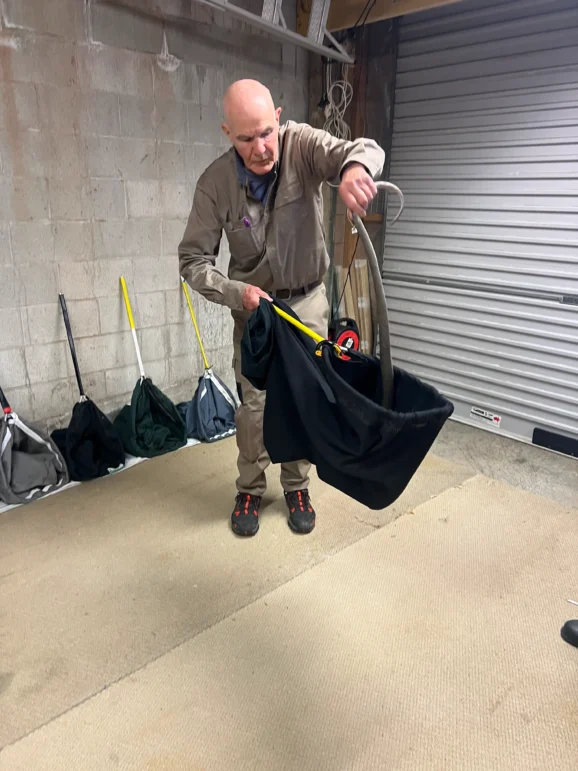
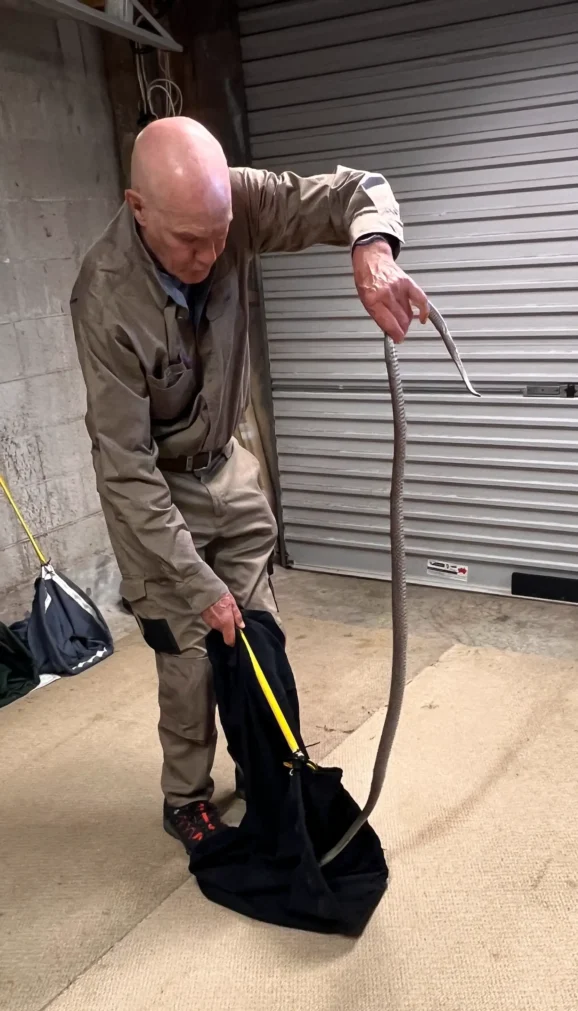
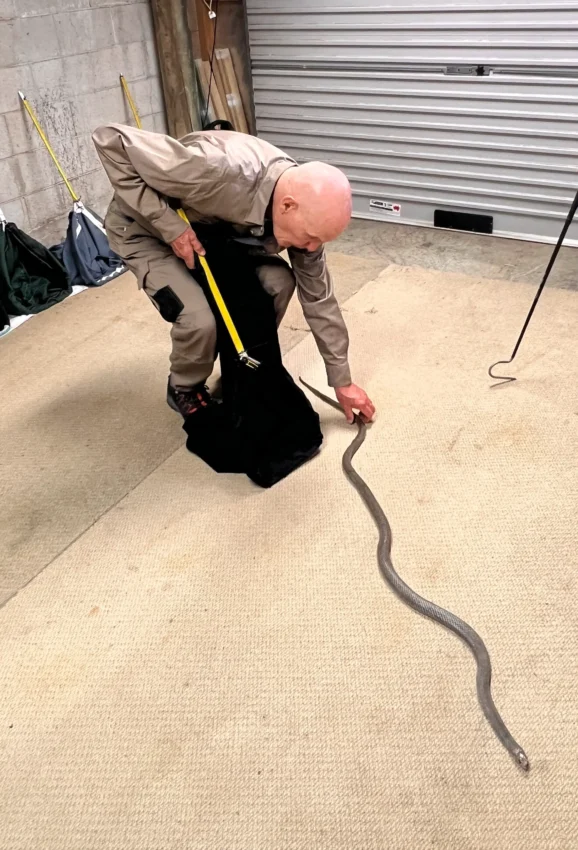
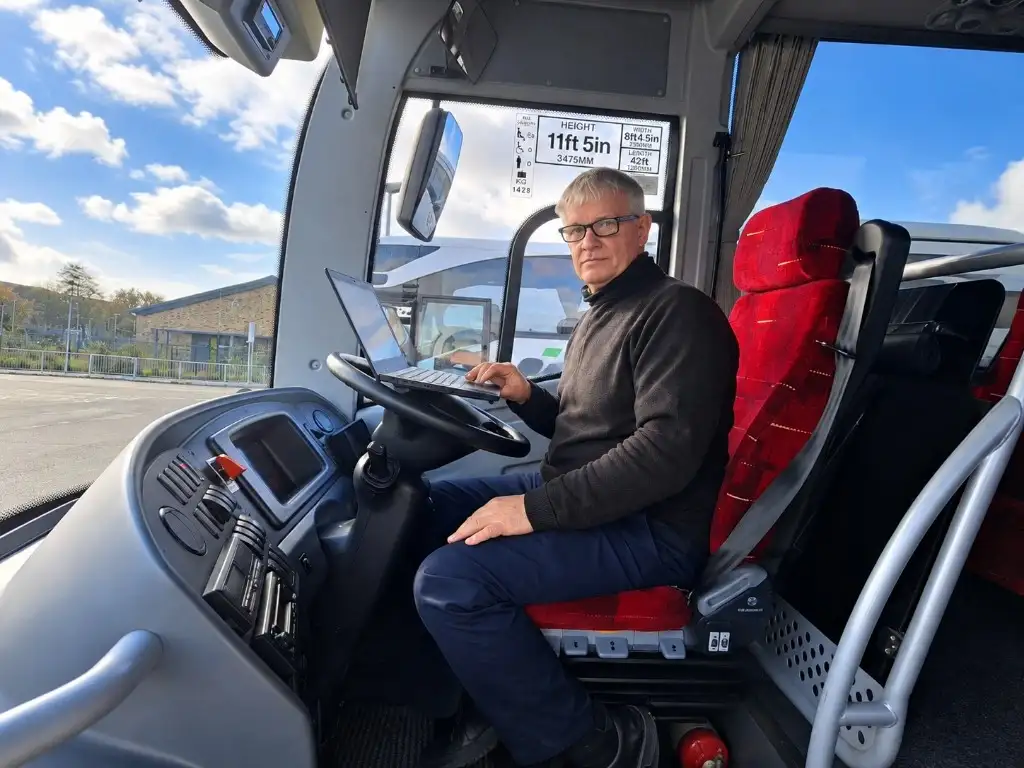
Dr Steve Simpson practises catching, handling and bagging a snake under supervision during a two-day training course on Australia’s New South Wales Central Coast.
As the training progressed, I began to notice something interesting about my own behaviour. The worst part was waiting. Only one snake was handled at a time, so while one student worked with an instructor, the other two sat watching. During those periods, my mind would be busy imagining what might happen when my turn came.
Yet whenever I was actually on the floor handling a snake, something extraordinary occurred. There wasn’t an ounce of fear or anxiety. I wasn’t thinking about the disclaimer, the prospect of being bitten or what would happen if I needed to go straight to hospital. All my attention was on the animal in front of me. In my professional work, I often talk about the state of complete absorption sometimes described as being ‘in the zone’, or experiencing flow. This was exactly what I was experiencing.
And that experience reinforced something I’ve talked about for years: the distinction between fear and danger. The danger presented by a venomous snake is genuine. Nobody should underestimate it. But much of the fear I experienced before the course was being generated by my imagination.
For three months, I’d been creating pictures of threatening situations that weren’t actually happening. Our minds are wonderfully inventive in this respect – we can construct mental images and sequences of events that seem more convincing than anything that Hollywood could produce. The resulting fear feels real, even when the event we are anticipating has yet to occur.
One encounter that had particularly preyed on my mind was the prospect of handling a death adder. Although encounters are relatively uncommon, they are found across much of mainland Australia and their venom can cause potentially fatal paralysis. Before antivenom became available, around 60 per cent of recorded bites to humans were fatal.
Towards the end of the programme, Tina announced that we were going to meet one. The room became unusually quiet. We had been serious about the training from the beginning, but now there was a noticeable hush.
When the snake emerged from its bag, it was smaller and less intimidating in appearance than I’d expected. It was well under a metre long and lay almost motionless on the floor. Tina explained the method we were to use, involving a hook to lift the snake gently into its bag.
Handling the death adder proved surprisingly straightforward. It barely moved, and the whole exercise was completed in seconds. Still, there was a collective sense of relief once that part of the session was finished.
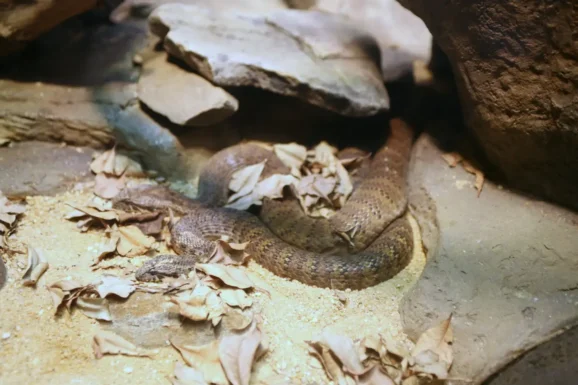
The training demanded considerable concentration. We had to learn different ways of safely and humanely catching, handling and releasing snakes, and the movements had to be performed in the correct order.
Towards the end of the course, I was physically and mentally exhausted. During one exercise, I suddenly found that I couldn’t remember the sequence I’d been taught. My mind went completely blank, and I stopped and asked for a moment to compose myself.
Tina offered just one word: “Breathe.” I took a couple of deep breaths, and the brain fog disappeared. Only then did I realise that I’d stopped breathing. It was a striking reminder of something I frequently tell others when they are struggling under pressure.
I have long emphasised the importance of breathing in managing our emotional state. People sometimes dismiss breathing exercises as rather dull, but simple techniques can be extremely powerful.
The incident also made me appreciate the instructors’ approach. John and Tina were remarkable in their calmness. They spoke quietly, moved slowly and never displayed the slightest hint of boastfulness or bravado. They had extensive experience, and their attention to safety was exceptional. Throughout, they demonstrated what good coaching looks like by the way they behaved.
The course certainly delivered on its promise, although I didn’t recognise it immediately. At first, waiting for each new snake had been an ordeal. Gradually, I began to notice that my thoughts were becoming less fearful. Sometimes I would find myself wondering, with genuine curiosity, what kind of snake might be in the next bag.
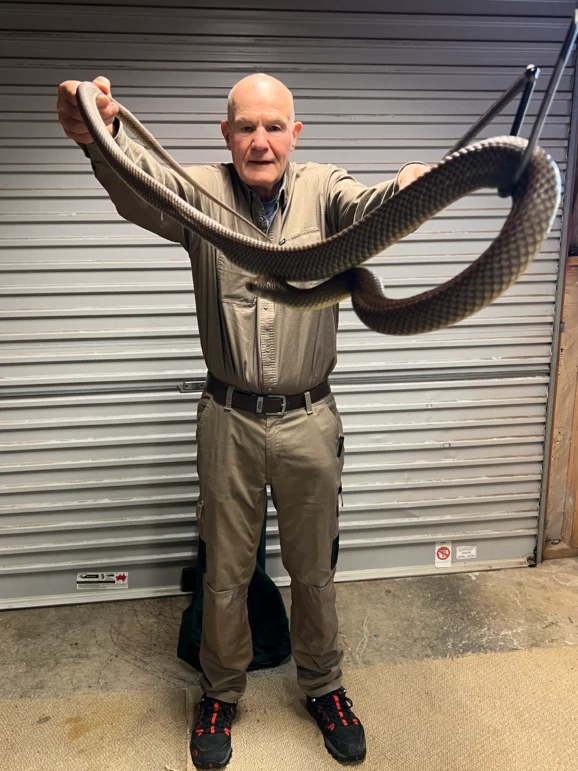
And there was one experience near the end that I would describe as an epiphany. Tina was demonstrating a technique that involved holding a snake – in this case, a mulga snake (also known as a king brown snake) – by its tail while using a hook in the other hand to support the weight of its body. I watched her and thought that I couldn’t possibly do it. It required coordination, and a mistake could have serious consequences: the mulga can deliver more venom than any other snake in the world, with bites capable of causing severe muscle damage and even death.
I told Tina how I felt. She smiled and said they were “there to help”. In other words, there was no way I could get out of it.
Once I began, however, I found myself becoming attuned to the mulga snake’s movements. Then I felt its tail wrap around my fingers. My first thought was that it might be preparing to flex its muscles and strike. But then I noticed how extraordinarily light its touch was, like the tiny grip on my hand when I’m crossing a road with my 3-year-old granddaughter.
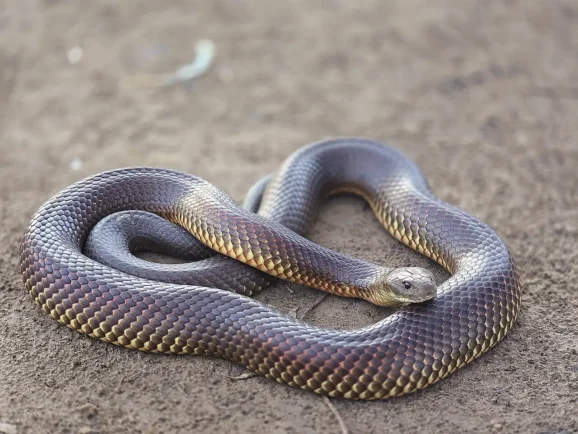
The snake’s touch felt just the same, and that’s when I knew I had made a connection. It’s difficult to describe precisely what I mean by that. There was something almost spiritual about the experience. I had felt something similar years earlier while running with wolves in a remote part of Kazakhstan.
The experience also made me reconsider the images I’d carried around in my mind since childhood. When I imagined a snake, I pictured a large, thick creature with an enormous head, open mouth and prominent fangs. But I began to recognise how much my imagination had exaggerated certain features and how strongly those mental pictures had influenced my feelings.
This is something I have discussed with people I coach. We create internal pictures and sounds that shape our emotional responses. Sometimes we can reduce the power of a frightening image by imagining it becoming smaller, more distant or less immediate. The aim is not necessarily to make fear disappear altogether. Fear can serve an important purpose, particularly when there is genuine danger. What matters is learning how to prevent it from dominating our thoughts and interfering with our ability to function.
When the course finally ended, I felt an enormous sense of satisfaction. Holding my Certificate of Competency, I felt that I’d earned my stripes. It was a particularly tough challenge I’d set myself, and I was very satisfied and content that I’d seen it through.
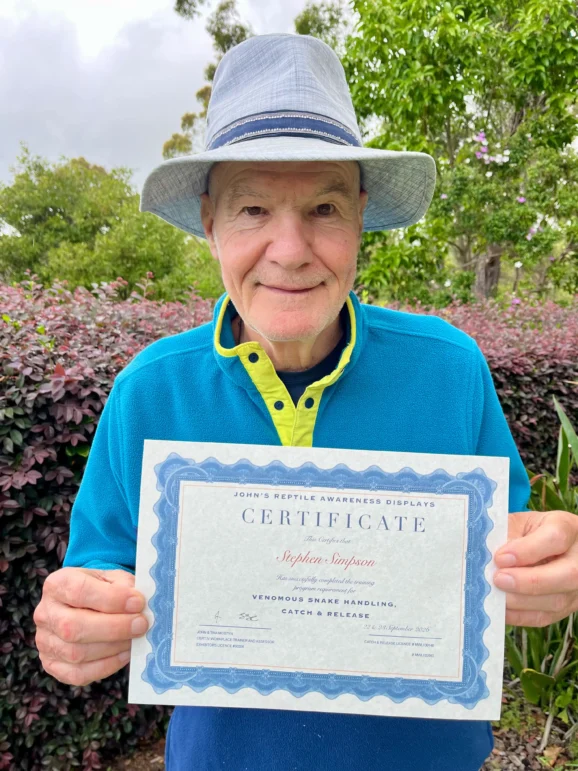
Before the course, the prospect of discovering a snake near my home would have alarmed me. Now, if I were sitting on my decking enjoying a coffee and noticed a snake nearby, I think I could probably finish my coffee while keeping an eye on it.
That doesn’t mean I would ignore the situation. I would assess the risk, particularly if my grandchildren were visiting, and decide whether any action was necessary. Nor does completing the course make me a snake-handling expert – I would need to complete further paperwork before capturing and releasing snakes.
But the sight of a snake no longer makes my legs immediately turn to jelly. I’m happy to give it space and let it go about its business.
Perhaps the best insight from the course was also the most personal: I worry too much. Having spent years teaching others about managing fear, preparing carefully and performing under pressure, it was an important reminder about how difficult it can be to put good advice into practice.
But now I have a much better idea of how to overcome fear, and one principle from the course has stayed with me above everything else: once you’ve made up your mind, do it. Whether handling a snake or doing any other task you find unnerving, you must assess the situation, consider your own position and determine the safest course of action. Having made that assessment, act decisively.
As I discovered when handling venomous snakes, if you approach a challenge in that way, you’ll usually find that you’ve got the situation in the bag.
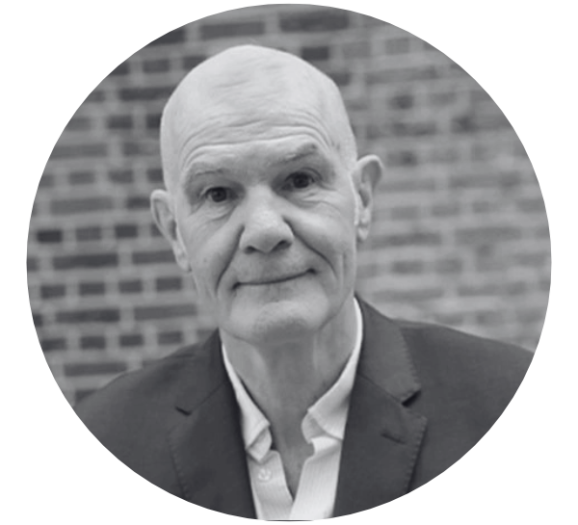
Dr. Stephen Simpson is an internationally acclaimed mind coach, TV and radio presenter, hypnotherapist, TEDx speaker, bestselling author, business consultant, and Fellow of the Royal Society of Medicine. With nearly 40 years as a practising physician and extensive experience in elite performance coaching, mental health, hypnosis, and NLP, he has worked with top athletes on the PGA European Golf and World Poker Tours. Dr. Simpson holds an MBA from Brunel University and has served as Regional Medical Director for Chevron, contributing to global health initiatives with leaders like Bill Clinton and Bill Gates. He hosts popular shows such as Zen and the Art of NLP, and his YouTube channel boasts over 260 videos and 350,000 views. His latest book, The Psychoic Revolution, encapsulates his innovative methods for achieving peak performance.
READ MORE: AI ‘could leave us busier than ever’, Oxford professor warns. The reality of the AI revolution remains deeply uncertain and may leave people busier, not freer, than before. Here, Dr Stephen Simpson interviews Oxford economist and historian Professor Carl Benedikt Frey, one of the world’s leading thinkers on artificial intelligence, automation and the future of work.
Do you have news to share or expertise to contribute? The European welcomes insights from business leaders and sector specialists. Get in touch with our editorial team to find out more.
Main Image: Dr Steve Simpson confronts his lifelong fear of snakes during a specialist handling course in Australia. Credit: Tina and John Mostyn