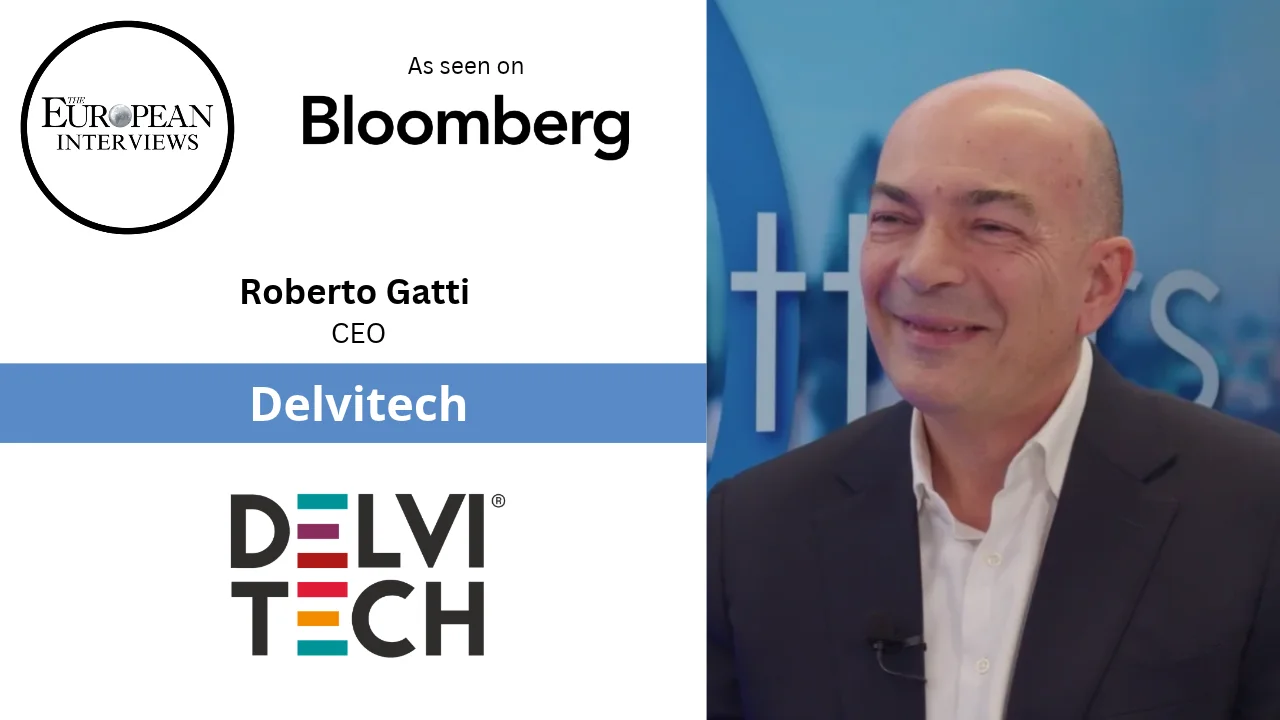
Elon Musk’s airborne Tesla Roadster and China’s plans to launch flying vehicles next year suggest the decades-old dream of flying cars could finally get off the ground. But Swiss technology chief Roberto Gatti warns that without urgent new safety laws, the road ahead could be turbulent – and the consequences deadly. He speaks to Juliette Foster on Business Matters about the risks and how AI could revolutionise the factories building tomorrow’s cars
Flying cars could take to the skies within years, but without new safety laws they risk putting lives in danger, a leading European technology boss has warned.
Roberto Gatti, the chief executive of Swiss technology firm Delvitech, said Tesla’s recent demonstration of its rocket-assisted Tesla Roadster 2 showed how close manufacturers were coming to making flying cars a reality.
The electric sports car stunned spectators in Texas last month when it raced up a ramp, performed a mid-air backflip and landed safely using powerful fans and thrusters.
Tesla boss Elon Musk acknowledged the risks of the stunt, reportedly explaining that the vehicle had been operated without a human driver “to make sure we don’t kill anyone”.
But Gatti warned that allowing such vehicles onto public roads and into the skies above crowded cities without strict regulations could have deadly consequences.
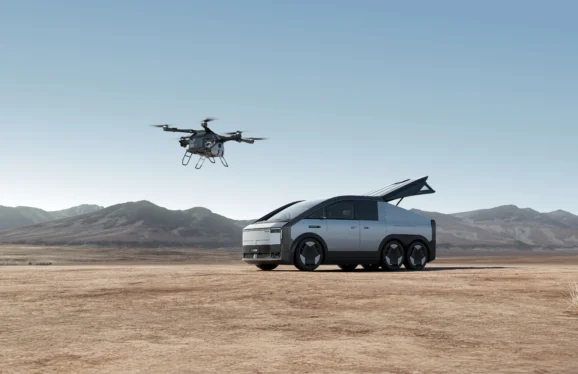
It comes as China prepares to allow limited use of flying cars from next summer, with manufacturer XPeng claiming its £225,000 two-seater aircraft, which uses six battery-powered propellers and can fly autonomously for up to 18 miles, could begin carrying passengers in the second half of 2027.
The vehicle has already received restricted approval from Chinese aviation authorities, while XPeng chief executive Deli Zhao said earlier this month that the company also plans to launch the technology in Europe.
Speaking to The European’s Juliette Foster, Gatti said: “Flying cars could bring real advantages, particularly when it comes to reducing traffic congestion. But they need to be regulated, and we must start defining those rules now. Otherwise, sooner or later, there will be problems.
“Turning an experimental demonstration into a vehicle suitable for everyday use is a major challenge. There are many stages between developing a prototype and bringing a finished product into production.
“Regulation also needs to move faster than it does today. The earlier the rules are established, the easier it is for manufacturers to develop their products, avoid costly changes and save money during production.”
Beyond flying cars, Gatti believes AI could fundamentally change how vehicles are manufactured.
In an extensive interview for Business Matters, produced in conjunction with The European, Gatti explained how so-called physical AI could allow machinery throughout a factory to communicate and automatically adjust production processes, identifying faults before vehicles leave the assembly line.
He said the technology could help manufacturers avoid costly recalls and improve safety, particularly as cars become increasingly dependent on complex electronics and software.
Gatti, whose company is a leading innovator in advanced AI-powered inspection technology, helping some of the world’s most sophisticated manufacturing operations achieve exceptional standards of precision and quality, argued that consumers were entitled to expect greater reliability despite the growing complexity of modern vehicles.
“Factories today can produce vehicles with no defects, but the challenge is monitoring every stage of production to catch mistakes before the finished product reaches the customer,” Gatti said.
“However, automation isn’t always the answer. Introducing it across an entire factory can be an unnecessary expense, so manufacturers need to identify where it will make the biggest difference to quality, costs and productivity.
“Looking ahead, factories will increasingly use machinery that can be continuously upgraded rather than replaced, allowing manufacturers to adapt their production lines as technology develops.”
Watch the full interview with Roberto Gatti, which also explores the limitations of computer simulations, the role of AI in railways and medical technology, and why manufacturers must meet consumers’ growing demands for faultless products, on The European’s YouTube channel.
READ MORE: Electric air taxis take step towards passenger reality after San Francisco Bay flight. A piloted electric aircraft has flown from Oakland International Airport across San Francisco Bay and around the Golden Gate Bridge in a public demonstration of how short urban air taxi journeys could soon operate in some of the world’s most congested cities.
Do you have news to share or expertise to contribute? The European welcomes insights from business leaders and sector specialists. Get in touch with our editorial team to find out more.
Main image: Roberto Gatti, the chief executive of Swiss technology firm Delvitech, speaks to Juliette Foster about the safety risks posed by flying cars, the urgent need for regulation and how artificial intelligence could transform vehicle manufacturing. Credit: Business Matters / The European