The reality of the AI revolution remains deeply uncertain and may leave people busier, not freer, than before. Here, Dr Stephen Simpson interviews Oxford economist and historian Professor Carl Benedikt Frey, one of the world’s leading thinkers on artificial intelligence, automation and the future of work
Silicon Valley promised a future without work, but one of the world’s leading experts on artificial intelligence and automation thinks it may, instead, leave us doing our own plumbing.
Far from the picture painted by politicians and tech evangelists of intelligent machines quietly absorbing the routine tasks and drudgery that consume so much of modern life, Oxford economist Professor Carl Benedikt Frey believes the AI revolution may, perversely, make many of us far busier than we are today.
Frey, whose research on automation helped shape global debates about the future of employment, says that the ability of Large Language Models (LLMs) to provide instant expertise could move us towards a “self-service society” in which we increasingly take on additional work once handled by professionals.
“I think there are a number of instances where, with AI, you might be able to take over somebody else’s work. And so you’re sort of gradually moving into maybe more of a self-service economy where people increasingly do their own taxes, ask for medical advice, maybe try to fix their own dishwasher or boiler rather than calling a professional,” he told me.
The result, he suggests, may not be a society liberated from labour so much as one in which labour quietly changes hands.
“It would lead to many people being busier rather than relieved of work.”
The observation cuts against much of the prevailing narrative surrounding artificial intelligence. While public debate tends to focus on whether AI will replace jobs altogether, Frey suspects the more immediate question may be whether it simply transfers more responsibility onto the individual.
It is a characteristically counterintuitive argument from a man whose career has largely been spent challenging conventional wisdom about technology and economic change.
Frey, who serves as the Dieter Schwarz Associate Professor of AI & Work at the Oxford Internet Institute and is also Director of the Future of Work Programme at the Oxford Martin School, first rose to international prominence in 2013 as co-author of The Future of Employment, a landmark study estimating that 47 per cent of U.S jobs were at high risk of automation.
His groundbreaking research was later adopted by institutions including the Bank of England and the Obama administration’s Council of Economic Advisers.
More recently, however, his attention has turned towards a different question: why major technological advances so often fail to unfold in the way their champions expect.
That theme runs through his latest book, How Progress Ends: Technology, Innovation, and the Fate of Nations, which draws on more than a thousand years of economic history to explore why technological breakthroughs do not always translate into prosperity – and why societies frequently misunderstand the forces that drive innovation in the first place.
One example, he says, is the enduring belief that war acts as a powerful engine of innovation and economic growth.
“There’s a perception out there that war is good for innovation and technological progress,” he said.
“People keep citing the Second World War and saying the war gave us the bomb, it gave us radar, it gave us all sorts of things.
“But when you start to look at the data, you see patenting plummeting; you see technical publications plummeting; you see manufacturing productivity plummeting.
“Did the war boost growth in Britain? Or Germany? Or Italy? The answer is most certainly not.”
For Frey, similar questions surround artificial intelligence, where he notes a growing disconnect between the extraordinary capabilities demonstrated by modern AI systems and the slower, messier reality of economic transformation.
Part of the reason for the current slower-than-expected transformation, he argues, is that even the most sophisticated AI systems remain heavily dependent upon human judgement.
Frey said: “With generative AI, for the most part still you still need a human in the loop because you need somebody to verify the output.
“And in order to verify the output, you need to learn with AI because if you can’t understand what it’s doing or producing, you can’t verify it at the end of the day, so you need to learn yourself.”
That distinction, he believes, is frequently missing from the wider public discourse.
On the morning of our interview, the BBC’s Today programme had been discussing the launch of a new UK Semiconductor Centre intended to strengthen Britain’s position in the global AI race.
Frey, however, is cautious about assuming that investment alone will resolve the deeper structural problems confronting the UK.
“Even if you manage to mobilise the investment, I’m not sure it’s going to have the expected return.
“The main problem that the United Kingdom has is that it lacks this large market. Energy costs are very high, and that’s going to be a concern for both manufacturing industry and for AI. Transportation infrastructure is likewise not very good.”
By contrast, he points to the enormous domestic scale advantages enjoyed by both the United States and China.
“A key advantage that both America and China have is that the firms there have a large domestic market to scale into and they’re taking advantage of that.”
For Frey, understanding how far the promise of AI can ultimately be fulfilled depends as much on historical perspective as on technical expertise.
One of the central themes of his latest work concerns the distinction between “exploration” and “exploitation” – the difference between discovering genuinely new ideas and efficiently scaling existing ones.
He said: “When you’re developing something new, you first need to explore and figure out what it is that you want to do or produce.
“At some point, though, you’ve developed your prototype and it’s a question of bringing it to market and bringing it to market at as low cost as possible.”
Different societies, he argues, frequently develop strengths in one phase while struggling with the other. He points to the former Soviet Union as a revealing example.
“We tend to look back at the Soviet Union as a failure today, but it actually grew quite rapidly for around four decades or so. It was pretty good at exploitation of existing technologies.”
The problem emerged when the technological landscape itself began to change.
“What was needed was more freedom to explore and experiment, which there was little space for in the Soviet system.”
By contrast, he points to the decentralised nature of American venture capital, recalling how Bessemer Venture Partners famously declined to invest in Google in 1999.
He said: “The fact that Bessemer didn’t invest didn’t mean the end of Google, because others stepped in. That’s the virtue: you have more people that can take different bets.”
Yet for all the present uncertainty surrounding AI, history suggests that somebody will ultimately lead the next great technological transformation – and that its consequences will reshape economies and societies on a vast scale.
In his internationally acclaimed book The Technology Trap: Capital, Labor, and Power in the Age of Automation, published in 2019, Frey draws unsettling parallels between the Industrial Revolution and the modern age of automation.
While industrialisation ultimately generated immense wealth and prosperity, the immediate consequences were often socially destabilising, with middle-class occupations collapsing, wages stagnating and inequality surging.
Frey believes many of those same pressures are now beginning to re-emerge in the age of AI, but at the same time he remains sceptical of the increasingly fashionable assumption that technological disruption itself is inherently dangerous or undesirable.
“I think a key message that I would like people to internalise is that technological progress and innovation are very important,” he said.
“An economy that isn’t growing will eventually become a zero-sum game. In a stagnant economy, the only way for you to improve your standard of living will be at my expense. That creates a society full of tension.
“But it’s also important for solving our environmental challenges as well. Productivity is about doing more things with fewer resources.
“Yet we cannot take progress for granted, so we need to focus on that and understand what drives progress.”
Yet for Frey, the deeper implications of the AI age lie not only in its economic or geopolitical impact, but in what it may mean for the human mind itself.
Again and again during the interview, he returns to the importance of protecting the space to think, displaying a concern for the growing fragility of human concentration, judgement and original thought.
“I think what you do need is time to think, time to read. If you don’t have that time, you are constantly on the treadmill.”
The principle he returns to most consistently throughout the interview is prioritisation.
“Prioritise and feel reasonably comfortable with less important things lying around.”
It is advice he frequently gives students as well.
He explained: “You need to have a very clear compass of what you want to accomplish, what you want to work on and what you want to focus on.
“It’s not always the most intellectually capable people that do the best research or even produce the most interesting ideas.
“You need some persistence, but it’s not just persistence, it’s also the capacity to prioritise.”
Which ultimately brings the conversation back to one of the defining paradoxes of the AI age: that as artificial intelligence becomes more powerful, the value of human judgement, discernment and original thought may only grow greater.
After all, the great technological revolutions of history rarely unfold in the straightforward way their evangelists initially imagine.
Frey remains unconvinced that society fully understands the shape of the transformation now beginning to emerge. The pace of change, he suggests, makes certainty itself increasingly difficult.
Frey added: “With AI, we don’t even know what the future of AI looks like.
“Is it going to be large language models? It might be small language models; it might be world models; it might be some fusion with symbolic AI; it might be something else. We don’t know.
“What’s hard in terms of advising governments and organisations about AI is that it’s a very dynamic field.
“What might be good advice today might be bad advice tomorrow.”
For the moment, at least, the AI age appears unlikely to deliver the effortless post-work utopia long promised to us.
Instead, it may usher in a world in which people quietly find themselves doing more and more for themselves.
But if Frey is right, the real challenge may not simply be keeping pace with artificial intelligence but continuing to preserve the time, concentration and intellectual space required to think clearly about where it is taking us.
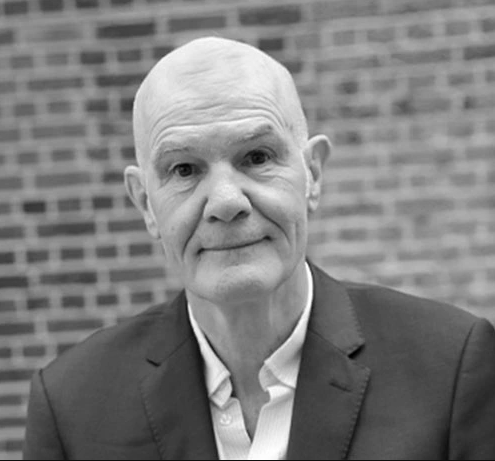
Dr. Stephen Simpson is an internationally acclaimed mind coach, TV and radio presenter, hypnotherapist, TEDx speaker, bestselling author, business consultant, and Fellow of the Royal Society of Medicine. With nearly 40 years as a practicing physician and extensive experience in elite performance coaching, mental health, hypnosis, and NLP, he has worked with top athletes on the PGA European Golf and World Poker Tours.
Dr. Simpson holds an MBA from Brunel University and has served as Regional Medical Director for Chevron, contributing to global health initiatives with leaders like Bill Clinton and Bill Gates. He hosts popular shows such as Zen and the Art of NLP, and his YouTube channel boasts over 260 videos and 350,000 views. His latest book, The Psychoic Revolution, encapsulates his innovative methods for achieving peak performance.
READ MORE: ‘Meet the Earth Prize-winning teenager tackling the world’s microplastic crisis‘. Arya Satheesh, 18, has been named European winner of The Earth Prize 2026 for Eco Purge, a biodegradable plastic prototype designed to release enzymes that help break down existing microplastic pollution.
Do you have news to share or expertise to contribute? The European welcomes insights from business leaders and sector specialists. Get in touch with our editorial team to find out more.
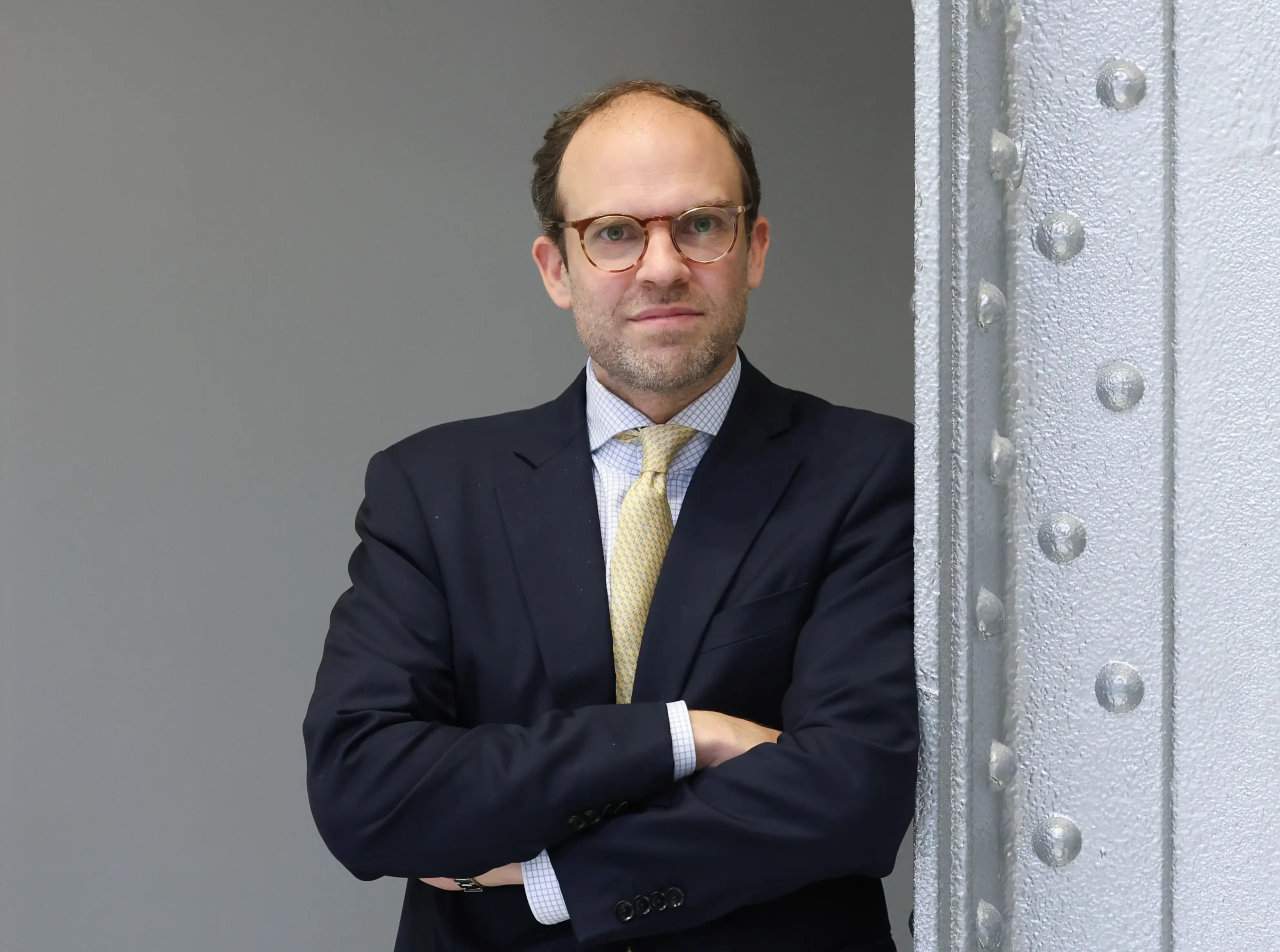
Main image: Prof Frey. Credit: Supplied.