

Nearly 700,000 women are to take part in the world’s largest trial of artificial intelligence in breast cancer screening, as the NHS begins testing whether the technology can detect tumours earlier and reduce pressure on specialist doctors. The first women have now joined the study in Cambridgeshire, almost two years after the government announced the programme
The NHS has begun recruiting women for the world’s largest trial of artificial intelligence in breast cancer screening, with nearly 700,000 patients expected to take part across 30 sites over the next three years.
Women attending routine screening appointments in Cambridgeshire are the first to join the £11 million study, which will test whether AI can help specialists identify cancers earlier while reducing the time spent examining mammograms.
The trial, known as EDITH – Early Detection using Information Technology in Health – was first announced by the government in February 2025, when ministers outlined plans to use AI to help tackle NHS waiting lists and improve cancer diagnosis.
Under the existing screening system, two specialist readers normally examine each mammogram for signs of cancer.
Every mammogram will continue to be reviewed by at least one human specialist, with clinical decisions remaining under professional oversight.
The study, funded by the National Institute for Health and Care Research, is being led by researchers at the universities of Cambridge and Warwick and Cambridge University Hospitals NHS Foundation Trust, working with NHS England.
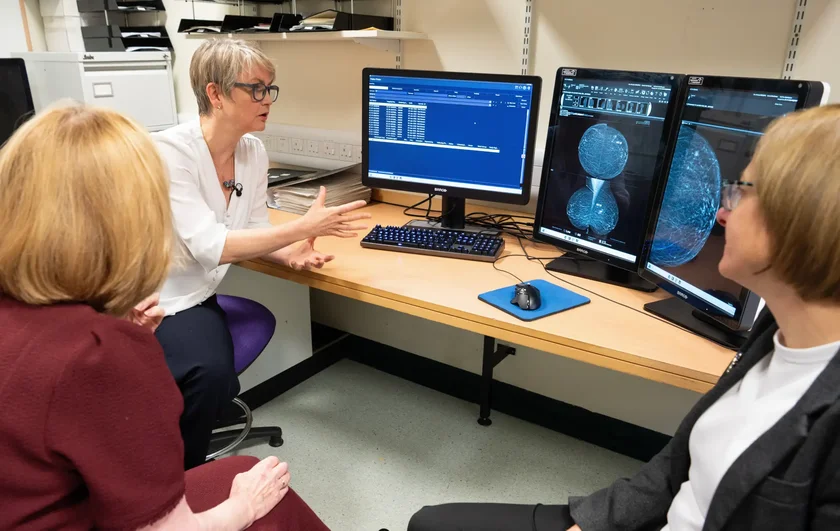
Yvette Cooper, the Health and Social Care Secretary, visited Addenbrooke’s Hospital in Cambridge to meet the researchers and women who have previously undergone breast cancer screening.
“This is the biggest AI breast cancer trial in the world, backed by £10 million of government investment to speed up diagnosis and potentially deliver life-saving improvements,” she said.
“If successful, this technology could help women get a breast cancer diagnosis and start treatment much more quickly, giving them the best possible chance of recovery.”
The trial is intended to establish whether AI-assisted screening can maintain or improve the accuracy of the existing system while freeing specialists to spend more time diagnosing and treating patients.
Fewer than one per cent of mammograms show signs of cancer, meaning radiologists spend much of their time examining images that do not reveal the disease.
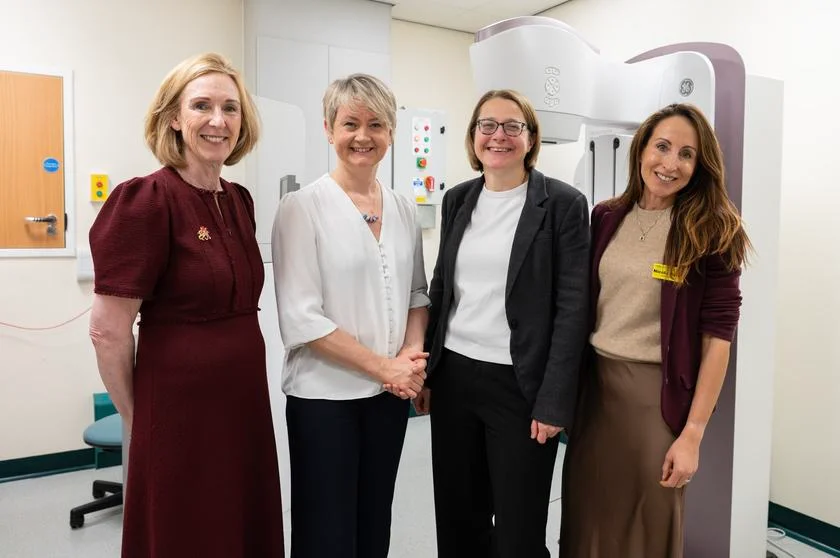
Professor Fiona Gilbert, from the University of Cambridge and Addenbrooke’s Hospital, who is jointly leading the research, said: “EDITH will test whether an AI-assisted mammogram-reading tool can help experts review images more efficiently, while maintaining professional oversight and the standards women expect from NHS breast screening.”
The government originally announced the programme on World Cancer Day, last year, identifying 30 screening sites and nearly 700,000 participants. At the time, it allocated £11 million in support through the National Institute for Health and Care Research.
Recruitment is now under way in Cambridge, with further NHS screening centres due to join the study in the coming months.
Around 2.1 million women undergo breast screening in the UK each year, with the programme estimated to prevent approximately 1,300 deaths annually.
Women invited to participate will receive information about the research alongside their routine screening appointment, including instructions on how to opt out. The screening appointment itself will remain unchanged.
Professor Sian Taylor-Phillips, from the University of Warwick, said: “AI-assisted technology could support staff by flagging areas of a mammogram where cancer might be missed to improve early cancer detection.”
The NHS will assess the findings before deciding whether the technology should become part of routine breast screening. Any changes will depend on evidence that AI-assisted assessment is at least as safe and effective as the existing system.
The trial will also receive support from a new AI research screening platform being developed by NHS England with nearly £6 million in government funding, designed to help hospitals participate in future AI screening studies.
READ MORE: Breast cancer campaigners target Burnham at PMQs over £20m research fund. A 22-minute vigil opposite Downing Street tomorrow will call on the Prime Minister to back dedicated research into invasive lobular breast cancer after 469 MPs and representatives of 17 opposition parties supported the campaign.
Do you have news to share or expertise to contribute? The European welcomes insights from business leaders and sector specialists. Get in touch with our editorial team to find out more.
Main image: Early detection can be crucial to surviving breast cancer. A major NHS trial involving nearly 700,000 women will investigate whether artificial intelligence can help identify the disease sooner, potentially improving treatment outcomes and easing pressure on specialist doctors. Credit: Michelle Leman / Pexels