For more than 80 years, one of the most recognisable moustaches in history has belonged to Hitler. Iranian filmmaker and researcher Babak Mehrdadnia argues that it is time to take it back
The first thing we see when we encounter another person is their face. Before someone speaks, and before we know what they think or what they have done, we read their outward signs: the shape of their face, their hair, beard and moustache, glasses, clothes, and even the way they stand or look at us. We invest these outward signs with meaning, reading into them ideas of class, fashion, masculinity, rebellion, dignity and modernity.
I have spent an important part of my professional life working with images, faces, and the ways in which visual details acquire meaning. What I have learned along the way is that the meanings we attach to appearance are rarely fixed. They change with time, culture and circumstance.
Few examples illustrate that more starkly than the toothbrush moustache.
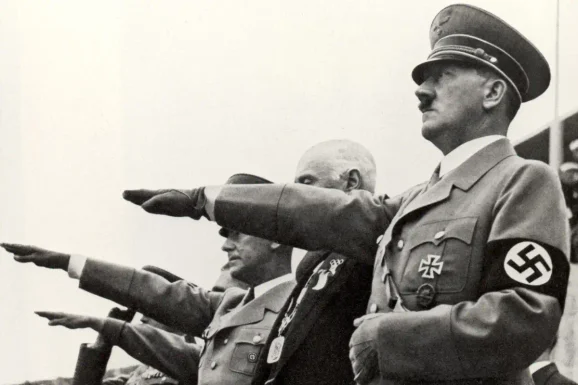
Today, it is almost impossible to look at that small moustache without immediately seeing Adolf Hitler in our minds.
There is a famous story about why Hitler wore his moustache this way. During the First World War, so it goes, he trimmed his previously fuller moustache so that his gas mask would fit better over his face. The story has been repeated – and changed – many times. What matters is how completely the style became associated with Hitler, eclipsing almost every other meaning it once carried. The association is all the more striking because the toothbrush moustache was neither invented by him nor unusual when it first appeared.
In the late 19th and early 20th centuries, in fact, as fashions in facial hair changed, short and neatly trimmed moustaches were becoming part of a modern masculine appearance. Compared with the fuller and more elaborate beards and moustaches of earlier generations, this form was simple, orderly and compact.
Then cinema carried the style far beyond the fashions that had created it.
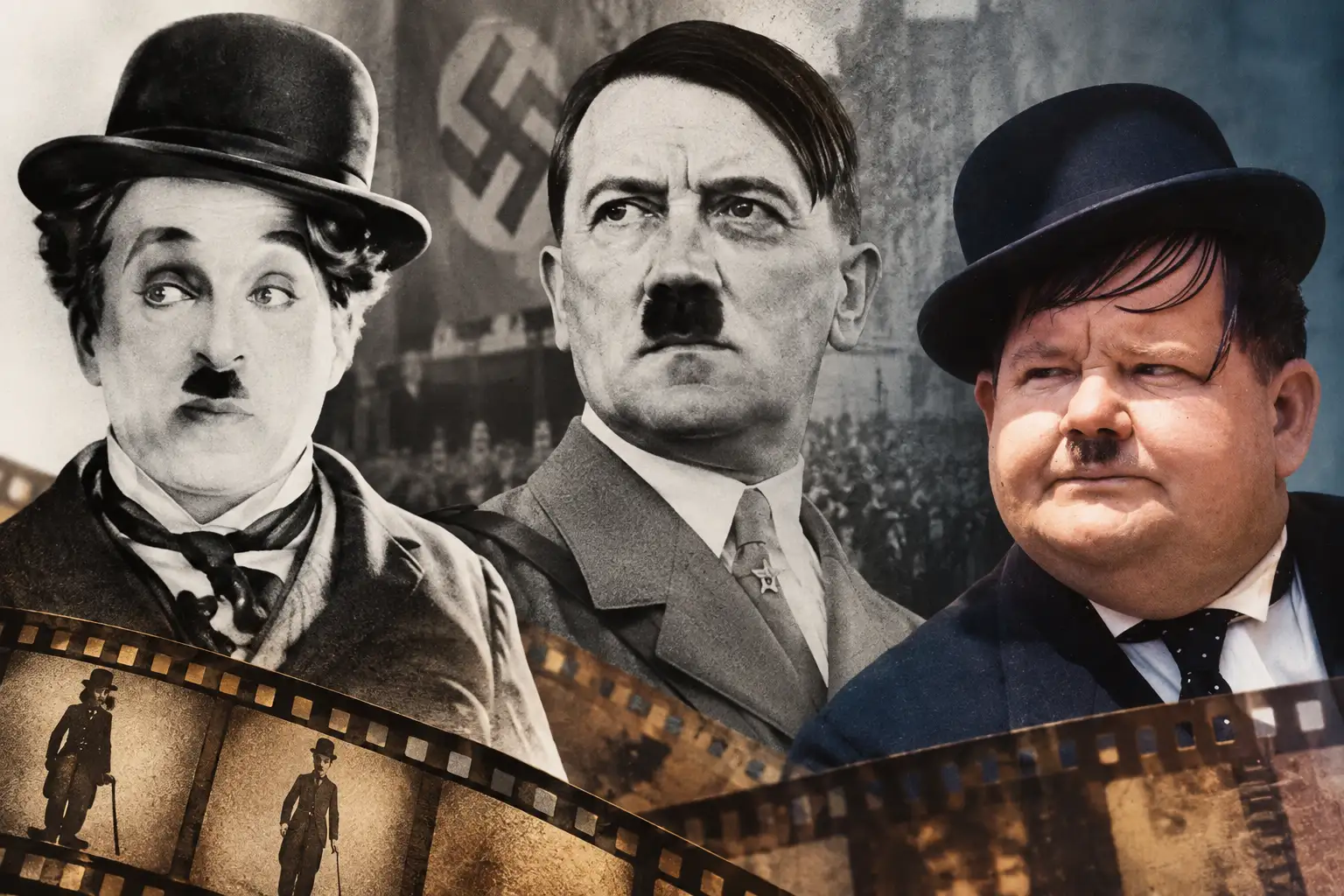
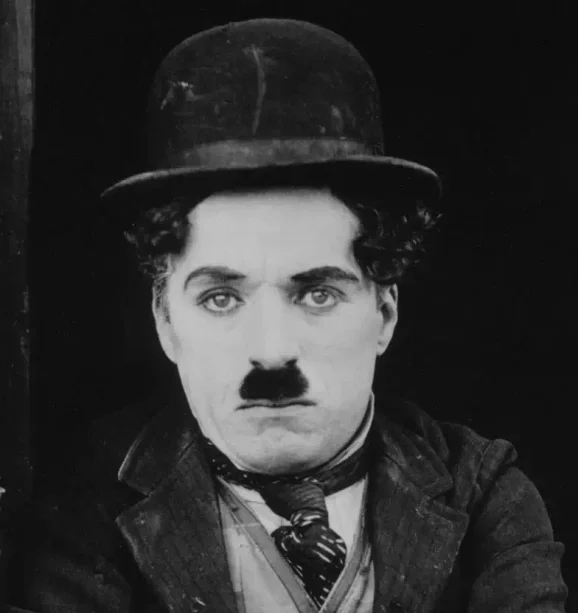
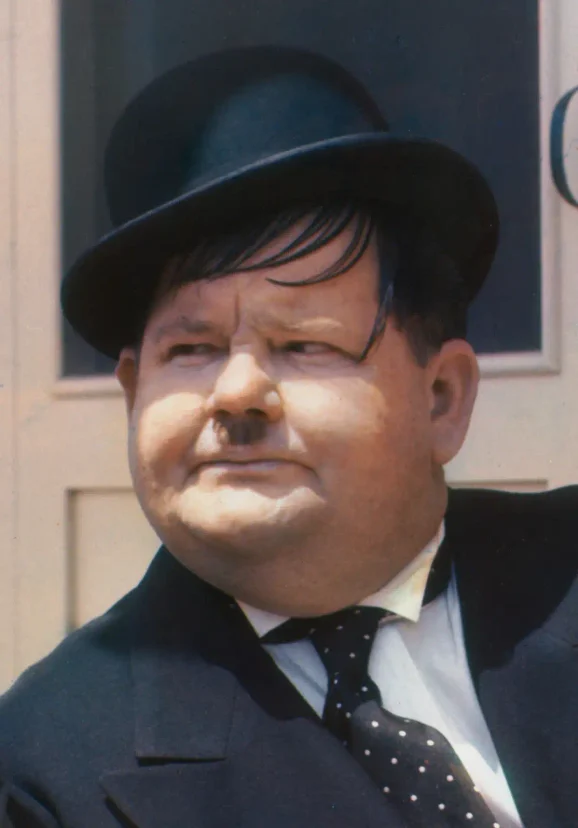
Charlie Chaplin made the toothbrush moustache instantly recognisable as part of his Tramp character, while Oliver Hardy wore a similar style throughout his screen career.
On Hardy’s face, the moustache became part of a carefully cultivated air of dignity and seriousness, made funnier by the absurd situations in which he invariably found himself. I have watched his films dozens of times and, for me, that small strip of hair has long been associated with wit, warmth and laughter. Hardy’s screen persona was pompous yet vulnerable, forever stumbling into foolish predicaments while reaching, beneath it all, for affection, friendship and respect.
History leaves us with an extraordinary visual collision: three of the 20th century’s most famous faces, each wearing essentially the same moustache, yet each giving it an entirely different meaning.
On one side stood Hitler, delivering speeches filled with anger, verbal violence, racial divisions, and commands that ended in destruction and ashes. On the other Charlie and Hardy, carrying messages of joy, life, and human connection.
At the end of his 1940 film The Great Dictator, a satire of fascism and Hitler, Chaplin’s Jewish barber, wearing the same toothbrush moustache, delivers the film’s famous closing speech: “More than machinery, we need humanity; more than cleverness, we need kindness and gentleness. In the name of democracy, let us all unite.”
And Hardy, with his unforgettable comedy, embraced the innocence and fragility of human beings. What dialogue could be more meaningful than that of someone who devoted his entire life to making a world weary of suffering laugh?
So why, you might ask, did history allow the toothbrush moustache to become the preserve of the monster, rather than the comedians who had made it a symbol of laughter?
If it remains forever defined by Hitler, then we concede that his hatred has proved more enduring in our collective memory than Chaplin’s humanity and humour. Surely, that is a cultural surrender we should resist.
None of this diminishes the horror attached to Hitler’s image. Six million Jews were murdered in the Holocaust, while millions of others were persecuted and killed by the Nazi regime. His face will always be inseparable from one of the darkest chapters in human history.
But history is full of clothes, hairstyles, gestures and symbols whose meanings have changed over time. Why should Hitler, one of the most evil men ever to have lived, retain a veto over something as ordinary as the hair above another person’s upper lip?
I do not imagine the toothbrush moustache will suddenly become fashionable overnight. Its association with Hitler is too deeply embedded for that. But meanings change through repetition. Perhaps I will include it in my next film. Perhaps other filmmakers, artists and performers might do the same.
In time, seeing it on different faces and in different contexts could weaken Hitler’s hold over it. His legacy hardly needs our help to endure.
If the toothbrush moustache can gradually be reclaimed for laughter rather than hatred, and for joy rather than fear, then perhaps Chaplin and Hardy might finally get a little of it back.

Babak Mehrdadnia is an Iranian researcher, documentary filmmaker, and producer, holding an M.A. in Art Research. As the CEO and founder of Ahura Film, he bridges visual storytelling with cultural semiotics. He is the author of several historical works, including Isfahan: From Roots to Tomorrow. His forthcoming 500-page book examines 7,000 years of beard and moustache history from Mesopotamia and Ancient Iran to modern cultures and religions. His peer-reviewed scholarship includes semiotic studies on masculine facial hair, identity, and social status in ancient civilizations, presented at international academic conferences.
READ MORE: Why the AfD is surging in Germany’s former East. The AfD’s 43.8 per cent vote in Saxony-Anhalt exposed a political divide that reunification never fully erased. German journalist David Fleschen argues that its strength in the East cannot be understood without the upheaval, lost status and unresolved grievances that followed 1990.
Do you have news to share or expertise to contribute? The European welcomes insights from business leaders and sector specialists. Get in touch with our editorial team to find out more.
Main image: The European. Source images First National/Public Domain, Unknown/Public Domain and Harry Warnecke/CC0.