The recent protests at the Port of Dover, which brought traffic to a standstill, have been attributed to migrant crossings. But according to Dr Stephen Whitehead, they fundamentally reveal how men who feel they have lost status, security or purpose can be drawn to displays of collective power. Addressing that insecurity early may prevent such movements from escalating
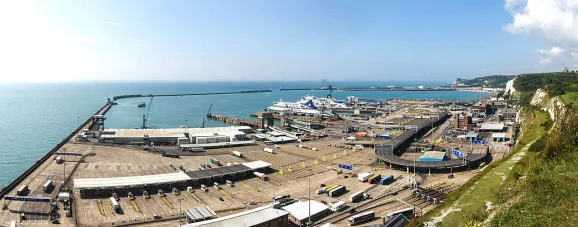
On Saturday morning, several hundred masked anti-immigration protesters blocked roads into the Port of Dover, with black-clad men in balaclavas linking arms across a major road. By blocking the routes into Britain’s busiest ferry terminal, they stopped traffic entering the port and created a four-mile tailback.
Most discussion since then has focused on the protesters’ opposition to immigration, the disruption they caused, police powers and their decision to cover their faces. But two features deserve closer attention: the protesters were all men, and they had deliberately made themselves look like a uniformed group.
After 35 years researching men, male identity and gender roles, I see those two details as connected. The anger expressed at Dover is not only about the arrival of migrants. Movements of this kind can attract men who believe that their economic security, social standing or sense of authority has weakened. Immigration then becomes one explanation for that loss, and migrants become one visible group to blame for it.
The protest offers something beyond opposition to small boats. It gives men who feel diminished an immediate experience of control, solidarity and status. Matching black clothes make separate individuals look like one organised body. Balaclavas hide the facial expressions through which strangers normally assess and respond to one another, while linked arms turn the group into a physical barrier.
The men were not soldiers, but their clothing borrowed from the appearance of soldiering: uniformity, anonymity and collective physical control. For several hours, hundreds of people in cars and lorries could not proceed because the protesters had decided they would not.
No violence was necessary. Conservative councillor Chris Vinson described the black clothing and balaclavas as “extremely intimidating” while saying he was unaware of any violence. The protesters had still demonstrated that they could control a significant public space and prevent other people from moving through it.
This is why judging the protest only by whether it could reduce small-boat crossings misses part of what happened. Crossings are down by more than 40 per cent this year compared with 2025, with stepped-up UK–France law-enforcement cooperation credited with helping to reduce them. Blocking Dover for a morning was not going to alter that figure, but it did allow the men taking part to stop other people, command attention and impose their presence on one of the country’s busiest transport routes. For men who already believe that something important has been taken from them, a protest that offers solidarity, visibility and a temporary sense of authority can be powerfully attractive.
The loss they feel may be real. A man may have lost secure work, social standing, a sense of purpose or confidence about his place in society. He can be right that something has deteriorated while being wrong about what caused it or who is responsible.
Restoring what has been lost is difficult. Jobs, wages, secure communities and a durable sense of purpose cannot simply be handed back to every supporter of a political movement. They require economic change, policy, competence and time.
Status, however, is easier to supply. A man can be told immediately that he has been pushed down, that another group has been allowed to move ahead of him and that his former position should be restored. Nothing material in his life has to improve for that message to make him feel that he has recovered some authority.
But status based on hierarchy only has value if somebody else occupies a lower position. If men are promised the restoration of authority they once possessed by right, another group has to become less powerful, less independent or less entitled to make its own choices.
History provides repeated examples of movements that promised men restored status while restricting the freedom of other groups.
Mussolini’s Fascist movement used the blackshirt uniform as part of its political identity, while the regime later pursued pronatalist policies and increasingly restricted women’s access to paid employment. Nazi Germany combined national restoration with increasingly coercive control over sexuality, including the 1935 expansion of Paragraph 175, which greatly widened the law used to persecute men accused of homosexual acts.
The pattern is not confined to 20th-century Europe. The Taliban has imposed restrictions excluding women from education, many areas of work and full participation in public life. Under Vladimir Putin, appeals to restored Russian power have accompanied both the 2017 decriminalisation of some first offences of family violence and a Supreme Court ruling defining the supposed ‘international LGBT movement’ as extremist.
These cases differ enormously from Dover in scale and severity, and I am not equating them. The relevant point is narrower: political promises to restore one group’s status have repeatedly been accompanied by attempts to reduce the freedom or standing of others.
German writer Klaus Theweleit studied the Freikorps, the private volunteer armies active in Germany after the First World War, and examined the relationship between their male identity, their images of women and their proto-fascist politics.
Historian Robert Paxton’s The Anatomy of Fascism examines fascism through what fascist movements did as they developed from violent uniformed groups into movements capable of gaining political power.
Sociologist Michael Kimmel, meanwhile, conducted in-depth interviews with former white nationalists and neo-Nazis in the United States and former skinheads and neo-Nazis in Germany and Sweden, finding that many saw themselves as victims whose status or ‘birthright’ had been taken away.
Women’s independence becomes important because it limits the authority that can be restored to men. Women who can earn their own money, decide whether to marry, leave relationships, travel, study and make decisions about their own lives cannot readily be placed in a dependent position.
Movements organised around traditional male authority therefore often become preoccupied with women’s employment, sexuality, family roles and control over their own bodies. Restricting women’s choices can increase men’s relative social status even when their jobs, wages and living conditions do not improve.
Gay and transgender people challenge the same idea of a fixed social hierarchy in another way. A movement may claim that there is one natural way for men and women to live and relate to one another. People who live openly outside those roles demonstrate that other arrangements are possible, weakening the claim that one particular order of gender, sexuality and family life is unavoidable.
The language of protecting women can reinforce male authority too. Anti-immigration politics is often expressed through concern for ‘our women’, ‘our girls’ or ‘our daughters’. Such concerns may be sincerely held, but the language can position men as guardians and women as people requiring their protection. That is different from defending women’s right to make their own choices as equals.
Male authority that depends on other people occupying a lower position reflects insecurity rather than strength. A man with a secure sense of his own worth does not need strangers to recognise his superiority or fear his collective presence. Hierarchy may temporarily compensate for that insecurity, but it cannot restore a lost job, rebuild a community, increase a wage or provide a lasting sense of purpose.
That is why I regard men drawn into this kind of politics as victims of the bargain as well as participants in it. Genuine insecurity or loss is redirected towards the supposed gains of migrants, women or sexual minorities. Blaming those groups does nothing to restore lost work, social standing or purpose. The grievance remains unresolved, creating the possibility that further enemies or stronger measures will be offered when the promised improvement fails to arrive.
What we need to learn from Dover is to consider the solution being offered to men who feel they have lost status, security or purpose. If they believe that something important has been taken from them, ask what would genuinely restore it. A movement offering better work, greater economic security and stronger communities is addressing the loss itself. A movement offering men higher status by reducing the freedom or standing of migrants, women, gay people or other groups is, by contrast, doing something very different.
If we can recognise that distinction early, addressing the male sense of insecurity and loss, then the conditions that made scenes such as Dover possible will be resolved before they escalate into something worse.

Dr Stephen Whitehead is a gender sociologist and author recognised for his work on gender, leadership and organisational culture. Formerly at Keele University, he has lived in Asia since 2009 and has written 20 books translated into 17 languages. He is based in Thailand and is co-founder of Cerafyna Technologies. His forthcoming book, Old Men: The Last Masculinity, will be published in 2027.
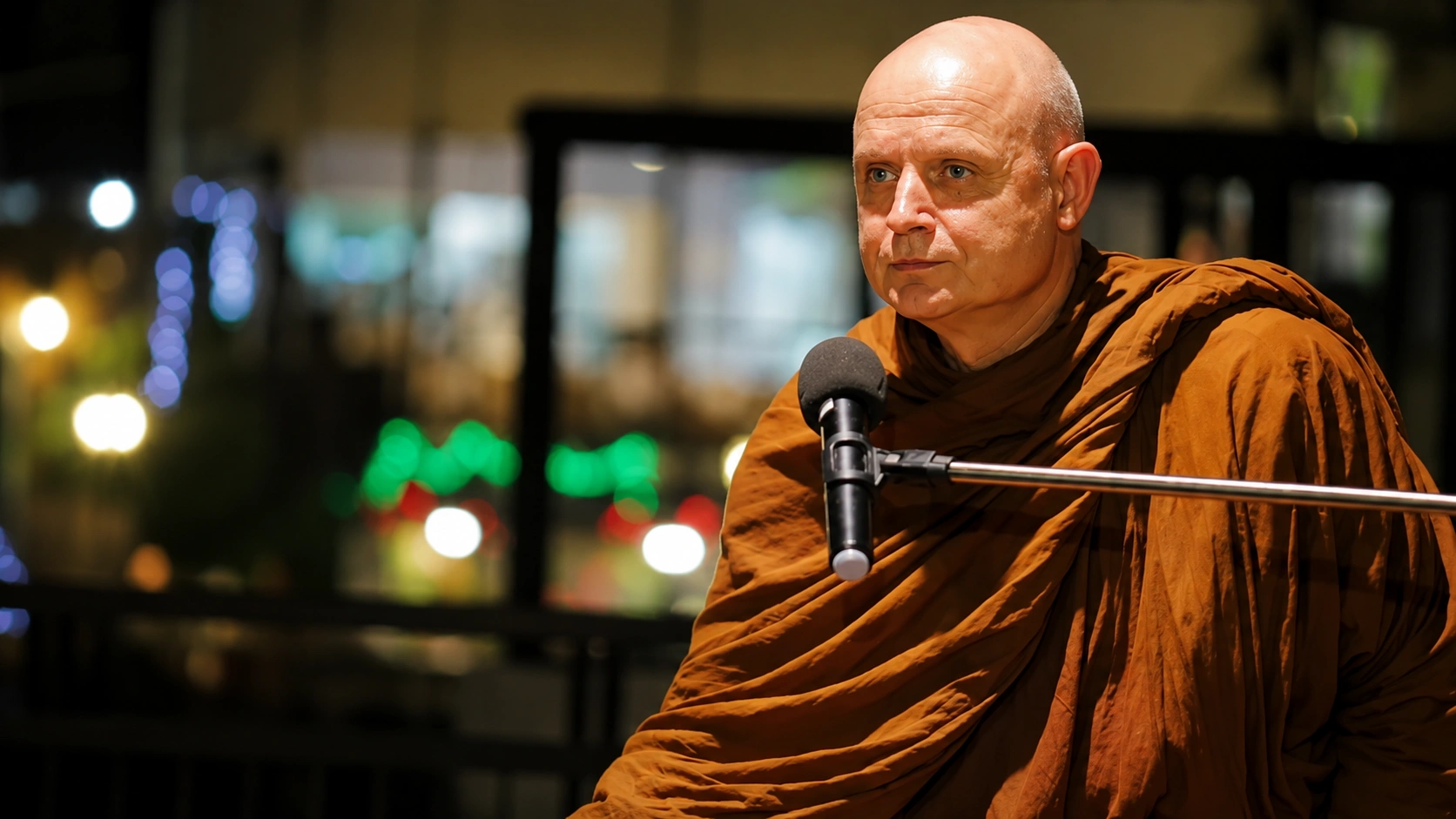
READ MORE: ‘Ajahn Jayasaro on growing older without growing lonely‘. Last month, Dr Stephen Whitehead wrote about Ajahn Jayasaro becoming the most senior foreign-born monk in Thai Buddhist history. In this exclusive follow-up interview, he talks to the British-born Buddhist teacher about masculinity in later life, from fathers, friendship and loneliness to desire and growing old.
Do you have news to share or expertise to contribute? The European welcomes insights from business leaders and sector specialists. Get in touch with our editorial team to find out more.
Main Image: Simon Walker / No 10 Downing Street, CC BY-NC-ND 2.0