As tensions continue to disrupt global shipping through the Strait of Hormuz, Dr Linda Parker argues that the present crisis cannot be fully understood — or resolved — without examining the centuries-long struggle for control of the Persian Gulf
In a recent United Nations report, Secretary-General António Guterres warned that the crisis in the Strait of Hormuz is beginning to strangle the global economy. Shipping and supply chains are coming under increasing pressure, resulting in higher prices, disrupted trade and slowing economic growth.
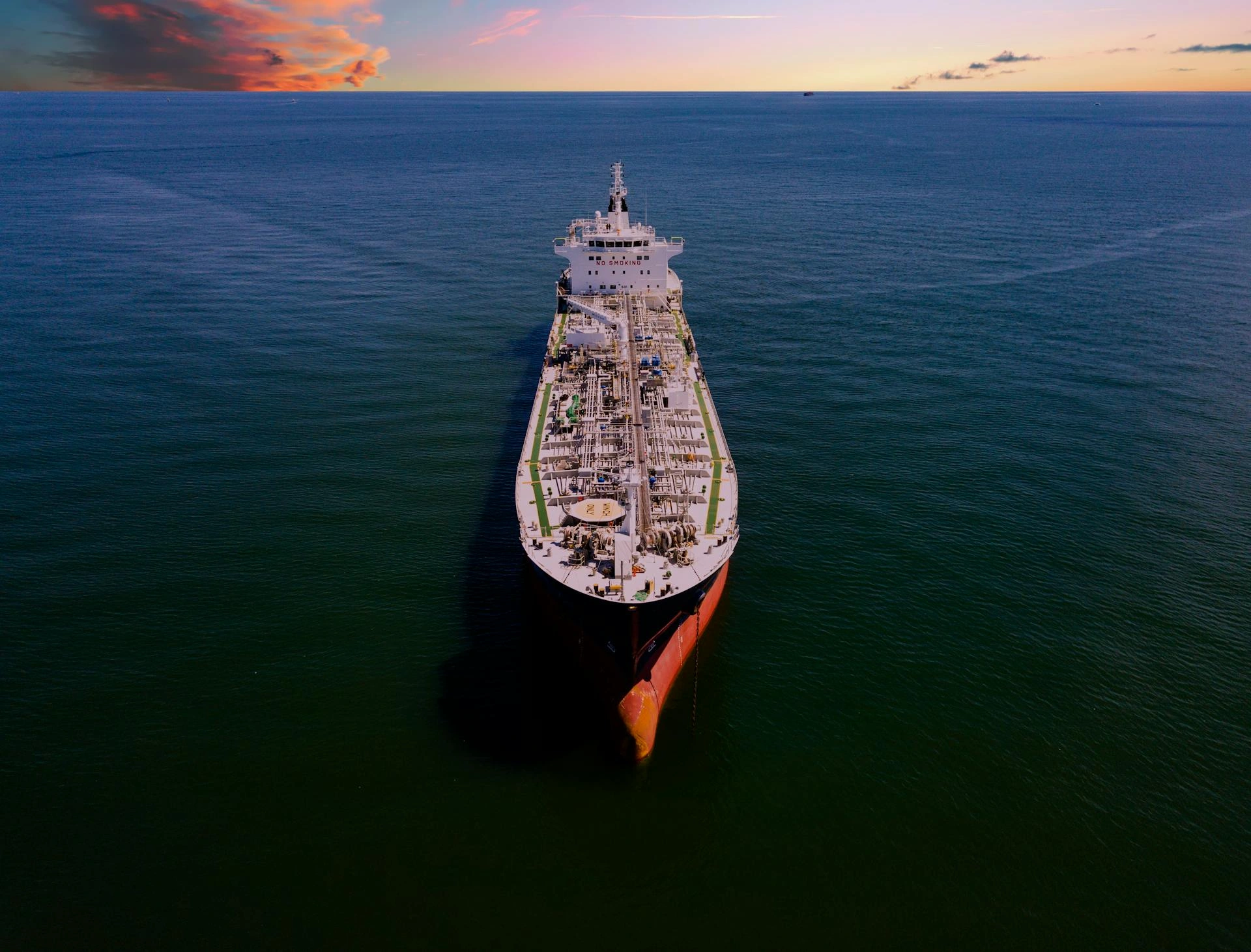
The number of daily passages through the strait has fallen dramatically compared with the roughly 135 ships that passed through each day before the conflict escalated. The figure continues to fluctuate as all sides attempt to adjust their levels of control.
The stance of many countries has been clear. In March, the UK, France, Germany, Japan and Canada issued a joint statement condemning disruption in the strait and warning that it represented “a threat to international peace and security”. The statement stressed that freedom of navigation remains a basic principle of international law.
The U.S response has oscillated between a hard-line approach, including the blockade of Iranian ports, and attempts to respond to the worsening economic crisis. However, the ceasefire has not resolved the shipping situation.
Iran, meanwhile, has sought to keep the crisis active and global by using maritime disruption as a negotiating weapon. This has involved rerouting shipping into Iranian waters, stopping vessels for inspection by the Islamic Revolutionary Guard Corps (IRGC) and imposing stringent tolls.
One aspect of the crisis which has not been fully examined in the media, and which sheds important light on the affair, is the long historical background to maritime control in the Persian Gulf. Iran frequently cites historical precedent, arguing that pre-Islamic Persian empires exercised authority over trade routes in the Gulf and the Indian Ocean.
Iran has often presented itself as the traditional stabilising force in the region. Iranian officials have long argued that the strait runs through its territorial and contiguous waters, giving it sovereign rights over passage. Arshin Adib-Moghaddam, Professor in Global Thought and Comparative Philosophies at the University of London, comments in a recent article for The Conversation that this “Iran-centric attitude towards the Persian Gulf explains much of Iran’s strategy in the Strait of Hormuz even today.”
During the 1660s, control of the Persian Gulf rested largely with the Safavid Persian dynasty, which exercised significant coastal authority. Yet control was never absolute. Power was shared and contested among Oman, Persian coastal governors and Bahraini rulers. Across the Gulf, kingdoms had controlled maritime traffic through transit duties, anchorage fees and customs charges since the 13th century, with Persian influence reaching a peak under Nader Shah in the mid-18th century.
By the early 19th century, the dominant maritime power in the Gulf was the Qawasim confederation, based at Ras al Khaimah. Britain, determined to protect its trade route to India, described parts of the modern-day UAE and Omani coastline as the “Pirate Coast” because the Qawasim attacked shipping in the region. Yet a growing number of historians now argue that the Qawasim were exercising a form of legitimate regional maritime power and that Britain labelled this activity ‘piracy’ because it disrupted British commercial interests.
In 1820, Britain’s expanding naval dominance enabled it to impose the General Treaty of Maritime Peace, which outlawed piracy and strengthened British control in the Gulf and the Indian Ocean. Through this system, Britain increasingly enforced maritime law in order to maintain regional stability and secure strategic choke points such as the Strait of Hormuz and Bab el-Mandeb. The Trucial States system that developed from this treaty remained a stabilising force in the region until the formation of the United Arab Emirates in 1971.
Today, the United Nations Convention on the Law of the Sea (UNCLOS) guarantees transit passage through the Strait of Hormuz. Although the United States is not formally a signatory and Iran has not fully ratified the treaty, its principles are generally regarded as binding under customary international law.
Throughout this century, however, Iran has repeatedly asserted a form of sovereignty over the strait, arguing that much of it lies within Iranian territorial waters. It has increasingly used disruption to maritime passage as a diplomatic tool during periods of confrontation with the West. One example came after the United States withdrew from the nuclear agreement and reimposed sanctions in 2018, when harassment of British and American vessels passing through the strait intensified.
It is clear that Iran is no stranger to using historical precedent to weaponise access to trade routes, once again placing pressure on the United States and its allies by disrupting world trade and the global economy.
At the same time, international law continues to uphold the principle of free transit through the world’s maritime choke points. Geoffrey Till of King’s College London has argued that the enforcement of free transit has historically helped to reduce tensions rather than inflame them.
President Trump does not seem to understand the historical context which Iran is using to justify policy. He has even, reportedly, suggested recently that the Strait of Hormuz be renamed the “Strait of America” or after himself. The Economic Times considers that this “signals strategic control, geopolitical leverage, and symbolic authority in one of the world’s most contested maritime passages.” Sanam Vakil, director of the Middle East and North Africa program at Chatham House, meanwhile, has commented that, “I think President Trump doesn’t really understand what drives the Iranians.”
He and his advisors would be well served in understanding that Iran’s actions in the Strait are rooted not simply in present politics but in a long historical view of the Gulf, which still shapes ideas of power, security and control there today.
Britain achieved stability in the Gulf during the 19th century by separating maritime passage from wider political confrontation, establishing enforceable rules of transit while still recognising the realities of regional power and influence. The challenge for the U.S. will be achieving the same delicate balancing act.”

Dr. Linda Parker is widely considered to be one of Britain’s leading polar and military historians. She is the author of six acclaimed books, an in-demand public speaker, the co-founder of the British Modern Military History Society, and the editor of Front Line Naval Chaplains’ magazine, Pennant, which examines naval chaplaincy’s historical and contemporary role.
READ MORE: ‘The Arctic’s unfinished cold war‘. As Arctic militarisation gathers pace amid renewed geopolitical rivalry, the environmental scars of the Cold War remain embedded in ice, soil and seabed. Dr Linda Parker argues that without sustained cooperation and meaningful Indigenous consultation, the region risks compounding an already hazardous legacy.
Do you have news to share or expertise to contribute? The European welcomes insights from business leaders and sector specialists. Get in touch with our editorial team to find out more.
Main Image: Ojas Narappanawar/Pexels