From burnout to social withdrawal, the effects of rejection can linger far longer than we acknowledge. The European’s Inclusion & Equality correspondent, Sara-Louise Ackrill, explores why some people experience social rejection more intensely than others, and why our reluctance to discuss it openly is impacting employees and employers alike
Social rejection is one of the most influential forces in working life, yet it remains one of the least discussed. In my experience as a corporate consultant working in neurodiversity, women’s health and D&I more generally, it’s affecting organisations far more than most leaders realise.
Far from being tackled head-on as a valid topic by most of us, social rejection sensitivity is almost guaranteed to be minimised and dismissed whenever it comes up in conversation, despite the fact that most of us experience it.
You don’t see corporate talks on social rejection and yet, if you want to invest budget in something that affects everyone, of every age and walk of life, surely this is it?
There is a quality to the subject of social rejection that, despite how much we might personally relate to it, makes it sound a bit pathetic. A widely held belief in society suggests that we must have too much time on our hands to think about it; that we’ve not quite grown up; that we’re arrogant enough to assume everyone should like us; that we have glaring blind spots when it comes to recognising our true character; or that we’re simply having a whinge about something so inevitable in life as to be a waste of other people’s time.
We also tend to rate different experiences of rejection as more or less valid. How many of us might empathise with someone being forced out of a job, yet struggle to understand someone replaying an off-the-cuff comment from a stranger for weeks or months on end? They tell themselves it is of no importance and send themselves in circles because they know, logically, it is not a big deal.
But this is the thing with rejection sensitivity: people at the extreme end of it have no gauge for how bad rejection is and no sense of relativity, even when intellectually they know something must be off if they are having off-the-scale reactions to social rejection.
Living with extreme rejection sensitivity all my life led me to working in this area as a therapist, coach and author. I spend my working life researching, talking about and breaking down what is really going on when we feel intense physical, emotional and psychological pain in relation to the Other.
I’ve had episodes where it has taken years to let go of something so objectively minor that I could only conclude I was at fault. But that was before I got into the topic through feeling really low and, frankly, tired, and started exploring the reasons some people see, feel and hold on to rejection far more than others do.
Neurodivergent people, particularly those with ADHD, cannot simply filter out rejection or let it go, so there is little point in telling them to be less sensitive or not let things get to them.
People with complex trauma (as opposed to Big T trauma) will define more experiences as rejection in the first place because their threat detectors are always on overdrive until they receive trauma therapy and dial that response down to the level of an eye-roll.
One couple I interviewed for my latest book, When Will I Get The Memo?: Why Rejection Stings; A Neuroinclusive Guide For Divergent Minds, identified as neurodivergent (him) and neurotypical (her) respectively. The husband could list more than ten experiences of rejection in the previous week when we met, while his wife’s best effort mustered a “Well, I’m sure something probably happened at some point in the playground…”
On greater reflection, however, they realised their lives were not that different socially speaking, but that he would see things as rejection where it would never have occurred to her to frame them that way in the first place. This was eye-opening.
I am autistic (my Level 1 autism would have been called Asperger’s many moons ago) and have ADHD, as I always have done. It is easy to overlook the fact that my wiring is not typical of everyone’s mindset or the reasons I become overwhelmed on a constant basis.
When we dismiss something as simply our norm, we naturally assume it is all internal factors acting on us and ignore the bigger picture. We cannot understand things purely at the individual level when we are social beings.

Where we get our social training and the quality of that education are important here. Most respondents to the questionnaire for my book could not remember seeing their parents deal with rejection, let alone talking about it as a family.
Parents I interviewed said they found it helpful to analyse their relationship with rejection with the aim of having those conversations with their own children — something that had never previously occurred to them.
After all, most of us were told bullying was a school thing. I was often told when I was abroad that this is seen as a particularly British way of viewing it. Yet many of us go on to discover that school is very much a microcosm of what happens in the adult world.
Rejection and bullying at school are not time-limited experiences confined to those four walls. Bullying is the active harmful version of rejection, whereas rejection is often passive, superficially dressed up in social niceties and confusingly handed to us in the guise of “doing us a favour” or somehow preparing us for the “real world”.
It is worth grouping bullying and abuse alongside rejection here because the consequences overlap: lack of social connection, lower productivity, stifled creativity, lost trust in teams and harm that people struggle to articulate, compounding loneliness and vulnerability. Financial inequality can follow too. Bullying and rejection are not the same thing, but they sit in the same ballpark.
Most people are good at their work and were hired into the right job, but the difficulty of socialising, having unstructured social time and being around colleagues in a range of non-work-related contexts takes its toll on almost every person I work with in my virtual therapy and coaching practice here in London.
They are the people showing up late to work by an irritating five minutes to ensure they can walk into the office and go straight to their desk without the “how was the weekend?” chatter that sends about one-fifth of people into a total head spin — something that anyone not struggling with unsupported neurodivergent wiring will likely find hard to accept.
When I worked with long-term unemployed people, what struck me was how many had workplace trauma that had gone unacknowledged, let alone untreated.
In the same way that people who hated school often hate attending anything that resembles a classroom environment, such as workplace training, those with workplace trauma and a history of not feeling that they belong become avoidant as a form of self-protection.
You will have colleagues and friends who go through an inordinate amount simply to show up to work each day because of their history of rejection and what became a baseline normality many years ago.
Some people show up at work but live as hermits outside it because, away from their work armour, they feel scared, lost, threatened and powerless around other people.
Then there is all the talent that never even gets to our door because people are too lost in the employment system, grappling with the part of the employability and careers puzzle that no CV expert or careers coach is going to bring up. I know from my employability and hiring background that so much talent is forever going to waste.
A fear of rejection means people avoid calling out bad behaviour, leaving it to undermine the organisations we lead.
The same leaders who do not know how to talk about rejection at work often did not see it modelled at home and are now neither having that conversation with their own children nor creating the conditions for it within their organisations.
Nobody benefits from social rejection sensitivity going unrecognised or being undermined. Lost work days, chronic unemployment, unexplained sickness and health conditions, inadequate social connection, living in our heads and divorcing ourselves from our bodies while holding on to shame and embarrassment about rejection and how weird we feel we must be, resulting in less exercise, less presence and poorer decision-making. Nobody is capitalising on this other than the worst-intentioned people in society, who thrive on vulnerability.
We all have an interest in making social rejection a mainstream topic and acknowledging that it affects all of us, albeit in different ways. Even if my form of rejection sensitivity is different from yours, and even if you think mine is better or worse than yours in some way, we all have a stake in understanding it.
Accepting that we all have an equal right to belong in society, regardless of our looks, accent, nationality, race, gender identity, professional role, family status or sexuality, is one of the kindest things we can do for ourselves. It is also an extremely important part of how we treat other people.
The more willing we are to talk openly about social rejection sensitivity and belonging, the better equipped we will be to build workplaces, communities and relationships in which fewer people feel compelled to retreat.
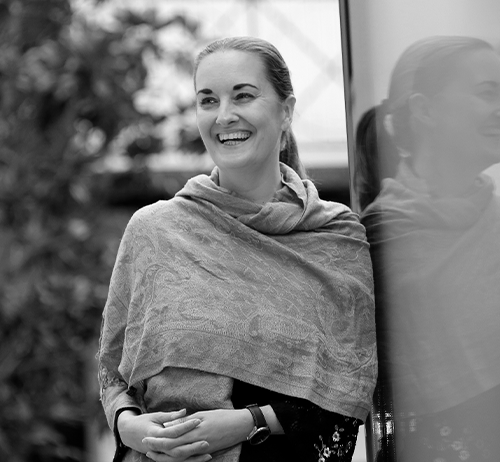
Sara-Louise Ackrill is a neurodivergent therapist, entrepreneur, and workplace consultant. Founding CEO of Wired Differently and co-founder of Start Differently, a non-profit, Sara-Louise supports neurodivergent individuals personally in employment and as entrepreneurs. Recognised as a ‘Top UK Neurodiversity Evangelist’ and one of Small Business Britain’s #IAlso100 2024 entrepreneurs, Sara specialises in workplace inclusion, neurodiversity awareness, and domestic abuse awareness in the workplace advocacy. She is currently developing wNDerful, an app for neurodivergent people, and strives to create inclusive spaces through psychoeducation and compassion.
READ MORE: ‘The European Reads: two new guides for adults living with late autism and ADHD diagnosis‘. As diagnoses of autism and ADHD in midlife and beyond rise sharply, two new books from Jessica Kingsley Publishers offer practical roadmaps for people grappling with the question: what happens next?
Do you have news to share or expertise to contribute? The European welcomes insights from business leaders and sector specialists. Get in touch with our editorial team to find out more.
Main Image: cottonbro studio/Pexels