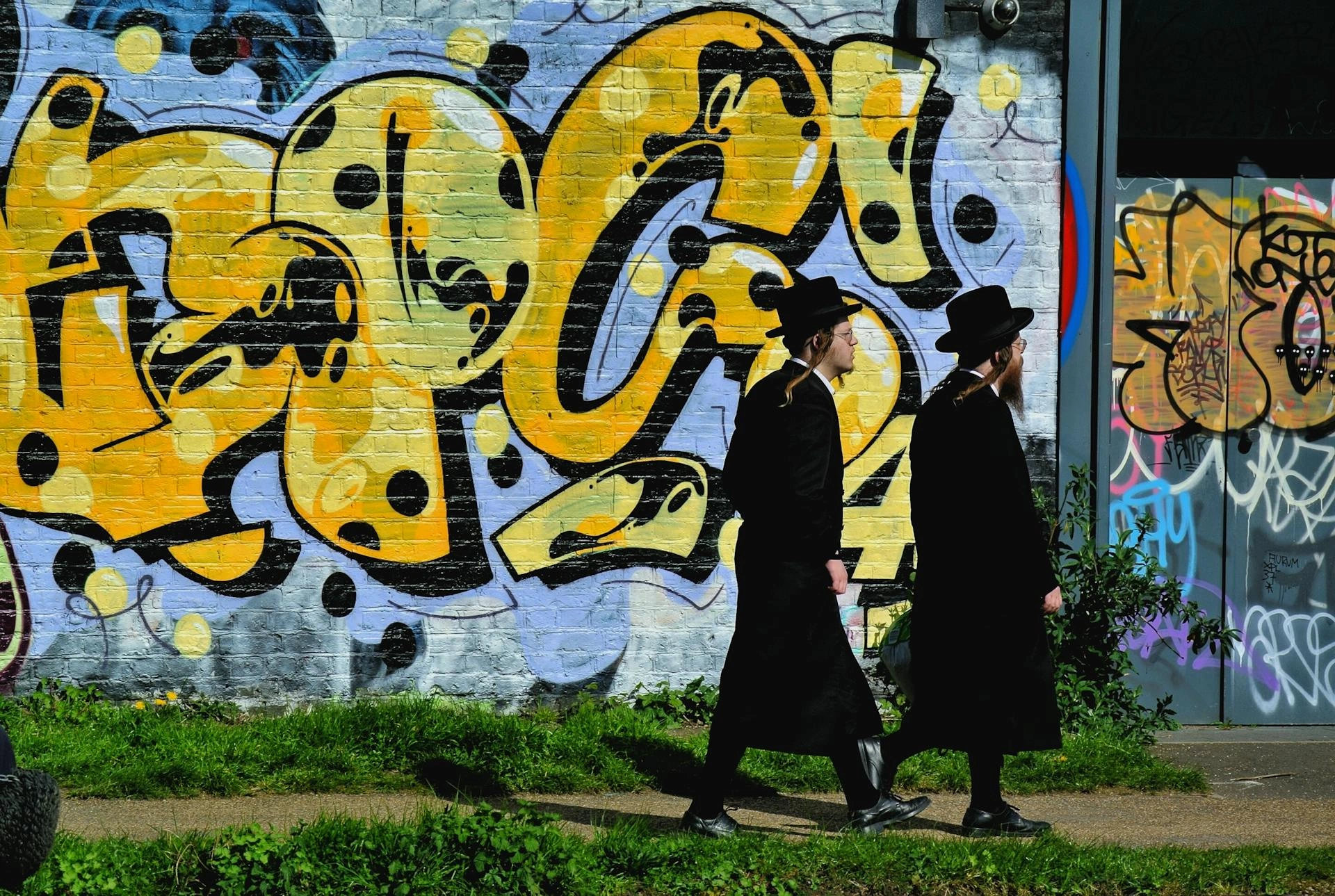
Recent violence against Jewish people in Golders Green has exposed a wider crisis of confidence over community safety in Britain and raised urgent questions about whether the government’s response is keeping pace with reality, writes Matthew Kayne
There are moments when a country is forced to confront uncomfortable truths about itself.
The stabbing of two Jewish men in Golders Green last week is one of them. In broad daylight, a man moved through a busy street targeting Jewish individuals, injuring two men before being stopped. Police are treating the attack as terrorism.
The attack sits within a wider, increasing pattern of antisemitic violence. In the weeks and months leading up to the Golders Green attack, Jewish institutions in north London have been targeted in a series of arson attacks and acts of intimidation.
And the danger extends beyond London. In Manchester, a synagogue was targeted last November during Yom Kippur — the holiest date in the Jewish calendar — which left two innocent people dead and three injured.
These incidents cannot be quietly absorbed into the news cycle. They are signals. Warnings, even.
And they raise a question that Britain cannot afford to ignore: Are we doing enough to protect communities who no longer feel safe?
For many Jewish people across the UK, myself included, the answer increasingly feels like no.
It would be easy — and politically convenient — to treat each attack as a standalone event. An isolated act; an individual failure; a moment of tension.
That framing is becoming harder to sustain. When incidents occur repeatedly in communities that have long been established and visible, the issue takes on a different character. It becomes structural, and it becomes a pattern.
And patterns demand a response that goes beyond statements of condemnation.
The significance of that shift should not be underestimated. A pattern changes how people interpret events as they unfold, it alters expectations and it introduces a sense of escalating continuity.
In areas like Golders Green, Jewish life is visible, active, and deeply rooted in schools, synagogues and shops. It is a multi-generational community that forms part of the fabric of British life.
So when that visibility becomes a point of vulnerability, as tragically seems to be the case, something has gone very wrong.
No community should feel that simply existing openly carries risk. Yet that is the sentiment being expressed with increasing frequency. People within the Jewish community are adjusting routines and being more cautious, thinking twice before they step outside.
Not because they want to but because they feel they have to.
These are lived realities that are being reshaped, revealing themselves in small, everyday decisions — where to go, when to travel. Day-to-day choices that once felt routine now carry a very different weight.
The government responds to incidents like these in predictable ways, with statements issued, condemnations made and reassurances offered.
Those responses matter. They signal intent and recognition, and public confidence is built on whether people feel protected in practice.
Yet that is where the gap is starting to show. When incidents continue to happen, and when communities repeatedly express concern about safety, a perception begins to form. The official response can appear to them to be reactive, not proactive, addressing events after they occur rather than preventing them from happening in the first place.
Over time, that perception settles, and begins to shape expectations within affected communities before anything is even said.
That frustration is already being voiced openly. Despite Home Secretary Shabana Mahmood announcing £25million in funding to increase security for Jewish communities, Simone Schehtman, a representative for the council of the West Midlands Jewish Community, told BBC News that many within the UK’s Jewish community are so afraid that they are planning to leave.
“It makes us ask why is it we’ve been abandoned in such practical measures by the government?” she added.
And this is not just a problem for the UK’s Jewish communities. It extends to all communities in Britain. It reflects what happens when any group begins to feel that its safety cannot be taken for granted.
Once that confidence starts to erode, it begins to influence how people see the state and what they expect from it. It raises fundamental questions: Who is being protected?, How seriously are these threats being taken?, and What is actually being done to prevent them?
When these questions go unanswered, trust in the state weakens.
The responsibility for addressing this sits firmly with government. While these terror-related incidents are rightly condemned at the highest levels, there is a clear distinction between expressed intent and actual impact.
From the perspective of those affected, the focus is clear: What changes?
Are resources being directed effectively? Is policing visible and proactive? Are early warning signs being taken seriously? Are communities being listened to in ways that lead to action?
These are the measures by which confidence is built or lost.
There is a tendency in modern politics to treat communication as a substitute for delivery, and it is one that falls far short of what is required.
For individuals who feel unsafe walking in their own neighbourhood, what matters is knowing that they, their families and their children are being kept safe.
The moment people begin to question whether they are safe — whether their community is being protected — that trust is already under strain, and rebuilding it is far harder than maintaining it.
This is where the conversation needs to become more direct. If incidents continue and confidence continues to weaken, something is broken. That demands an honest response that recognises the problem and reassures communities in ways that can be recognised on the ground.
Communities need to see and feel that their safety is being actively, consistently protected. Not assumed, not implied, but demonstrated.
The UK prides itself on being a country where people of all backgrounds can live freely and safely. That is an aspiration, but it is also a key social responsibility.
No community should have to adapt its behaviour to feel safe, and situations such as the Golders Green attack test whether that responsibility is being met in practice.
I believe strongly that public safety is not negotiable. That no community should feel exposed or overlooked. Government must be judged by outcomes as well as intentions.
Because in the end, the measure of a country is not how it responds in words but in how safe its people feel in their daily lives.
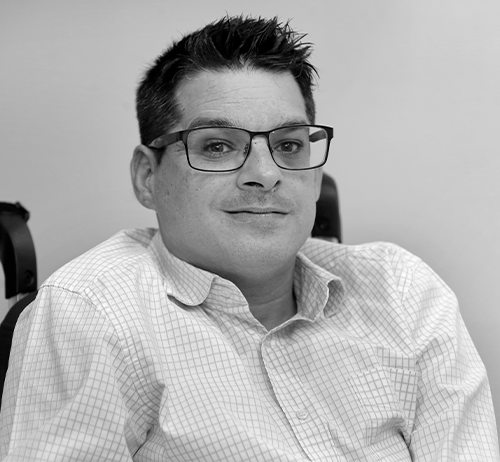
Matthew Kayne is a broadcaster, political campaigner and disability rights advocate who has turned personal challenges into platforms for change. He is the founder and owner of Sugar Kayne Radio, a DAB and online station dedicated to uplifting music and meaningful conversations, and the leader of a national petition calling for reform of the UK’s wheelchair service. Living with cerebral palsy and a survivor of bladder cancer, Matthew channels his lived experience into advocacy, broadcasting, and songwriting. His long-term ambition is to bring this experience into politics as an MP, championing disability rights, healthcare access, and workplace inclusion.
READ MORE: ‘Disabled drivers ‘pushed out of the driving seat’ by Motability Scheme shake-up‘. Changes to the national Motability Scheme, which provides vehicles to disabled people, risk restricting independence for those who rely on it every day, writes Matthew Kayne.
Do you have news to share or expertise to contribute? The European welcomes insights from business leaders and sector specialists. Get in touch with our editorial team to find out more.
Main Image: Londonphotopunk/Pexels