The age of drone and electronic warfare demands a new model of defence acquisition – one built for speed, innovation and industrial scale, writes Blythe Crawford CBE
Walk the corridors of defence ministries in London, Berlin or Washington and you will hear the same refrain: our systems are broken. What you will not hear, not often enough anyway, is what it will take to fix it.
The central issue is not how fast, or by how much, military budgets can rise. It’s whether we can create a modern defence procurement system that can act with sufficient speed and agility to counter the threats we now face, from drone and electronic warfare to autonomous weapons and other forms of artificial intelligence.
The system we have today leaves us dangerously exposed. It is slow and inefficient, and it keeps us hooked on expensive weaponry even as our adversaries deploy cheap, mass-produced ones. In the Iran war, we have witnessed how Iranian drones costing less than a pick-up truck have taken out US early-warning radar systems worth billions of dollars.
When low-cost systems can destroy or degrade assets costing orders of magnitude more, every pound tied up in a slow-moving procurement cycle is a pound not generating deterrence.

We have a model for what 21st-Century deterrence looks like very close to home. For more than four years now, Ukraine has been able to fight a much larger and more powerful invading army by innovating faster, scaling more efficiently, and imposing unsustainable costs on the enemy.
The key to this astounding feat is Ukraine’s Brave1 defence marketplace, a government-run digital platform connecting military users directly with hundreds of manufacturers, technology firms and university laboratories. Among other achievements, it is this dynamic marketplace that has enabled Ukraine to shorten the innovation cycle for drone systems to just four to six weeks. New versions are designed and manufactured, in a continuous improvement loop, in response to feedback of their performance on the battlefield. Contracting is fast and competitive and open to newcomers in both the defence and civilian worlds. There is no equivalent in any Nato member state.
Our procurement systems, by contrast, are lineal rather than cyclical, moving slowly and sequentially from drafting the specifications to design, production and eventual deployment. There is no continuous feedback loop to improve or adapt weaponry to new threats and realities. All too often, equipment and technology are obsolete by the time they are deployed.
This system is not fit for the world we are entering.
Nato governments know this and are beginning to look beyond traditional procurement processes and suppliers. Berlin’s €100 billion Zeitenwende defence package has been accompanied by efforts to draw civilian manufacturers in automotive, robotics and advanced materials into defence production pipelines. Already, Volkswagen has entered into joint-ventures to produce military vehicles, and there are reports that its plants may produce components for the Iron Dome defence system.
This, of course, has been done before, in both war and peacetime. The UK doubled the production of Spitfires and Hurricanes during the Battle of Britain by drawing on manufacturers far outside the traditional aviation supply chain, such as furniture makers, bus builders, sheet-metal shops. The same principle applied during the COVID ventilator challenge, when Formula 1 teams and vacuum-cleaner manufacturers produced certified medical devices in weeks.
Within Nato countries, the talent, technology and industrial capacity exists. The procurement model that can unlock it does not.

The age of drone and electronic warfare demands a new model of defence acquisition: one built for speed, innovation and industrial scale.
Instead of a slow linear model, we need a Nato equivalent of Brave1: contracts structured around demonstrated effect; frontline operational data informing innovation and improvements; manufacturers competing in real time; funding flowing in tranches, linked to performance, rather than being committed upfront to a single supplier.
Digital platforms that support this kind of federated, data-driven marketplace are already beginning to emerge. Systems such as GRAIL, for example, are designed to connect frontline demand directly to a distributed industrial base, enabling continuous iteration, faster supplier onboarding and procurement decisions based on cost-per-effect rather than upfront specification. They point to what a modern acquisition architecture could look like if scaled across allied defence ecosystems.
The munitions domain offers the most immediate opportunity to demonstrate what this model can achieve. The UK’s £6 billion commitment to munitions in the 2025 Strategic Defence Review includes a £1.5 billion always-on pipeline where a more open and dynamic procurement model could prove its value.
The uncomfortable truth is that our adversaries have understood this transition faster than we have. Russia, for all its failures in Ukraine, has adapted its drone and electronic warfare production at a pace NATO procurement cycles cannot match. China is systematically integrating commercial innovation into its military industrial base in ways that blur the line between civilian and defence production. Iran, as we have seen in the Gulf, can impose costs on the world’s most sophisticated military using systems assembled from commercial components.
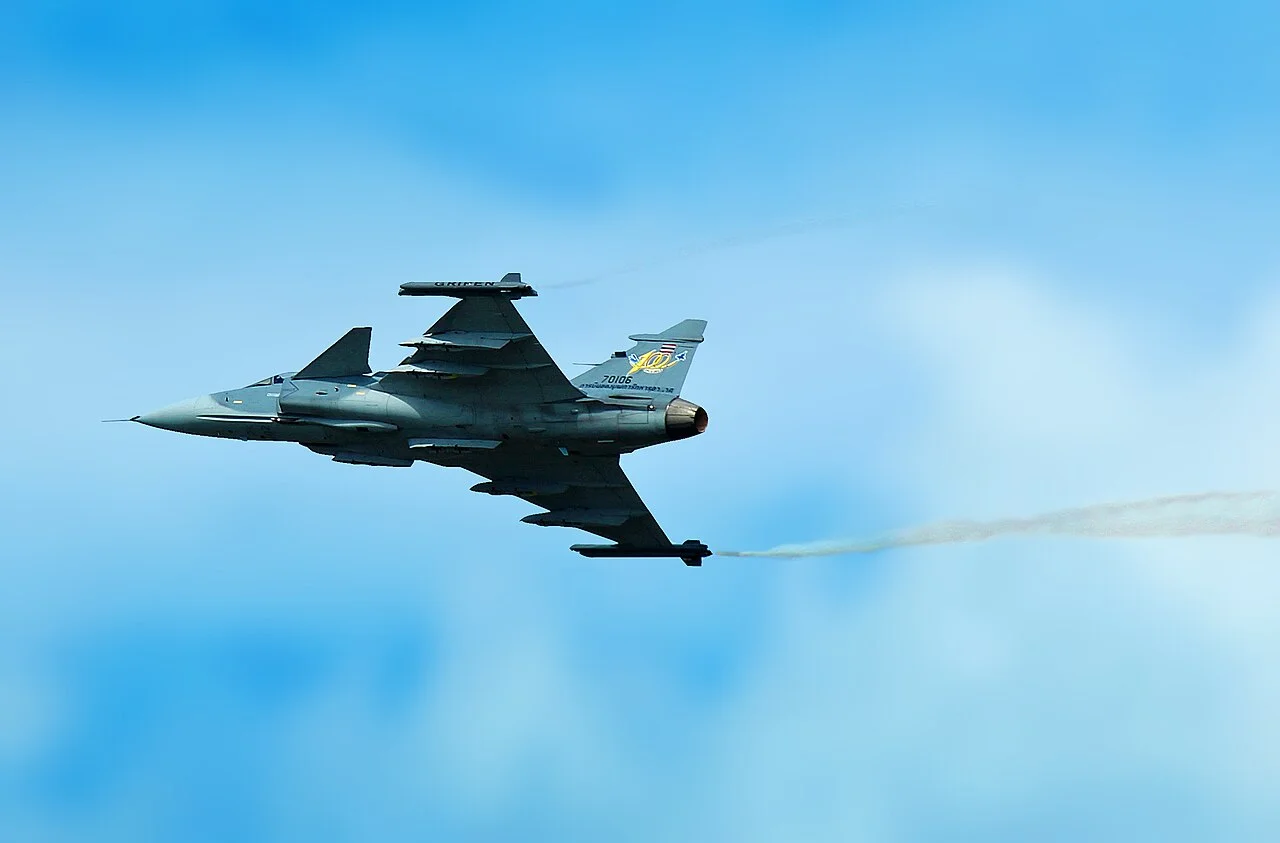
None of this means that high-end capability is irrelevant. There will always be a need for the exquisite end of the spectrum – Eurofighters, nuclear submarines, precision-guided munitions. But if these high-end assets are not surrounded by swarms of cheap systems that can soak up enemy fire, saturate sensors and impose cost at volume, they will quickly become isolated and expensive targets. The mix must change. And changing the mix requires changing the model.
The Ukrainians did not have the luxury of a leisurely reform programme. They built a new procurement model under fire. We still have time to build ours before that becomes necessary. But not much time and none to waste.

Blythe Crawford CBE is a former Royal Air Force Air Commodore and former Commandant of the Air and Space Warfare Centre, where his work included capability development in support of Ukraine. He served in the RAF for more than 30 years, including operational and staff roles in Nato, the Pentagon, Baghdad and Washington, and was awarded an OBE in 2015 and a CBE in 2021.
READ MORE: ‘Lasercom has solved one problem. The next is getting the data back to Earth‘. Recent breakthroughs by Tesat and Blue Origin, the space company owned by Amazon founder Jeff Bezos, have shown that laser communications are moving from promising tests towards operational use. But Jean-François Morizur, chief executive of optical communications company Cailabs, argues that the bigger challenge now lies in getting that data reliably back down to Earth at scale.
Do you have news to share or expertise to contribute? The European welcomes insights from business leaders and sector specialists. Get in touch with our editorial team to find out more.
Main image: Blythe Crawford CBE, pictured during his RAF career, says Nato must learn from Ukraine’s faster approach to defence innovation and procurement. Credit: Supplied