Europe prides itself on championing rights and equality, yet more than 100 million disabled citizens still face systemic barriers to work, housing and mobility. Until accessibility is embedded at the heart of economic and political strategy — treated as core infrastructure rather than social afterthought — the continent’s claim to equality will remain unfinished, warns Matthew Kayne
Europe speaks the language of rights fluently. We champion equality, dignity and social justice, and we sign conventions, adopt directives and draft strategies that promise inclusion for all.
And yet for more than 100 million disabled people across our continent, myself included, equality remains conditional, dependent on geography, funding cycles and bureaucratic discretion. That reality amounts to managed exclusion rather than genuine parity.
I believe disability rights belong at the centre of economic and political strategy, embedded within mainstream policymaking rather than confined to the margins of social policy. Inclusion is a core test of national seriousness and institutional integrity. It demonstrates whether a society genuinely believes in the principles it so confidently articulates.
The European Union has introduced the European Accessibility Act. Countries, including the United Kingdom, are signatories to the United Nations Convention on the Rights of Persons with Disabilities. The UK embedded legal protections within the Equality Act 2010.
These frameworks matter but we must remember that rights that exist primarily on paper are not self-executing.
Across Europe and the UK, disabled people are still less likely to be employed, more likely to live in poverty and more likely to experience isolation. Accessible housing remains in short supply. Transport infrastructure varies dramatically between cities. Digital services — now central to public life — are still launched without accessibility embedded from the outset.
This inconsistency reflects a deeper problem that disability policy is too often reactive. Governments respond to crises, scandals or campaigning pressure. Funding packages are announced. Reviews are commissioned. But rarely do we see sustained, cross-government planning that treats accessibility as core infrastructure — as essential as roads, energy or broadband.
I take a different view.
Accessibility should be treated as a national resilience issue. When systems exclude millions of citizens, we weaken our workforce, reduce economic participation and increase long-term public expenditure.
The disability employment gap is a prime example. Businesses frequently claim there is a “talent shortage” while overlooking a vast pool of capable individuals facing preventable barriers in recruitment processes. Interviews still prioritise performance style over competence. Workplaces often treat adjustments as burdens rather than as productivity tools. Many politicians and policymakers continue to treat disability employment as a welfare issue when it is fundamentally an economic one. Expanding access to work strengthens the labour market, widens the tax base and reduces long-term public expenditure. Inclusive employment is practical economic strategy and a foundation of long-term workforce resilience.
Similarly, housing policy continues to underestimate the scale of need. An ageing population makes accessibility a demographic certainty. Building homes that people can live in across their lifespan reflects responsible, forward-looking planning.
Many new developments still proceed without accessible design as a standard feature, leading to expensive retrofitting in later years. This approach increases long-term public and private costs and reflects short-term decision-making rather than sustainable fiscal management.
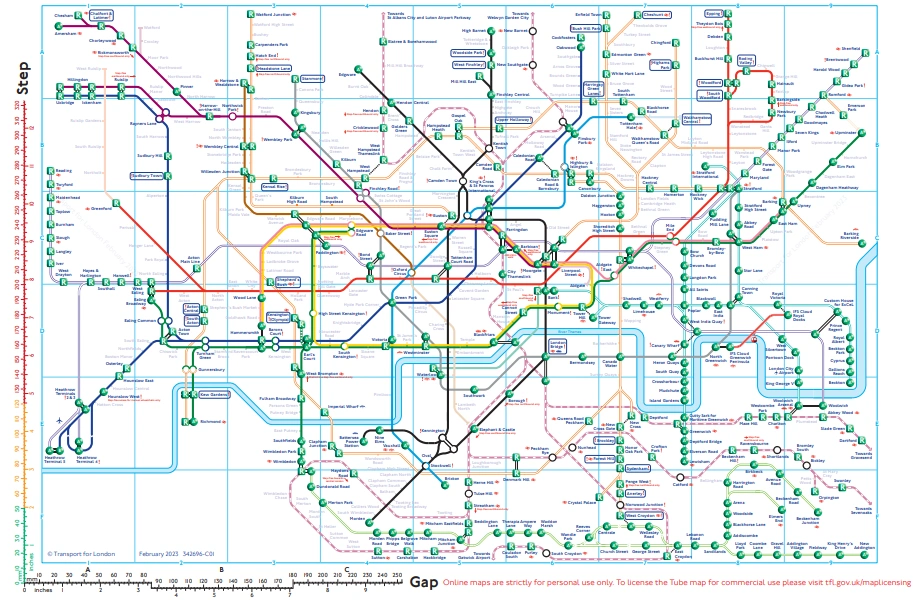
Transport is another test of seriousness. Independent mobility determines access to work, education and civic life. When step-free access is patchy and inconsistent, independence becomes a postcode lottery. We cannot credibly champion free movement across Europe while failing to guarantee basic movement within our own cities.
In my view, three structural changes are required.
First, disability inclusion must be embedded in economic policy at treasury level rather than siloed within health or social care departments. Investment decisions, procurement frameworks and infrastructure strategies should undergo accessibility impact assessments as standard practice.
Second, representation must move beyond consultation. Disabled people should be present at decision-making tables — in local government, national parliaments and regulatory bodies — not as symbolic appointments, but as contributors to mainstream policy.
Third, accountability must improve. Data collection across Europe remains inconsistent. Without transparent reporting on employment outcomes, housing accessibility and service performance, we cannot measure progress effectively. Targets without measurement are aspirations, not commitments.
Post-Brexit Britain has an opportunity here. Outside EU structures, the UK can choose either divergence or leadership. I believe we should lead — not by lowering standards, but by strengthening enforcement and demonstrating that accessibility and economic growth are not competing goals.
The pandemic proved how quickly systems can adapt when urgency exists. Remote working became widespread almost overnight. Flexible service delivery models emerged. Barriers once described as “impractical” were suddenly overcome. That lesson should not be forgotten.
When political will aligns with necessity, transformation is possible. The question is whether disability inclusion is considered necessary — or merely desirable. For me, it is necessary. Inclusion reflects the kind of country — and continent — we claim to be. It expresses, in practical terms, whether our stated commitments to dignity, equality and opportunity are embedded in everyday governance.
There is also a cultural dimension that policy alone cannot fix. Too often, disability is framed through the lens of inspiration or tragedy. Both narratives are limiting. Disabled people are neither policy burdens nor heroic exceptions. We are citizens — taxpayers, professionals, students, parents — whose participation strengthens society.
Equality that requires constant negotiation is not equality. When individuals must repeatedly justify their need for access, the system has already failed.
Europe frequently positions itself as a global defender of human rights. That moral authority depends on internal consistency. When disabled Europeans continue to face structural barriers in employment, housing and transport, international advocacy carries less weight.
The issue concerns direction and intent. Progress requires sustained structural change that aligns domestic practice with the values Europe promotes abroad. Are we designing societies that anticipate diversity — or ones that retrofit it reluctantly? Are we building infrastructure for the next generation — or perpetuating patchwork adjustments?
I believe accessibility should become a defining test of modern governance.
A truly inclusive Europe would not treat disability policy as an appendix but embed it within economic growth strategies, urban design, digital transformation and workforce planning.
That change requires courage and ministers willing to prioritise long-term structural reform over short-term political convenience. It also requires businesses prepared to view inclusion as investment, and a media willing to frame disability as a mainstream political issue rather than a specialist concern.
We often say that a society is judged by how it treats its most vulnerable. I would go further. A society is judged by whether it removes vulnerability created by its own systems. Europe cannot convincingly call itself equal while millions remain constrained by avoidable barriers.
If we are serious about rights, dignity and opportunity, accessibility requires consistent application across law, infrastructure and economic policy. It should form a foundational principle of modern governance, embedded from the outset rather than added retrospectively.

Matthew Kayne is a broadcaster, political campaigner and disability rights advocate who has turned personal challenges into platforms for change. He is the founder and owner of Sugar Kayne Radio, an online station dedicated to uplifting music and meaningful conversations, and the leader of a national petition calling for reform of the UK’s wheelchair service. Living with cerebral palsy and a survivor of bladder cancer, Matthew channels his lived experience into advocacy, broadcasting, and songwriting. His long-term ambition is to bring this experience into politics as an MP, championing disability rights, healthcare access, and workplace inclusion.
READ MORE: ‘The fight for independence disabled people shouldn’t have to wage‘. After 15 years in a care home, our Disability Rights and Workplace Inclusion Correspondent, Matthew Kayne, knows what it feels like to have even the smallest choices taken away. From daily routines dictated by rotas to support determined by budgets, he says disabled people are too often denied dignity, and are forced to fight for the freedom most take for granted.
Do you have news to share or expertise to contribute? The European welcomes insights from business leaders and sector specialists. Get in touch with our editorial team to find out more.
Main image: Transport for London (TfL)