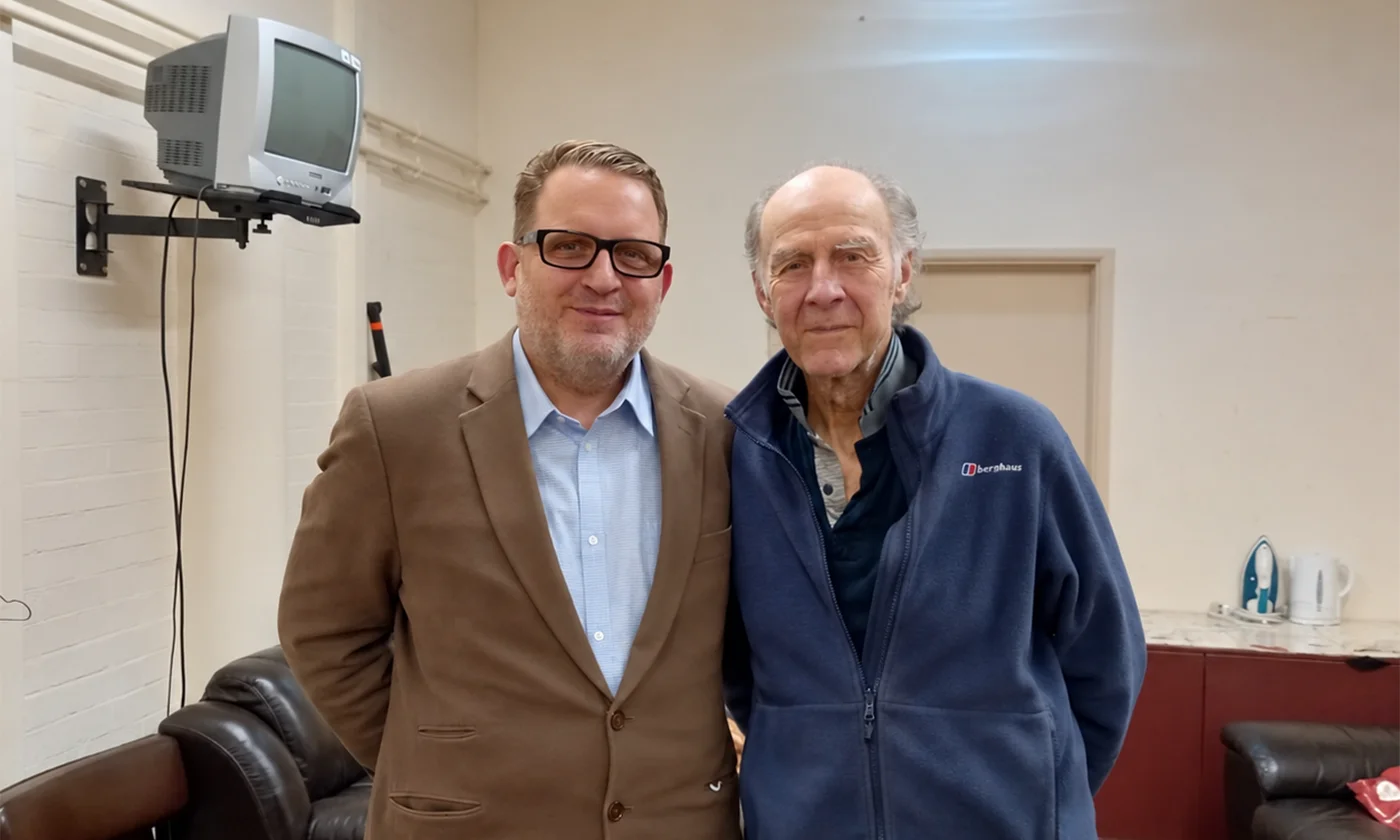
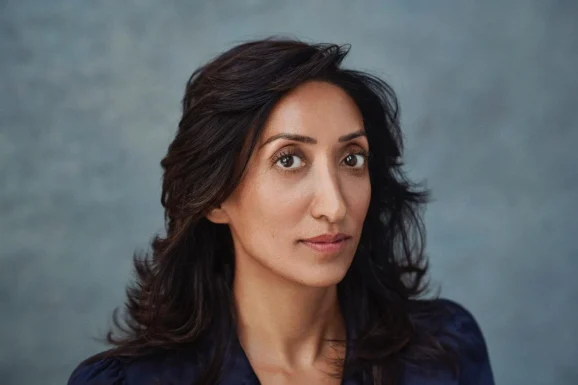
From teaching science to sneaking into stand-up, comedian Shazia Mirza took the long way round. In this exclusive with Dr Stephen Simpson, she talks classroom heckling, Celebrity Island, her upcoming memoir — and why her new EastEnders role should make her parents proud
Shazia Mirza has worn many hats: biochemist, schoolteacher, stand-up comic, reality TV survivor. Now, she can add another to the list — soap star.
“I’ve just filmed EastEnders,” she says matter-of-factly, near the end of a wide-ranging interview that includes everything from childhood humiliation to surviving a month on a desert island. “I played a doctor. My parents always wanted me to be a doctor. So finally, I am. It’s not a real one — but still, that’s good.”
Her first episode has just aired, seeing her cast as a paediatrician — which, given her background in science and her parents’ long-held ambitions for her, felt oddly fitting. “I actually sounded like I knew what I was talking about,” she says. “And I thought, is that what being a doctor is? Just sounding confident enough?”
It’s a classic Shazia moment: dry, slightly subversive, tinged with humour that masks a deeper truth. Born in Birmingham to Pakistani parents, she grew up in a home where the career options were straightforward. “Being a doctor, lawyer, or teacher — those were the paths,” she says. “Being a comedian? That wasn’t even a concept.”
In fact, she never planned to become one. “I didn’t grow up dreaming of comedy,” she explains. “We watched it at home, sure — my mum loved the Two Ronnies, Frankie Howerd, Larry Grayson — all gay men, not that she knew. But on screen, it was always white men. So it never crossed my mind that someone like me could do that.”

Instead, she studied biochemistry, completed a PGCE, and found herself teaching science in some of London’s toughest schools — including Langdon Park and Highfields in Enfield. “It was chaos,” she recalls. “Sixteen-year-old boys who didn’t want to be there. All the boys thought they’d play for West Ham. The girls wanted to be Spice Girls. And I didn’t want to be there either.”
It was in those overcrowded classrooms, though, that she inadvertently began training for her future. “I’ve never had that much heckling in comedy as I did in teaching,” she says. “Verbal abuse, backchat, constant interruptions — it was brutal. But now I think, that was my training. I didn’t know it at the time, but it made me bulletproof.”
Still, she needed a way out. “I went on a comedy writing course in London. I wasn’t thinking of performing — I just liked writing funny stuff.” The course turned out to be filled with other disillusioned professionals: lawyers, doctors, even other teachers. “The tutor told us to write five minutes about something we hated — just the truth, not trying to be funny. I wrote about hating my job and the kids. And when I read it out loud, everyone was in stitches.”
That moment changed everything. “The teacher said, ‘You’re really funny — you should perform this on the circuit.’ I’d never even been inside a comedy club. Never seen live comedy. But she gave us a list of places and one day after school, I just turned up at a gig above a pub on Tottenham Court Road. No mic, just me and what I’d written And they laughed.”
That five-minute rant about teaching became her first routine. Word spread, and the double life began: science teacher by day, stand-up comic by night. “Nobody knew — not my parents, not my friends. I didn’t tell anyone because I knew they’d try to talk me out of it. First time many of them saw me perform was when I was on Have I Got News For You.”
It’s easy to paint Shazia as a trailblazer — and she is, in many ways. As one of the first Muslim women to break through the British comedy scene, she’s forged a career in a space that didn’t seem to have room for her. But she’s not interested in packaging her story as struggle or triumph. “It’s just what happened,” she shrugs. “It wasn’t some grand plan”
She does, however, see comedy as deeply serious work. “People think it’s about getting laughs, but it’s more than that. It’s about making people feel better — about themselves, about life. Laughter is healing. It’s a release.”
That belief sustained her during the hardest moments of her other, more extreme ventures — most notably, her appearance on Celebrity Island with Bear Grylls, where contestants were left to survive for weeks without food, clothes or contact with the outside world.
“We didn’t even know where we were going,” she says “Bear Grylls dropped us on an island in Panama and said, ‘Good luck.’ I’d never fished before in my life — but I ended up doing all the fishing. Kept everyone alive. There were Olympic athletes who left before me.”
After that, Channel 4 came calling — repeatedly — to get her on SAS: Who Dares Wins. “I said no three times,” she says. “Eventually, I gave in. And it was horrific.” She recounts one task in particular, where she was strapped into a burnt-out helicopter, submerged to the seabed in total darkness, and told to find her way out. “People panicked. Only two of us out of 15 completed it. But I did.”
What kept her going? “It’s all in the mind,” she says. “That same mental discipline you need before a gig — when you’ve got a difficult audience and you have to picture them laughing. Same thing.”
For someone who thrives on discomfort, it’s no surprise Shazia is now entering yet another unfamiliar world: publishing. Her memoir, set for release in 2026, will chart her upbringing in Birmingham and the path to becoming a comic. “It’s about my life before stand-up — my family, being a teacher, growing up as a Pakistani girl in Britain,” she says. “Once you’ve read it, you’ll understand why I became who I did.”
The book will likely include stories of her old pupils — some of whom, she says, still follow her online. “They message me. They’ll comment under videos saying, ‘She used to be my science teacher.’ It’s mad.”
And she’s still reflecting on that world. “I once went to teach comedy at a top private school in North London. Rich kids, parents paying a fortune. It was the most boring experience of my life. No character, no spark. Give me the East End any day. Those kids had grit. They had stories.”
For all her success, Shazia remains grounded. There’s no media polish, no polished anecdotes — just stories told with brutal honesty and sardonic warmth. She’s not afraid to challenge popular ideas, either — including the framing of comedy itself as some kind of noble suffering.
“People say comedy saved them — and maybe it did,” she reflects. “But for me, I do it because I love it. I love hearing people laugh. That sound, when hundreds of people are laughing together — there’s nothing else like it.”
As for those who say they “don’t like comedy,” she raises an eyebrow. “I’ve heard that. I don’t get it. Comedy is what takes you out of yourself. It’s joy. How can you not like that?”
And perhaps that’s the core of her work — not just the performance, but the intent behind it. “I don’t go on stage thinking about whether people will like me,” she says “I go up there and do what I think is funny. And if they laugh, great. If they don’t, well — they’re wrong.”
She laughs, pauses, then adds: “You know what’s mad though? I’m still surprised it worked out. But I suppose it was what I was meant to do.”
And now, finally, her mum can tell people her daughter’s a doctor — even if it’s only on Albert Square.
Read Dr Stephen Simpson’s earlier interview with Paul McKenna, here.

Dr. Stephen Simpson is an internationally acclaimed mind coach, TV and radio presenter, hypnotherapist, TEDx speaker, bestselling author, business consultant, and Fellow of the Royal Society of Medicine. With nearly 40 years as a practicing physician and extensive experience in elite performance coaching, mental health, hypnosis, and NLP, he has worked with top athletes on the PGA European Golf and World Poker Tours. Dr. Simpson holds an MBA from Brunel University and has served as Regional Medical Director for Chevron, contributing to global health initiatives with leaders like Bill Clinton and Bill Gates. He hosts popular shows such as “Zen and the Art of NLP,” and his YouTube channel boasts over 260 videos and 350,000 views. His latest book, The Psychoic Revolution, encapsulates his innovative methods for achieving peak performance.
Main image: Supplied