Artificial intelligence is increasingly being treated as a tool of geopolitical power, risking a global governance regime shaped by the interests of its strongest players – the U.S and China. That could narrow the range of ideas needed to prevent future catastrophic AI failures. To avoid an AI apocalypse, nations and organisations around the world must be able to contribute their ideas and expertise to AI governance, argues Vendan Ananda Kumararajah
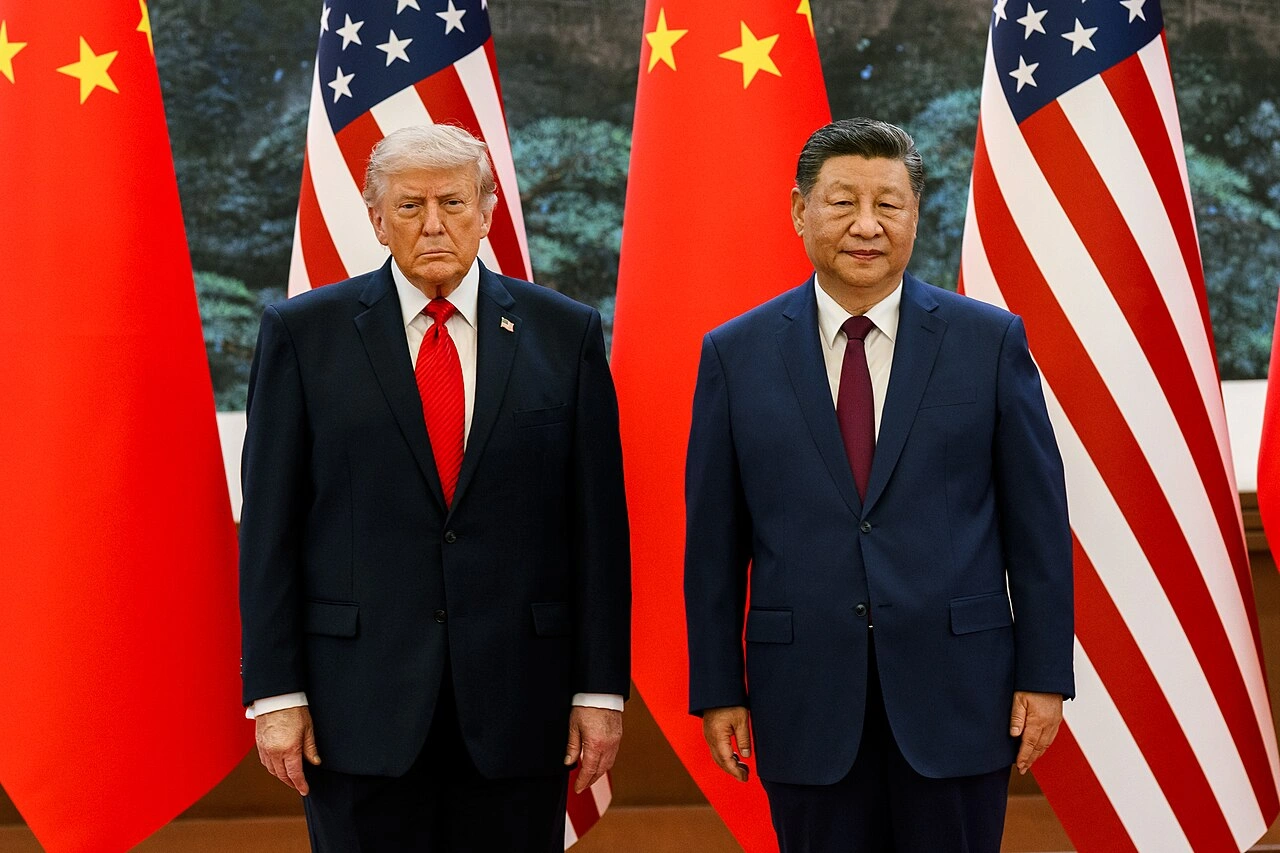
China and the United States risk reverting to a Cold War mentality in their approach to artificial intelligence, increasingly treating AI as an instrument of geopolitical advantage, strategic dominance and the projection of their own values.
That rivalry is increasingly explicit. President Trump has rejected calls to slow AI development on the grounds that the U.S must stay ahead of China, saying “whoever wins with AI, wins.” Beijing has, in turn, accused Washington of seeking to constrain Chinese AI development. “Fearmongering, confrontation and vicious competition will only disrupt the process of global AI governance which serves no one’s interest,” said spokesperson Guo Jiakun at a press conference yesterday.
A Cold War mentality is too narrow for the historical moment now unfolding. AI represents an inflection point in human knowledge, agency and capability, with the potential to reshape societies far beyond the effects of an ordinary technological transition. Steered well, it could widen access to knowledge, accelerate scientific discovery, strengthen human creativity and create new possibilities for human flourishing.
Using this transformation as a means of domination, technological containment or ideological imposition would apply an old geopolitical strategy to a fundamentally new intellectual environment. The emerging AI age could produce an unprecedented range of ideas about how intelligent systems should operate, make decisions and be governed. International rules should therefore encourage responsible cooperation while resisting attempts to use safety standards, technical standards or access restrictions to determine which countries, institutions or intellectual traditions are allowed to shape AI’s future.
AI governance needs to distinguish between controlling genuinely dangerous applications and controlling the development of knowledge itself. International cooperation should constrain demonstrably dangerous uses of AI without unnecessarily restricting the ideas, research and alternative approaches from which better systems may emerge.
Frontier capability and frontier thought are different things. States and companies may lead in computing power, capital and model scale without holding a monopoly on the most consequential ideas about intelligence or its governance.
AI remains fundamentally knowledge-driven. Foundational research, cybernetics, theories of intelligence, new system architectures and new approaches to governance can emerge outside the laboratories with the largest computing resources. A governance regime designed mainly by today’s dominant technological powers could therefore become more than a system for managing safety. It could begin to determine who may innovate, which technical approaches are regarded as acceptable, what forms of knowledge are treated as legitimate and which intellectual traditions are allowed to contribute to AI’s development.
Safety then risks becoming a language through which existing technological advantage is preserved and epistemic boundaries are quietly enforced.
A more discriminating form of governance would regulate different activities according to the seriousness of the risks they create.
That means distinguishing between levels of risk. Strict international safeguards are justified where AI intersects with genuinely catastrophic capabilities, including nuclear command and control, biological or chemical weapons, autonomous lethal force, strategic cyberattack and other clearly high-consequence uses.
In these areas, arms control provides a better analogy than blanket technological regulation. Nuclear non-proliferation, missile-control regimes and the laws governing warfare seek to constrain dangerous capabilities and prohibited uses, establish verification where necessary and assign responsibility to those who deploy or command them. AI governance should apply similarly strong controls where the potential consequences justify them.
Outside these high-risk areas, the presumption should favour intellectual openness. Foundational knowledge and research should have the greatest freedom. Commercial and societal deployment of AI should be regulated in proportion to demonstrable risks. Catastrophic or strategically dangerous applications should face the strongest international controls. In other words, govern consequences rigorously but do not cartelise knowledge.
A purely bilateral U.S-China conception of AI governance would therefore be inadequate. Dialogue between the two largest AI powers is valuable, particularly when it can reduce military escalation or catastrophic risk. But bilateral cooperation should not allow two states effectively to define the limits of legitimate AI development for everyone else.
Broader participation is essential to ensuring AI’s future safety because valuable ideas may emerge beyond the countries and companies that currently dominate the technology. Thus, the field of innovation must be kept intellectually open. Indeed, some of the most important ideas about AI may come from smaller states, independent researchers, different philosophical traditions or alternative forms of cybernetic thought.
Epistemic diversity – diversity of knowledge and intellectual approaches – is therefore part of the engineering search space itself. If AI is becoming more autonomous, complex and consequential, narrowing the range of ideas available to understand and govern it would reduce our chances of finding better solutions.
The A3 Model provides one example of the kind of alternative governance framework that can emerge outside the dominant technological centres. Its contribution does not depend on having greater computing power but, instead, begins from a different cybernetic premise: legitimate agency is the central problem of intelligent systems, beyond questions of capability, control and safety.
A3 approaches this through three connected concepts: Aram, concerning ethical coherence; Aanavam, concerning distortions arising from within the system; and Adhikaram, concerning legitimate authority. These are mutually conditioning elements of agency, with each affecting the legitimacy and operation of the others, and under this model, authority is conditional and can be withdrawn.
Within A3, this means governance must also be capable of recursive reconstitution – revisiting and reconstituting its own governing arrangements rather than treating them as permanently fixed. The framework also holds that when a form of closure occurs, it changes the knowledge and governance conditions within which what follows must be considered.
Whether A3, or any other emerging framework, ultimately proves decisive should be determined through intellectual challenge, practical application and evidence. A global AI order should create the conditions in which alternative approaches can emerge, compete, be criticised and evolve, rather than assuming that today’s dominant technological centres have already discovered the conceptual architecture through which advanced intelligence must be governed.
A single AI system is also unlikely to suit every society. Different states have different legal traditions, ethical systems, institutional histories and cultural understandings of authority, privacy, autonomy and responsibility. A durable global framework should therefore seek interoperability without homogenisation: different systems should be able to work alongside one another without being forced into a single model.
That means establishing common international limits around catastrophic harm while leaving societies substantial freedom to govern other aspects of AI according to their own legitimate traditions.
International safeguards must not become instruments through which one set of norms is imposed universally. The institutions responsible for designing those safeguards must also remain open to scrutiny. Any body given the power to restrict AI development should itself be accountable, contestable and subject to review. Otherwise, concentrated technological power risks simply being replaced by concentrated regulatory power.
The challenge is to avoid policing the future of AI into conformity and, instead, creating the conditions in which humanity can explore that future responsibly and pluralistically while recognising that no state, company or intellectual tradition has yet earned the right to define it for everyone else.

Vendan Ananda Kumararajah is an internationally recognised transformation architect and systems thinker. The originator of the A3 Model—a new-order cybernetic framework uniting ethics, distortion awareness, and agency in AI and governance—he bridges ancient Tamil philosophy with contemporary systems science. A Member of the Chartered Management Institute and author of Navigating Complexity and System Challenges: Foundations for the A3 Model (2025), Vendan is redefining how intelligence, governance, and ethics interconnect in an age of autonomous technologies.
READ MORE: Who governs the governors of AI?. AI governance has become increasingly sophisticated, with governments, regulators and technology companies building ever more elaborate systems of oversight. But Vendan Ananda Kumararajah argues that one question remains largely unanswered: who determines whether the institutions governing artificial intelligence are themselves still fit to exercise that authority?
Do you have news to share or expertise to contribute? The European welcomes insights from business leaders and sector specialists. Get in touch with our editorial team to find out more.
Main Image: U.S. President Donald Trump and Chinese President Xi Jinping, whose countries risk dominating the rules governing the future of artificial intelligence. Credit: Official White House Photo by Daniel Torok