Deborah Lyon left London in search of space and solitude. What she found was a wrecked Victorian estate, a new livelihood in hospitality, and the freedom to pursue her first love: writing
I left London almost twenty years ago without the faintest idea that I would end up restoring an old estate near Windermere or writing children’s novels inspired by the Lake District.
Like many who leave the city behind, I was searching for space and time. In Cumbria I discovered a crumbling Victorian property that my husband and I painstakingly renovated into a five-acre collection of self-catering homes. What began as a restoration became the start of a new life I could never have imagined during my daily commute on the Northern Line.
People often assume such moves are whimsical, born of a romantic impulse to buy a farmhouse and start baking bread. In truth, my escape from the rat race was deliberate. I loved London, but I found myself craving the peace and solitude of the outdoors. A sudden change of my personal circumstances meant I needed to get out of town and clear my head for a while. Newly divorced with a small baby son in tow, I headed north to regroup. Six months was the plan. Twenty years later, having acquired a husband, daughter and three step-children on the way to keep me and my son company, we’re still here.
When my husband Gez and I bought the property in 2016, what is now The Heaning Estate was little more than a dilapidated house with a scattering of barns, outbuildings and acres of tangled ground.
Driven by naïve energy and the hope of a new beginning for the estate, we saw past the rot and broken stone to what it could become. Over the next few years, we worked with local builders and craftspeople, using traditional Lakeland methods to restore and reimagine the site. It was painstaking work, but it mattered to us that the estate should feel authentic: built by the community it now serves.
I’m often asked why I chose self-catering rather than a hotel, and the answer lies in my own experience of moving here. Above all, I wanted space and a sense of belonging to the countryside rather than passing through it. Visitors want that too. They come to cook with local ingredients, to return from a fell walk and collapse on their own sofa, to sit by a fire without worrying about disturbing other guests. The Heaning allows them to borrow the Lake District for a while and make it theirs, just as I did..
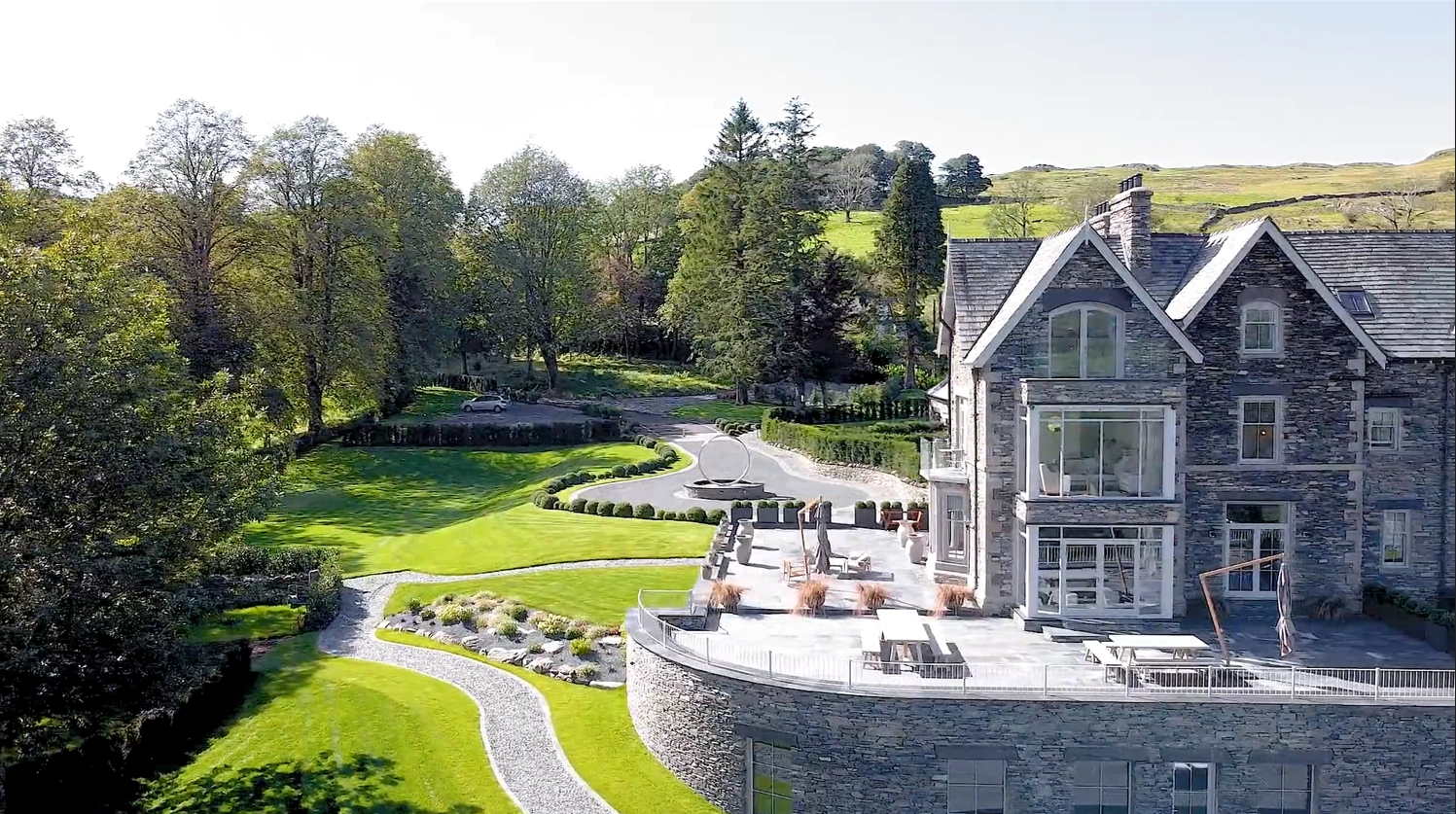
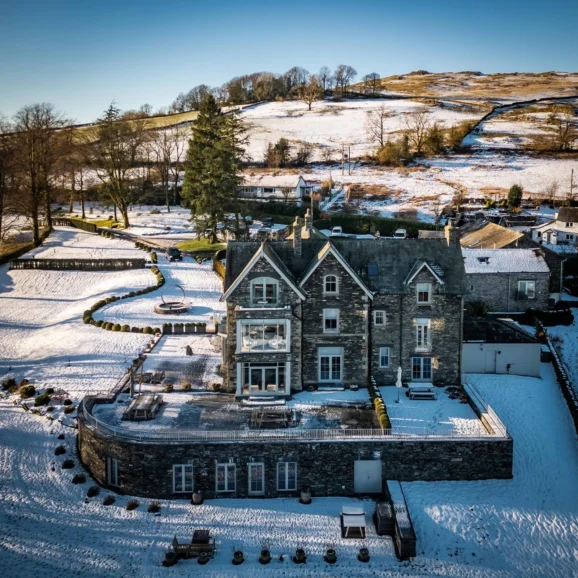
Today The Heaning Estate comprises eleven self-catering properties across five acres of beautifully maintained grounds, edged with wildflower meadows and dotted with picnic spots reserved exclusively for our guests. The Big House (the name says it all) sleeps fourteen, its high windows framing long views of the fells. The Small House (nobody can accuse us of overcomplicating things), meanwhile, sleeps six and is ideal for families. We have five one-bedroom Heaning Cottages, each designed for couples, and three Barn Cottages, each with three bedrooms and space for six. Properties can be booked individually, combined for groups, or taken as an entire estate for milestone gatherings.
More recently, we’ve begun hosting yoga retreats and corporate stays, too. The Hub, our light-filled studio with views across the fells, provides a calm space for yoga and well-being practitioners, while its breakout areas and conference facilities make it equally suited to team gatherings.
Of course, there were many missteps along the way: over-specifying some rooms to a standard that looked impressive on paper but proved impractical to maintain; underestimating how relentless the damp can be when you are responsible for old stone buildings through a Cumbrian winter; and discovering, too late at times, the cost of seasonality in a county where the majority of visitors still come in high summer. Although that’s changing, I’m pleased to say.
The logistics were daunting. Roofs leaked, drains blocked, paintwork blistered in the wet. What we had thought of as small touches of luxury occasionally turned out to be hostages to fortune—items that needed constant repair, or that simply did not suit the way guests actually used the properties.
We learned, gradually, that hospitality in the Lakes requires resilience as much as design. To run a year-round business, you must prepare for frost snapping pipes in January, for sudden storms in October that fell trees and cut power, for boilers that give up at precisely the wrong moment. Those lessons were expensive, humbling, and sometimes exhausting. But they were also necessary.
At the same time as building The Heaning, I returned to a childhood ambition: writing. I had always wanted to tell stories, often making up tales for my own children when they were small. Living in a region so steeped in cultural heritage—the Wordsworths, Beatrix Potter, Ruskin—it felt natural to begin adding my own small voice to the tradition of stories shaped by this landscape.
My first publication was a children’s travel guide, Lake District Unlocked, which appeared in 2010. Later, I undertook a Masters in Creative Writing, determined to learn my craft properly. The process gave me both the discipline and the humility I needed, and eventually the confidence to attempt fiction.
The inspiration for my first novel, Timewaif & The Roman Road, came from two simple things: an inscription on a Roman tombstone in a local museum, and a dog walk through the ruined fort at Galava in Ambleside. I became fascinated by the thought that the Romans had lived in this wild corner of England two thousand years ago and built lives, families, and communities here. From that seed grew a story about Tim Wainwright, a twelve-year-old boy who falls back in time from his modern troubles into the far greater challenges of Roman Cumbria.
To my delight, it has drawn some acclaim. Tim Robertson, the former Director of the Royal Society of Literature, wrote of it: “Deborah Lyon is a born writer and this is an absolutely wonderful book. I loved its Cumbrian setting, and got completely involved not just in the time-travelling adventure but above all in the human stories: I found myself caring hugely about the characters, totally exhilarated and at times moved to tears. I’ve given a copy to every 8–15-year-old I know, I urge everyone else to read it too, and I can’t wait for the next in the series.”
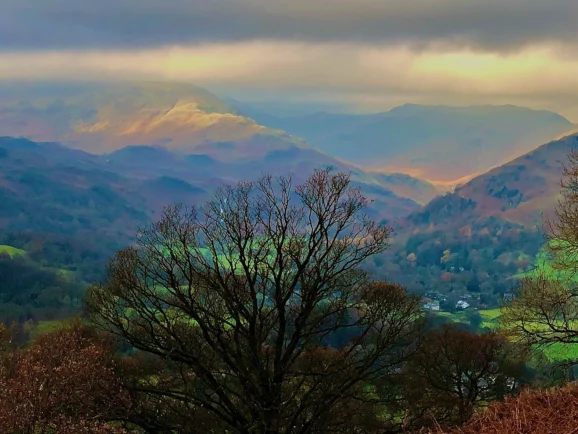
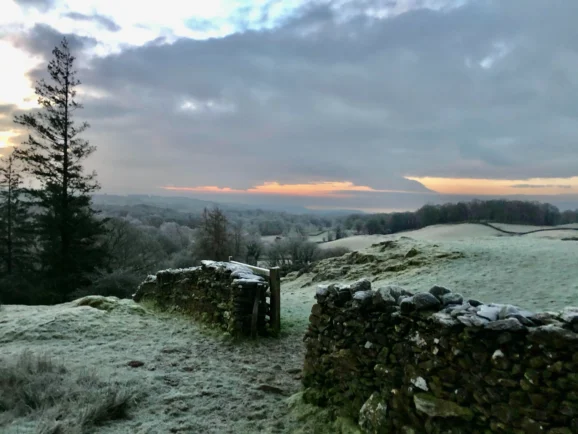
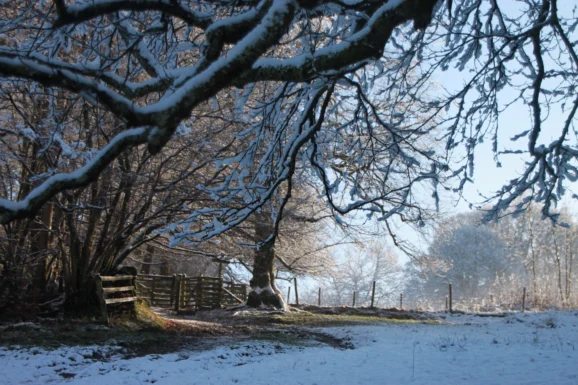
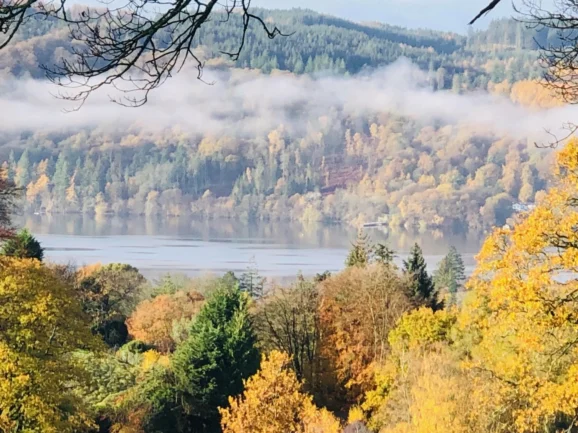
After 20 years of living and writing here, I’m convinced that the Lake District is at its best between November and January, when the fells glow bronze, the air is clear, and you can walk for hours without meeting another soul. A strong cup of tea also tastes better after a frost-bitten walk.
When guests at The Heaning ask me what to do, I tell them to climb Catbells above Derwentwater, to take a boat across Windermere, or to walk up to Rydal Caves. I might suggest a day at Coniston to visit Brantwood, John Ruskin’s former home, and I’ll almost always recommend Grasmere for Wordsworth’s Dove Cottage or Hawkshead for Beatrix Potter’s Hill Top.
But I also tell them to do nothing at all. To spend some time simply sitting outside, watching the light shift across the fells, noticing the frost on the hedgerows in the morning, and soaking up the peace and quiet. For me, this is the essence of the Lake District — the reason I made my life here, and the reason I write.
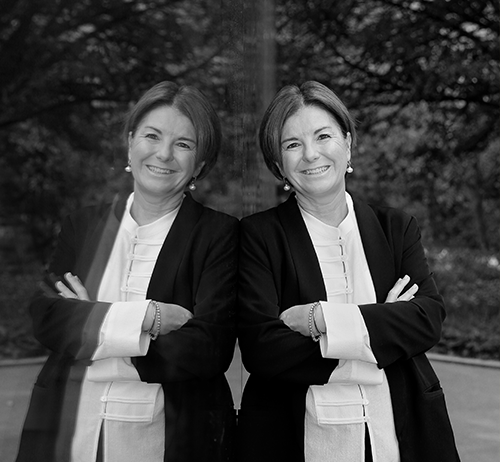
Deborah Lyon is a writer, editor and hospitality entrepreneur based in the Lake District. She left London two decades ago to restore a derelict Victorian estate near Windermere, now The Heaning — a five-acre collection of self-catering properties rooted in local craftsmanship and Cumbrian heritage. Alongside running the estate, she writes about landscape, place and belonging, drawing inspiration from the fells and literary traditions that surround her. Her first novel, the acclaimed children’s book Timewaif & The Roman Road, was praised for its evocation of Roman Cumbria and its “human stories told with tenderness and truth”. She is also the author of Lake District Unlocked, a family travel guide to the region’s hidden landmarks.
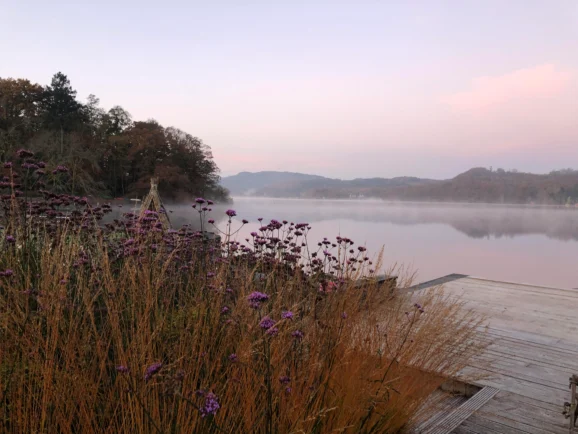
Main image: The Heaning Estate, a five-acre collection of self-catering properties that Deborah painstakingly restored with her husband after leaving London. Image: The Heaning Estate