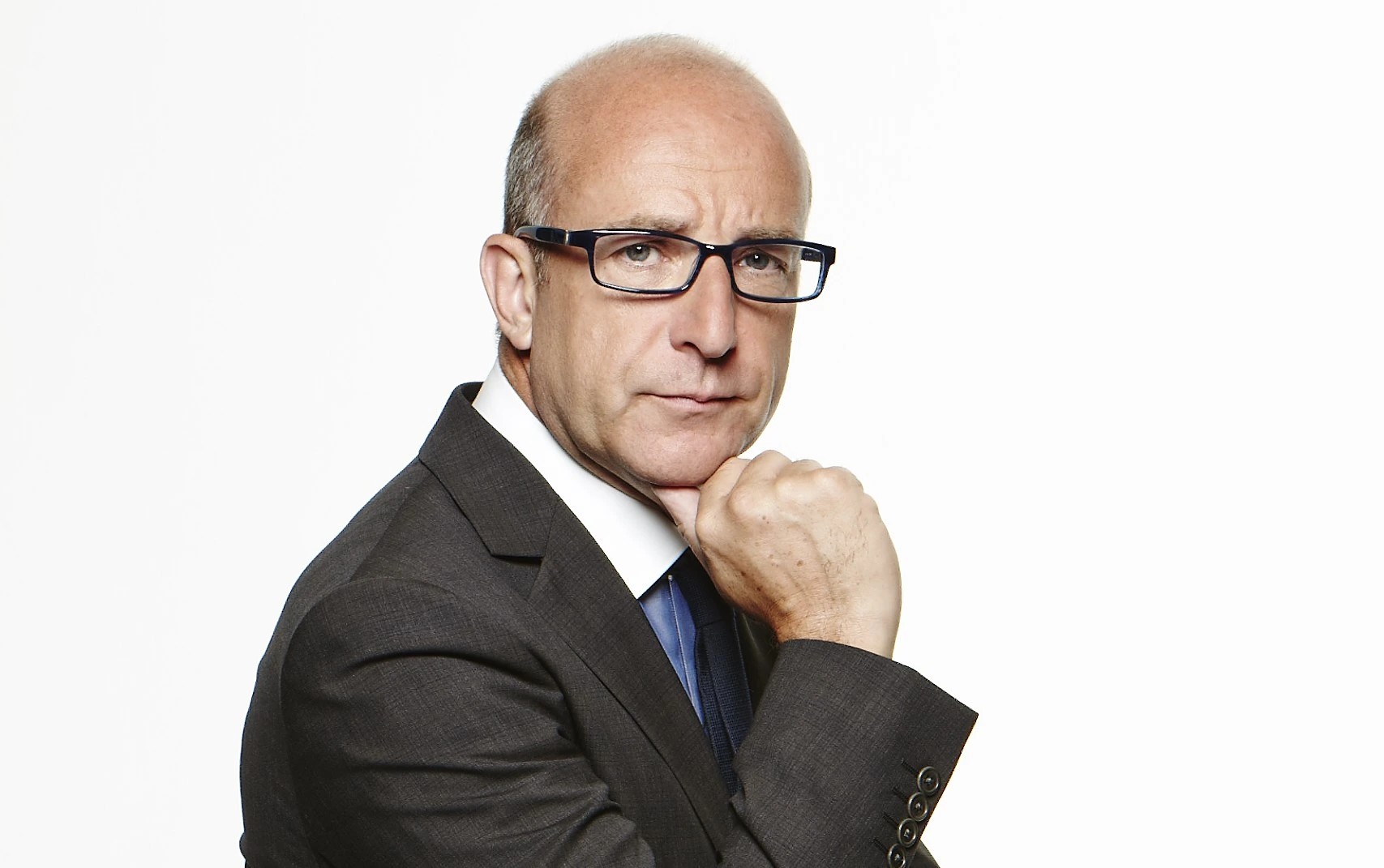
Since the early 1990s, Paul McKenna has been the world’s most recognisable hypnotist with a reputation for rapid personal change. But what many people don’t know is that behind the public profile, he has spent decades working at the front line of mental health to help survivors of trauma, addiction and burnout rebuild their lives. Now, as the UK faces what he calls a new psychological emergency, McKenna is calling for a fundamental rethink of how we teach resilience. In this exclusive and wide-ranging interview with The European’s Dr Stephen Simpson, he reflects on collapse, recovery, and why emotional wellbeing should be part of every child’s education
Paul McKenna has been famous for so long it’s easy to forget what made him so in the first place. Since the early 1990s, he has been a household name; the celebrity hypnotist who could make you thinner, richer, happier or more confident, all before the end of a long-haul flight. His books topped bestseller lists, his stage shows sold out theatres, and his media presence became a kind of shorthand for pop psychology.
But that was a different time, and today McKenna is a markedly different figure. The man once known for his showmanship has steadily reshaped himself into something far more serious: a behavioural scientist, clinical therapist and trauma expert whose private clients include Olympic athletes, political figures and survivors of terrorism, abuse and war. Now in his early sixties, he’s focused on repairing what he sees as a national crisis in mental wellbeing, and believes the solution lies as much in treatment as it does in education, tools, and preventative skills.
“The average therapist I know is treating anxiety or anxiety-related conditions,” he told me this week. “We’re coming out of a biological pandemic and straight into a psychological one.”
In his view, modern life has overwhelmed people’s mental resilience, partly because schools still fail to treat emotional literacy as an essential life skill. They should be taught, he says, with the same seriousness as reading or maths. “We send young people into the world able to factorise equations but not handle rejection. We wouldn’t skip literacy – so why are we skipping self-worth?”
His argument is grounded in genuine lived experience. A decade ago, McKenna’s outward success concealed a deep internal collapse. Following the death of his father, he fell into a period of intense depression. “I was drinking too much, sleeping all day, totally disconnected. I had everything that’s supposed to make you happy – money, success, a beautiful home in LA. And I felt absolutely nothing.”
He describes sitting with friends and having to pretend he was fine, while privately wondering what the point of any of it was. At his lowest, he says he was barely functioning, feeling isolated, adrift, and disconnected from anything that had once given his life structure. Around the same time, he was involved in a military study on PTSD, working directly with soldiers and medics who had witnessed extreme violence. The details were graphic and unrelenting, and the professional distance he tried to maintain began to slip. “I was hearing things like children blown to bits,” he said. “I had to stay neutral, but at the same time I was angry.”
He described moments when he felt overwhelmed by the stories he was being told, and there were days, he told me, where he would finish a session and sit alone for long stretches, trying to absorb what he’d heard. “It gets in. You can’t pretend it doesn’t.”
Over time, the impact began to show physically. He stopped sleeping properly, his eating habits fell apart, and his working hours became irregular and erratic. “It wasn’t one case. It was the build-up. That’s what people don’t always understand about trauma work. It’s not the horror — it’s the accumulation.”
Eventually, the strain of it all became too much. “Simply put, I broke,” he admitted.
It was the point from which he began to rebuild, using the tools he now recommends to others – structured gratitude, mental rehearsal, and actively disrupting negative thought patterns – to do so. “Bit by bit, I came back from the edge of the abyss. And the gift, I suppose, is that I now understand how it feels – and I know what works.”
His recovery shifted the direction of his work permanently. While still training and mentoring others, McKenna spent the next ten years working with survivors of severe trauma, including abuse, domestic violence and terrorism. He played a key role in introducing havening – a psychosensory therapy that uses touch and specific visualisation techniques to disrupt the brain’s threat response. “You can’t just talk trauma away,” he explained. “You need something that interrupts the nervous system in real time. Havening does that – often in minutes.”
His methods worked and over the following decade, he helped people recover from some of the most extreme experiences imaginable.
But even as the outcomes were positive, the work itself came at a personal cost. McKenna is frank about the mental toll of helping others. “Some of the stories were horrific – people who’d witnessed bombings, children dying, abuse. You have to stay detached. Compassion, not empathy. The moment you enjoin someone in their pain, you lose the ability to help them.”
This realism extends to his views on therapy in general. McKenna is critical of traditional analysis and what he calls “endless problem-talk”, and rejects the idea that insight alone leads to healing. “I meet people who’ve been in therapy for 20 years. They can explain their issues in perfect psycho-babble – but nothing’s changed. The behaviour’s still there.”
He points to the rise and fall of debriefing therapy as an example: “Turns out, if you keep talking about your trauma, you just reinforce it.”
That pragmatism underpins his belief in hypnosis – a technique still misunderstood. “People think it’s a truth serum, or a magic trick. Some say it’s dangerous. It can’t be both – and it isn’t either.”
He points to meta-analyses showing hypnosis to be highly effective for issues like smoking cessation, insomnia, low confidence and even pain management. Yet despite the evidence, it’s still largely absent from mainstream medicine. “Doctors don’t have time,” he says. “They’ve got 15 minutes with a patient. It’s easier to write a prescription than try a psychological approach.” Part of the resistance, he believes, is down to perception. “When hypnosis works, it can look like magic. That makes people suspicious – or think it’s just a trick.”
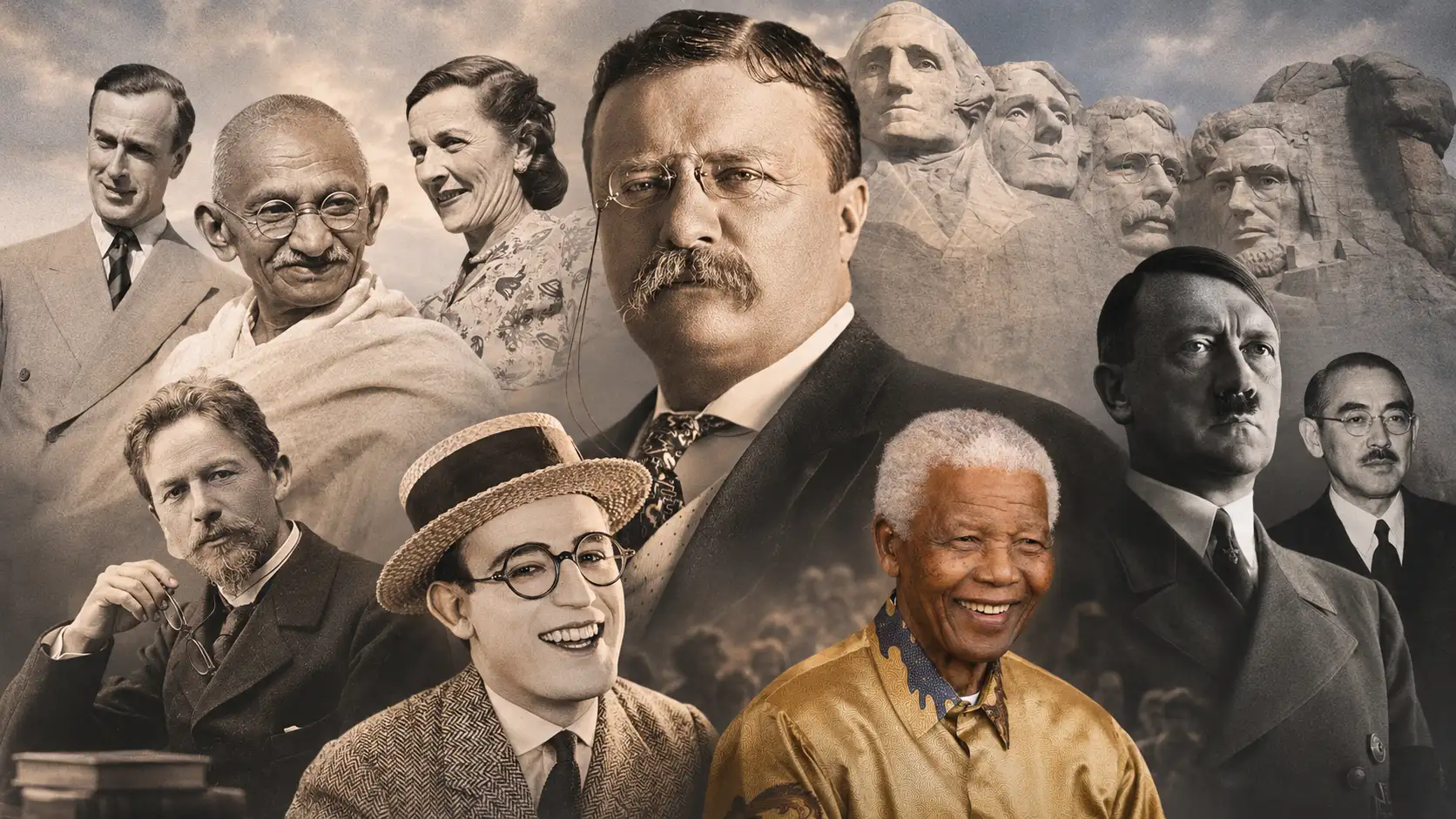
The same could be said of persuasion – a subject he knows inside out. Asked whether his methods have ever reached government, McKenna smiles. “Let’s just say Tony Blair, Barack Obama and Bill Clinton are all trained in NLP. They understand how to use language to shift emotional states – their own and others’.” That power, he says, can be used to help or to harm. “Hitler was a hypnotist. His language – repetition, emotional anchoring – was classic NLP. The difference is intention.”

McKenna’s career began in radio. In the 1980s, he was a DJ on Capital FM, building a profile that quickly made him a familiar voice. He started learning hypnosis as a side interest, originally as a tool to help with stage fright. “I used to be terrified before going on air,” he once said. “I wanted something that could get me out of my own head.” It worked. Before long, he was using it on others.
“I used to be terrified before going on air,” he once said. “I wanted something that could get me out of my own head.” It worked. Before long, he was using it on others.
By the early 1990s, he’d become a household name. His stage shows played to packed theatres, his books sold in the millions, and his face became a fixture on primetime television. He promised audiences they could stop smoking, lose weight, or become more confident — often in a single session. Critics dismissed it as spectacle, but behind the scenes, McKenna was studying neuro-linguistic programming, cognitive science, and therapeutic technique.
Much of that clinical work happened out of sight. Alongside the celebrity appearances and publishing deals, he was consulting privately with athletes, actors and executives under intense pressure. Some were dealing with anxiety, some with burnout, others with trauma they had never spoken about publicly. “People remember the theatre stuff,” he told me. “They forget I was seeing clients quietly the whole time.”
He estimates that over the past three decades, he’s worked with more than ten thousand people. His clients have included Olympic gold medallists, national team managers, A-list performers and Fortune 500 CEOs. He’s coached snooker players who needed to focus, tennis players who wanted to slow time, and racing drivers visualising corners at 180mph. “Daley Thompson once told me he didn’t believe in sports psychology,” he said. “Then he described rehearsing every step of his race. I told him, ‘You’re already doing it.’”
That work taught him how pressure distorts perception and how the right tools can restore control.
But pressure, he says, is no longer confined to elite sport or public life. What he once saw in athletes and executives, he now sees everywhere. We are, he believes, living in a state of near-constant psychological overload, a shift he traces to changes in both culture and technology. Attention is fractured, boundaries have collapsed, and people are bombarded with information, opinion and stimulus from the moment they wake up. “People check their phones 2,000 times a day,” he says. “That’s not connection – that’s addiction. Social media has turned outrage into a commodity and anxiety into a default setting.”
The result, he says, is that people are permanently distracted, emotionally dysregulated and stuck in survival mode. He believes the solution is preparation. The tools he used to teach high performers — visualisation, emotional regulation, inner dialogue — should, he argues, be taught much earlier. “Why wait until someone burns out? Why not teach the skills before they’re needed? We’re sending kids into high-pressure worlds without the tools to cope.”
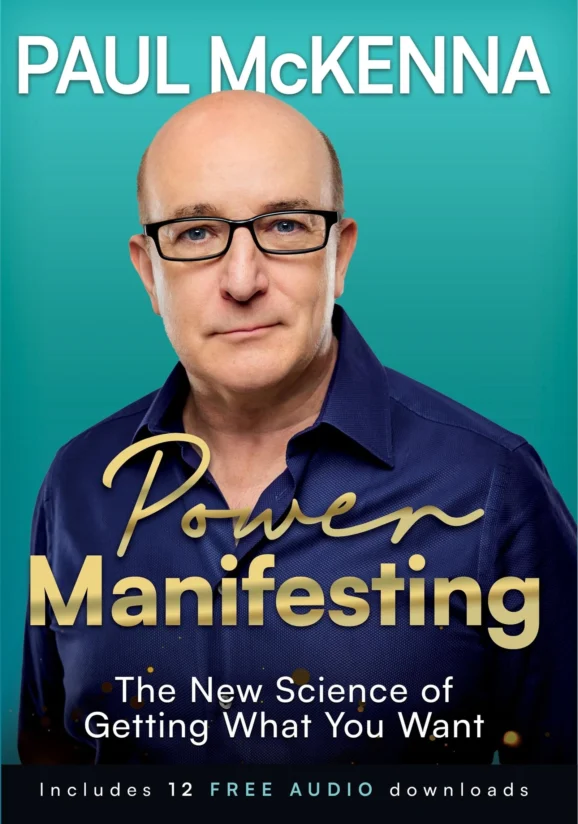
Away from the clinical work and training, he’s also found time to write a new book. Power Manifesting pulls together ideas he’s been using for years — focus, intention, mental rehearsal — and lays them out as a step-by-step method for people to achieve their goals. It draws on both neuroscience and performance psychology, and reflects where his work has landed: less about fixing problems after the fact, more about giving people the tools to steer their lives before things fall apart.
He breaks it down into four levels: clarity, alignment, reverse engineering and consistent practice. He calls the full process “four-dimensional manifesting”. “You start by imagining you’ve already succeeded – what it looks like, feels like. Then you walk it backwards. What had to happen before that? Then before that? Until you’re back at today. Then you have a real timeline – not just a hope.”
Though the language of manifesting is often associated with the esoteric, McKenna roots it in physics. “Einstein said ‘Everything is energy and that’s all there is to it. Match the frequency of the reality you want and you cannot help but get that reality’. That’s not a slogan – that’s science.”
Even luck, he argues, is a kind of perception. “People who see opportunities are more likely to spot them. Your emotional state affects your focus. Casinos even use ‘coolers’ – people who subconsciously disrupt someone’s winning streak just by being there. We’re energetic beings. We influence each other constantly.”
For McKenna, the spiritual and scientific are not at odds. A practising Buddhist, he sees no contradiction in combining evidence-based therapies with philosophical principles. “I don’t believe in a magic man in the sky. I’m more with Einstein – God as the sum total of natural laws.”
As for what comes next, McKenna says he has no interest in slowing down — but he’s clear that health and happiness come first. These days, he measures success less in milestones than in energy, focus and peace of mind. “Pleasure is a glass of champagne, a new watch, a faster car. Happiness is living your values. I’ve met plenty of miserable millionaires. Bob Marley said some people are so poor, all they have is money. That’s true.”
For him, those values are simple: health, freedom, meaningful relationships, creativity, and purpose. “That’s what I measure now. I still set goals. I still manifest. But the difference is, I enjoy the journey.”
The stage hypnotist may have stepped away from the spotlight, for now at least, but McKenna’s message today is louder than ever – and it isn’t about how to lose a stone in a month. It’s about how to stay sane in a world designed to drive you mad.
Paul McKenna’s new book Power Manifesting is published by Headline Welbeck and out now.

Dr. Stephen Simpson is an internationally acclaimed mind coach, TV and radio presenter, hypnotherapist, TEDx speaker, bestselling author, business consultant, and Fellow of the Royal Society of Medicine. With nearly 40 years as a practicing physician and extensive experience in elite performance coaching, mental health, hypnosis, and NLP, he has worked with top athletes on the PGA European Golf and World Poker Tours. Dr. Simpson holds an MBA from Brunel University and has served as Regional Medical Director for Chevron, contributing to global health initiatives with leaders like Bill Clinton and Bill Gates. He hosts popular shows such as “Zen and the Art of NLP,” and his YouTube channel boasts over 260 videos and 350,000 views. His latest book, The Psychoic Revolution, encapsulates his innovative methods for achieving peak performance.
Images: Paul McKenna