
The US–Israel alliance has moved from a strategic relationship to unquestioning reverence, shaped by theology and protected from scrutiny by political taboo. This culture of silence undermines the republic’s founding principles and leaves America weakened, writes political analyst Mike Bedenbaugh
What happens when a republic built on liberty becomes shackled by alliances it no longer understands?
Could such an alliance, distinguished by a drift in foreign policy from serving national interests to advancing loyalties that are longer questioned, pose a greater danger than military threats?
These are the kinds of hard questions every republic must be willing to ask if it hopes to survive and in the United States today, the most prominent example of this confusion is, I fear, our relationship with Israel.
Let me be clear here: this isn’t about hostility toward a people or a nation. My enquiry is exclusively and entirely focused on whether this strand of American foreign policy is grounded in clear-sighted reason or blind reverence.
I strongly suspect the latter. At present, the US–Israel alliance operates without the scrutiny or balance expected in a functioning democracy. Billions of dollars in military aid are distributed with limited public debate. American law and diplomacy are frequently shaped to protect Israeli interests, even when they diverge from our own. Criticism of Israeli government policy is routinely met with accusations of antisemitism. And while America grieved following Hamas’s attack on Israel on 7th October 2023, that grief has subsequently been allowed to obscure tens of thousands of Palestinian deaths.
This lack of proportionality, transparency, and democratic oversight is, in any objective sense, a serious breach of our constitutional principles.
Why, then, is this imbalance so rarely discussed, and so fiercely protected? Why are questions about the US–Israel alliance often dismissed as disloyal or offensive, even when raised in good faith?
The answer lies in sentiment. The alliance has moved beyond strategy to become something closer to a political taboo. Our alliance with Israel has become a mirror reflecting what has gone wrong in America’s wider global posture, exposing how sacred myths can override sober strategy and how emotional loyalties can smother democratic debate.
Part of the explanation for this entangled alliance lies in theology. For many evangelical Christians in the US, Israel represents far more than a country. To them, it is a fulfilment of biblical prophecy, with the Jewish people returning to the Holy Land aligning to Old and New Testament prophecies tied to the Second Coming of Christ.
Everyone is entitled to their own personal beliefs but this framing blurs the essential distinction between the ancient Kingdom of Israel, which fell nearly 2,700 years ago, and the modern state of Israel, founded in 1948.
It likewise blurs the lines between a people and a government and, especially, between faith and policy. For this personal belief has become deeply embedded in political practice. It now shapes how presidents speak, how Congress allocates funding, and how the public interprets events in the Middle East.
Language reflects this confusion. Linguistically, the term ‘Semite’ includes both Hebrew and Arabic speakers. Yet ‘anti-Semitic’ is used almost exclusively to refer to prejudice against Jews, while anti-Arab sentiment is often ignored. This selective use of powerful terms suggests our political vocabulary is shaped more by ideology than accuracy.
The inability to speak plainly is a political liability. Foreign policy requires difficult conversations and competing viewpoints. If a nation loses the ability to question its assumptions and challenge prevailing orthodoxy then it also loses its capacity to course correct. That is what we risk by allowing our alliance with Israel to operate above scrutiny.
There needs to be a recognition that there is a separation between criticism of a government’s actions and hostility toward its people. There must be a right to weigh competing tragedies, examine alliances, and adjust policies without fear of condemnation.
If a foreign relationship has become politically sacred, however, then none of this is possible. Dissent is punished, nuance disappears, and our capacity for democratic decision-making is eroded.
It skews our foreign engagements, and it carries serious consequences at home, eroding our legislative integrity, our diplomatic flexibility, and the public’s faith in the fairness of government. Ultimately, it weakens the very republic our alliances are supposed to defend.
America’s leading founding father, George Washington, made the same observation more than 200 years ago. In his Farewell Address, a parting message to the American people after his presidency in 1796, he warned against “permanent, inveterate antipathies against particular nations, and passionate attachments for others”.
Such sentiments, he said, enslave the national will. That warning now echoes through every debate we refuse to have about Israel and our role in the Middle East.
I’m not saying America should sever the alliance with Israel. The point is to restore the conditions under which it can be evaluated. The US should be as free to challenge its allies as support them, and to change course when necessary.
To recover our independence of judgement, we must disentangle policy from mythology. That process begins by naming the myths and by having the courage to speak plainly about them.
This is essential as the foundation of any sound alliance is the ability to assess it honestly, and the foundation of a functioning republic is built upon such honest scrutiny. If we do not move away from this climate of silence and restore space for scrutiny then we undermine the republic and everything Washington fought to put in place.

Author and political thinker Michael Bedenbaugh is a respected voice in constitutional principles and American governance. Based in South Carolina, he is deeply involved in his home state’s development while contributing to national discussions on governance and civic engagement, most recently as standing as an independent candidate for Congress. He is the author of Reviving Our Republic: 95 Theses for the Future of America and the host of YouTube channel Reviving Our Republic with Mike Bedenbaugh.
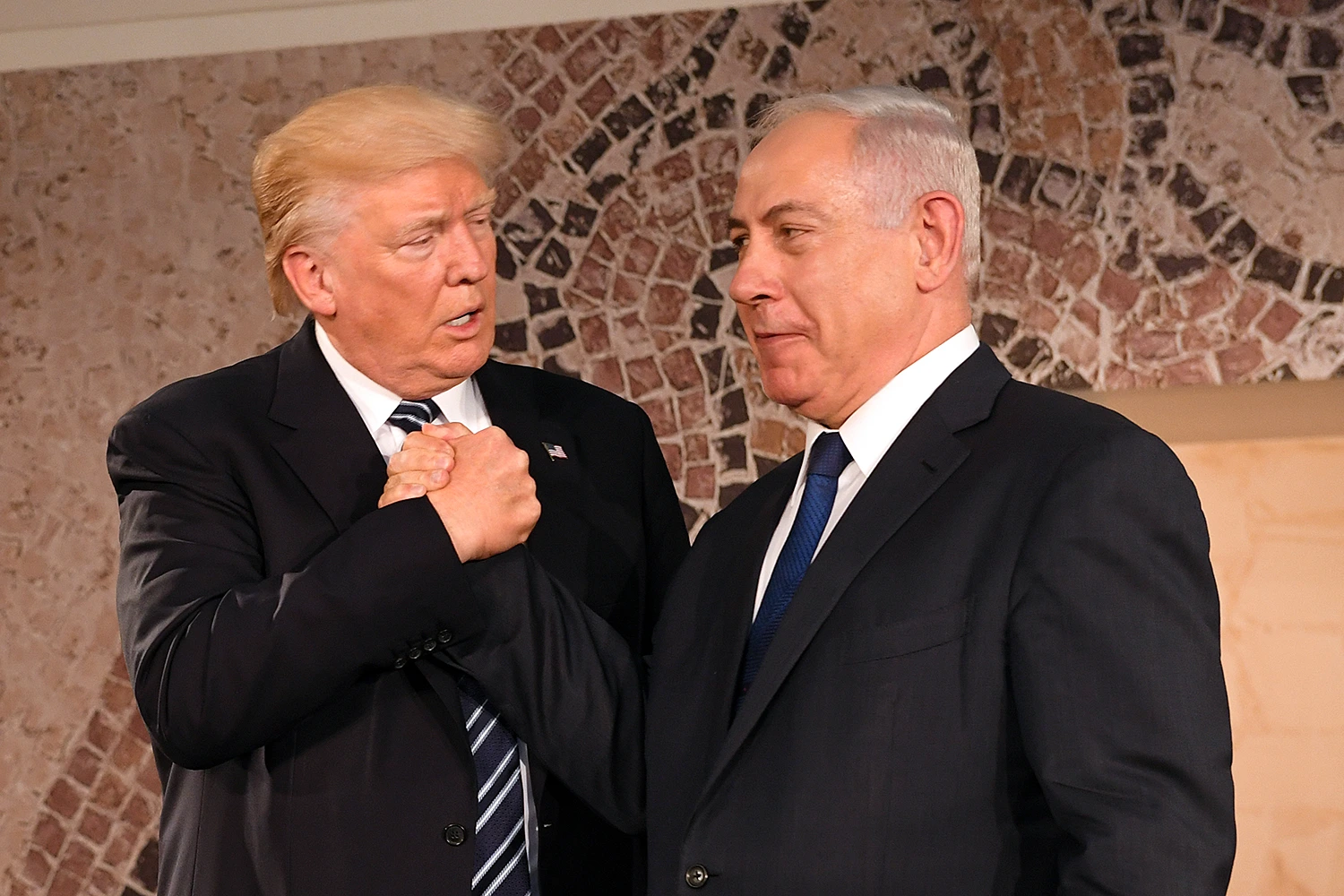
Main image: Courtesy, U.S. Embassy Tel Aviv (Creative Commons)